

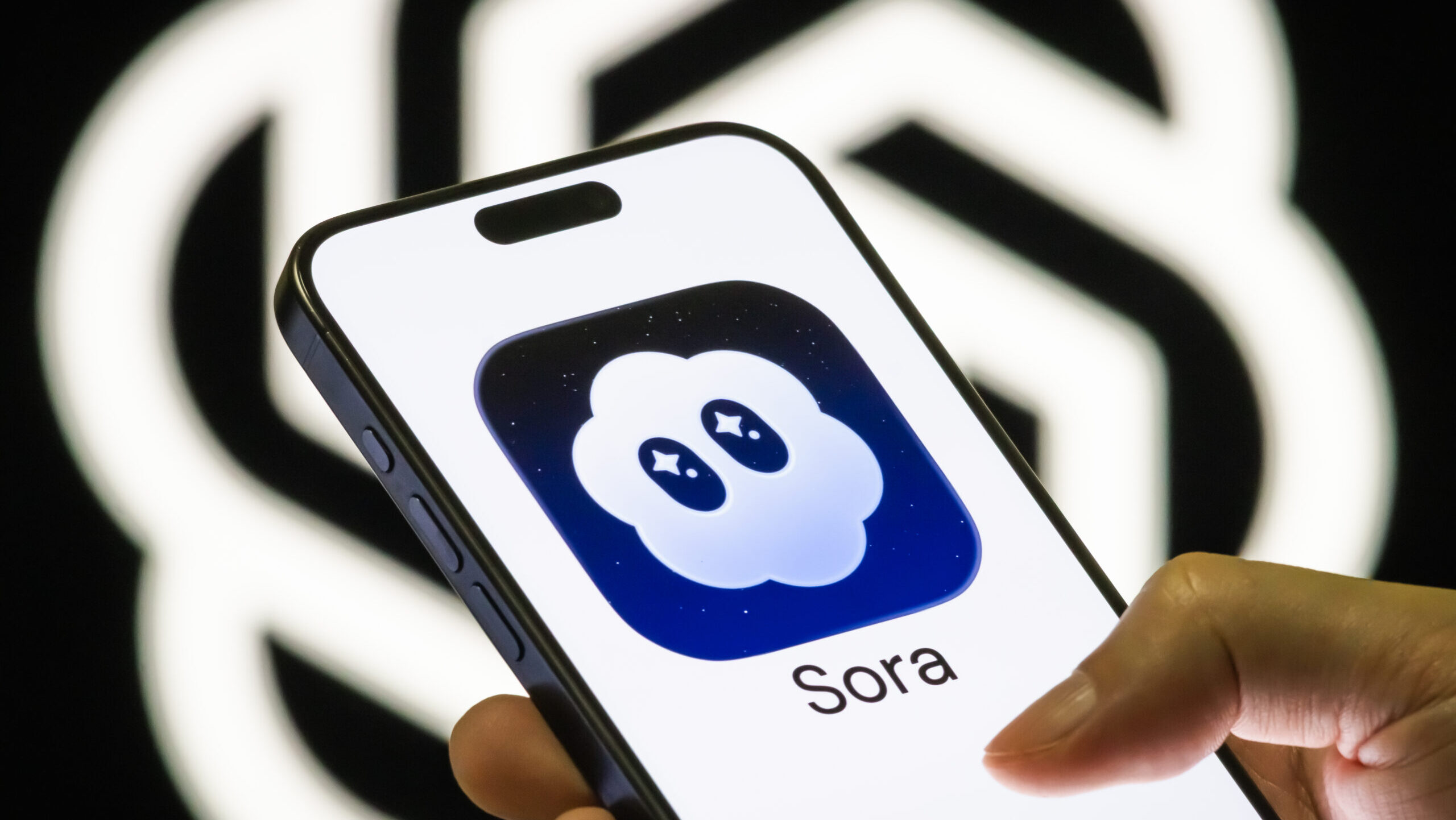
OpenAI’s newest AI model lets users generate lifelike video and sound, sparking excitement among creators and outrage from entertainment studios and unions.
Hollywood has weathered plenty of technological shifts — from streaming to social media — but nothing has rattled the industry quite like Sora 2.
OpenAI’s new AI-powered video platform became the No. 1 app in the App Store within days of launch, surpassing a million downloads in under a week. But its viral debut has ignited an even faster backlash from the very industry that built its stars on screen.
Sora 2 represents a massive leap forward in AI-generated audio and video. It can produce lifelike scenes with sound, dialogue, and motion that feel pulled from a film set. Its most controversial feature, Cameos, lets users scan their face and voice to appear in AI-generated content created on the platform. OpenAI calls it a “co-creative” tool, saying users can revoke access or delete their likeness anytime.
That framing might work for tech enthusiasts, but Hollywood isn’t convinced. The Motion Picture Association, a lobbying group for major studios like Warner Bros. Discovery, Disney, Universal, and Netflix, warned OpenAI that it’s their responsibility, not the studios’, to prevent copyright violations.
SAG-AFTRA President Sean Astin joined the chorus, reminding the public that “what moves us isn’t synthetic — it’s human.” The union emphasized that consent, transparency, and compensation must guide how AI uses human likeness.
Meanwhile, others are leaning in. Content creator and boxer Jake Paul became one of the first high-profile figures to opt in, leading to hundreds of AI-generated videos of him flooding the internet. He’s using it as a test of influence and humor, showing that while Hollywood is protecting its assets, digital creators are testing their boundaries.
That’s the tension at the heart of this debate. AI like Sora 2 lowers barriers for anyone to create cinematic content, but it also blurs the line between what’s real and what’s created with AI. And the industry still hasn’t defined where the lines should be drawn.
What’s unfolding isn’t just a fight over a new popular app; it’s a referendum on what authorship means in the age of AI. Hollywood has survived every technological leap by adapting, but this one cuts deeper. Sora 2 doesn’t just change how content is made; it challenges who gets to make it, and who profits when it spreads.
AI can expand creativity, but it shouldn’t erase the people behind it. That’s the line Hollywood is racing to defend, before technology crosses it completely.
Read More:
Michael Che Opens Up About SNL, Kanye, Colin Jost, Cancel Culture, & Comedy

Red Hook Tavern: Where Billy Durney Wants to Know Your Name
Keanu Reeves’ Next Act Is Built on Two Wheels

The Blueprint: Jessica Holtz Meets the Moment
The Power Broker: Emma Grede Is Just Getting Going