

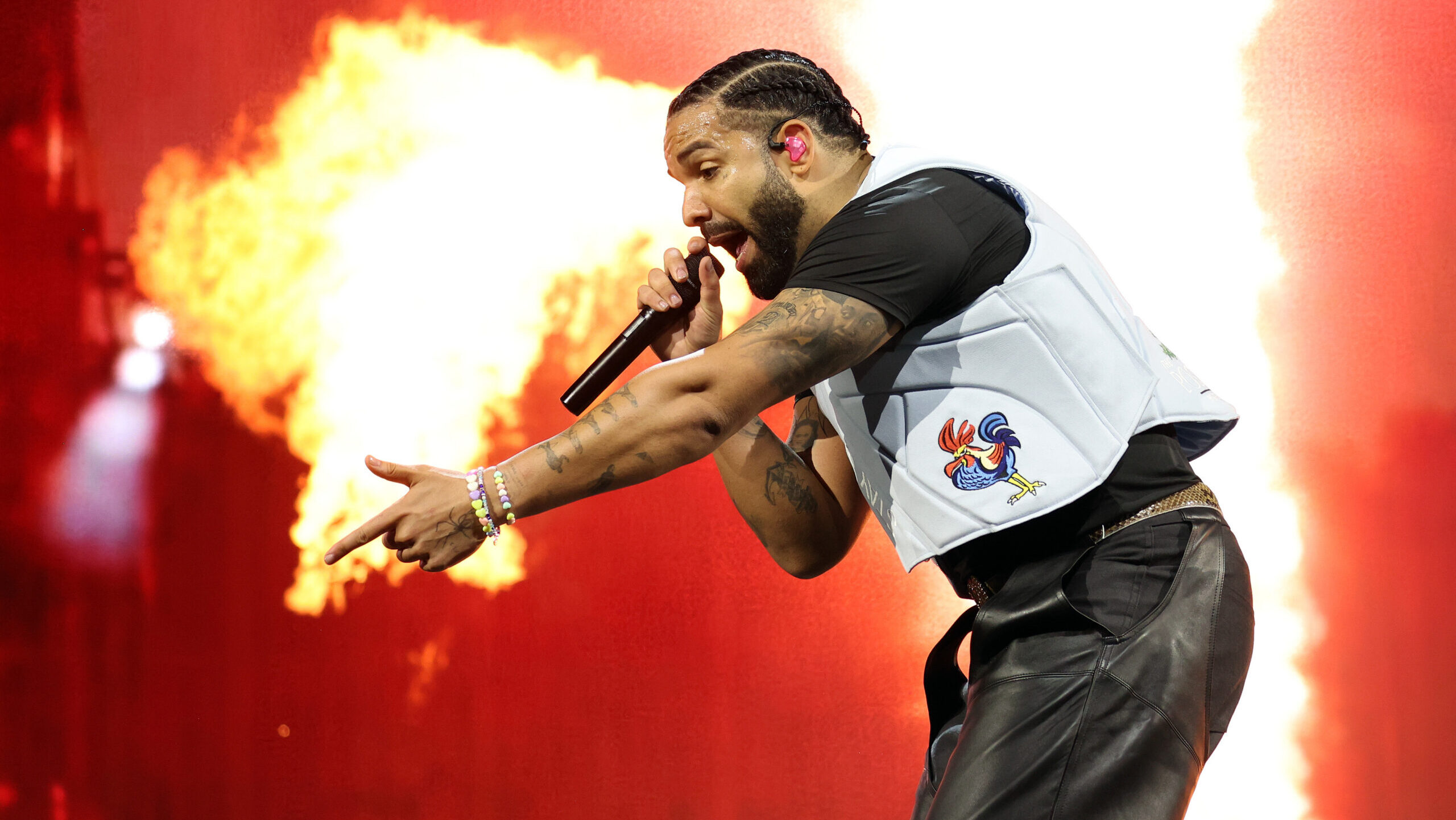
With Iceman, Habibti, and Maid of Honour, Drake just rewrote the record books. But what do those numbers really mean?
Are we officially in music’s steroids era? Much like Major League Baseball in the late 1990s and early 2000s, stats are juiced, records are getting smashed left and right, and the industry’s biggest star (see: Drake) is enjoying an unprecedented run of success thanks to the ease by which streaming stats convert to chart milestones.
Granted, I am one of many MLB fans who will defend Barry Bonds until he’s elected into the Hall of Fame; you don’t luck your way into 73 home runs, you aren’t that much better than everyone else (who were also taking steroids!) thanks to performance-enhancing drugs. Much like Bonds, Drake is redefining success in the streaming era in the wake of his three-album surprise release on May 15. What, though, do the numbers mean in this modern streaming era? An artist of Drake’s caliber is going to find success whenever they drop new music. Was unloading three albums at once a way to game the system? To flood the market and rack up as many streams as possible? Yes, but that doesn’t mean the work hasn’t earned its honors, either. Like most things with Drake, the answer lands somewhere in the middle.
On the May 30 Billboard 200 chart, Drake made history by occupying the top three spots — Iceman, Habibti, and Maid of Honour in that order. He became the first artist to hold the top three positions simultaneously since the chart began publishing on a regular weekly basis in 1956, and “Janice STFU” from Iceman debuted at No. 1 on the Billboard Hot 100. Almost more stunning is that “Janice” is one of Drake’s 42 entries on the Hot 100, 40 of which are debuts. These, of course, are both Hot 100 records. Drake, perhaps most impressively, has launched himself ahead of Michael Jackson for most career No. 1s on the Hot 100 by a solo male. He now has 14.
Billboard ran a forum with staffers to discuss the legitimacy around his chart success, and they came away with the same realization as many critics who took issue with Drake’s strategy. An artist too big to fail is obviously going to dominate the charts in the streaming era. It comes at the risk of quality. Says Billboard staffer Kyle Denis: “Michael Jackson’s record for most Hot 100 No. 1 hits by a male soloist certainly sounds cool, but when you compare Drizzy’s No. 1s to the King of Pop’s, the difference in quality is so stark it’s laughable.” Sure, Drake is dominating the conversation right now, but how many of his 42 Billboard singles will maintain the same streaming volume and remain on the charts next month? Hell, what about next week? Is everyone giving these albums a listen and then moving on? Only time can tell. Perhaps “Janice STFU” is that all-timer, but can it stand up against hits from previous Drizzy eras?
Iceman on its own earned 463,000 equivalent album units, which is a serious feat, but it begs the question: how many albums could he have moved if he put all his energy and quality control into one album? One era-defining, post-Kendrick statement? As Lyndsey Havens points out in the Billboard forum: “This historic chart performance proves fans will always be ready and waiting for more Drake (apparently, three full albums worth), and in no world was he going to flop during debut week. But I’m curious to see what the next few months look like for Drake and where these albums fall within his longterm legacy.”
This is where Drake’s chart records will face a true test. What staying power does this music have? Hip-hop superstars are at a premium, especially in an off-cycle year for Drizzy’s biggest rival, Kendrick Lamar. There’s plenty of oxygen for Drake to siphon off, but are the numbers he’s grabbing empty calories? The story surrounding Iceman, Maid of Honour, and Habibti was less about the songs on these albums than the surprise that there were three albums in the first place. Rewinding to a few weeks ago, so much of the Iceman era was about hype and buildup — the frozen seats at the Raptors game, the ice block downtown. Those moments are still the defining images of this album run. The music has become almost secondary.
Clearly, people are listening to the new music Drake dropped two weeks ago. Fans are still playing catch-up, sorting through their favorites amongst the two and a half hours of music he dropped. From that lens, it makes sense that the songs are slowly seeping their way into culture, big moments finding their footing as listeners become familiar with their favorite moments.
By that same token, Drake’s decision to lovebomb his audience with three albums at once is endemic of our moment, where cheap rewards satiate our cravings before we move on to whatever’s more, next, louder. It’s especially disappointing because Drake’s biggest opp proved less than two years ago that one album, one song, one verse could dominate the music world. Drake could have gone for that indelible moment at some point on this trio of albums. Instead, he’s the new king of pop. I don’t think anyone knows what that means; I’m not sure they care, either.
Read more:
Keanu Reeves’ Next Act Is Built on Two Wheels

The Blueprint: Jessica Holtz Meets the Moment

The Power Broker: Emma Grede Is Just Getting Going

Quiet Power: Imani Ellis on CultureCon, Creators, and Learning to Let Go

The Long Game: How LeBron James and a Few NBA Friends Might Elevate the Game of Golf