
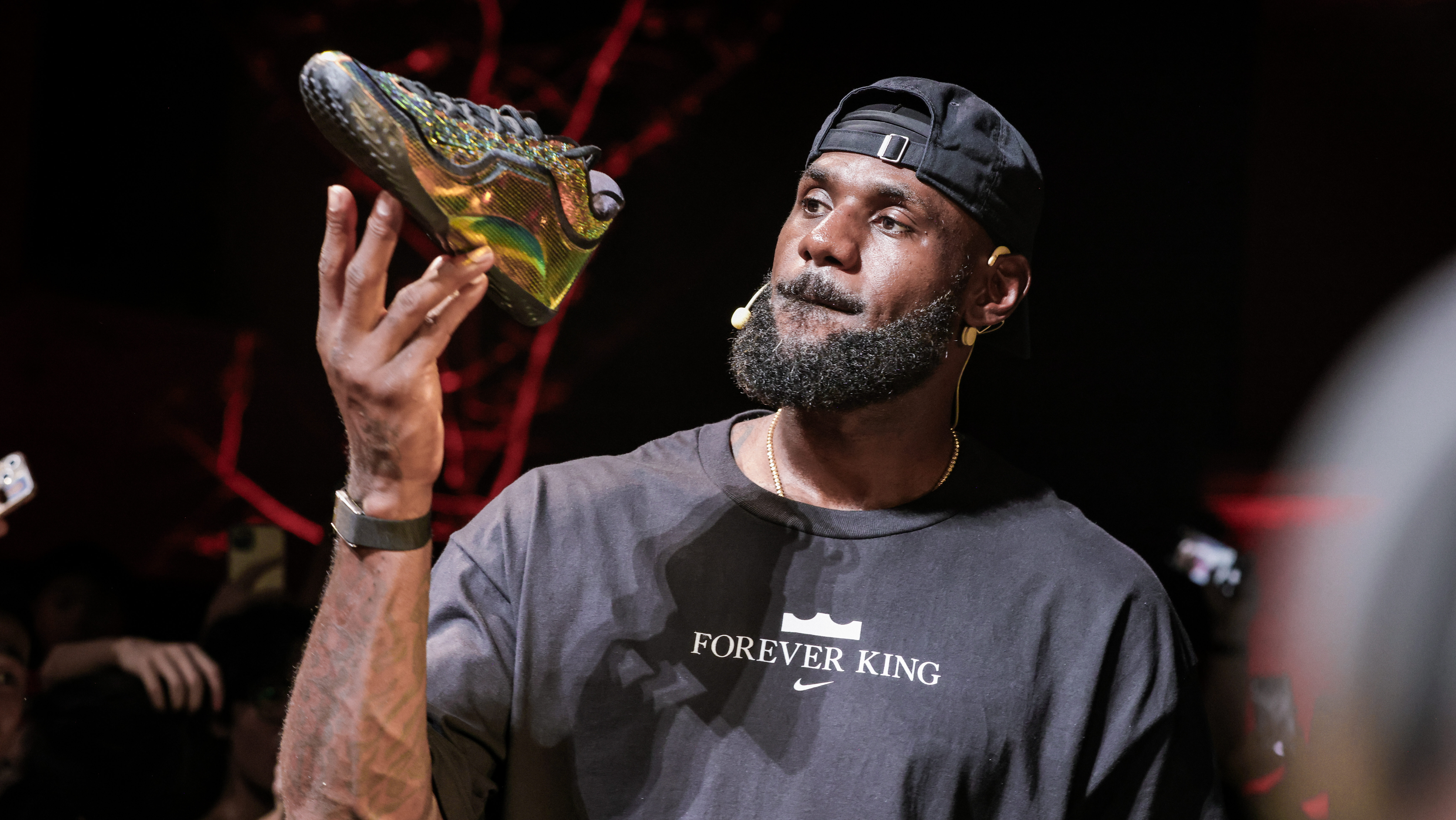
LeBron reflects on Nike’s future, the brand’s connection to younger generations, and why he believes it needs to listen more closely to the communities that helped shape its culture.
After two decades with Nike, LeBron James has become one of the most recognizable athletes in the history of the brand. As Nike navigates a period of scrutiny around its stock performance, cultural relevance, and connection with consumers, James believes the path forward starts with returning to the foundation that helped make the company what it is.
“You got to get back into the roots,” James told Rich Kleiman in the latest episode of Boardroom Talks at Game Plan Summit, which took place at Fanatics Fest.
For James, that means reconnecting directly with the communities that have long played a central role in Nike’s identity. He points to the importance of having people on the ground, listening to younger generations and understanding what they actually want.
“You got to get back to being out in the inner city, having runners,” James says. “How it was when I was coming up, you had people that was literally out in the communities talking to these younger generations, asking them what they like, what they don’t like, how do they feel about this? How do they feel about that?”
That kind of direct engagement, James says, is essential for a brand that wants to understand how it is being received beyond the stock market. For Nike, the challenge is not simply about business performance. It is also about maintaining a meaningful connection with the people and communities that helped shape its culture.
James has been one of the most prominent faces associated with Nike for more than 20 years, making his perspective particularly significant as the brand considers its next chapter. But he also sees responsibility extending beyond Nike itself.
“There’s a responsibility as a Nike athlete to rule supreme,” James says.
For James, Nike’s future begins with listening. The next generation is already communicating what it wants from the brand. The key, he suggests, is getting back into the communities and creating the kind of direct connection that once helped define Nike’s approach.
Read More:

The Blueprint: Jessica Holtz Meets the Moment
The Power Broker: Emma Grede Is Just Getting Going

Quiet Power: Imani Ellis on CultureCon, Creators, and Learning to Let Go

The Long Game: How LeBron James and a Few NBA Friends Might Elevate the Game of Golf
Savannah James and April McDaniel on Navigating Money, Friendship, and Business