
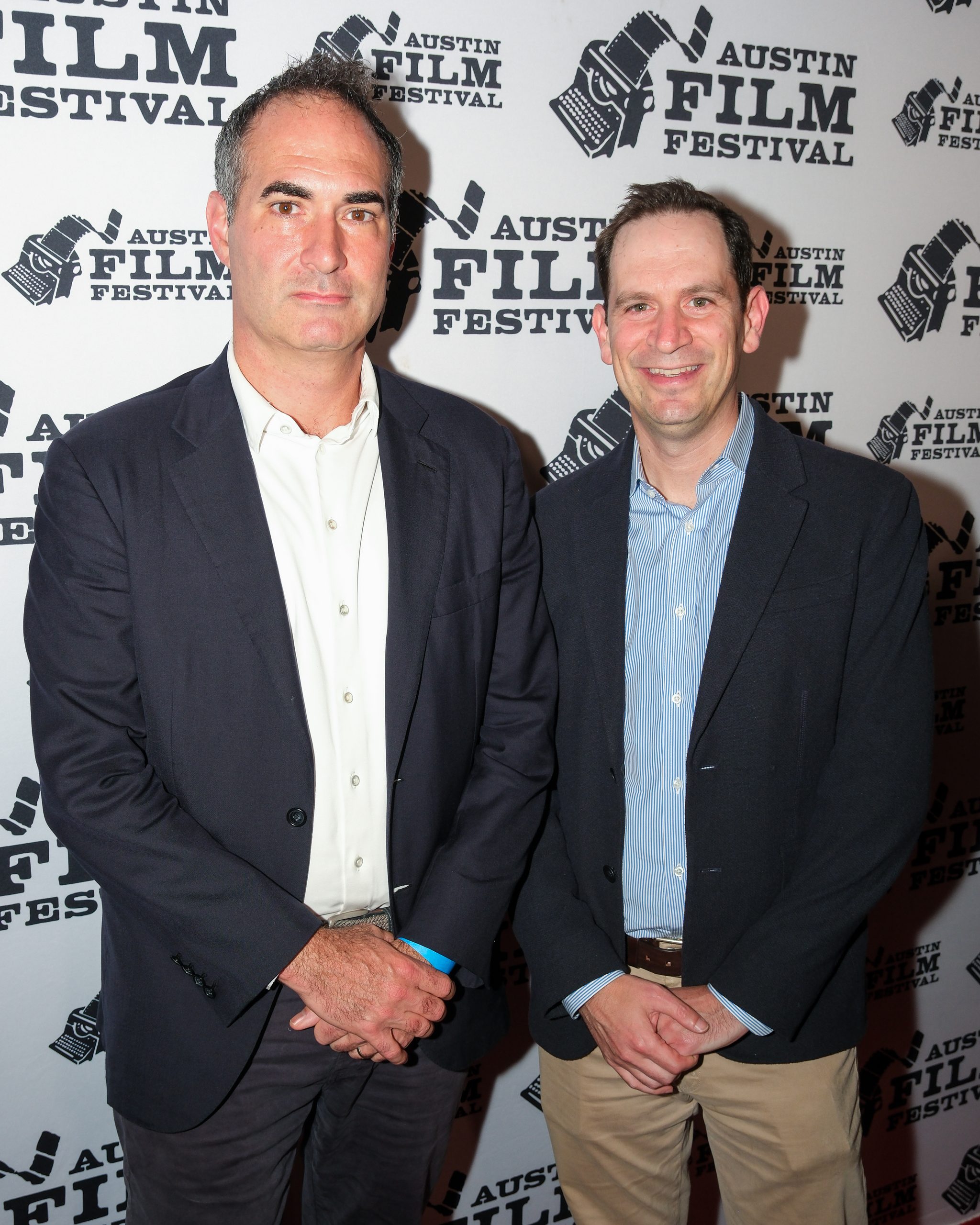
Two and a half years, more than 80 interviews, and a deep archive. The producers behind the ESPN docuseries explain why the legendary coach wanted it all on the table.
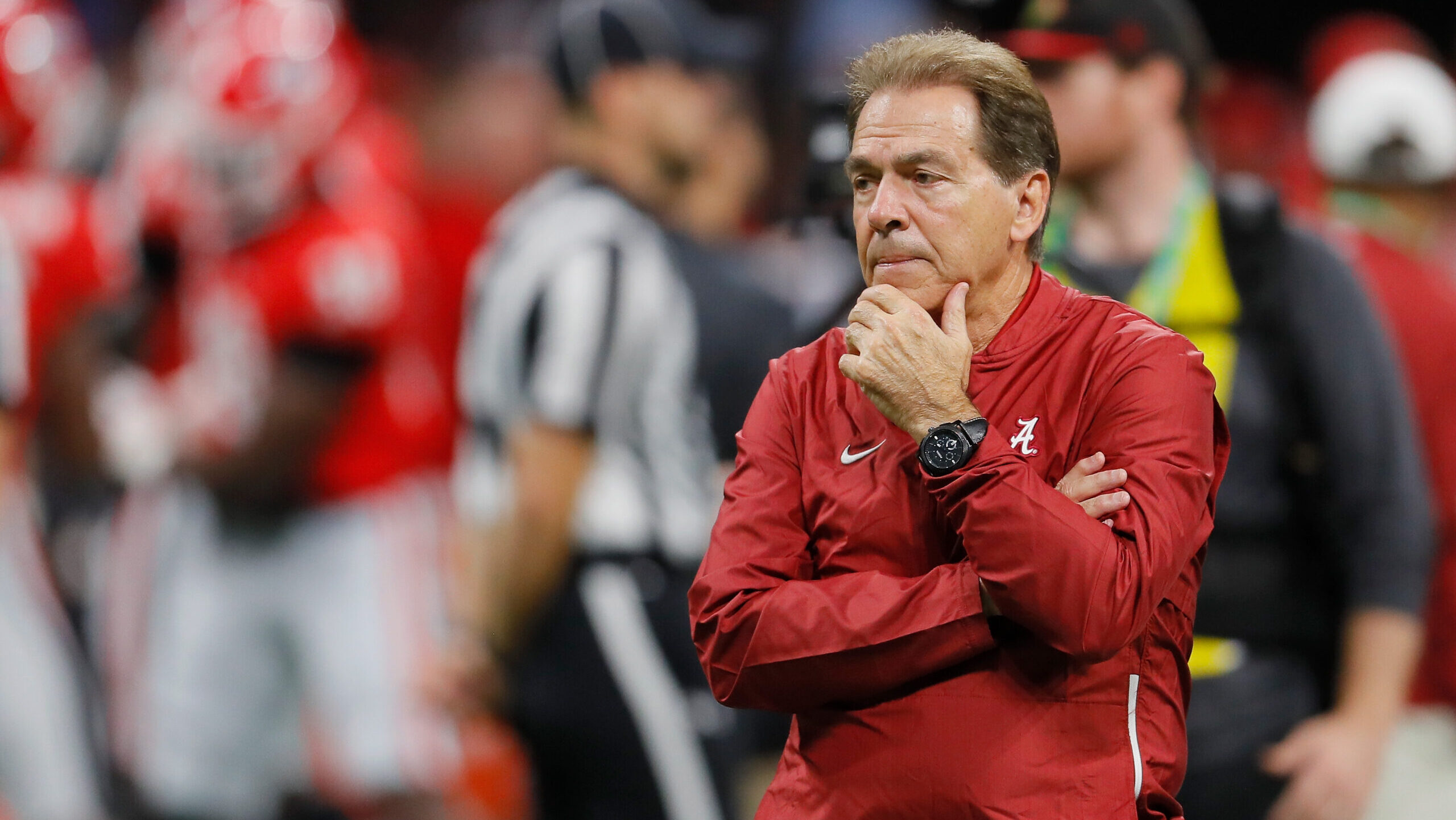
For nearly 20 years, Nick Saban was one of the most televised men in the United States. Yes, he’d been coaching in some capacity since the ‘70s, and found success at other schools like Michigan State, but it was when he became the head coach of Alabama that Saban became as much of a superstar as a college football coach could be. But how, exactly, does one become a coaching legend? What does it take? You won’t find the answer if all you’ve seen are his post-game interviews or if you watched him on the sidelines at Crimson Tide games surveying the gridiron. Nah, you need to dig into everything, like the decade-and-a-half archive of pregame, halftime, and postgame speeches that no one outside of the team had ever seen. When producers Connor Schell and Aaron Cohen started work on SABAN, the six-part docuseries that premiered on ESPN in October, Coach Saban told them in their first meeting that if they were going to do this, they had to tell the whole thing. So the archive, which featured over 100 hours of video, was theirs.
But how deep or incisive can a documentary be if it’s made with the full cooperation of the subject? Schell and Cohen have spent a long time on that question, Schell especially, since he helped build 30 for 30 at ESPN before telling stories at Words + Pictures with Cohen. The SABAN series took two and a half years and more than 80 interviews, and almost nobody turned them down. Former players who had been on the wrong end of Saban’s temper sat for it, and so did assistants who left and became rivals, and so did Dr. Rosen, a psychiatrist in East Lansing who helped Saban work out what came to be his process and who had never spoken to the media before. The pick-six is in there. So are the Dolphins years.
Two days before Alabama played Georgia, Cohen and Schell hopped on Zoom while in Tuscaloosa to talk about SABAN got made, what it was like to work with the legend, sifting through his archive of video, and whether a story told with permission can still be the whole story. They think it can. What do you think?
This interview has been edited for clarity and length.
BOARDROOM: You’ve both been through many show and doc launches. How does this one feel?
CONNOR SCHELL: It feels great. We’re both in Tuscaloosa. There’s a premiere tonight that will be attended by Coach and Miss Terry, various other members of College GameDay, some former players, a bunch of the staff, and a ton of the Tuscaloosa community from the university and beyond.
We start working with Coach Saban, we’re telling his story along with Miss Terry’s story, their life together. Obviously, the central piece of it is his coaching career and specifically Alabama. Then you find a partner along the way in ESPN, who is the dream partner for a project like this. So then to land the plane, doing a premiere in Tuscaloosa two nights before Alabama plays Georgia in the biggest college football game of the year, right down the street from where we are, that feels amazing. It feels like this weekend Alabama football is the center of the sports world. And Coach Saban created that, or created the modern version of that.
He said that he and Miss Terry were “ready to tell their story.” How did you get them to that point?
SCHELL: They’ve lived an incredible life, and their journey is worthy of telling. He’s an incredible leader. One of the ways that he led, though, was by being fairly private. While he was very present in our lives on Saturdays and in press conferences, you didn’t know much about him, you didn’t know much about what went on inside the building, inside the locker room. Once he got out of coaching, he was ready to talk about all of that.
AARON COHEN: The really cool thing for us was how many people also wanted to be part of that story. There wasn’t a single person who said no to us, I don’t think. That includes his players, who, by the way, had tough relationships with him at some point because he was really hard on them. It included rivals, or former assistants who kind of became rivals. Everyone felt like this was one of the seminal sports stories of the 21st century.
He’s one of the most televised people in sports history. What was it like getting into that vault? Was there anything he and Miss Terry said to leave alone?
SCHELL: No. Coach is not someone who makes decisions lightly. But once he makes the decisions, he commits to them. That’s part of his whole process. The minute it was “We’re gonna do it,” it was, “We gotta tell the whole thing.” If you’re gonna focus on the process, it’s not all positive. There’s hard work, there’s failure, there’s setbacks along the way. It’s got to be real, and it’s got to cover all of that in order for it to be of value. That’s clearly how we feel as documentary filmmakers, but that came from him in literally the first meeting.
We’ve shot an archive of nearly every pregame, halftime, and postgame speech he’s given, and that’s been sitting on a server or in a vault, so to speak. There was no holding back on the story we could tell. When you coach like he coaches and hold people accountable like he holds people accountable, it’s not always super pleasant. And yet you find through the totality of it that the level of appreciation his players and former assistant coaches have for going through his system, and what that meant for their lives, is real. That’s something we’ve learned through 80-plus interviews.
COHEN: In Episode 1, there’s this five-minute section of basically the definition of an ass-chewing. But the ultimate moral of the story is what Coach says in the open, which is what his whole thing was about: getting ordinary people to do extraordinary things. We heard him say so many times things to the effect of, if I’m gonna get the best out of you, that doesn’t mean I should be nice to you. I’m gonna push you further than you want to be pushed, even further than you think you can be pushed.
SCHELL: Coach comes to Alabama in 2007, when he is 35 years into his coaching career. He’s an overnight success 35 years in the making. He had won a national championship at LSU, but it was not preordained at that point that he was the greatest coach in college football history. As sports fans, we see the end product, but we don’t necessarily understand the grind that it takes to get there.
As you went through his story, were there moments you looked back at and thought, “I thought this happened differently”?
As a sports fan who consumes everything, we have these things that we hold to be true in our heads. The things I held to be true two and a half years ago, when we started this, were: Alabama football’s always been a dynasty, the SEC has always been the dominant force in college football, and Nick Saban has always been the greatest coach in the sport. But when you start to dig into it, you understand that when ’07 came along, Alabama had had a string of coaches who had failed. The program was down, and some would say at rock bottom. The SEC wasn’t nearly what it is today. College football wasn’t nearly the spectacle that it is today.
Saban, at the point he was in his career, coming to Alabama at the point where they were as a program, was this perfect match. He redefines the program, he ultimately redefines the conference, and I don’t think it’s a stretch to say he changes the entire landscape of the sport. It could have gone a lot of different ways, and there are all these little what-ifs where maybe none of that happens.
For someone as big as him, did you go in and find yourself thinking, “This is not the way I thought it was at all”?
SCHELL: I think the flip side of that is he is very true to who you think he is. His relationship with his wife is beautiful, and it’s 50-plus years. They’ve made every decision together. Every single part of this journey is as much Miss Terry’s as it is Coach’s, and that’s real. And the discipline, the commitment to the grind, the focus on the journey, not the outcome — we live in this social media world where you’re bombarded with inspirational stuff all the time. But in his case, it’s real. He’s actually doing that every day.
The roster of talent you were able to pull for this is really impressive. Who was the most difficult to lock in?
COHEN: The coolest one for us was Dr. Rosen, who Coach Saban told us about in our early meetings. As we would say behind the scenes, he’s this Obi-Wan Kenobi behind Saban, a psychiatrist who he crossed paths with at Michigan State and who ultimately was integral in the creation of what became known as the process. He had never spoken to the media before. I think he’s now 90, and still working. Russ Dinallo and I went up to East Lansing to meet with Dr. Rosen. We had a really cool couple of hours with him, and at the end he agreed to do this for Coach and gave us this really cool interview. That by far is the most notable booking, as it were, in the series.
SCHELL: The rest of it, literally every single person said yes. It was hard to nail down the right time to do the Jalen Hurts interview, for instance, or the Derrick Henry interview, because those guys are busy with their own schedules. It’s pretty easy to get guys like that to give you five minutes in a locker room or at a podium. But in every single case, the reaction we would get is, “If I’m gonna do this, I gotta carve out real time,” in order to really talk to you about Coach, because of how meaningful it was in their lives, good or bad.
Is working with the talent in full cooperation on their documentary a help or a hindrance? How do you see the line either remaining or blurring in the future?
SCHELL: Not everything’s created equal. From day one, Coach Saban said he wanted to tell his story. I don’t love the expression “warts and all,” but he understood that in order for that story to have power, it had to have credibility and authenticity. So working in collaboration with him was a gift. It lets us get at a level of truth that we frankly couldn’t get at doing this without his involvement.
That said, we run a company that tells a lot of different stories. There are certain projects where a subject wants to assert some level of collaboration or control where the answer is absolutely not. You can’t tell that story in a real way with you being involved. We truly view this as our credibility is on the line every time out. If we start doing stuff that feels like a puff piece or an infomercial, we’re not going to be able to sell the next project to a buyer or to an audience.
In a creator-led economy, where people are taking more control of their own stories, how do you define the notion of arm’s-length journalism? That’s a very tricky line to navigate. Aaron’s the best story person I’ve ever worked with. He’ll write these detailed outlines, and we sat with Coach Saban and Miss Terry and went through what we thought the beats of the story were after a research period.
COHEN: The word I always come back to when we’re figuring out how to tell these stories is integrity. We want to be able to look ourselves in the mirror and look at the subject and say we told the full story and the whole story. These are authorized biographies, is what they are. There’s a great long history of significant figures partnering with a writer and saying, “You’ll tell my story.” The good books, just like the good films, are the ones that tell the whole story and put it in perspective. And we’re proud to say that was definitely the case here.
Read More:
How E-40 Outlasted Everybody by Never Chasing Anybody
Bread, Not Cred: CAA Sports’ Mike Levine on Team Over Ego, 20 Years In
Heavy Is the Head: 15 Years In, Davido Still Has Something to Prove
Isack Hadjar Talks Favorite Rappers, ‘Iceman,’ and What Makes a True Sports Car
The 15 Best Horror Sequels to Watch This Halloween