

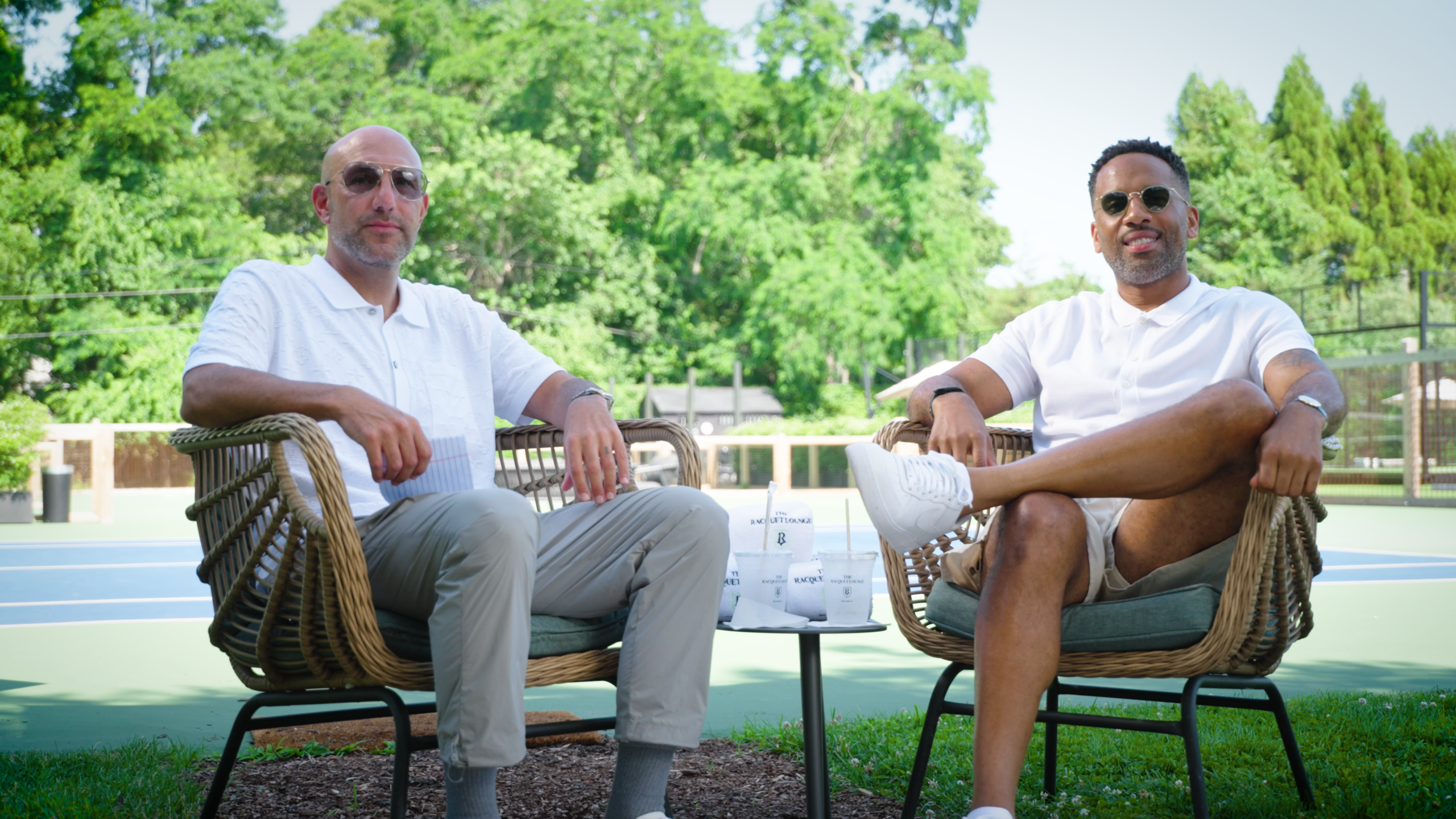
Mav Carter sits down for the latest episode of Boardroom Talks to discuss the lessons, risks, partnerships, and big swings that shaped his career alongside one of the greatest athletes ever.
For Maverick Carter, the end of LeBron James’ basketball career is less about mourning what’s ending than understanding what comes next.
After more than two decades spent building alongside one of the greatest athletes in history, Carter has spent plenty of time thinking about the day basketball is no longer the center of LeBron’s life. But he doesn’t see that moment as an ending so much as a transition.
“It’s funny. Sometimes it’s less sad. It’s more like, oh shit, in life, everything comes to an end,” Carter said during the latest episode of Boardroom Talks, recorded live in the Hamptons. “But it’s good that things come to an end in life because when things end, old things move out and new things move in. And that’s a great part of life.”
Carter knows there is no true replacement for what LeBron has experienced on the basketball court. The rush of a packed arena, the pressure of a playoff game, the feeling of hitting a shot that silences an opposing crowd — those moments cannot simply be replicated through another business venture.
But Carter’s job, in part, will be helping LeBron find what comes next.
“Replacing that feeling of when October rolls around, him going to his office to the practice and practice and playing is impossible to replace,” Carter said. “But we did talk a lot about literally thinking about what’s the next job for him.”
That next chapter will build on an ecosystem that has already grown far beyond basketball. Carter described LeBron’s business world as three interconnected pillars: the business of LeBron himself, the production company Fullwell, and the investment portfolio that the two longtime partners have built together.
Fullwell, where Carter serves as co-CEO and LeBron is chairman, has become a global production powerhouse behind projects ranging from The Kardashians and the Grammys to the opening and closing ceremonies of the 2028 Olympics. On the investment side, Carter and James have built positions in companies including Fenway Sports Group, Whoop, and Canyon Bikes.
The partnership with Fenway, in particular, became a defining moment in Carter’s evolution as a businessman. Before that deal, he was still learning the mechanics of building a company around LeBron. Then, during a meeting with IMG founder Teddy Forstmann, Carter realized the possibilities were far bigger than traditional athlete representation.
“I was like, ‘Oh, this thing is…’ Yeah. A, it’s bigger. And B, it’s just a natural feeling of like, ‘Oh, I’m in the big leagues now,’” Carter recalled. “I was like, wait, you can think that big? First off — there’s something over there that I haven’t even been to yet.”
That mindset has remained central to Carter’s approach. He describes himself as an optimist, a big swinger and, fittingly, a maverick. The goal has never been to simply follow an existing blueprint; it has been to create one.
“I always just wanted that feeling,” Carter said. “And it’s just human. I just wanted that feeling of that. You don’t even have to say nothing, just sitting and be like, ‘That’s always a thing that I want the most, that I’m chasing the most.’”
For Carter, that may be the clearest measure of success: building a life and career that earns the respect of the people he respects most, while continuing to find the next big thing to build.
Read More:
Michael Che Opens Up About SNL, Kanye, Colin Jost, Cancel Culture, & Comedy

Red Hook Tavern: Where Billy Durney Wants to Know Your Name
Keanu Reeves’ Next Act Is Built on Two Wheels

The Blueprint: Jessica Holtz Meets the Moment
The Power Broker: Emma Grede Is Just Getting Going