

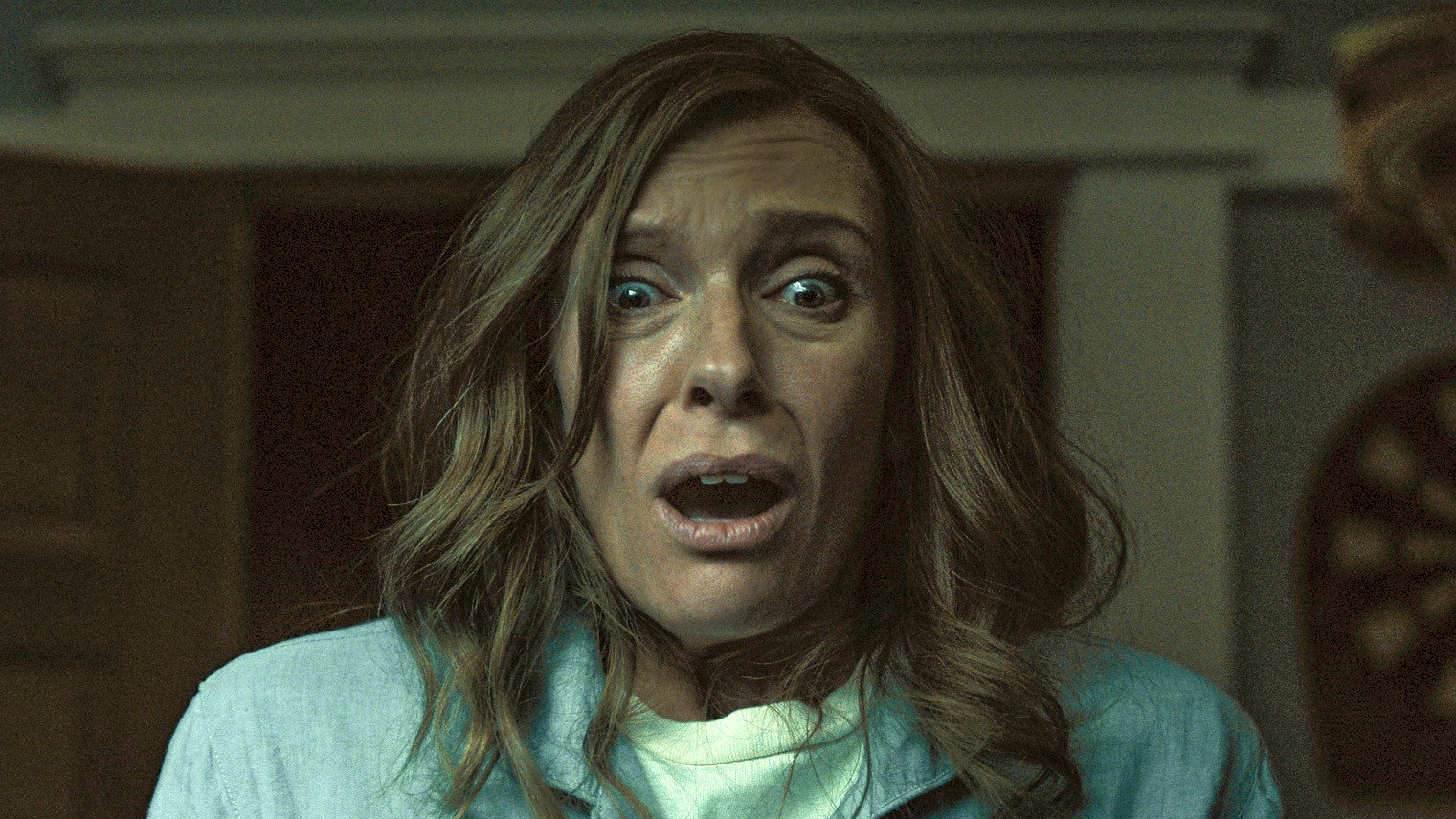
A cinematic screamfest curated by the Boardroom team — celebrating the films that changed horror forever and continue to haunt us in the best way possible.
What better way to celebrate Halloween than with a good old-fashioned horror movie marathon?
Whether you’re into supernatural hauntings, psychological breakdowns, or stories so unsettling they linger long after the credits roll, there’s nothing like dimming the lights, grabbing your snacks, and pressing play on a film that makes your heart race.
At Boardroom, we didn’t rank these movies by box office numbers or fancy film-school metrics. We picked them based on something much more real: their impact on horror culture and how downright terrifying (and thrilling) they are to watch. These are the films that redefined fear, created icons, and reminded us why we love to be scared in the first place.
So, if you’re looking for your next Halloween watchlist, consider this our definitive guide to the scariest, smartest, and most unforgettable horror films ever made.
Boardroom’s Picks
Hereditary (2018)
Directed by Ari Aster
Worldwide Box Office: $80.9 million
A modern masterpiece of grief and terror, Hereditary topped our list as one of the few films everyone in the office agreed was pure, undiluted horror. Aster’s feature debut turned family trauma into something cosmic and unforgettable. It’s not your typical horror movie. Hereditary doesn’t rely on jump scares or overdone supernatural entities — instead, it uses realistic storylines with situations that are deeply unsettling and uncomfortable to watch. The true horror is the dread that drags on and grows throughout the film. You feel every bit of the characters’ helplessness — and that’s way spookier than a haunted house or a cheap scare. Highly recommend.
Psycho (1960)
Directed by Alfred Hitchcock
Worldwide Box Office: $32.3 million
Tune into the latest season of Netflix’s Monster if you want to learn all about how Ed Gein, aka the Butcher of Plainfield, turned into America’s first known serial killer. But stay if you want to learn how he went on to influence generations of horror auteurs, including Alfred Hitchcock, who was looking for a way to connect to an audience that was becoming increasingly desensitized by the world at large. It’s a phrase used far too often, but Hitchcock’s fictionalized take on Gein’s horrific crimes completely changed everything: The way films were made, the way the horror genre was seen by the masses, and the public’s expectations for pop art.
The Shining (1980)
Directed by Stanley Kubrick
Worldwide Box Office: $46.8 million
All work and no play makes Jack a dull boy. The Shining is Kubrick’s haunting masterpiece — a film that redefined what psychological horror could be. The Overlook Hotel isn’t just a backdrop; it’s the film’s true villain, a sprawling and sinister force that drives its guests toward madness. Jack Nicholson’s transformation from struggling father to deranged killer is one of the most chilling performances in cinema history.
The film is filled with unforgettable moments, but none more seared into memory than the infamous bathroom scene — a grotesque vision that marks the point of no return for Jack Torrance. The Shining proved that horror can be more than cheap scares; it can be art — an exploration of isolation, obsession, and the darkest corners of the human mind.
Alien (1979)
Directed by Ridley Scott
Worldwide Box Office: $109.1 million
Few films have left a mark on both horror and science fiction the way Alien has. Ridley Scott’s slow-burn thriller took the terror of the unknown and launched it into deep space, blending atmospheric dread with groundbreaking creature design. The film’s claustrophobic tension and unforgettable tagline — “In space, no one can hear you scream” — set a new standard for cinematic fear.
More than four decades later, Alien has evolved into a full-blown franchise spanning sequels, prequels, comics, and games, each adding to the mythology of the Xenomorph and the doomed Weyland-Yutani Corporation. What began as a single film about survival in the void became a genre-defining universe that continues to inspire today.
The Silence of the Lambs (1991)
Directed by Jonathan Demme
Worldwide Box Office: $275.7 million
The Silence of the Lambs is as close to a perfect film as the horror-thriller genre gets. From its opening scene to Hannibal Lecter’s chilling final phone call, it traps you in a world that’s disturbing, claustrophobic, and utterly hypnotic. Anthony Hopkins delivers one of cinema’s most outstanding performances as Lecter — a villain so charismatic you almost forget he’s a cannibal. His electrifying chemistry with Jodie Foster’s Clarice Starling anchors the film, turning their psychological chess match into its true heartbeat.
The movie didn’t just redefine the serial killer genre; it set a new standard for it. Its influence can be traced across decades of film and television that followed. The Silence of the Lambs remains timeless: elegant, terrifying, and impossible to look away from, even as it makes your skin crawl.
Halloween (1978)
Directed by John Carpenter
Worldwide Box Office: $70.0 million
Before Halloween, the idea of a masked killer stalking suburbia didn’t exist the way we know it now. John Carpenter’s low-budget thriller introduced the world to Michael Myers: an emotionless, unstoppable figure who became the blueprint for slasher villains for decades to come. His blank, white mask and slow, deliberate movements turned something as ordinary as a quiet neighborhood street into a nightmare.
What makes Halloween endure isn’t just the blood or the body count; it’s the atmosphere. Carpenter’s eerie score, the stillness of Haddonfield, and the way fear lingers in every shadow transformed a simple premise into a horror legend.
The Exorcist (1973)
Directed by William Friedkin
Worldwide Box Office: $428.9 million
Even over 50 years later, The Exorcist still feels like the scariest film ever made. The story of a young girl possessed by something truly evil shocked audiences in ways no one was ready for, and honestly, it still does. Between the spinning heads, the chilling whispers, and that staircase scene, it’s horror that seeps into your soul and stays there.
What makes The Exorcist timeless is that it’s about faith, fear, and what happens when neither can save you. Friedkin turned religious horror into prestige cinema, and every film about possession that’s come since owes it a debt.
Jeepers Creepers (2001)
Directed by Victor Salva
Worldwide Box Office: $58.9 million
In 1990, siblings Ray and Marie Thornton were driving through a town in Michigan when they were tailgated by a man named Dennis Depue. After riding their bumper, Depue went around them and sped off. The siblings later drove past a school building where they claimed to have seen Depue disposing of a bloody object. They alerted the police, who then tracked Depue down and engaged in a shootout with him before he took his own life. Director Victor Salva won’t admit that the story had any bearing on the film he wrote and directed, but the similarities are striking. What’s more striking is the movie’s monster antagonist, which looks like something that fell out of Guillermo Del Toro’s sketchpad. Fast-paced and as fun as it is terrifying, Jeepers Creepers delivered a novel horror thriller at a time when reboots were running the game.
The Blair Witch Project (1999)
Directed by Daniel Myrick & Eduardo Sánchez
Worldwide Box Office: $248.3 million
The Blair Witch Project was a twisted, mind-bending experience, especially for anyone who saw it in theaters back in ’99. Shot entirely as found footage, it dropped viewers into the chaos with no clear sense of what was real or staged. The shaky camera, the terrified whispers, the complete lack of answers — it all felt disturbingly real.
The marketing only made it more unsettling. The filmmakers released a fake “documentary” with interviews from the so-called missing students’ families, blurring the line between fiction and reality. It was one of the first movies to weaponize the internet and word-of-mouth to create fear. Before viral marketing was even a thing, The Blair Witch Project made us all believe the nightmare might be real.
Get Out (2017)
Directed by Jordan Peele
Worldwide Box Office: $255.6 million
Jordan Peele flipped the horror genre on its head when Get Out was released, using it as a mirror to expose the everyday horrors of race, privilege, and performative allyship. What looked like a simple meet-the-parents weekend turned into one of the smartest, most unsettling thrillers of our time.
The beauty of Get Out lies in its remarkable realism. The tension, the microaggressions, the smiling faces masking something sinister — it all hits way too close to home. Peele proved that horror doesn’t need monsters or ghosts to be terrifying; sometimes, the scariest thing in the room is polite society itself.
Poltergeist (1982)
Directed by Tobe Hooper
Worldwide Box Office: $121.8 million
Many don’t think of horror when they think of Steven Spielberg. Instead, they think of family-friendly blockbusters like E.T. or Indiana Jones. But the Ohio-native knows how to spin a fantastically frightening yarn. (It’s not a horror film, but don’t tell me you weren’t shook the first time the Tyrannosaurus Rex popped out in Jurassic Park). While most bring up Jaws, Poltergeist is the prototypical Spielberg horror flick. Unable to direct it due to the filming of E.T., Tobe Hooper jumped in to helm the story of a family dealing with their increasingly terrifying interactions with ghosts haunting their home. The special effects may seem hokey and ineffective now, but the story and the performances, like most Spielberg flicks, still hold up.
The Descent (2005)
Directed by Neil Marshall
Worldwide Box Office: $57.1 million
Nightmare fuel comes in many forms, but one of the most potent is being trapped in a space with a predator inching ever closer to you. The horror canon has no shortage of those types of films, and one of the absolute best is Neil Marshall’s 2005 banger about a group of friends who take a weekend off to go caving, only to discover that the caves they’re exploring are not what they seem. Claustrophobic and manic, The Descent is an intense ride that doesn’t let up until the very last frame, just like a nightmare.
Midsommar (2019)
Directed by Ari Aster
Worldwide Box Office: $46.7 million
Midsommar is not your typical horror movie — it’s bright, slow, and almost hypnotically beautiful, which somehow makes it even more disturbing. Ari Aster takes the concept of grief and heartbreak and sets it against a backdrop so sunny and serene it’s disorienting. You’re watching this nightmare unfold in broad daylight, surrounded by flowers and smiling faces, and yet you can feel the dread building with every frame.
The way Midsommar unpacks grief, codependency, and emotional manipulation hits different. It’s a breakup movie disguised as a cult horror, and Florence Pugh delivers a performance that’s both heartbreaking and terrifying. By the time the credits roll, you’re not sure whether to cry, cheer, or run for your life — and that’s precisely why it works.
Barbarian (2022)
Directed by Zach Cregger
Worldwide Box Office: $45.4 million
If you haven’t seen Zach Cregger’s film about an Airbnb stay gone awry, you should stop reading this and go watch it right now. It’s one of those movies that works best when you know as little as possible about the plot. With that in mind, we’ll leave you with this: Everything you love about your favorite horror films —the settings, the setup, the villain, the consequences, the tone, etc — can be found within the 102 minutes of Barbarian.
The Witch (2015)
Directed by Robert Eggers
Worldwide Box Office: $40.4 million
Robert Eggers is a master of mood. He builds his worlds slowly and methodically, with each scene slithering into place and lingering just long enough to make you question everything. The best example is his debut feature, The Witch. Centered around a New England family in the 1600s dealing with an evil presence, The Witch is most effective when not much is happening. Eggers uses light and shadow to astounding effect. When paired with Mark Korven’s creepy score, the movie turns into a meditation on madness. It eschews the gore and campiness that usually go hand-in-hand with most possession flicks that take place on farms or in the wilderness. Instead, it places the viewer right in the middle of the craziness, forcing you to reckon with harm unfolding in front of you.
The Strangers (2008)
Directed by Bryan Bertino
Worldwide Box Office: $83.1 million
The Strangers is one of those movies that sticks with you, mainly because it feels like it could actually happen. There’s no supernatural twist, no elaborate motive, just pure, senseless terror. Three masked intruders arrive at a quiet house in the middle of the night, completely shattering any illusion of safety.
What makes it so effective is the simplicity. The silence. The slow pacing. The line “because you were home” might be one of the coldest things ever said in a horror film. It’s not flashy or overdone; it’s real, intimate, and horrifying in the most human way possible. The Strangers proves you don’t need monsters when the scariest thing imaginable is already out there: people.
Audition (1999)
Directed by Takashi Miike
Worldwide Box Office: $363.8 thousand
Most horror movies telegraph the scare—you know when to brace yourself. Not here. Takashi Miike sets you up like it’s a slow-burn rom-com, then flips the whole thing on its head. What starts as a lonely widower looking for love turns into one of the wildest, most stomach-turning third acts in movie history. It’s calm for so long you almost forget you’re watching a horror flick—until you realize you’ve been trapped right alongside him. Audition isn’t just scary—it’s disrespectful in the best way possible.
A Quiet Place (2018)
Directed by John Krasinski
Worldwide Box Office: $334.9 million
A Quiet Place is one of those rare horror films that hits you right in the heart. It’s terrifying, yes — every sound feels like a death sentence — but it’s the emotional core that makes it unforgettable. Watching John Krasinski and Emily Blunt navigate parenthood in a world where silence means survival feels extra powerful knowing they’re married in real life. That real chemistry bleeds through.
It’s a film about monsters, sure, but more than that, it’s about family — about sacrifice, protection, and the quiet, unspoken ways we show love. By the end, you’re not just scared for them; you’re heartbroken with them. A Quiet Place proves that sometimes the loudest emotions are the ones never spoken at all.
The Gift (2000)
Directed by Sam Raimi
Worldwide Box Office: $44.6 million
This one comes courtesy of Boardroom Co-founder and Co-CEO Rich Kleiman — The Gift is his pick. Directed by Sam Raimi before his Spider-Man fame, the film is a slow-burning Southern Gothic thriller that leans more on mood and mystery than outright horror. It follows a small-town psychic, played by Cate Blanchett, who becomes entangled in a murder investigation that blurs the line between intuition and obsession.
What makes The Gift stand out is its restraint. It’s eerie without being over-the-top, and Raimi’s direction gives every shadow and whisper a purpose. Blanchett’s performance grounds the supernatural in something deeply human — grief, guilt, and the burden of seeing what others can’t. It’s an under-the-radar gem that proves sometimes knowing too much is scarier than the unknown.
The Texas Chainsaw Massacre (1974)
Directed by Tobe Hooper
Worldwide Box Office: $30.9 million
Many credit John Carpenter or Wes Craven for inventing modern horror, but Tobe Hooper got there first. The Texas Chainsaw Massacre isn’t about perfectly staged scares or supernatural terrors—it’s about the raw, unrelenting horror of real people doing unspeakable things. Shot on a shoestring budget in the sweltering Texas heat, Hooper’s film feels less like fiction and more like a found artifact of pure madness. There’s no Hollywood gloss—just the whirring of a chainsaw, the screams of the doomed, and the unnerving feeling that you’re watching something you shouldn’t be. And 50 years later, it’s still one of the most disturbing and influential films ever made.
Sinister (2012)
Directed by Scott Derrickson
Worldwide Box Office: $82.5 million
Sinister proves that sometimes the scariest thing isn’t what’s hiding in the dark. Ethan Hawke stars as a true-crime writer who moves his family into a house with a grisly past, only to discover a box of home movies that reveal something much worse than murder. What starts as a curiosity quickly unravels into a nightmarish descent into obsession, guilt, and pagan horror. The grainy film reels, the unsettling sound design, and that ghastly figure lurking just out of focus all work together to make Scott Derrickson’s film a modern horror classic.
Wrong Turn (2003)
Directed by Rob Schmidt
Worldwide Box Office: $28.7 million
Wrong Turn is pure, unapologetic early-2000s horror — the kind that doesn’t waste time explaining itself. A group of friends takes a shortcut through the West Virginia woods and instantly regrets every decision that led them there. What follows is brutal, relentless, and precisely what you’d expect when you mix isolation, backroads, and locals you should’ve never crossed paths with.
It’s not trying to be deep or symbolic — it’s just good, gory fun. The movie taps into that primal fear of being lost somewhere no one can hear you scream, where nature itself feels hostile. Wrong Turn isn’t high art, but it doesn’t need to be. It’s the kind of horror flick that reminds you why you’ll never, ever take the scenic route again.
30 Days of Night (2007)
Directed by David Slade
Worldwide Box Office: $80.3 million
Forget Twilight — David Slade’s 30 Days of Night delivers vampires the way they should be: animalistic, merciless, and straight up terrifying. Set in the isolated Alaskan town of Barrow, where the sun disappears for a month each winter, the film capitalizes on a natural phenomenon as a perfect setup for horror. Josh Hartnett plays Sheriff Eben Oleson, who leads a small group of survivors fighting to outlast the darkness as the vampires feast. The concept is simple, the execution brutal, and the atmosphere thick with dread. It’s a bleak, stylish survival story that reminds you how scary the dark can be when there’s no light on the horizon.
Paranormal Activity (2007)
Directed by Oren Peli
Worldwide Box Office: $194.2 million
Fifteen thousand dollars. That’s how much writer/director Oren Peli and producer Jason Blum spent to shoot what would become Paranormal Activity. They wound up spending $200,000 more to redo the sound design and the score and to shoot a better ending at the behest of a little-known producer named Steven Spielberg. But, even with the price tag at $215,000, Peli’s debut feature film was still a miracle. Using nothing more than a few camcorders, an empty crib, and a few no-name actors, the film flipped the genre on its head. The scares are hard-earned and come unexpectedly, forcing you to really lock in to ensure you don’t miss the next one. This wasn’t the first budget horror film, but it was the first one that treated its budget as a creative constraint. It was a genius piece of filmmaking. And its nearly $200 million box office proved it.
The Conjuring (2013)
Directed by James Wan
Worldwide Box Office: $319.5 million
Has any director had a bigger impact on the horror genre in the past 20 years than James Wan? Doubtful. After breaking onto the scene with Saw — a film made for $1.5 million that went on to gross over $100 million at the box office — in 2004, Wan redefined what the modern horror film could be. Instead of riding the Saw train into the sunset, Wan branched out and began experimenting with story and tone, directing films like Dead Silence and Insidious, which reminded viewers that horror films didn’t need to exist only to frighten. The pinnacle of that idea is The Conjuring, which finds Patrick Wilson and Vera Farmiga starring as the infamous demonologists Ed and Lorraine Warren. They travel to Rhode Island to assist a family dealing with a supernatural entity haunting their home, where they find their wits and mettle tested. The film is scary, yes, but that’s just a bonus. Like the best horror movies, it’s also well-acted, well-written, well-directed, and well-edited.
Read More:
Red Hook Tavern: Where Billy Durney Wants to Know Your Name
Keanu Reeves’ Next Act Is Built on Two Wheels

The Blueprint: Jessica Holtz Meets the Moment
The Power Broker: Emma Grede Is Just Getting Going

Quiet Power: Imani Ellis on CultureCon, Creators, and Learning to Let Go