
Don King, a crazy Pepsi commercial, and a promoter who lost $22 million. The Victory Tour was a disaster for almost everyone — except Robert Kraft.
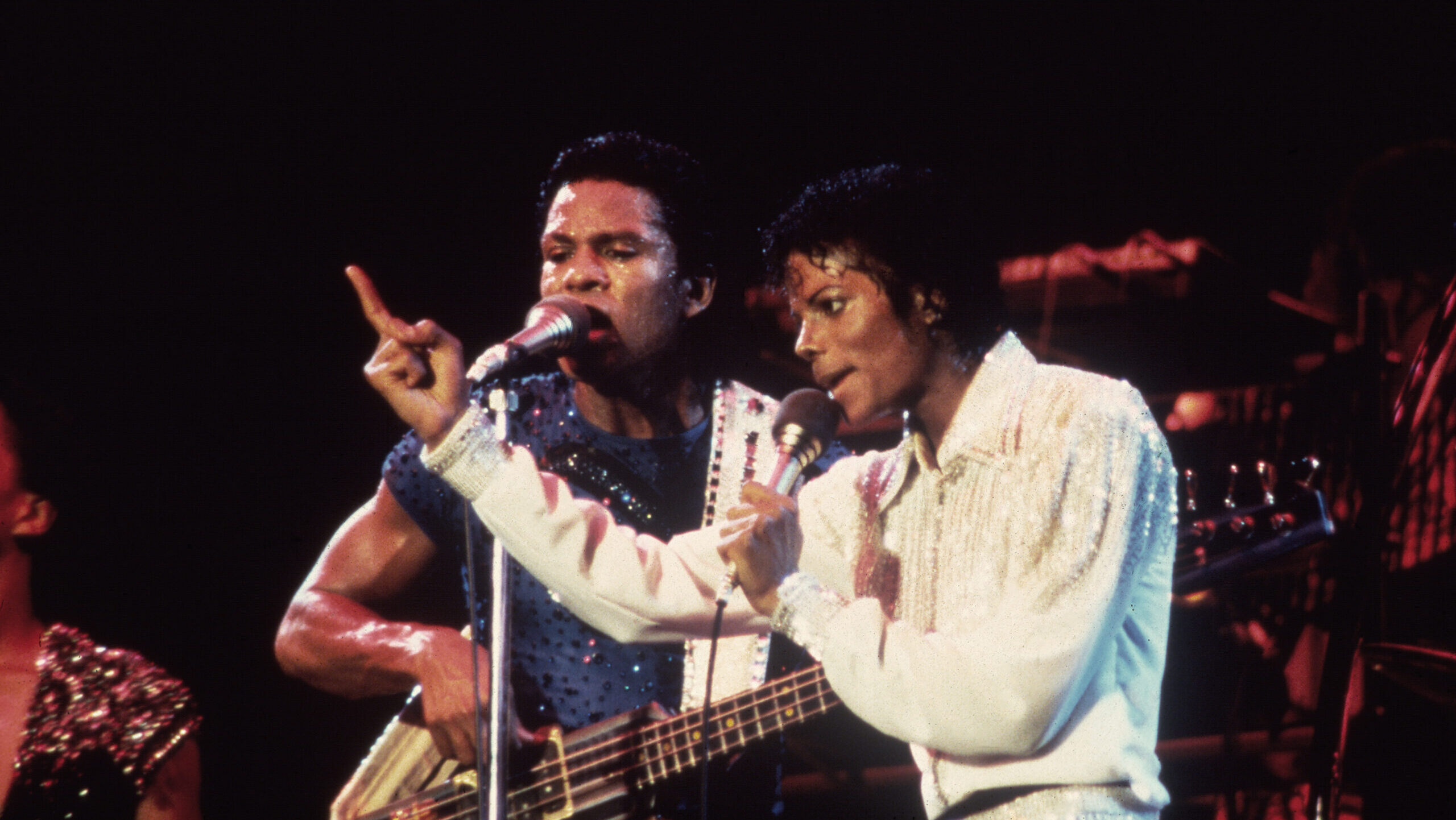
Towards the end of the Michael Jackson biopic Michael, which has already pulled in over $227 million at the global box office, Michael’s in the midst of gaining independence from his father (and manager), Joe Jackson, when Joe calls on Don King to devise a tour surrounding The Jacksons’ 1984 Victory album as a way to siphon Michael’s growing success into Jackson family dollars. In the end, it led to Michael’s biggest act of rebellion towards his father, surprising his family live on-stage with the announcement that the “Victory Tour” would be ending.
What’s more amazing is that, even though the movie gives you an idea how tumultuous the Jacksons’ “Victory Tour” was, the real story is stranger than fiction and somehow ends with Robert Kraft owning the Patriots. Here’s how it all went down.
Released in November of 1982, Michael Jackson’s Thriller owned 1983 — it’s crazy to think that Thriller spawned six singles before the title track’s release in November 1983. Clearly, Michael was white-hot, building on the success of his solo album Off the Wall into the monster that was Thriller. The same month as the release of the “Thriller” single, all six Jackson brothers held a press conference, announcing that Don King was putting up $3 million to help kickstart the “Victory Tour,” with an album to be recorded and released before the start of their tour.
According to reports, Michael was reluctant to join the tour, but it was his mother, Katherine, and the devotion of Jackson family fans that persuaded him to do so. During the press conference, Michael didn’t want to make it about himself and instead spoke about his brothers. However, when it came to the actual tour, it ended up looking like the Michael Jackson and the Jacksons Show. The bulk of the material the group performed was from Off the Wall, Thriller, Jermaine Jackson’s then-newly released solo album Jermaine, and throwback Jackson Five hits. That’s right, the big Jackson Family “Victory Tour” included zero songs from the Victory album.
Sadly, the turmoil surrounding the “Victory Tour” didn’t only stem from the Jackson family drama. Despite linking with Don King at the outset, the Jacksons did not have a proper promoter lined up for the tour. Chuck Sullivan, son of New England Patriots founder Billy Sullivan and owner of Foxboro Stadium, stepped in. The Victory Tour consisted of 55 tour dates, with 53 in large stadiums — yes, the Jacksons were popping for real in the early ’80s; most of them were out to see a Thriller-era Michael Jackson moonwalk with the sequined glove on.
Sensing an opportunity, Chuck got Stadium Management Corp., the organization that operated Foxboro Stadium, to take on the promotion of the entire “Victory Tour,” as he expected it to gross between $70 million and $80 million overall. He offered the Jacksons almost 84 percent of gross potential ticket revenues, which was something like 25 points above industry standard at the time. Chuck even put up Foxboro Stadium itself as collateral, in part to help pay the almost $37 million he guaranteed to the Jacksons for embarking on the tour. Chuck’s dealings didn’t stop there. He found a way to spread 26 of the 55 dates across 17 NFL stadiums, making deals to pay some stadiums less than usual for this kind of concert, likely to help curb the money SMC would have to pay out to keep “Victory” going.
With the tour’s costs skyrocketing, the Jacksons sought corporate sponsorship. They reportedly had a deal on the table with Quaker Oats, but King previously had a deal (for less money) with Pepsi that the Jacksons felt they couldn’t turn down. This involved them being featured in two Pepsi commercials — a brand Michael reportedly didn’t even drink — and during the filming of one of those commercials, Michael’s hair caught fire during a pyro stunt, leaving him with second- and third-degree burns on his scalp.
Outside of the family’s financial woes, fans were trying to figure out how to even afford to see the show. A plan was devised by King, Sullivan, and Joe Jackson to offer a lottery for Victory Tour tickets. A form would be sent out in newspapers, and eager fans would have to send in a $120 money order, with the idea that they’d win a block of four $30-priced tickets to the Victory Tour. A $30 ticket was the highest cost for a concert ticket at the time, and despite Michael warning his brothers that it would be a PR nightmare, they went through with it. And, just like Mike predicted, there was major backlash.
It’s sad because it was actually a great show, mostly remembered for an undeniable Michael Jackson at the beginning of his real solo stardom. Yet, despite the media reporting sold-out shows across the country, the money Sullivan thought he’d generate just wasn’t piling up. The stage Michael designed was so large that, at times, it would take up available seating in the stadium, and required over 30 trailers to transport it. This, plus a number of other rising fees, meant that the “Victory Tour” cost Sullivan about a million dollars a week to put on, leaving him unable to pay the $24 million balance on the advance. Some of those fees were eaten up by the Jacksons themselves. The tension in the family meant they flew and slept separately from the rest of the Jacksons, often on private jets rather than commercial flights. Their squabbling divided the brothers into factions, with Michael and Jermaine represented separately. One could imagine that their individual success made it hard to put on a tour representing the entire family. Over the course of the 55-date tour, their bond as brothers was fractured like never before.
As the “Victory Tour” wound down, everything surrounding it fell apart. A number of shows had to be canceled due to poor ticket sales, and Sullivan’s actual profit from the tour was dwindling, although, due to the deals he’d made previously, the Jackson brothers did end up making money — roughly $7 million each (with all of Michael’s proceeds reportedly going to charity). As a result, Sullivan started planning to turn this into a real world tour, with dates discussed for both Europe and Australia, but once he got word of it, Michael was done. That was when, at the end of six sold-out shows in Dodger Stadium, Michael announced that the “Victory Tour” was ending, dashing out any plans Sullivan was concocting to recoup on his investment.
How much did Sullivan end up losing in his failed attempt at concert promotion? The figure is said to be between $13 million and $22 million, forcing the Sullivans to put the New England Patriots and Foxboro Stadium up for sale for $100 million. Victor Kiam ended up buying the Patriots in 1988, but had to sell the team in 1992 to James Orthwein, which is where the Patriots’ current owner Robert Kraft enters our story. Kraft first acquired Foxboro Stadium after it was lost to bankruptcy, and used it to block the Patriots from moving to St. Louis, then further imposed his will to keep the team from leaving Foxboro. Unable to move the team, Orthwein put the Patriots up for sale, but no prospective buyers wanted to deal with Kraft. That left Kraft as the best option, and he ended up purchasing the Patriots in 1994 for $172 million, the highest price paid for an NFL team at the time.
Word on road is Kraft keeps a “Victory Tour” poster in his office to remind him of how he got there. One has to imagine that if Chuck Sullivan, who passed away earlier this year, had any “Victory Tour” posters left in his home, he would have stomped on them. Oh, the torture!
There Is No Offseason: KLUTCH Sports Group COO Fara Leff on Commanding the Sports Calendar
Michael Che Opens Up About SNL, Kanye, Colin Jost, Cancel Culture, & Comedy
Red Hook Tavern: Where Billy Durney Wants to Know Your Name
Keanu Reeves’ Next Act Is Built on Two Wheels

The Blueprint: Jessica Holtz Meets the Moment