

From The Sopranos to Succession, the network has spent three decades proving that its old tagline wasn’t just marketing.
HBO has always operated on a simple, arrogant premise: that it’s not regular television. For most of its history, it’s been right.
The network that once sold itself on boxing matches and theatrical movie windows quietly became the most important creative institution in American entertainment — a place where filmmakers who felt constrained by studio notes and writers who couldn’t get a novel published found the space, money, and editorial freedom to make something unprecedented. Before “prestige TV” was a marketing category, HBO was just making shows that didn’t look or feel like anything else on air. No laugh tracks. No tidy resolutions. No assumption that the audience needed to be protected from complexity.
That legacy is easy to take for granted now. Every streamer on the market is essentially chasing the model HBO built — spend heavily on talent, trust the creator’s vision, let the work speak for itself. But there’s a difference between adopting a strategy and actually executing it, and HBO’s hit rate across three decades of original programming remains unmatched. No other network has produced this many shows that fundamentally changed what the medium could do.
And the run isn’t over. HBO is already having a strong 2026, with DTF: St. Louis emerging as one of the year’s most talked-about new series and the long-awaited return of Euphoria drawing massive attention. It’s a reminder that even in an era of infinite content and shrinking attention spans, HBO still knows how to make people care — still knows how to put something on screen that cuts through the noise and demands to be discussed.
That momentum made us want to step back and take stock. Not just of what’s working now, but of the full scope of what HBO has built over the decades — from the early experiments that proved cable could compete with film, to the cultural juggernauts that dominated conversation for years at a time, to the quieter masterpieces that found their audiences slowly and never let go.
Ranking these shows against each other is, frankly, a little absurd. The best HBO series tend to be so different in ambition, tone, and scope that comparison feels beside the point. But we did it anyway. These are the 15 best shows HBO has ever produced — the ones that defined eras, launched careers, broke rules, and proved, over and over again, that the network’s old tagline wasn’t just marketing. It really wasn’t TV. It was something better.
Additional writing by Khal Davenport.
15. Chernobyl
Created by: Craig Mazin
Years: 2019
Chernobyl accomplished something remarkable: it made a five-episode miniseries about a nuclear disaster feel like one of the most important things HBO ever produced. Created by Craig Mazin, it dramatized the 1986 reactor explosion and its aftermath with procedural detail and moral seriousness that left viewers physically shaken. The show’s real subject wasn’t radiation. It was the cost of lies. Institutional, political, personal. It depicted a system so committed to protecting its own narrative that it let people die rather than admit failure. That theme landed in 2019 with an uncomfortable timeliness Mazin didn’t need to underline. The show trusted its audience with dense scientific explanations and proved limited series might be the ideal format for stories this focused. — Damien Scott
14. Oz
Created by: Tom Fontana
Years: 1997-2003
If we’re being real, there’d be no list of best HBO shows to make without Oz, the first hour-long drama series that HBO produced. Set in a four-level maximum security prison, Oz was created by Emmy Award-winning Tom Fantana, who previously worked on Homicide: Life on the Street. That connection is key, as the two series featured the same pool of dynamic character actors, which was essential for a series set in a prison. The show was known for its shock value, with Aryan leaders burning swastikas into the hind parts of their prags, or people being fed tiny shards of glass over time until they bled internally. Oz set the standard for adult dramas that were unafraid to show nudity, fling four-letter words, and bring you the gritty side of life, all in the hopes of providing the most raw and intense storytelling viewers had ever seen. Oz walked so The Sopranos could run. — khal
13. Band of Brothers
Created by: Steven Spielberg and Tom Hanks
Years: 2001
Band of Brothers established a high-water mark for the televised war epic that remains unchallenged decades later. Executive produced by Steven Spielberg and Tom Hanks, the ten-part odyssey chronicled the trajectory of Easy Company, 101st Airborne, from the rigors of training to the chaos of D-Day and the frozen hell of the Battle of the Bulge. By anchoring the global scale of World War II to the intimate shared trauma of a single unit, the series traded in a visceral, unflinching realism that redefined how history could be dramatized on a premium cable budget. The series transcended mere blockbuster spectacle through a relentless commitment to granular specificity. These weren’t sketches of soldiers, they were flesh-and-blood men, anchored by poignant opening interviews with the actual surviving veterans. That framing lent every kinetic battle sequence a gravity that pure fiction simply cannot replicate, forcing the viewer to reconcile the onscreen chaos with the living testimony of those who endured it. — Damien Scott
12. Deadwood
Created by: David Milch
Years: 2004-2006
How does civilization evolve from chaos? Ask David Milch. His series, set in a South Dakota mining camp, meditated on how language, commerce, and law impose themselves on a place that has none of those things yet. The series’ linguistic texture was perhaps its most radical maneuver. Milch crafted a lexicon that was simultaneously heightened, profane, and kinda musical—a register that defied logic yet emerged as one of the most singular voices in the medium. Characters didn’t just speak; they delivered soliloquies to severed heads and brokered power through syntax so densely layered it demanded the same scrutiny one might afford a piece of classical poetry. At the center of this verbal storm was Ian McShane’s Al Swearengen, a saloon proprietor and cutthroat who evolved into one of television’s most indelible figures through the sheer, unrelenting gravity of that language. — Damien Scott
11. Boardwalk Empire
Created by: Terrence Winter and Martin Scorsese
Years: 2010-2014
This was easily the most underappreciated drama in HBO’s golden era. Created by Terence Winter and produced by Martin Scorsese — who directed a pilot that cost a reported $18 million — it brought Prohibition-era Atlantic City to life with a level of production design and period detail that bordered on obsessive. Steve Buscemi’s Nucky Thompson was a fascinating lead. He wasn’t a brute or a mastermind but a politician, a fixer, a man who preferred to let others handle the violence while he counted the money. Buscemi played him with a quiet vanity that made the character more unsettling than any conventional mob boss. The show surrounded him with real historical figures — Al Capone, Lucky Luciano, Arnold Rothstein — and let their stories intersect with fiction in ways that felt earned rather than gimmicky. Michael Shannon’s tortured Agent Van Alden became one of television’s strangest and most compelling creations.
The show’s challenge was also its strength: it was genuinely sprawling, tracking storylines across multiple cities and years, which demanded patience from viewers in an era when Game of Thrones was pulling attention with dragons. It never achieved the cultural footprint it deserved. But Boardwalk Empire was doing something rare — building a serious, novelistic American crime epic with the patience to let its themes of corruption, identity, and moral compromise unfold across decades rather than seasons. – Damien Scott
10. Veep
Created by: Armando Iannucci
Years: 2012-2019
Is this the funniest political comedy of all time? We can’t think of a funnier one. What’s funnier, though, is that current events make Veep at times seem like a documentary. Julia Louis-Dreyfus delivered one of the greatest comedic performances in television history. She won six consecutive Emmys for the role, and even that understates what she accomplished — building a character who was simultaneously pathetic and terrifying, someone you pitied and recoiled from in the same breath. The ensemble around her — Tony Hale, Anna Chlumsky, Timothy Simons, Matt Walsh — matched her beat for beat, creating an ecosystem of insults and desperation that never broke rhythm. But the real draw here was what the show said about politics: That it attracts broken people who mistake proximity to power for purpose, and that governing is just an inconvenient byproduct of winning. Sound familiar? — Damien Scott
9. The Leftovers
Created by: Damon Lindelof and Tom Perrotta
Years: 2014-2017
One of the beautiful things about The Leftovers—a hallmark of HBO’s taking risks and letting content breathe—is that the show doesn’t really start working until Season 2. The first season examines a town dealing with the “Sudden Departure,” where two percent of the world’s population just vanishes, three years after the event. Season 1 isn’t bad, but there’s something to be said for it being the entirety of the novel the series is based on. Damon Lindelof and company bring the show to life, with seasons two and three turning the existential questions the premise forces viewers to ask into a thing of beauty. And just so we’re clear: no, you aren’t supposed to know why the Sudden Departure happened. Like the lyrics in the intro say, just let the mystery be. — khal
8. Six Feet Under
Created by: Alan Ball
Years: 2001-2005
Despite death being the central focus of Alan Ball’s series, it was never bogged down by morbidity. The show followed the Fisher family as they ran a Los Angeles funeral home, using each episode’s opening death as a springboard into examinations of grief, denial, sexuality, faith, and the quiet desperation of everyday American life. The true trick, however, was the show’s want to make its characters genuinely unlikable — selfish, contradictory, stuck — and then slowly reveal the wounds driving that behavior. It treated therapy, queerness, and spiritual confusion with a frankness that was ahead of its time. And then there’s the finale. We won’t spoil it. But if you haven’t watched it, go peep immediately. And then thank Sia. — Damien Scott
7. Watchmen
Created by: Damon Lindelof
Years: 2019
For many, there were two questions coming into an HBO series based on the iconic comic series Watchmen, where superheroes work with the government and being a masked vigilante is outlawed. Instead of trying to recreate the comic, or the 2009 Zack Snyder film, Lindelof chose to make this a sequel set three decades after the comic series, focusing on a white supremacist group in Tulsa, Oklahoma. Watchmen was quirky—it was based on Watchmen, after all—but how many series have the stones to incorporate the 1921 Tulsa Massacre into their opening episode? It’s an intricate tight rope walk, choosing to pay the best homage to Watchmen by building upon the themes that made up so much of the original series. — khal
6. True Detective
Created by: Nic Pizzolatto
Years: 2014-2024
The inaugural season of True Detective was eight episodes that felt less like traditional procedural television and more like a hallucinatory Southern Gothic fever dream. Nic Pizzolatto’s script managed to merge gritty pulp noir with a sense of cosmic philosophical dread, somehow channeling the likes of Thomas Ligotti and Robert W. Chambers into a package that had no business working as well as it did on prestige cable. Matthew McConaughey and Woody Harrelson turned in career-defining performances as Rust Cohle and Marty Hart, a pair of Louisiana detectives peeling back the layers of a ritualistic murder case across nearly two decades. In Cohle, we got a chain-smoking nihilist and unwilling mystic who became an instant cultural archetype. The show helped make the anthology format a viable engine for prestige drama again. And while it’s widely accepted that subsequent seasons never quite recaptured that specific lightning in a bottle, it only reinforces how singular that first run really was—a self-contained masterpiece that didn’t need anything beyond its own haunting conclusion. — Damien Scott
5. Game of Thrones
Created by: David Benioff and D.B. Weiss
Years: 2011-2019
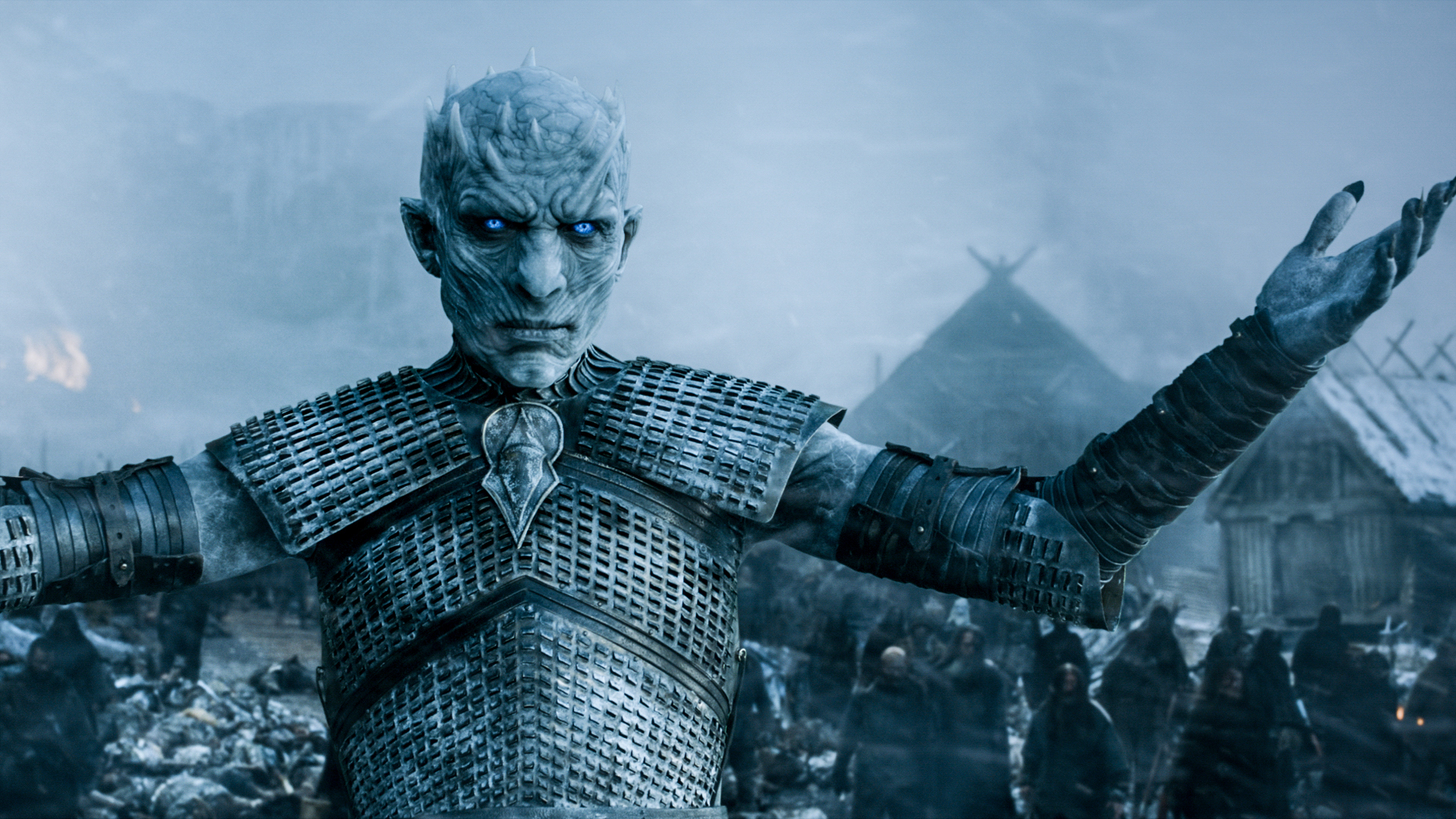
Ok, let’s all agree to forget about the ending and focus on the positives. Game of Thrones was the last true monoculture television event—a show that made the entire world stop and watch together in an era when that was supposedly no longer possible. Adapted by David Benioff and D.B. Weiss from George R.R. Martin’s novels, it proved to a new generation that fantasy could be taken seriously as a premium drama, blending political intrigue, moral ambiguity, and genuine consequences into a spectacle that reshaped what television could achieve on a production level. During its zenith, the series was untouchable. The Red Wedding persists as a masterclass in narrative subversion, a sequence so jarring it essentially redefined what could be aired on premium television. In Tyrion, Cersei, and Daenerys, we didn’t just get characters; we got icons that dominated the cultural zeitgeist. It was the moment HBO effectively became a blockbuster engine, proving once and for all that a mass audience would not only tolerate but crave a sprawling, labyrinthine epic populated by a legion of characters. Just as long as the writing stayed up to snuff. — Damien Scott
4. Curb Your Enthusiasm
Created by: Larry David
Years: 2000 – 2011; 2017 – 2024
HBO’s greatest comedy, from the mind behind Seinfeld, one of TV’s most all-time successful sitcoms. And sure, you might think, “it’s Seinfeld with cuss words,” but that’s a gross overstatement of what’s going on. For the first part, while Larry David sketches out the story beats for each episode (and, roughly, the entire season), the bulk of the dialogue on the series is freestyle. That fact means in order to be a part of Curb, you gotta be able to box with Larry David, which means that the series ends up casting some of the funniest people in the industry today, primarily because they know how to play make believe in this alternate-universe Hollywood with Larry, the most ornery everyman that somehow everyone relates to. —khal
3. Succession
Created by: Jesse Armstrong
Years: 2018-2023
It wasn’t a new idea. Other showrunners tried to take down the wealthy and powerful. As a matter of fact, Showtime was trying to do that very thing with a competing show that ran at the same time. But Jesse Armstrong’s series was different. The show chronicled the Roy dynasty—media titan Logan Roy and his quartet of adult offspring—as they orchestrated schemes, betrayals, and psychological warfare in a bid to seize the crown of their global empire. It was pure Shakespearean tragedy viewed through the lens of luxury travel and high-stakes corporate maneuvering, a show that masterfully illustrated how the vacuum of extreme wealth doesn’t shield one from despair, but rather serves as its primary engine. But what really and truly set Succession apart was its tonal precision. It was genuinely, darkly hilarious while never letting the humor soften the cruelty at its core. — Damien Scott
2. The Wire
Created by: David Simon, Ed Burns
Years: 2002-2008
What more is there to say? Outside of The Sopranos, no other show is as universally loved as the one created by a Baltimore journalist and a former Baltimore detective after a run of grisly character-driven limited series focused on life trapped in the streets of Maryland’s largest city. All of which is hilarious given the fact that it went largely ignored during its run. It never won an Emmy, or any other award, and largely missed most big “best of” lists of its day. If you didn’t catch it during its original five-season run, word of mouth is likely the only reason you can recite some of its classic lines by heart. Maybe people didn’t take it seriously because some of its stand out stars weren’t even real actors. Or perhaps because, despite its groundbreaking universal interconnectedness, Simon treated each season like a self-contained novel. Yes, even season two. But, whatever, best not to dwell on the past, because you know the thing about the old days—them the old days. — Damien Scott
1. The Sopranos
Created by: David Chase
Years: 1999-2007
The series that created the blueprint for a Golden Age of Television, the 86-episode saga known as The Sopranos perfected the medium. It’s the series that made Sunday nights an institution, one that had Journey’s “Don’t Stop Believin’” run back up the charts after its expert use in the series finale’s final moments. Another simple premise—a mob boss walks into a psychiatrist’s office—becomes an examination of evil. Humanizing a monster like Tony Soprano was a wicked form of genius; even soccer moms found themselves sympathizing with the devil, a hulking brute hellbent on hoarding all of the money being earned by his minions and wanting to be left alone. And while the show could have just been Godfellas: The Series, David Chase liberally injected humor while exploring the boundaries of the medium. There’s a reason why, right before releasing Seasons 3 and 4 of Atlanta, Donald Glover could only compare his opus to The Sopranos; the (mob) family drama is truly the cream of the crop. — khal
Read More:

The Blueprint: Jessica Holtz Meets the Moment
The Power Broker: Emma Grede Is Just Getting Going

Quiet Power: Imani Ellis on CultureCon, Creators, and Learning to Let Go

The Long Game: How LeBron James and a Few NBA Friends Might Elevate the Game of Golf

Savannah James and April McDaniel on Navigating Money, Friendship, and Business