
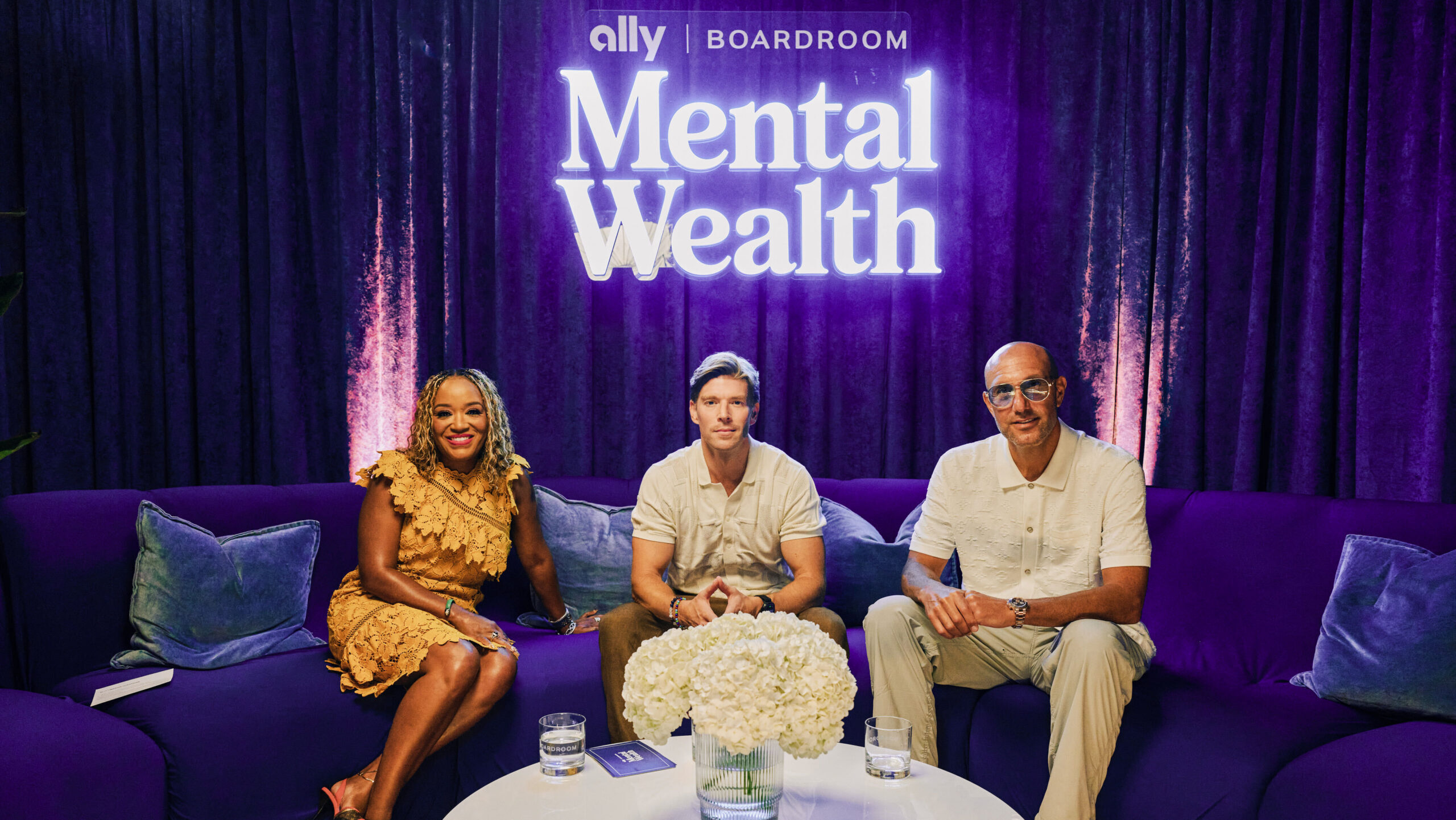
Cooke joins Rich Kleiman and Jack Howard on ‘Mental Wealth’ to discuss entrepreneurship, financial stress, resilience, and finding joy beyond money.
At one point in the latest episode of Mental Wealth, Kyle Cooke stops sounding like the guy known for reality-TV drama and starts sounding like someone who’s been through it and came out clearer. He turns to Boardroom CEO Rich Kleiman and sums up everything that’s happened over time in one plain sentence: “I really do think life is one long learning lesson.”
That’s the tone Kleiman and Jack Howard, Ally Bank‘s Head of Money Wellness, set out to build with this series — real conversations about money that go past the numbers. And Cooke, the Summer House star, DJ, and founder of the canned-cocktail brand Loverboy, sits across from them and walks through entrepreneurship, debt, and what it actually means to feel financially secure. The series has built its identity around conversations that move past net worth and into the emotional wiring behind it, and Cooke, true to form, doesn’t hold back.
He traces his relationship with money to a childhood without an allowance — magic shows, lemonade stands, a landscaping gig, even a short-lived fake ID business in high school. His grandfather, a self-made doctor, drilled in the idea that wasted time was wasted money. His parents, meanwhile, modeled something Cooke now recognizes as intentionality rather than frugality: 47 years of marriage, he says, without a single fight about money.
That upbringing shaped Loverboy‘s early scrappiness, and Kyle Cooke now admits some of its biggest blind spots. The brand rode a genuine wave as one of the fastest-growing players in the canned alcohol category, peaking around 2022. But caution that once felt like discipline curdled into something costlier: underinvesting in senior talent, avoiding outside capital out of a business-school instinct to protect equity, and ultimately getting outpaced by better-funded competitors. “We got over our skis,” he says of the stretch that followed, a period that saw the company shed staff from 30 employees down to three and post losses for three straight years.
The most striking financial detail isn’t the losses themselves, but what came with them: an SBA loan Cooke personally guaranteed, six figures in accounts payable to vendors, and a moment, following his COO’s departure, when he realized production had effectively stalled until those relationships were repaired. A wave of public attention briefly boosted merchandise sales — proceeds he funneled straight into paying down vendor debt — but he’s candid that virality moves faster than an industry built on year-long sales cycles can actually absorb.
By the end, the conversation works into what actually brings Kyle Cooke joy now: DJing around his touring schedule, morning runs he once dreaded, and travel modeled after the immersive family trips his grandmother once prioritized over a larger inheritance. It’s a fitting close for an episode built on the idea that money is only ever a tool. Cooke’s version of that lesson came the hard way, but he’s arrived at something clear: Freedom and flexibility — not the number in the account — are what he’s actually building toward.
Read More:
There Is No Offseason: KLUTCH Sports Group COO Fara Leff on Commanding the Sports Calendar
Michael Che Opens Up About SNL, Kanye, Colin Jost, Cancel Culture, & Comedy
Red Hook Tavern: Where Billy Durney Wants to Know Your Name
Keanu Reeves’ Next Act Is Built on Two Wheels

The Blueprint: Jessica Holtz Meets the Moment