

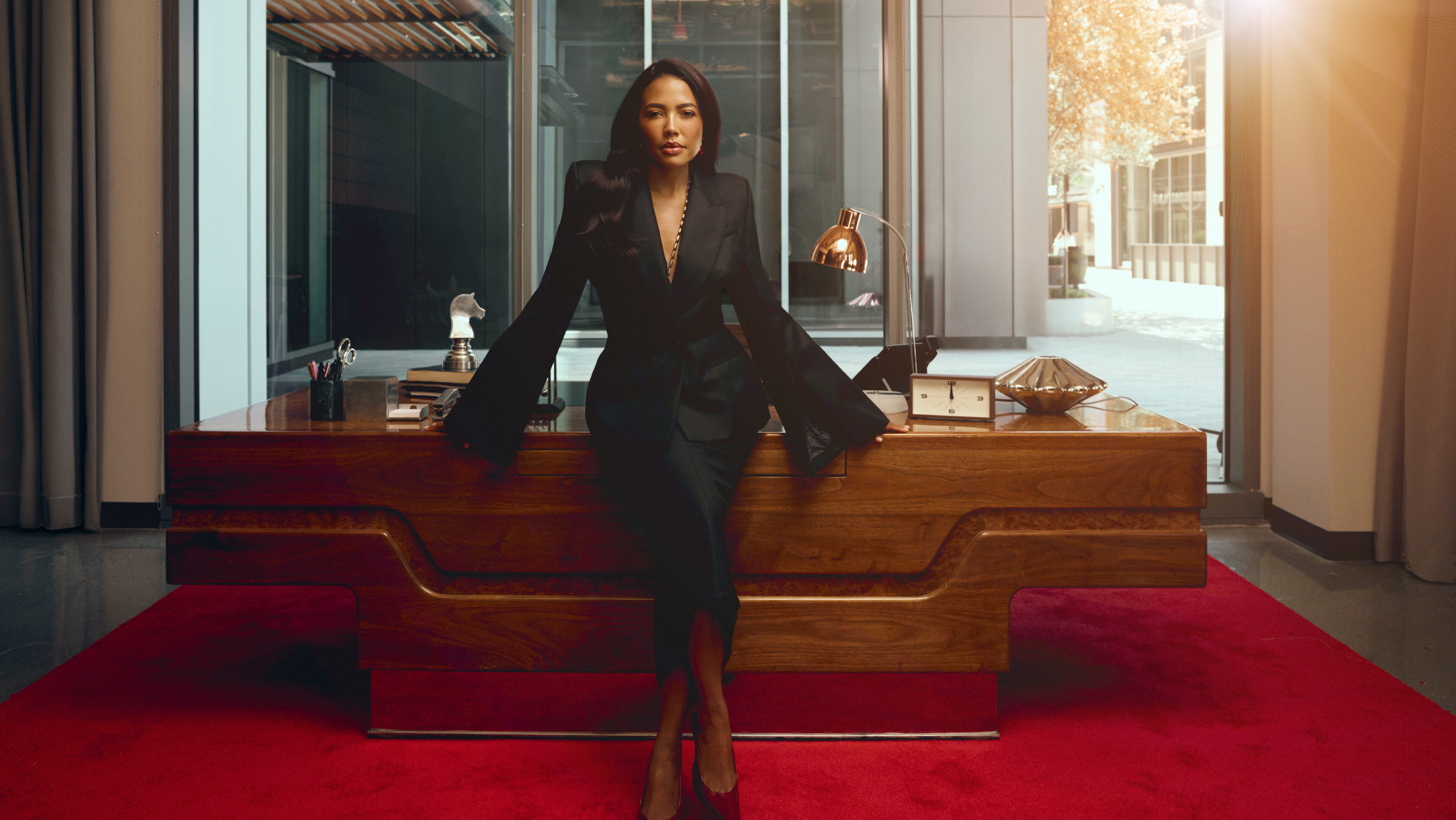
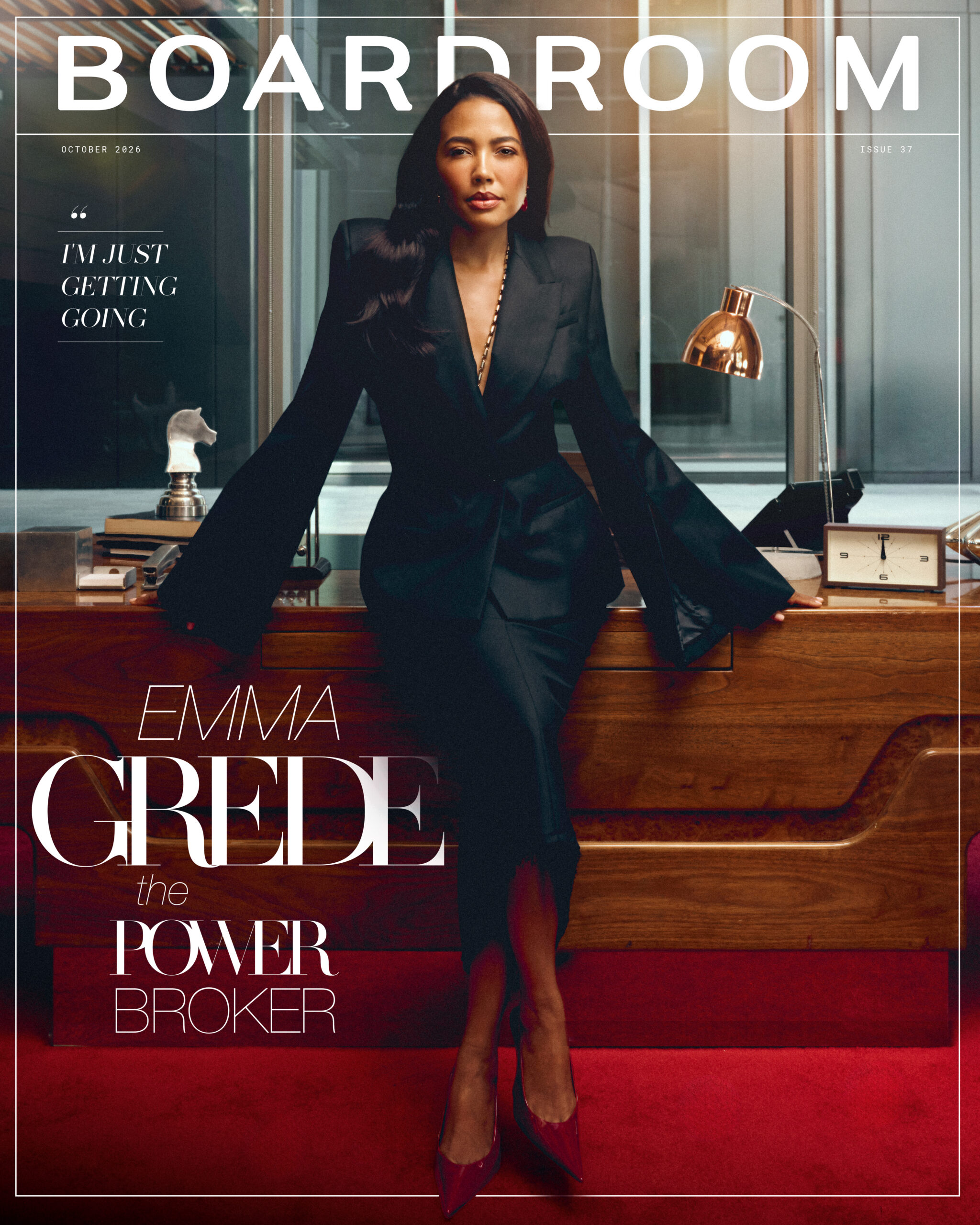
Emma Grede has never been particularly interested in standing still.
Long before she became the co-founder of Good American, a key force behind SKIMS, a business leader, author, podcast host, and one of the most recognizable entrepreneurs in fashion, Grede was already thinking several moves ahead. Growing up in London, she became obsessed with fashion, but the ambition ran deeper than clothes. She wanted to change her circumstances, make her own money, and build a life that she could control.
That instinct — to turn one opportunity into the next — has followed her throughout her career. Grede describes it as “weaving the web,” a mentality she developed early in her career while working behind the scenes in fashion and entertainment. Every relationship, every room, every job became an opportunity to build something bigger. Her reputation became an asset. Eventually, that ability to connect people, ideas, products, and opportunities became the foundation for a business career that expanded far beyond the role she originally envisioned for herself.
But Grede’s story is not simply about ambition. It is also about evolution.
As her companies have grown and her public profile has expanded, so has her willingness to challenge conventional ideas about leadership, money, motherhood, celebrity, and success. She talks openly about the importance of giving her children the dignity of finding their own path, the need for leaders to balance empathy with an “enterprise mentality,” and why even successful businesses have to continually reinvent themselves.
That same philosophy applies to Grede herself. She never expected to become the entrepreneur she is today, write a book, build multiple companies, or become a public voice for women in business. But each opportunity created another, and she kept saying yes. Now, as she approaches a new chapter, Grede says she is “just getting going.”
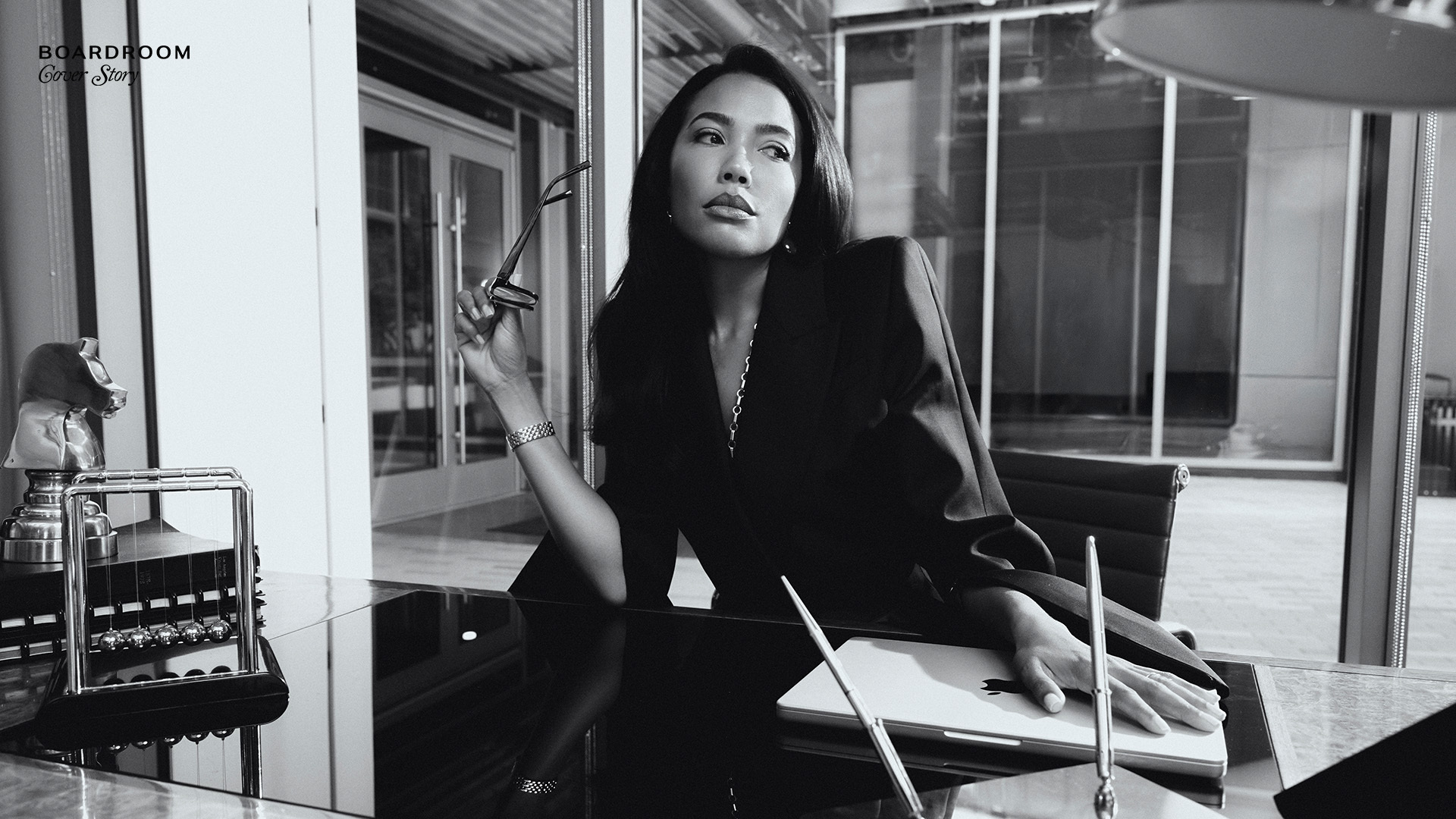
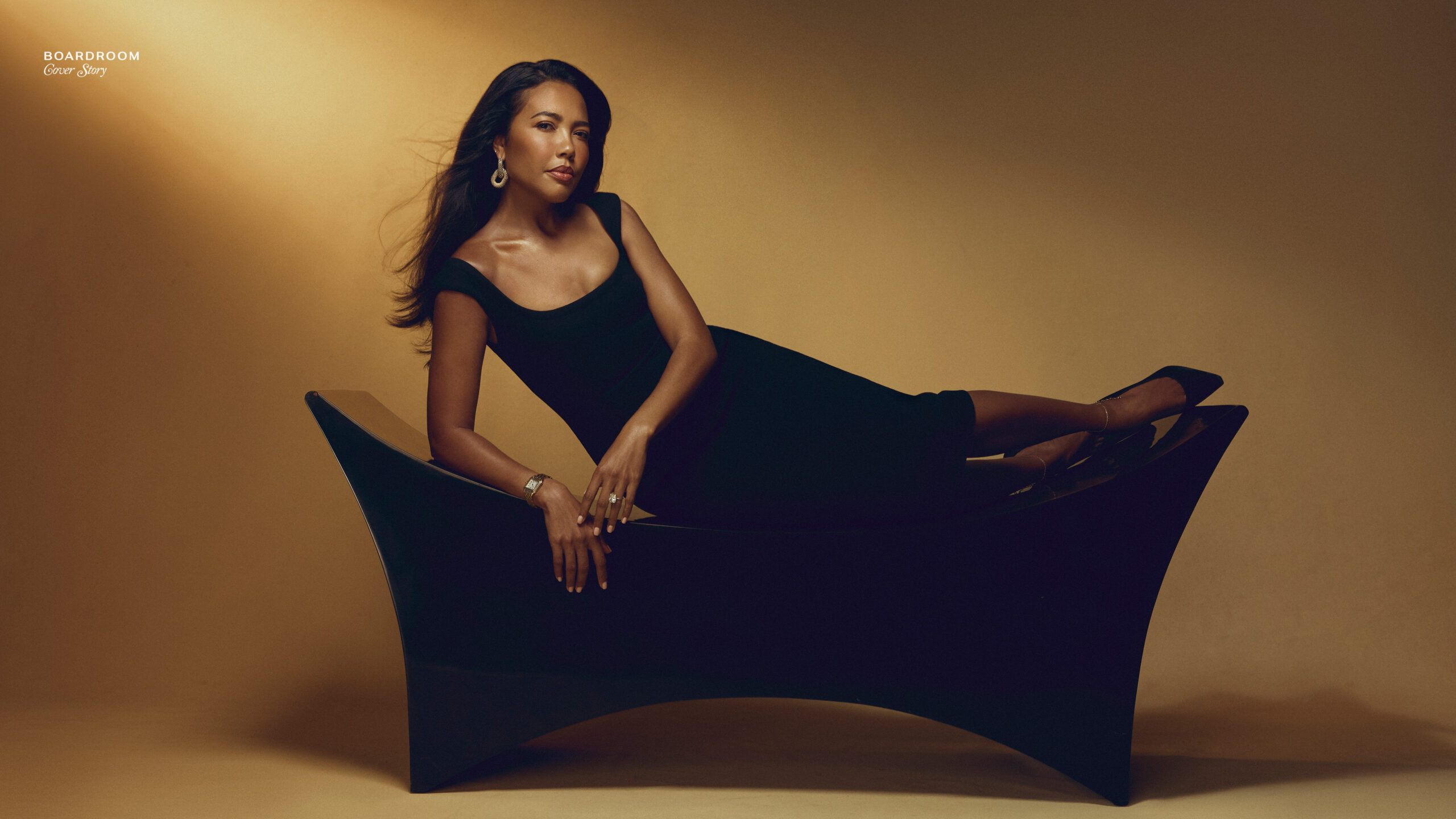
Sitting down for the latest Boardroom Cover Story with Rich Kleiman, Grede reflects on the experiences that shaped her, the business lessons she learned along the way, the realities of building alongside her husband, the changing relationship between celebrities and brands, and why the most important part of building something lasting may be knowing what to leave behind.
Rich Kleiman: You’ve always had this ambition and drive. Did you feel that as a young person?
Emma Grede: A million percent. Yeah. And I still feel that to a large degree now. I’ve always been in the mode of feeling like I needed to prove myself, but also feeling like I needed to change my circumstance, but that I was wholly responsible for doing that. There was nothing in me that felt like I couldn’t do it, but by the same token, I knew that whatever greatness was going to happen to me, it would be entirely down to me.
Was there something that specifically drove you, or was it just that feeling?
I think it was twofold because, to me, I was obsessed with the fashion industry. And when you grow up in England in the 80s and the 90s, it was the glory days of British fashion. It was such an amazing time when things were happening, and that’s when fashion shows still ended up on the front page of the newspaper.
But for me, it was so much more about escaping my circumstances. I just wanted to be somewhere else. I wanted to move from all the shit that I saw around me and better my circumstances. And so to me, I equated that with just working really hard and I wanted to get into the fashion industry, but the truth is I worked in a clothes shop. I would just do anything to get me out of the current circumstances. And I also saw making money as the key to that because I knew that the more money I made, the more likely it was that I could move away from that place and kind of give myself a whole new reality.
Was money stressful in your house?
It’s so interesting that you say that. Now, because I speak about money on my podcast so much, especially as it pertains to women and our sometimes reluctance to talk about money, what I’ve understood is that despite not having much, we spoke about money all the time in my house, but not in a stressful way, not in a way that was linked to not having any. It was like, this is what we have and this is what we need to do X, Y, and Z. And so it was out there on the table. At 10 years old, I remember my mom sitting at the kitchen table and making a line-by-line budget. And with that came an element of control. I knew we couldn’t spend that much on grocery shopping because otherwise we wouldn’t have the money to keep the lights on.
But with that came this element of like, I understood it. I knew what everything cost. I knew what we could and couldn’t do. And so I never felt scared around money. It was talked about all the time. And I started a paper round when I was really young, and I knew exactly what I would do with the 20 pound that I would make from that paper round. And that was freedom.
I got my magazines. I’ve got anything I need. I’ve got train fare to make it into the West End, which is where I can make more money. That, to me, felt liberating, and it was about freedom. And so that was the path. To me, I was like, “Just make more money.”
Did your family know that you were wired that way?
Yeah. Yeah, for sure. And I think there was always this distinction made that people would always say, “Oh, she’s going places. She’s different.” And in a lot of ways that was negative to me because it was like, “Oh, she’s not really like us.” And I took great offense at that.
But by the same token, I kind of thought, “Yeah, you’re right. I’m not like that. I’m not going to…” Because I was surrounded rich, by so much heartache, so many women that were left high and dry, this idea that everything would be fine, and then seemingly the relationship situation changed, and the woman was just left with all the responsibilities with the kids. And I saw that everywhere around me. And I think at a very young age, I was like, “That shit can never happen to
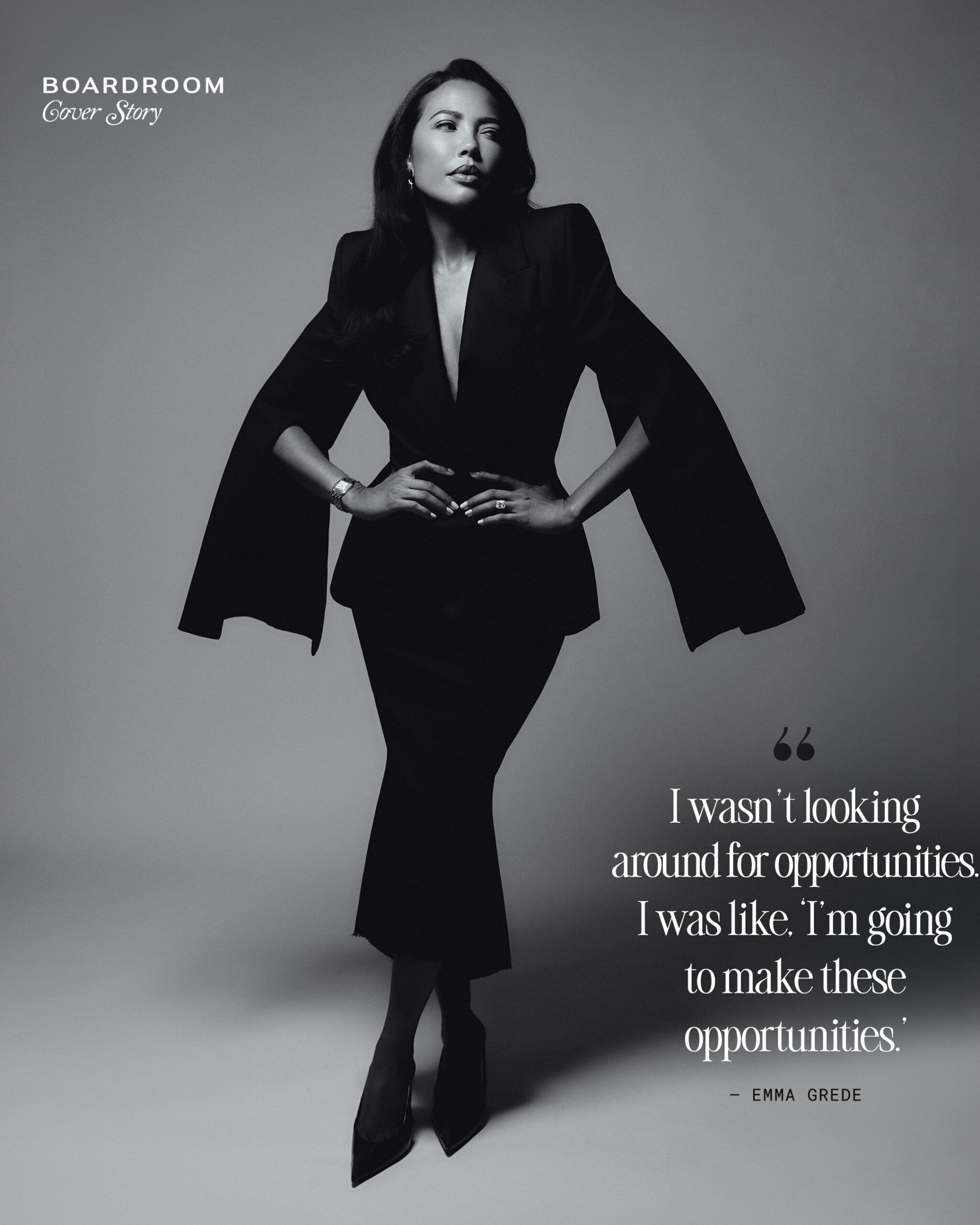
Will never be my reality. I will never be in a situation where I’m reliant on somebody else.” And so that sparked something in me. But again, I wasn’t looking around for opportunities. I was like, “I’m going to make these opportunities.”
When you think about raising your kids now, who don’t have to struggle with money maybe the way you did, is that a challenge?
It’s a huge challenge. One of the things that I think is so important is that we are creating our own path in our lives. And I have seen so often the kids of wealthy parents make choices that they might not otherwise because of that level of security. I grew up with nothing, and as a result of that, I made choices. Some of them good, some of them bad, some indifferent.
My kids will never need to make those choices. They will never need to live in a high-rise apartment with no front door and no oven and fridge. They will never need to do the things that I needed to do and to hustle in the way. And thank goodness for that. Having said that, I feel like giving kids money, where their choices suddenly change. They decide that they can go and do this thing because they don’t really need to do that thing.
So for me, it’s like I’m going option B all day long because I think I want to give my kids just enough education, a roof over their head for as long as they need it.
But I am not that person who will be buying you an apartment when you’re 18 or when you’re 21. Absolutely not. Because I want you to have the experience of what it means to find your own path and figure out what that is for you regardless of what it is that I do or I can afford you.
That is a really big part of life. I would never be here if it weren’t for me and the decisions and the choices that I’ve made. And that has made for a wonderful and interesting and somewhat scary life at some points, but that’s the beauty of it. That’s what makes me, me.
Did your family support that driven, ambitious young girl?
Yeah. I was raised by a single mom, and my mom was really good. She was tough. She was super strict, and she had to be. I’m the eldest of four girls, but my mom had three kids under five when she was 28.
But she was one of these people that said, “Emma, you can do anything.” She was like, “You are not better than anyone else, but nor is anyone better than you.” And I believed that so much. And so when I went out into the world, I was like, “I can do anything. Nobody’s better than me.” And so I took that to heart. And I think that while she couldn’t support me in giving me a leg up or making introductions, she was very supportive of my choices.
She was like, “Yeah, you want to go to the London College of Fashion? Do that.” She was always like, “Great, you go for it.” And didn’t stand in my way.
Was there a north star? Did you have an idol?
It was always Oprah. And Oprah’s not in fashion because, to me, it’s like my head, I was such a kid that was obsessed with anything in fashion, but it was always Oprah because, for me, first of all, if you go back, I was born in 1982, and in England on the TV, the only Black people that were on the TV were musicians or athletes, period. And then you had Oprah. And Oprah was the first person that I had heard talk about meditation or gratitude.
And so for me, I saw in her this woman that was so beautiful and her ideas were so broad and she was introducing all this stuff to the culture because again, we didn’t speak like that back then.
And so I was like, “I’m just going to copy what she does. I’m going to pretend I’m her.” And I really did. In my head, I used to talk to her. I used to take lines that she said, and I’d repeat them. And I was like, “I’m just going to be like this lady.”
When you finally got Oprah on your podcast, did you get a moment to enjoy that?
Because I’ve had that practice in my life for so long, being grateful when I really had nothing to be grateful for, when I’d really have to make it up. I’d be like, “Oh, I’m so grateful. I have the money on my Oyster card to get from A to B on the train in London.” It would boil down that when I’m at this point in my life, I am truly someone who stops to smell the roses. You have to, and you have to institute that yourself. Because if you don’t, the moments are so fleeting.
And we all live some kind of version of the future, especially in my business where it’s like I literally work in the future. It’s like I’m a year ahead in product in any of the companies that I’m in. And so you’re trained to keep kind of looking over there. And so I make a point to stop and go, “What amazing episode. How great was that thing? Can you believe we’re in Hawaii at Oprah’s?” And I literally, I kissed the ground, but I was like, “I can’t believe this has happened.”
And when I started the podcast, first guest I went out to was Oprah. I wanted Oprah. And I sat back and I was like, “You know what, Emma? You get Oprah when you deserve Oprah.”
You’re consistently dissatisfied. Where does that come from?
Because I am very clear that all the things I do are a result of something else that I’ve done. It’s like I really believe that I am getting the things that I have worked for. But in my head, I think that I’m a consistently dissatisfied person. Whatever I do, I think it could be better.
It doesn’t matter if that’s a product, if it’s a show, if it’s an interview, I’m like, “Oh, I could have said that better. The execution of this thing could be better. The way that this store turned out, I wish the thing was hanging that way and not that way.” It’s like that’s just how I’m wired. I’m always going to find the default, but I don’t let that stop me from going, “Did I put 110% into that thing?” Then I have to be satisfied, and I have to be grateful, but I am constantly in learning mode. That’s just who I am.
When I met you 20 years ago, were you already thinking about how to build something bigger?
Oh, I was in the weaving web. I’m not even joking. I remember going on set, and I would make lists in the morning of everyone I needed to speak to, i.e. You. I was like, “How am I getting to this Rich Kleiman guy? How is he going to know who I am? Because at the end of the day, I’m just the broker. I’m the least important person on the set.”
So I was like, “I want to be in front of the client. I want the producers to think I’m the best broker ever. I need that manager to think this was the easiest thing ever. I want the talent to notice me in case there’s a party or a thing or a thing.” So I was like that, but I was constantly in the mode of how do you extract the most out of every situation and how do you turn this one thing into many things?
What did you learn from that about building your reputation?
Definitely. And it’s so interesting. I had and have an uncle who was a football agent, a soccer agent, and he would talk to me about the way things come together. I’d be like, “How did you sign all of these players?” And it would always be this random story of how this person knew this person, then you’re in the right room. And I was like, “Oh, I’m going to do that. I’m going to be that person that just weaves the story together.”
And what I understood super early was that my reputation was an asset. Me being me, being in that room just in case anything went wrong, me being the type of person that would create a good atmosphere, me being the person that would go above and beyond whatever they were contracted for, that was the thing.
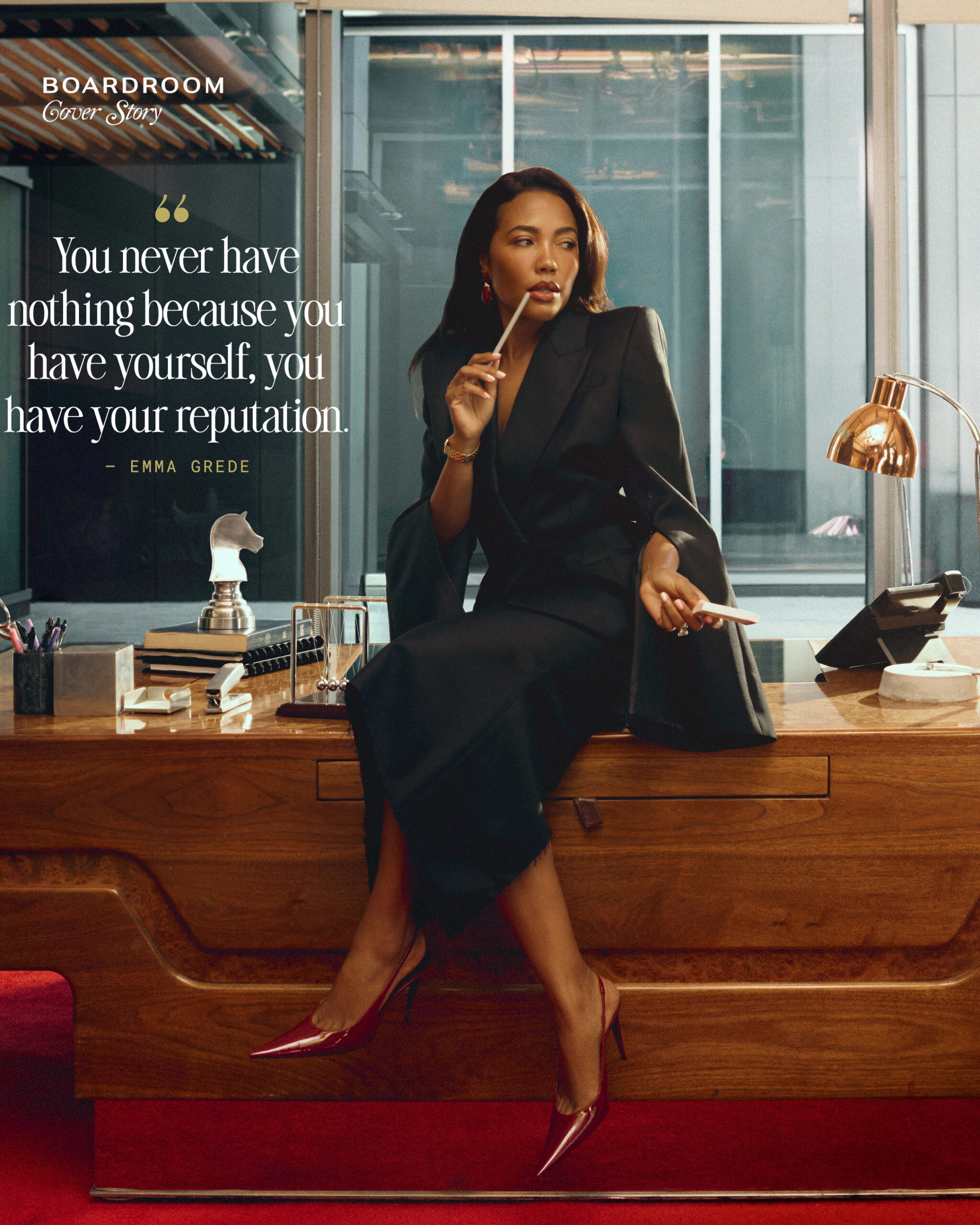
All of that other stuff on top became my reputation, became the reason that people would come to me and then eventually to my agency. And so I really thought about reputation as this asset. And I have so many people that come to me and they talk about, what do you do when you have nothing? I’m like, you never have nothing because you have yourself, you have your reputation. And so you’ve got to think about that as building that as a thing, as though that were a business. And I took that very, very seriously.
When did you realize you were becoming a builder and not just a facilitator?
You know what happened? As someone who is really planful and really strategic, I have to say that side of things chose me. And what happened is that you went from this sort of moment in culture where I was very entrenched in this celebrity brand entertainment packaging world, collaborations and product placement. And that was my job. I never thought about myself as anything but a facilitator.
And after I started Good American, things really changed. People started looking at operators. They started looking at CEOs, founders, entrepreneurs as the new thing, the new thing to aspire to. And so I started getting a lot of articles that were written about me and things that would pop up on social without my input. And my story was being written for me. And I was like, oh no, no, no. It’s like she came to America and boom, she’s building these billion-dollar companies.
And I was like, are you absolutely kidding? I’ve had a job since I was 12. It didn’t work like that. And so I took it upon myself to actually tell my story because I thought that what was out there about me was entirely untrue. And the fact of all the work that I’ve done to build up, to get those opportunities where I could raise those funds to be able to start those businesses, to be able to make those successes, I was like, guys, it’s all the stuff before. The interesting part is not what’s happening now. It’s those 15, 20 years that I have spent in the trenches that enables me to have those conversations.
And so I was like, I just need to be able to speak on my own behalf.
What makes up the ecosystem today?
Well, the ecosystem, it’s interesting because I never think about it like an ecosystem. It’s like I did a bunch of things that led to other things. And so there was never this grand plan to have these different companies and to invest in lots of things. It’s like I did one thing and it worked really well. And out of that came a bunch of opportunities.
And so when I started Good American, I had such a specific point of view on a customer that was massively overlooked. And I though, you know what? I can create something that bridges this gap between what we call regular sizing in fashion and plus sizing. And I could be the only person that did that with a really kind of a mindset of like, let’s just put the product first.
And I think that through that, I really started to understand how you make clothes in an extra, extra small up to a 5X. And so I positioned myself to then get these other opportunities that have led to other businesses, to other things. And again, when you are out there and you are willing to do the work, when you’re willing to get involved in conversations and you kind of park your own ego, amazing stuff happens.
What happened is I was really good at something and I leveraged that into lots of other things.
How does it work being in business with your husband?
Do you know what? I have to tell you what was interesting. Listen, relationships, period, are never easy, right? You know this, that when you’ve been with somebody for a very, very long time, you make a choice of how you want your life to be and what you’re willing to put work into. And this relationship just so happens to be something that I value so much that I am willing to work at it. No one’s saying it’s super easy, but what that is good is easy. Nothing good in my life is that easy.
And we have four kids together, and so there is that part of that. But I think that what happened with Jens and I is that we had a professional relationship before we were ever in love with one another. And when he came on my podcast, I had to really beg. I was like, “Babe, listen, the people they’re asking.” And he’s like, “I just don’t care.” I was like, “But I’ve had Michelle Obama and Cardi B and Mark Cuban, you should come.” And he’s like, “I just don’t care.”
And so it was interesting because our relationship is one that professionally existed before, and then we fell in love, and then we had a family together, and then we grew together.
And I think that with Jens and I, we just have such a respect for what each other does. And even though people think there’s a lot of crossover, there just isn’t. It’s just like we don’t cross over. We do very, very separate things.
What does that ecosystem look like across Good American, SKIMS, and Frame?
Well, I think the things that we are most known for would be SKIMS, Good American, and Frame. Now Frame is completely Jens’s business. I’m just a shopper. Everybody’s like, “I love your company, Frame.” I’m like, “I have nothing to do with it at all.” But I love that business.
And then when the opportunity for SKIMS came around, that was very much Kim’s idea, Kim’s business, something that she envisaged. And at that point, in that time, I was a hundred percent sure. I was like, “Wow, this is an insane opportunity. This is like a billion-dollar opportunity.”
And I thought that the role that I would play having spent, I think at the time, six years building Good American, really understanding what it means to make clothes in all these sizes, I was like, “Chief product officer is where I’m going to sit. I am the person that is going to be able to take what it is that Kim envisages for this company and turn it into a product reality.”
And I was like, “Just put me in. Let’s go.” And we built that company very much in Kim’s vision of what it was that she wanted. And I think that, if I’m really honest, it surpassed all of our expectations.
Why do some celebrity-backed brands work while others don’t?
I think that it would be an extremely unique product proposition because, at the end of the day, what talent do they serve as an accelerant to the idea. They are able to put the firepower under something being known that otherwise any amount of ad dollars in the world is not going to be able to replicate.
But the difference between somebody with a great idea and a true entrepreneur is that world-building. And I think that when you are able to take somebody’s aesthetic world and then an incredible idea and then incredible execution and put all of those things together, that’s when you’ve got something truly special.
And I’ve said this so many times, it’s like talent can drive you to a first purchase, but they don’t create repeat purchase behavior. Then it’s just down to the product.
And so at the end of the day, you’ve got to do something that is excellent. You’ve got to create a superior understanding of the marketplace and a standout product.
What has changed about the celebrity-brand model?
I think the truth is that what has changed is certainly in the last, I can’t even believe Good American’s turning 10 years out this October. And if you think about the media landscape there, especially as it pertains to social media, which is a primary vehicle for the kind of marketing behind a lot of these businesses, but that’s how we shaped them.
We were acquiring a customer at a profit through plowing money into social media funnels. And for want of a better word, that worked for the longest time until it didn’t. And now we’re in such a fragmented media landscape that you can’t do the same thing in that way anymore.
It’s like we’re in such a fragmented media landscape that fame doesn’t work like it does. You are important to a vacuum of a group of people. If I sat and scrolled on your social media now, I’d be like, “Really? Are you living in a different world?” Because I don’t see the same news as you. I don’t see the same interests as you. It’s just like you live in your world, I live in mine, and the two of them have nothing to do with one another.
And so being able to find those people that cross over, especially in the new celebrity landscape, is almost impossible, which is why we keep seeing people from our past coming back and doing things because at least they have the cut through and they have first name recognition.
How do businesses adapt as the market changes?
And so right now I think it’s an interesting time. I don’t think that any of us have it completely figured out, but I think it’s not unprecedented because the only thing that you can guarantee in business is that it’s going to change. Whatever you were doing even two years ago isn’t going to have the same effect now.
The only thing that stays the same is your purpose and the reason that you started. Everything else, including the people, that original team, whoever brought success to you, the way that you market, the product that you do, all of that has to constantly evolve as your business grows or indeed as time goes by, because otherwise you’re going to die.
And I was thinking about this the other day, as Good American turns 10, our primary market has always been women between the ages of 25 and 45. Well, if you’re 25 now, you were 15 when Good American started; you have no idea who we are.
You have to retell the story, and you have to have conviction in the reason that you exist. Now, do you tell it in the same way? Are you using the same language? Has that language been completely adopted by the rest of the industry? And in that case, yes, it has. So you have to be willing to change and evolve.
So you have to do what I call, which is like, you’ve got to kill your darlings. You got to know what is worth saving and holding onto, and where do you have to move and pivot?
How does empathy as a leader fit into making difficult business decisions?
Well, one of the things that I talk about all the time is that two things can be true at once, right? You can, at once, be an extremely empathetic leader and have the needs of your team and your people at the absolute forefront of what you’re doing. And yet what you must have is an enterprise mentality to do what is right for the business. Because if you’re not doing right by the business, you can’t do right by your people.
And so my job as the founder or as the CEO or the leader of those organizations is to make sure first and foremost that we are doing right by the business because that enables me to do everything else well. The reality is that not everybody grows at the same speed.
Not everybody grows at the same speed as the business. And as the leader, you have to make difficult decisions. It is not my job to be your friend. It is not my job to treat everybody as though this were a family. But that doesn’t mean that you miss empathy or that you treat people badly.
And I think the honest truth is that when you are leading the type of organization where I am, where it’s kind of like radical honesty is required all the time, nobody’s surprised, Rich. Nobody said, really? I’m doing a bad job. I’m not fit for purpose in this role anymore because you are having those conversations.
It is not the job of me or any other woman in a position of leadership to have to kind of like cotton ball everybody along the way. That’s not what we’re there to do. We run a business just like anybody else and that is with an enterprise mentality to do the best things to the right for the company.
Was writing your book and becoming more high-profile always part of the plan?
No, I don’t think I did know. I don’t think I did. I always thought that I would, even entrepreneurialism never felt like something for me. Where I come from, you got a job to pay your bills, and you did that job for pretty much your whole life. I never thought that I would be someone who started a company. I never thought I’d be someone who goes out and raises money. I never thought that I would be responsible for this many people. And I never thought that I would do things that would be this successful. I thought that I would be successful in whatever it was that I do, but I couldn’t imagine this.
And it’s like I’ve always been someone who took the opportunities and made the most of her circumstances. And so I got here and I was like, I’m going to take the opportunities and make the most of my circumstances. They just got bigger, they got broader. And the more I did and the better my work became and the more excellent I was, the more opportunities that came my way.
And so for me, writing a book, I remember even when I got an agent, I went on Shark Tank and I did the first contract myself and then I was like, I wonder if I’m being paid enough. And so I signed with an agent and they were like, you should do a book. And I was like, guys, don’t even talk to me about that. I need you to negotiate this one contract, and I’d like you to get me on the British version so that my grandma, who can’t watch Shark Tank in England, can see the English version.
Turns out, fast forward, I have something to say, and I have a pretty distinct point of view. And I also thought that as a woman in business, there seemed to be this sort of narrow way that we were seen in how we should lead and what we should do. And my feeling was contrary to some of those ideas.
And so for me, the book was like, here’s a way that I can actually talk about what I want to talk about in 300 pages and actually get a full idea and a philosophy and a way of thinking, which is how I think about myself. I’m starting with myself. I’m doing it unapologetically. This is how I roll. And I’m unashamedly giving this kind of operating manual to other women because I think what happens is that some of these stories that we tell ourselves are not our stories. They’re handed down to us from our mothers or from other women around us or in the workplace.
What is “Emma Grede disease”?
I think Emma Grede disease, which is just something that some lovely women are talking about on TikTok, is when women seemingly kind of front, like they have a business and they’re entrepreneurs and they’ve got all the thing happening here in the front, but they don’t have anything going on behind. So I would like to think about perpetuating the full spectrum of Emma Grede disease, which is you have to go to work with it. You have to be doing something, you need to turn up, you need to be in the office, you need to be making moves because it cannot just be this part.
And that’s why, again, we have to do the 20 years before, before you can have the full disease,
How do you deal with the attention, criticism, and rumors that come with being more public?
You know what? What I take as an inevitability of being more forward-facing is that some people are not going to get it. Sometimes the wrong story is going to come out. Now, is it my job to go and dispel every myth, everything that I don’t like? It’s like I put myself there, and then you got to take some shots. You got to take the good with the bad.
Then there’s people that don’t agree with me. Then there are rumors, and all of that is part of it. I think that what I understand is that that is a distraction, and I am so resilient. I think where I came from, you had to be resilient because there was real stuff going down all around me.
And so when I see a rumor, it doesn’t hurt me. Does it annoy me sometimes? Absolutely. But I’m very choiceful at what I decide to retaliate to. And so I don’t make it my business to answer every single thing that’s put on social about me.
I did get really annoyed around this thing of this idea that somehow my husband is responsible for my success because I was like, “Whoa, that crosses a line into not just unhelpful, but deeply untruthful.” And so I answered it back and I did so and then I put it down and I was like, “I’ve said my piece and then I walk away.” So to me, it’s like collateral damage.
How do you separate social media from real life?
Yeah. And also, listen, I’m old. I’m 43. Social is not real. That’s not my life. My life is my life, and my work is my work, or my business is my business. That isn’t where I get my information. It’s not where I get my news. It isn’t what makes me happier or less happy in a day.
And so I think that I’m really, I have a lot of distance to the reality of what is real and what is just mess. And also I think that when you put out an opinion that is kind of contrary to what is in the zeitgeist or the culture, you’re going to get a few slapbacks like three hour mom.
When I talk about having lots of help and childcare being my single biggest privilege in life, people go, “Oh my goodness, really? I’m so happy you said that because I thought you were doing it all with no help.” And I’m like, “God, no, absolutely not. I’m the most helped.”
I don’t take it personally because I know better that when people do that, it’s so much more about them and their feelings, but I also think they’re entitled to their opinion. That’s not a bad thing. And when you ask for a conversation and you get a conversation, what are you going to do? Cry about it? Yeah. I wrote the book so people would have a conversation and think, “I wonder if I should have signed a prenup. I wonder what my mortgage rates are. I wonder what’s going to happen to me when I’m 55.” I wanted those conversations.
Are you still weaving the web, or has the way you work changed?
Yeah. Again, when you start right at the bottom, you have an appreciation for what every single person does in the room. And I am that person that is like, I really acknowledge everyone’s part in what we’re doing. I think that that is, to me, it’s incredibly important to know what makes a thing. That acknowledgement and how you see people, how you treat them.
To me, that is the number one most important thing in life because when people feel seen and recognized, and their work is appreciated, they’re going to do a million times better job.
But also, that’s just who I am as a human being. Do I feel the same feverishness that having to run around and make what it is that my value is known? Not so much, but that’s more because I’m so choosy about what it is that I want to do now and I’m so focused.
And when you’re a mother of four, you have to be extremely focused on what you’re doing. So I say no 10 times a day because I have to conserve my energy for the things that are most important to me. And I have a rule that I do what is important, not what’s urgent, because otherwise I would be pulled from pillar to post every day.
No one calls me when everything’s going right. They only call me with problems. And so my job is to decide which problems require and deserve my attention versus what can be figured out by somebody incredible that is on my team.
So there’s still a lot more to come?
Oh yeah, I’m just getting going. You’re just getting going. I’m just getting going. Back to Oprah, I heard her say online the other day, she was like, “The year of my life that was the best year, the time when I felt like most myself, and I stopped apologizing, was 44. And I’m going to turn 44 in September. And I’m a person that really cares about numbers and signs and signals. My lucky number is eight. I’m turning 44. This is going to be my big year. This is it.
Interviewer – Rich Kleiman
Art Director – Michelle Lukianovich
Sr. Producer – Craig Newton
Director – Audrey Blackmore
Video Editor – Matt Strickland
Photographer – Sage East
Photo Assistant – Austin Durant
DP – Christian Adkins
Digital Tech – Garren Pryce
Sound Mixer – Andrew Pitts
Set Design – Thoa Nguyen
Lighting Director – Byron Nickleberry
Gaffer – Chad Harrell
Key Grip – Jerod Nawrocki
Videographer – Kaykay Sublime
Stylist – William Thomas
Hair Stylist – Lorenzo Caldron
Makeup Stylist – Christiana Cassell
GM, E13 Media – Derrick Brown
Head of Integrated Marketing, E13 Media – Olivia Homan
Executive Assistant, SKIMS – Brittany Smith
VP, General Manager – Paul Beckles
VP, Content – Damien Scott
VP, Revenue & Brand Partnerships – Abigale Smith
VP, Partnership Strategy & Marketing – Bernadette Doykos
VP, Social Media – Yoni Mernick
VP, Audience Development – Jonathan Wiener
Sr. Director, Marketing & Content Operations – Stephanie Talmadge
Sr. Manager, Content Operations – Griffin Adams
Sr. Manager, Social Media – Tate Jordan
CMO – Sarah Flynn
Co-Founders – Rich Kleiman & Kevin Durant
Read More:
YG on Making ‘My Krazy Life’, His West Coast Legacy, & Reinventing Himself
There Is No Offseason: KLUTCH Sports Group COO Fara Leff on Commanding the Sports Calendar
Michael Che Opens Up About SNL, Kanye, Colin Jost, Cancel Culture, & Comedy
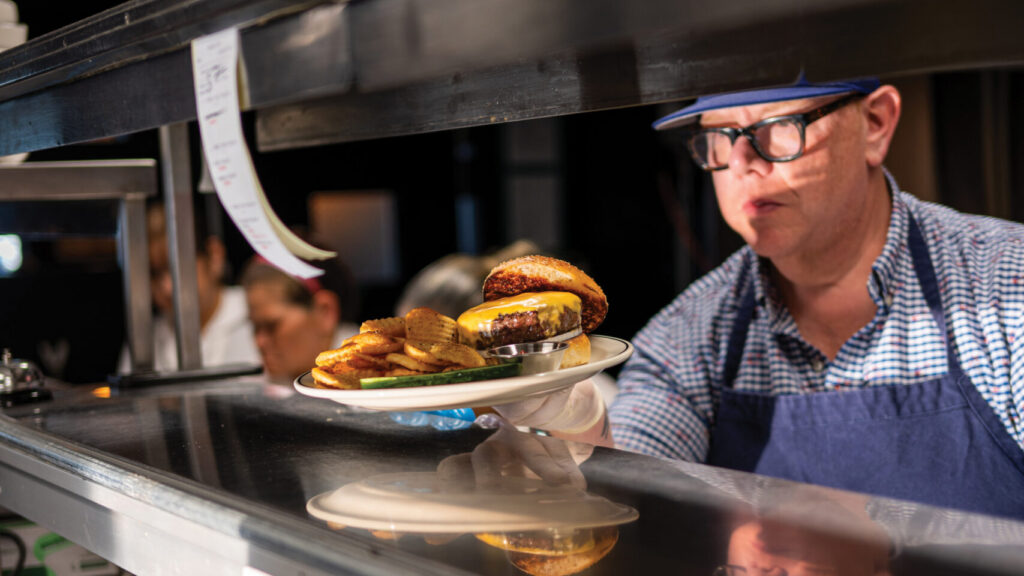
Red Hook Tavern: Where Billy Durney Wants to Know Your Name
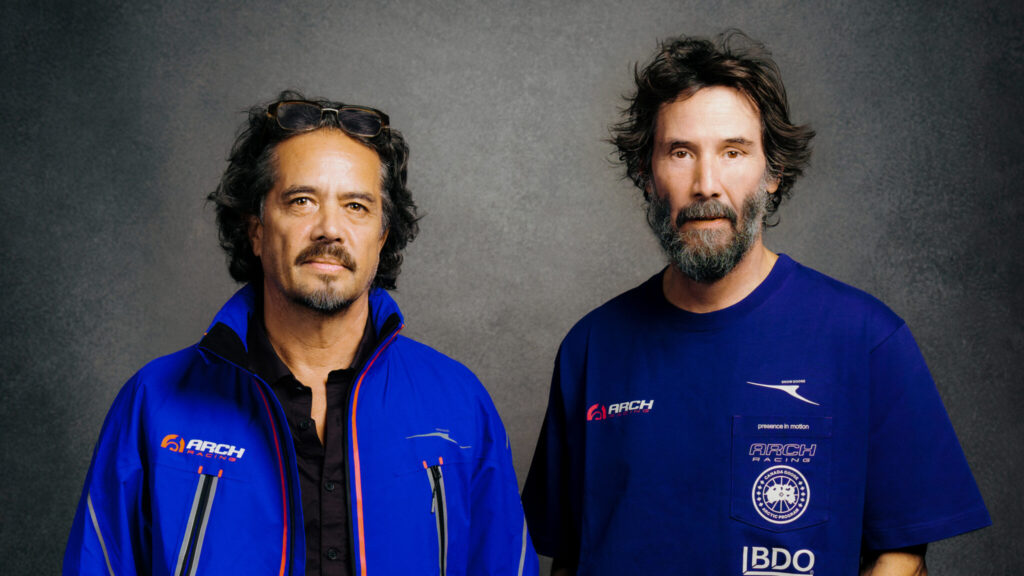
Keanu Reeves’ Next Act Is Built on Two Wheels