

You know what’s scarier than a good horror film? The sequel.
Making a sequel to any type of film is incredibly hard to pull off. The very nature of the endeavor is artistically compromised. But for the disadvantages in originality and surprise, there are an equal number of advantages. Because sequels are made when the first in a series is successful, a follow-up will usually be given more money, more time and better actors. With these greater resources, a great filmmaker can expand the world, mythology and lore of beloved IP.
There are a few phenotypes of sequel, the least successful of which is the “run-it-back” kind. In horror, this usually means giving a slasher a new crop of teens and watching them all get killed in a similar yet heightened fashion to the first film (e.g., “Halloween 4: The Return of Michael Myers”). The best one can hope for from a run-it-back sequel is some inventive kills or surprising jump scares, but there’s usually nothing in them that warrants subsequent viewings. (This is dishonest, because I revisit “Halloween 4” frequently.)
A sequel could also take the original and simply add “more.” The apocryphal tale of James Cameron pitching “Aliens” (a classic, but not on this list because it’s a sci-fi movie first, an action movie second and a horror movie a distant third) has him slowly writing “A-L-I-E-N” on a chalkboard for some film executives. He then added an “S.” Then he drew two lines through the “S” so it read “ALIEN$.” The executives applauded. More aliens, more money. This is the blueprint for the “just add more” horror sequel. Results have varied (see: “Predators”).
“Aliens” is also an example of the “genre-swap” sequel. Sometimes all a sequel needs to feel fresh is a new tone and the tropes of a different genre. “The Purge” is a taut home invasion thriller. “The Purge: Anarchy” adds a grizzled Frank Grillo as the series’ very own Snake Plissken and takes the premise to the action genre in what amounts to a variation on “Escape from New York” (a very fun one).
The prequel is often a disaster. It usually demystifies the franchise’s villain, removing everything that makes them interesting. When a prequel is done right, however, it can add resonance to the original, enhancing the experience of both.
All of these types of sequels are on this list, so if you need something new to watch this spooky season and haven’t gone down the franchise rabbit hole, here are the 15 best horror sequels of all time.
15. The Conjuring 2 (2016)
Directed by: James Wan
Box Office: $310.2 million worldwide
When The Conjuring came out, it had been some time since a classic haunted house movie had captured the country. Much of the horror of the Bush and early Obama administrations was hyperviolent and bleak, dubbed “torture porn.” Ironically, one of that genre’s architects, Saw director James Wan, brought back the traditional ghost story with The Conjuring, which grossed almost $500 million and launched a franchise now 10 films strong. The Conjuring 2 is a run-it-back sequel. Patrick Wilson and Vera Farmiga return as ghost hunters Ed and Lorraine Warren, tackling a new family, a new house and a new ghost in England. There are moments of cheesy sentimentality and moments of abject terror. Between the spirit of Bill Wilkins, the Nun and the Crooked Man, this house is replete with spooks. It’s the best of the sequels and spinoffs. I’m still waiting for a Crooked Man movie.
14. Doctor Sleep (2019)
Directed by: Mike Flanagan
Box Office: $72.4 million worldwide
Mike Flanagan had an impossible task. The Shining is one of the best horror films of all time, so Doctor Sleep was always going to pale in comparison. Yet Flanagan’s film works as a fun standalone and a bridge between Stephen King’s novel and Stanley Kubrick’s film. Ewan McGregor plays the adult Danny Torrance, who, like his father, struggles with alcoholism, the best way to suppress his shining and the ghosts of his past. He must uncork that bottle and reengage his psychic talents to save a young girl from a group of “energy vampires.” Rebecca Ferguson steals the movie as their leader, Rose the Hat, both alluring and terrifying despite her very silly hat. King has (very wrongly) lambasted Kubrick’s adaptation for years. Anyone who shares that opinion should enjoy this film, which brings back elements of the original novel for a conclusion more satisfying than King’s source material.
13. Terrifier 2 (2022)
Directed by: Damien Leone
Box Office: $15.7 million worldwide
Mileage may vary on the Terrifier franchise. If you don’t like blood, gore and guts, you will not like this movie. To put it bluntly, Terrifier is for the sickos, and from time to time, I am such a sicko. I found the original a little too lacking in plot and character to justify its gore, but Terrifier 2 brings in Lauren LaVera as the franchise’s final girl, providing the emotional ballast that lets Art the Clown do what he does best. Lovers of practical effects and corn-syrup blood will love this throwback to the hallowed days of Freddy and Jason. Made for just $250,000, Terrifier 2 made $15 million and set the stage for the third installment to make almost $100 million. Writer-director Damien Leone gave us the first 21st-century slasher to achieve the heights and iconography of the ’80s greats, and this second installment sealed the deal.
12. Smile 2 (2024)
Directed by: Parker Finn
Box Office: $138 million worldwide
With the original Smile, writer-director Parker Finn took basic elements of the indie horror classic It Follows, combined them with the creepiest face of all (the smile) and created a new IP staple. “Smile 2” broadens the canvas, centering on Naomi Scott as a pop star, a person whose life is defined by people looking at her creepily. Finn runs some of the same scares back in a bigger, badder way, and they still achieve their intended purpose. “Smile 2” doesn’t reinvent the wheel or expand the universe much. What it does is deliver on its premise in a hugely satisfying way, and sometimes that’s enough for a successful sequel.
11. The First Omen (2024)
Directed by: Arkasha Stevenson
Box Office: $54 million worldwide
The First Omen is the rare prequel that improves on the original. The Omen (1976) arrived in the wake of The Exorcist, along with a string of pale imitators including The Sentinel, Beyond the Door and Abby. It’s the most successful of the era, but it has always felt a little overrated to me, so I went into The First Omen with trepidation, especially after enjoying the similarly themed and underrated Immaculate. I was very pleased to be mistaken. “The First Omen” is a banger. Arkasha Stevenson, the first woman to direct a film in the franchise, creates the most horrifying movie pregnancy since Alien. The film ties into the original without becoming an overwhelming string of Easter eggs and callbacks, and it uses the iconography of the Catholic Church to great effect.
10. A Nightmare on Elm Street 3: Dream Warriors (1987)
Directed by: Chuck Russell
Box Office: $44.8 million domestic
Practical effects! Freddy Krueger puns! Laurence Fishburne! After Wes Craven’s original, this is the best in the Nightmarefranchise by a Krueger mile. It has a hugely overqualified team: director Chuck Russell (The Blob, The Mask), writer Frank Darabont (The Shawshank Redemption), and actors Fishburne and Patricia Arquette, joining returning cast members John Saxon, Heather Langenkamp, and, of course, Robert Englund as Freddy. This time, Freddy’s teenage prey have special skills of their own: They’re the titular Dream Warriors. Freddy manifests in the real world in some incredibly impressive special effects feats. It doesn’t reach the heights of the original, but Dream Warriors is a worthy sequel and well deserving of its place on this list. Bonus points: a high-camp hair metal theme song by the band Dokken.
9. The Devil’s Rejects (2005)
Directed by: Rob Zombie
Box Office: $20.9 million worldwide
Any movie whose climax plays out over the entirety of Lynyrd Skynyrd’s “Free Bird” must be rewarded for its audacity. That the preceding film is great is almost inconsequential. Highly influenced by No. 6 on this list, The Devil’s Rejects sees the return of the Firefly family from Rob Zombie’s debut, House of 1000 Corpses, as they take to the road. Roger Ebert called it “a gaudy vomitorium of a movie, violent, nauseating and really a pretty good example of its genre.” That genre is the throwback 1970s exploitation movie. The film can be enjoyed for its vomitous virtues, but released in 2005, two years after the U.S. invasion of Iraq and at the height of the global war on terror, it’s also a fascinating vision of America, as William Forsythe’s Sheriff John Quincey Wydell descends into torture and abuse to achieve revenge and his vision of justice.
8. The Exorcist III (1990)
Directed by: William Peter Blatty
Box Office: $25 million domestic
The Exorcist III has the best jump scare of all time, and that alone would vault it up the sequel rankings. It also features a cameo by Georgetown and Knicks legend Patrick Ewing as the Angel of Death, and the last great performance from George C. Scott, replacing Lee J. Cobb as Lt. Kinderman. If The Exorcist is about faith and family, this installment is about friendship. After the disaster that was Exorcist II: The Heretic (so bad a documentary was just released cataloging everything that went wrong), it made sense that audiences were reluctant to give this film a chance. That was a shame, because it’s a great time. Exorcist writer William Peter Blatty, a Georgetown basketball fan, adapts his novel “Legion,” creating imagery that would influence horror for decades. Scott goes head to head with Brad Dourif’s terrific heel performance, giving Blatty the foundation for his nightmare imagery.
7. Hellbound: Hellraiser II (1988)
Directed by: Tony Randel
Box Office: $12.1 million domestic
Hellraiser was one of the most visually striking and original horror films of the ’80s, introducing the sadomasochistic Cenobites and their leader, Pinhead. They return along with most of the human characters from Clive Barker’s original, and Hellbound makes good on the promise of its title: We enter a beautifully rendered, M.C. Escher-inspired vision of hell. Barker hands the directing reins to Tony Randel, who expands the original hellscape to infinite proportions. The film answers just enough of the questions left by Hellraiser without overexplaining to the point of demystifying the Cenobites and the world of Leviathan. Among the new characters, the great stage actor Kenneth Cranham brings the heat as the villainous Dr. Channard, whose final fate still haunts my dreams.
6. The Texas Chainsaw Massacre 2 (1986)
Directed by: Tobe Hooper
Box Office: $8 million domestic
The Texas Chainsaw Massacre 2 is the platonic ideal of the genre-swap sequel. The original is arguably the best horror movie ever made and one of the best movies, period. It landed outside the top 100 in Sight and Sound’s latest greatest films poll, so a sequel was an almost impossible ask. Tobe Hooper did the only thing that made sense: He made it a comedy. Audiences in 1986 were taken aback by the gonzo tone but should’ve been tipped off by the poster swapping in the Sawyers for teens parodying The Breakfast Club. Underappreciated on release, it’s now a cult classic. Rob Zombie’s hellbilly aesthetic traces back to it, down to Bill Moseley’s casting. If you want to recapture the feeling of the original, you’ll be disappointed. But open yourself to this hilarious camp classic, with an unhinged Dennis Hopper performance, and you’ll enjoy yourself. “The saw is family.”
5. Day of the Dead (1985)
Directed by: George A. Romero
Box Office: $34 million worldwide
“CHOKE ON ‘EM!” Not to spoil the list, but this is the first of two George Romero films here. When people opine about the wonderful practical effects of the ’80s, this movie, along with The Thing, is what they’re talking about. Day of the Dead sports a dream team of special effects makeup artists, with Tom Savini and Greg Nicotero creating some of the best goopy gore of all time. The world is completely overrun by zombies, and as far as we know, the underground military base where the film is set holds the last remaining humans on Earth. Tensions rise as resources dwindle and the soldiers clash with the scientists in the bunker. Romero continues to explore his ideas about fascism, conformity, and whether the zombies are the true villains.
4. 28 Years Later: The Bone Temple (2026)
Directed by: Nia DaCosta
Box Office: $53.6 million worldwide
Both 28 Years Later films are worth your time, and while the first was a beautiful meditation on loss and grief, The Bone Temple gets the nod here because of Jack O’Connell’s incredible performance as Sir Lord Jimmy Crystal. O’Connell’s gleeful evil energy recalls Heath Ledger’s Joker and Malcolm McDowell’s Alex from A Clockwork Orange. He simmers on screen, in perfect balance with the never-not-great Ralph Fiennes, who plays Dr. Ian Kelson with understated restraint, until a third-act set piece that may be the best scene of the year. Nia DaCosta’s direction is both dynamic and tender, and this may be the best film in the franchise.
3. Dawn of the Dead (1978)
Directed by: George A. Romero
Box Office: $66 million worldwide
George Romero, in his second appearance here, gave us the only movie on this list that could be called cozy. When Romero released this sequel to his masterpiece, Night of the Living Dead, in 1978, shopping malls were reaching their zenith as meccas of capitalism, and what better metaphor for the shuffling suburban shopper than the shuffling cannibalistic ghoul? Zombies are the perfect avatar for brain-dead conformity, and Romero used them to often hilarious results. The film opens with a horrifying sequence as law enforcement lays siege to a low-income housing project. The fascistic glee with which the cops attack people of color is still resonant. Eventually, four people find safety in a mall that becomes both a castle they must defend against marauders and a prison where boredom drives them out of their minds. The commentary is as relevant today as it was in the 1970s, perhaps more so.
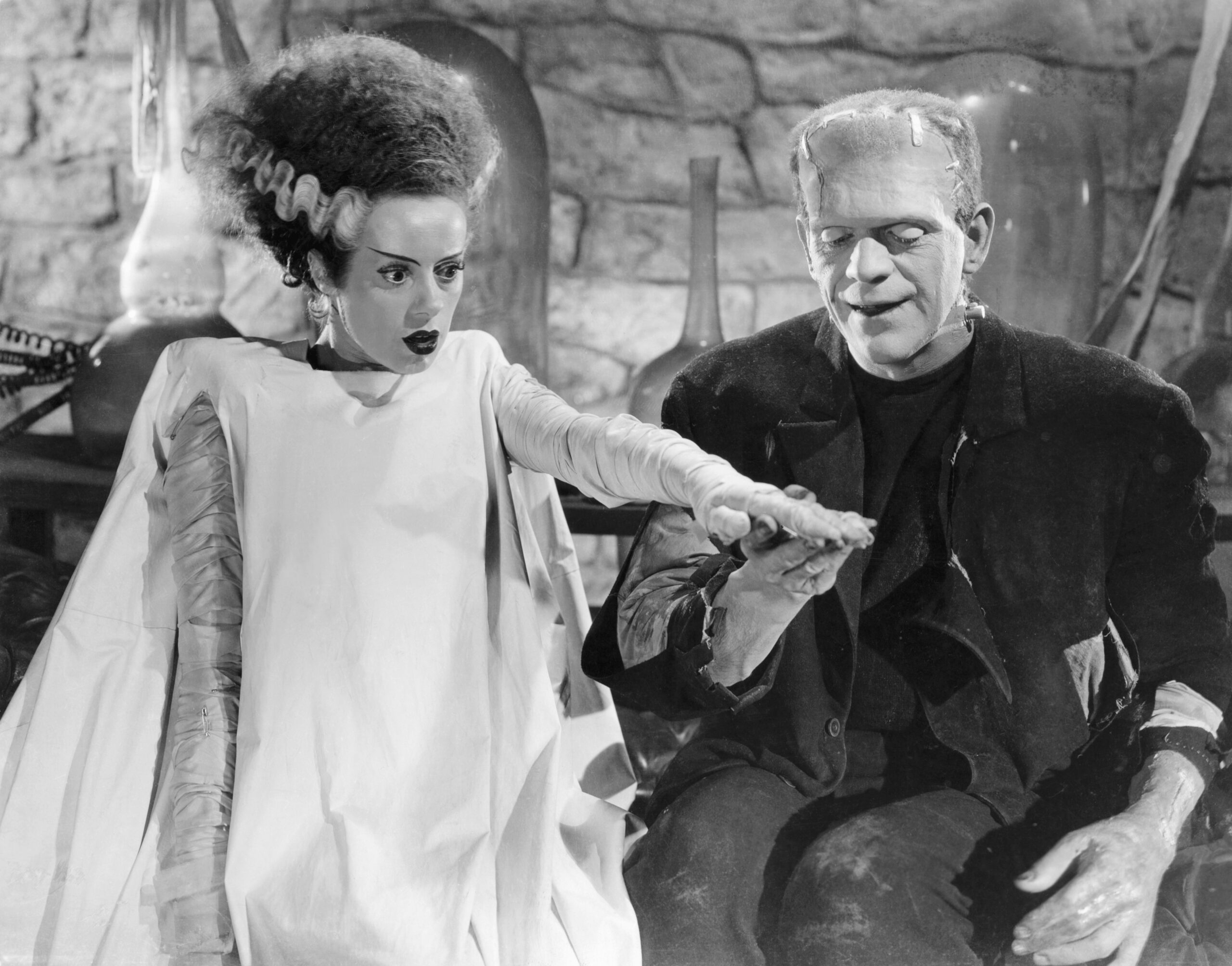
2. Bride of Frankenstein (1935)
Directed by: James Whale
Box Office: About $2 million (1943 studio report)
The ur-text. The alpha. The archetype. With “Frankenstein,” Mary Shelley invented the modern horror novel, and with Bride of Frankenstein, James Whale invented the modern horror sequel. Boris Karloff returns as the Monster with another heartbreaking performance as the loneliest of the classic creatures. The empathy he engenders is still the high-water mark for the creature, all the way to last year’s Jacob Elordi performance. Colin Clive’s Henry Frankenstein (not Victor, as in the novel) similarly set the tone for every mad scientist to follow. But Elsa Lanchester’s Bride is the film’s most enduring icon. One could argue she invented goth. Tim Burton would not have his entire aesthetic without the white streaking through Lanchester’s hair. In terms of iconography, Lanchester’s Bride is horror’s Marilyn Monroe or James Dean.
1. Evil Dead 2 (1987)
Directed by: Sam Raimi
Box Office: $5.9 million
What is there to say about Evil Dead 2 that Jack Black’s Barry hasn’t said in High Fidelity? “It’s so funny, and violent, and the soundtrack kicks ass.” There’s a reason the hipster characters (and writers) of High Fidelity talk at length about it: It’s a perfect movie. I agree with Barry that if you haven’t seen it, “you’re a cinematic idiot and I feel sorry for you.” No movie, before or since, has combined horror and comedy this effectively. If the Oscars valued either genre appropriately, Bruce Campbell would have a gold statue. As comedian and action star, he’s Buster Keaton and Bruce Willis in the same movie. Sam Raimi’s direction whips around the cabin with such intensity you’re as disheveled and delirious as Campbell’s Ash. That it sustains its gonzo energy for a whole film is a miracle. Tonally, it’s often imitated, never bettered. In a word? “Groovy.”
YG on Making ‘My Krazy Life’, His West Coast Legacy, & Reinventing Himself
There Is No Offseason: KLUTCH Sports Group COO Fara Leff on Commanding the Sports Calendar
Michael Che Opens Up About SNL, Kanye, Colin Jost, Cancel Culture, & Comedy
Red Hook Tavern: Where Billy Durney Wants to Know Your Name
Keanu Reeves’ Next Act Is Built on Two Wheels