

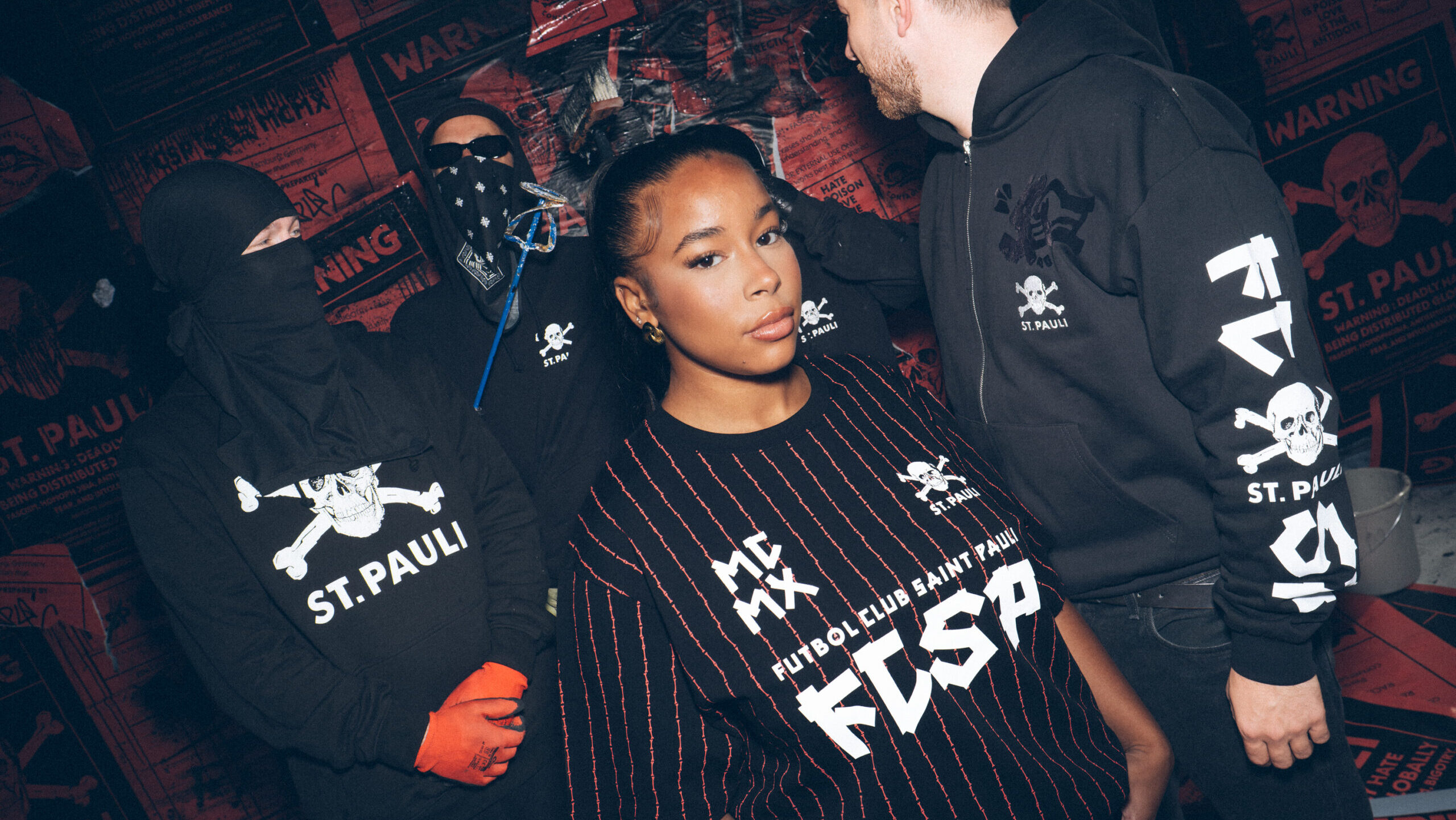
Jeff Staple discusses his new partnership with FC St. Pauli, his creative process, and why seeing a stranger wear his designs remains his ultimate measure of success.
Jeff Staple has spent nearly three decades proving that a blank T-shirt is never really blank.
To him, it’s a magic carpet. “You can use this vessel to go anywhere and tell any story,” he says, and that idea has carried him from a single screen-printed tee in 1997 to one of the most influential careers in streetwear. As the founder of STAPLE and Reed Art Department, he is one of the pioneering figures of modern street culture. His 2005 Nike Pigeon Dunk is still among the most coveted sneakers ever made, and it essentially birthed the drop model that now governs how limited-edition products are released. The list of brands, artists, and institutions he has collaborated with is staggering.
Next year marks the 30th anniversary of that first shirt. When people ask him for the secret to that kind of longevity, his answer is disarmingly simple: “Care. Give a shit.”
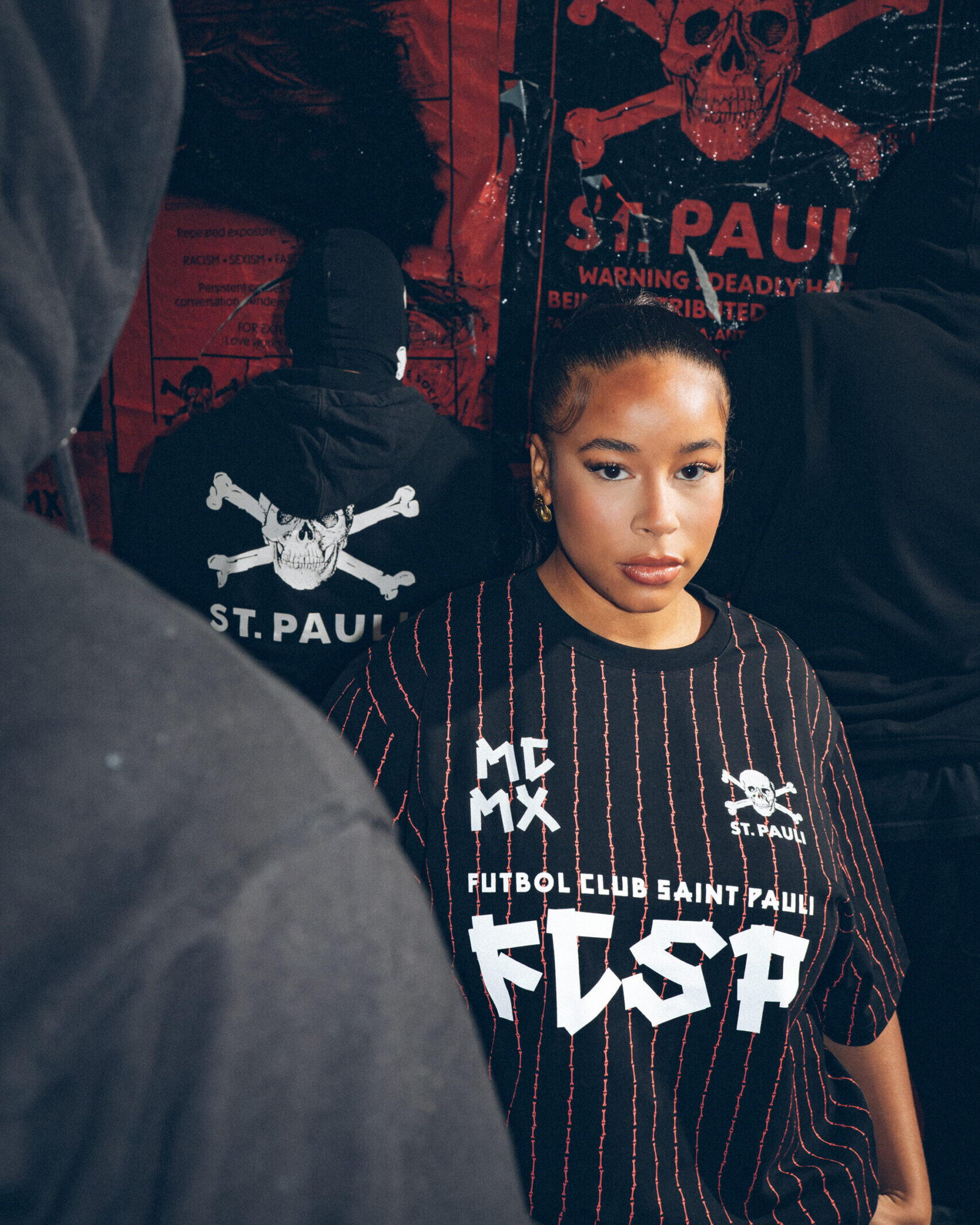
That belief runs through everything he does, and it’s why his latest move is so interesting. On Friday, Jeff enters European football for the first time, launching a collaboration with Germany’s FC St. Pauli during STANDS, the club’s creative conference in Hamburg. He’ll be there in person, delivering the kickoff keynote, leading a private breakout workshop, and running a DIY session with heat presses, where he’ll design on blanks alongside fans.
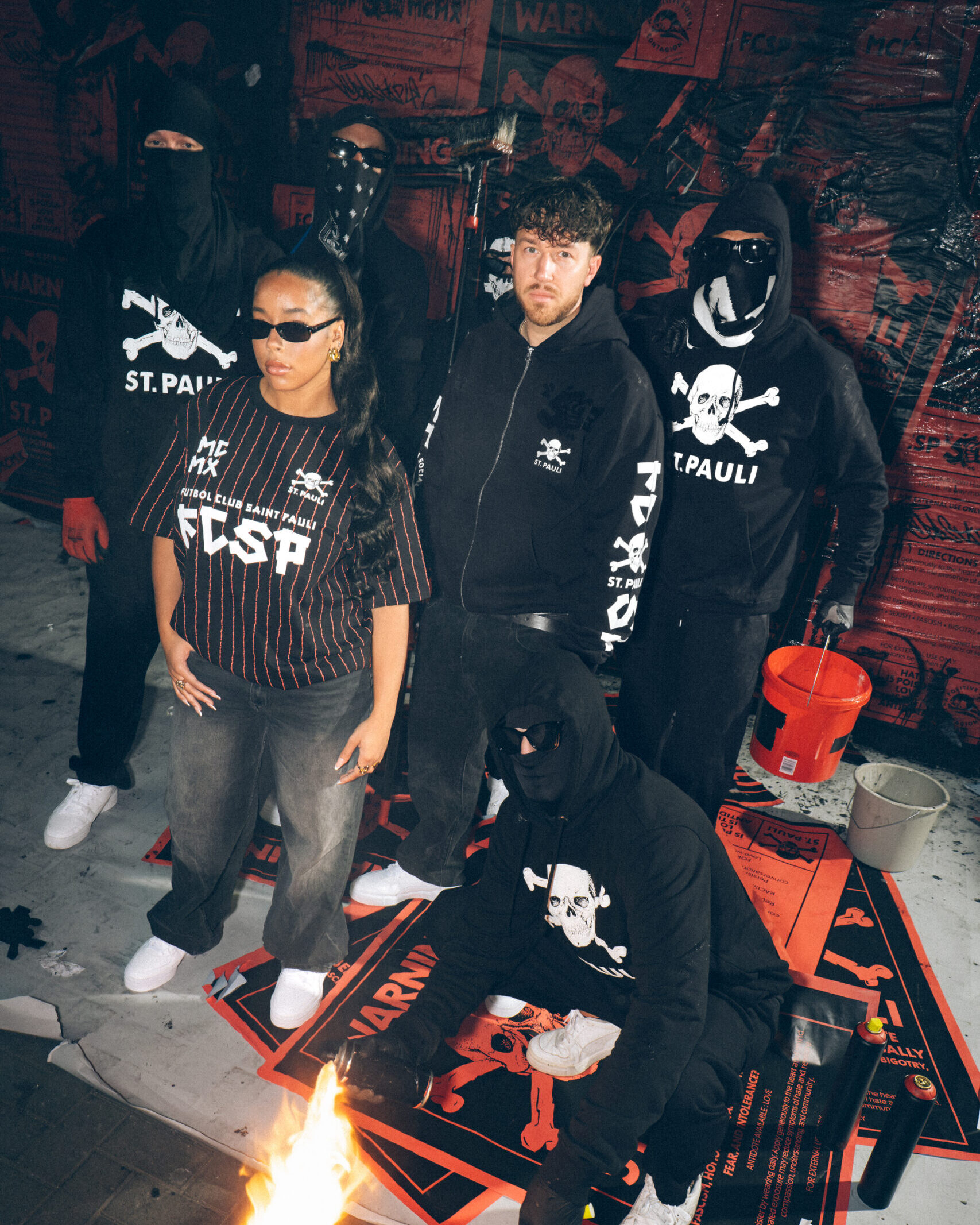
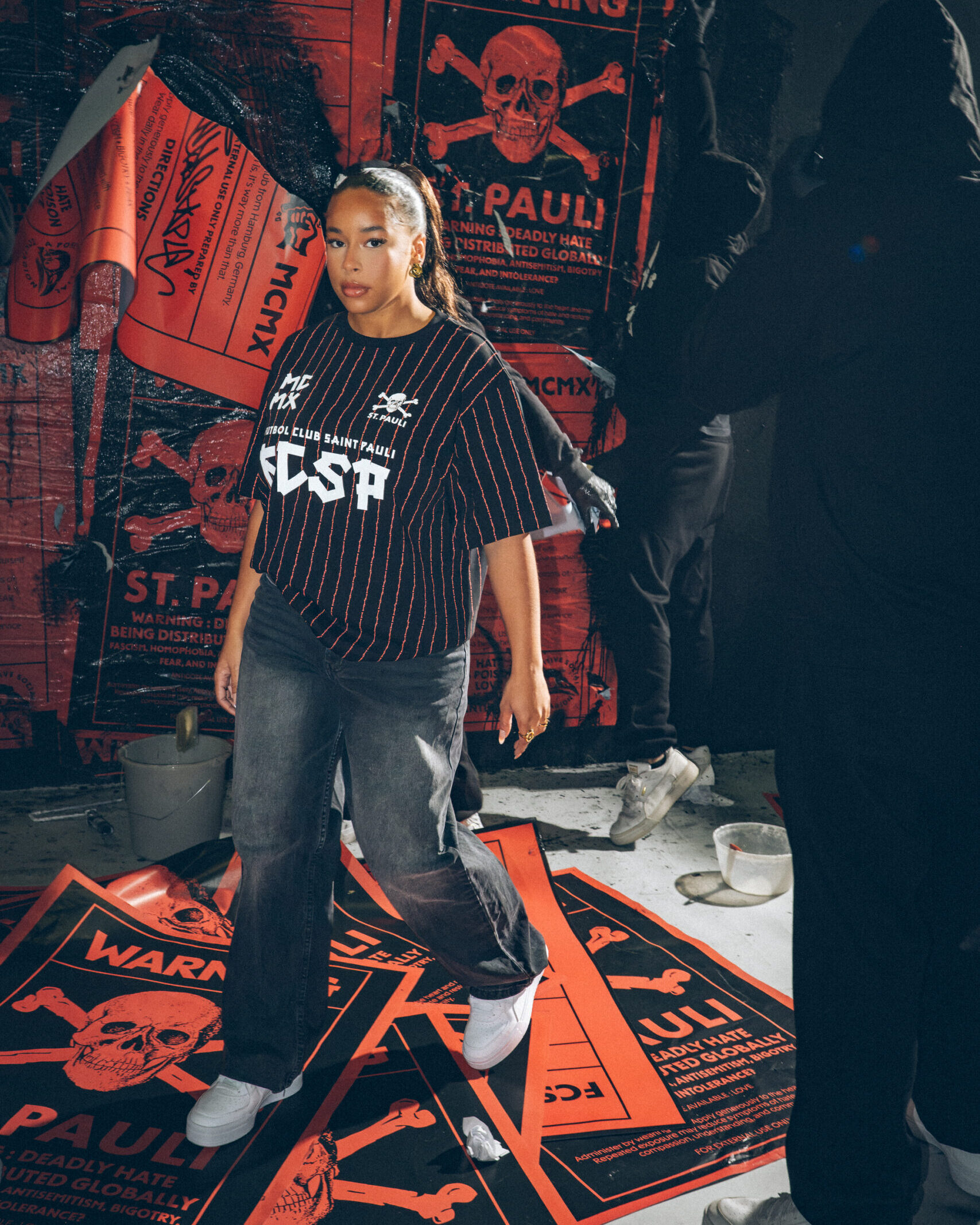
The choice of club was anything but random. St. Pauli is arguably the most outspoken team in world football, a club that wears its activism on its sleeve in a sport where racism and sexism have historically made headlines, and where many organizations settle for a phoned-in statement. Jeff, whose brand has operated under the tagline “a positive social contagion” since 1997, saw an obvious kindred spirit. It’s an underdog mentality he recognizes from his own corner of the industry: streetwear, he points out, did things differently out of necessity, not because it was trying to be cool, only for bigger brands to later turn those tactics into marketing strategies.
That alignment matters because Jeff is wary of collaborations that amount to two logos slapped together. He can’t control how the public perceives his work, he admits, but he can control what goes into it: his blood, sweat, tears, and DNA. Below, he explains how he separates culture from content, why he trusts his gut (and a simple Zoom-call test), and why the Pigeon’s storytelling instincts were made for a club with this much identity.
For a brand like his, football’s appeal is the loyalty. Clubs have communities that nobody can manufacture on demand, and as fashion and football grow closer, the challenge is creating new products around that passion without diluting what made it powerful. Jeff admits this is the part that makes him most nervous. Nobody wants 30,000 fans booing the collection, and he doesn’t want his own followers asking what the hell they’re looking at either. His aim is a balance: something St. Pauli supporters embrace, and something so good that a stranger who has never watched a Bundesliga match adds the zip hoodie to their rotation and becomes a fan by default.
What comes through most in conversation is that none of this feels like a job to him. He compares himself to an ant in an ant farm, moving grains of sand from one place to another, wondering why the big faces outside the glass find it so fascinating. He’d be printing shirts and talking to kids about how to make them, whether or not a brand, team, or conference was paying attention.
His definition of success is just as humble. “All I need is for me to one day see a stranger I don’t know rocking the collection.” Someone who has never met him, spending hard-earned money on something that came out of his head. After 30 years, that still floors him.
Here’s Jeff Staple, in his own words.
This interview has been edited for clarity and length.
BOARDROOM: You’ve worked across sneakers, music, art, basketball, and countless other corners of culture. What about this partnership finally made you say, “Now is the time to enter this space?”
Jeff Staple: Frst of all, it’s just mainly because of sport and football. Sport, to me, precedes being a sneakerhead. You can’t have sneakerheads without sport. So sport is always the one for me. And then if you think about the world sports, we’ve done so many different leagues and different types of organizations, but soccer, as we all know, coming off of the World Cup this summer, is truly the world sport, and now it’s just taken over America as well. So for me, looking at opportunities of how we can do sport overseas was really intriguing to me. We had actually done soccer in America, so we did NYCFC before. We also did the MLS Cup for two years in a row, but it was always the U.S. version, not the OG, the Bundesliga and the European Federation. So being able to do St. Pauli now, and also with, and I’m sure we’ll get into this a little bit more, but particularly because of the values that St. Pauli embodies, it was just a perfect match and just perfect for where I wanted to take that next step of Staple as well.
This club has a particularly strong identity around activism and social issues. How did that shape the way you approached the collaboration, and how do you make sure you’re tapping into that identity authentically rather than just borrowing its aesthetics?
I don’t know about you, but when I think about OG football culture, I think on the one end, it’s a pretty rowdy ass crowd of people. And there’s been historically moments where things like racism and sexism have taken the front-page headlines. And then you’ve got another type of organization where it’s like, “Yeah, we’re for the people.” And it’s just you got to phone in the sort of positive statement. And then you’ve got St. Pauli, which wears it fully on their sleeve. It’s like the first thing, the front facing thing for them. And so for them to oppose the sort of normal trend of what happens in sports was one of the big things for me. Our tagline since 1997 has been STAPLE: A Positive Social Contagion, which is sort of the idea of manifesting ideas that spread almost like a contagion would across people.
That’s what positive social contagion means. And so that was a perfect match for St. Pauli as well. And then, like you said, with the reference to other collaborations that just feel like two logos slapped together. At the end of the day, I can’t speak for other brands, so I don’t know if that’s actually the case of what happens, but I know for me, I always try to put my blood, sweat, and tears and DNA into every product that I put out. I can only hope that through storytelling, messaging and marketing, that the public feels that, but ultimately I can’t decide. I could do all this stuff. I’m going to Hamburg in a week to actually launch it with them. I’m doing a talk at the stadium, but someone could just be like, “Yo, Jeff just phoned that shit in.” It’s like, “All right, I don’t know what more do I do. I got to literally cut myself and pour my own blood onto this thing.” But yeah, I try to do it. I try to put everything I can into it. And when you think about next year, it being the 30th anniversary of me printing the first STAPLE T-shirt in 1997, and then when people ask, “Yo, what’s the secret? How do you maintain that longevity?” It’s like, “Care. Give a shit.” That’s very much the secret. That’s it.
You’ve built your career around communities that have a real sense of identity and belonging. What does football understand about community that you think brands and fashion companies sometimes struggle to replicate?
FC St. Pauli, I would say, because of how they wear activism on their sleeve, they’re the minority in the whole world of sports. And I love that sort of underdog, don’t-give-a-F mentality of we know this is going to ruffle feathers. We know this is not the norm, but we feel it’s important. Similar to, I mean, this is timely, but what’s been happening recently with Macklemore, we know that’s not what you’re supposed to do in order to make the powers that be satiated and happy, but sometimes you just got to do the right thing. So, I love that St. Pauli embodies that same thing. And then because they are the minority, they have to act and move in a certain way that keeps them relevant and not ruins the entire business too.
So if you look at it from a fashion standpoint and design and street culture, there is traditional fashion, traditional world of that. And then I think street culture or streetwear is the sort of antithesis minority mentality to that. It’s like we did things in a different way, not because we thought it was hyper cool, but it was usually because it was out of necessity. And then now bigger, more traditional brands adopt those tactics and turn them into marketing strategies. And meanwhile, we’re still sitting here trying to innovate. So I kind of felt very aligned in that kind of mentality by working with them.
When you’re approached by an organization or brand now, what are the signals that tell you, “This could become culture,” versus “This is simply content?”
Yeah, it’s a great question because I do think it’s a combination of the two. I’ve seen collaborations and projects, and I’ve actually, frankly, I’ve been a part of them too, where the concept of it was super deep, really meaty, and it needs to be done. The world needs to see this and have this. It has depth, but then the marketing and the content part of it was lame, or it didn’t hit. And so nobody knows about it, and if nobody knows about it, nobody can buy it and nobody can support it, and then you don’t have the money to do another one of those. Or people on your team will be like, “Yeah, the last time we did something like that, it was whack. It didn’t perform well.” So you need the content and the banger to make that sing, you know what I mean?
And on the flip side, if you have something that you just did it for the moment, but there’s no depth to it, then it doesn’t last and it becomes yesterday’s news. So, I always try to do both. To answer your question of how I know, I hate to answer the question this way because it doesn’t really help. Maybe it does. I mean, it’s gut feeling. It’s just like, does it feel good to you? Are you excited about it? Here’s a clue: When there’s ultimately going to be Zoom calls and conference calls to discuss this thing, do you want to be on them or not? If you don’t want to be on them, it probably says something that you’re not really involved in this or don’t really want to be involved. If you’re like, “Yo, I want to have this meeting so we could get to the next day,” then it’s like, “OK, I’m riled up.” So it’s just like know yourself, ask yours, look at the mirror and just be like, “Do I really want to be a part of this or not?”
And there’s different factors too. Sometimes it’s because it’s reaching a new audience; sometimes it’s because it’s a product that you’ve never touched before and you want to be able to play with it. Sometimes it is the bag. It just comes down to this bag is crazy, and if I get this bag, I’ll be able to do these other amazing things. That’s just real. So I think it’s just knowing yourself, honestly.
Football clubs have something that most fashion brands spend years trying to build: people who are emotionally invested in the brand before they ever buy a product. From a business perspective, how valuable is that built-in loyalty?
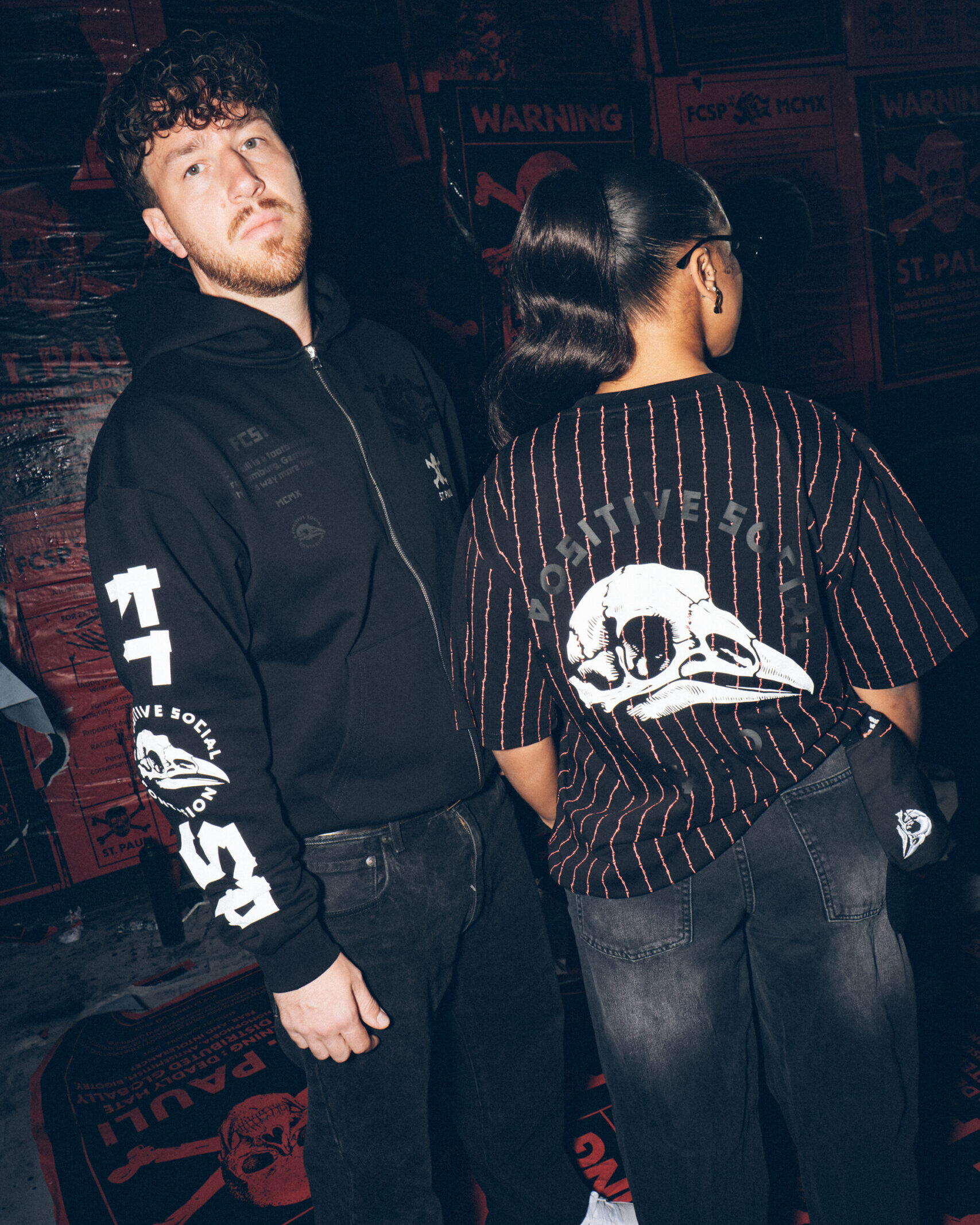
Awesome question. And this is the one that in practice makes me the most nervous. Because I could do something I think is dope, but do I want 30,000 fans in the stadium booing my collection? Absolutely not. So I’m very cognizant of making something that is respectful to the fans. Conversely, though, flip side, if I make something that the fans love and all the STAPLE fans are like, “What the hell is this crap?” So I’m trying to find that balance in creating this, which I believe I did. The other factor that I look into, it is my ultimate win is if someone like yourself maybe, who doesn’t follow the Bundesliga, has never watched the St. Pauli game, but this zip hoodie is so fire that you need to add it to your rotation. And now hence you do become a fan in a way because you’re repping the team now. That to me is the ultimate win.
And then on the flip side of that, you’ve got fans who love anything St. Pauli, who’s never even. Forget Jeff Staple. They never even heard of streetwear. They don’t even know that people collect sneakers and now they’re buying this jersey and I design it, they look into the hang tag and everything and they learn who I am. So that’s what I’m trying to do when I design this collection is make the fans happy, make me happy because I’m the founder of this brand, but also create something that allows for new audiences to come in. That’s my goal. And different designers have different objectives. Some designers want to create something so polarizing that it’s like, “Yo, I only want me and my 10 friends to go to the club to rock this. That’s our shit.” I get that too, because then that becomes you and your posse’s uniform, but then no one outside of your posse would rock that. And to me personally, that’s not a W. That’s an L in my opinion. I want new people to rock this.
What has surprised you most about the culture, and what do you think STAPLE can bring to football that wasn’t there before?
Well, in all sport, apparel and merch and swag in sport is nothing new. It’s been happening for centuries, but it’s usually pretty thoughtless, pretty cheap, made by some sporting goods company, so there’s not really any thought-provoking thing to it. What I’m hoping is that in addition to the other six St. Pauli t-shirts you as a fan might have in your closet, this is an elevated point of view. And when you purchase it, it’s almost like a key to a Pandora’s box to a whole new world, and a world that I’ve been happily being involved in for three decades now. So that’s what I’m hoping for is that. And the lesson there is that this can apply to NHL, to F1, to any sport. There is the swag and the merch that you’re going to buy, but then there is a space for something that’s more elevated, has more storytelling.
It does ultimately end up becoming a wearable, a thing that you wear, but you can use this, and this is really the crux of it for me in STAPLE. To me, the blank T-shirt was like a magic carpet around the world. You can use this vessel to go anywhere and tell any story. Most people just want to embroider their one little whatever, polo horse, Gap logo, Abercrombie logo, whatever it is. But no, I saw it as a way, you could use this as a blank canvas and it’ll take you around the world.
You talk about storytelling there, and I think that’s a huge piece of your brand and how you’ve gotten to where you are today. Is that something that you’re going to be super involved in when it comes to this collaboration, the whole rollout? How involved are you there?
It’s a blessing, man. It’s a thousand percent a blessing. I mean, I could tell you I’m leading off a whole talk series that they’re doing in the stadium next week. They do a creative conference already called STANDS. So I’m the kickoff keynote speaker there. There’s also going to be a more private breakout workshop session where people can directly ask me questions. And then I’m also leading a DIY work session where I’ll have heat press machines. I’ll be able to work with people on blanks, and then we could design shit together. And that to me is like, you asked if it was work. I guess it is work, but it’s not. What an honor it is for me to be able to go to a foreign country and tell my story, share it with people. If they have inquisitive questions, I can help, maybe guide them in a certain direction, and then to be able to play with them all to help tell the story of this collaboration we’re doing is an honor.
I kind of equate this often with. Did you ever own an ant farm when you were a kid or your friend? To me, at the end of the day, I’m a creative, I’m a designer, I’m an artist, but that is the job. The job is for the ant, it’s moving one piece of sand to another place. That’s what they’re doing. It’s work, it’s my craft, it’s my trade. And then the part about the ant farm that’s interesting is that I feel like the ant sometimes must look out and be like, “Why are people watching me work? Why is this so interesting to y’all big-face people out there that I’m just working?” But that’s sometimes how I feel. I’d be doing this even if there was no paycheck involved, even if there was no sponsorship, I’d be printing shirts, I’d be talking to the youth about how to do it. So now that brands and sports teams and conferences are involved, I’m just like, “Wow, y’all are interested in this because I’d be doing this anyway.”
When it’s all said and done, what does success look like for you in this partnership?
I have very low expectations. All I need is for me to one day see a stranger I don’t know rocking the collection. Because you know what that tells me? That person spent his or her hard-earned money on a thing that came out of my brain, and they don’t know who I am. They’ve never met me. That to me is still wildly crazy that people earn their money and I’m going to buy this thing that came out of this person’s brain that I don’t know. Wow, that’s crazy. So that’s my goal with this.
Read More:

Red Hook Tavern: Where Billy Durney Wants to Know Your Name
Keanu Reeves’ Next Act Is Built on Two Wheels

The Blueprint: Jessica Holtz Meets the Moment
The Power Broker: Emma Grede Is Just Getting Going

Quiet Power: Imani Ellis on CultureCon, Creators, and Learning to Let Go