


Angel McCoughtry opens up about life between basketball chapters, battling injury, and discovering a new identity behind the camera.
Last offseason — and really, the long stretch that followed — forced Angel McCoughtry into unfamiliar territory, the kind that doesn’t come with a playbook or a timeline. She wasn’t done with basketball, not officially, but she also wasn’t playing. Caught in that in-between space, rehabbing from back-to-back ACL injuries and waiting on opportunities that never quite materialized, McCoughtry found herself confronting something most athletes spend their entire careers avoiding: stillness.
“I still haven’t retired. And so I’m sitting at home with no job, nothing to do, and I was injured,” Mcoughtry told Boardroom.
For someone who had been immersed in basketball since the age of 8, that absence wasn’t just about the game; it was about identity. The structure was gone — no practices, no travel, no locker room rhythms to fall back on. Just time, uncertainty, and a growing list of questions that didn’t have easy answers.
What do you do when the thing you’ve always done is suddenly out of reach? How do you replace something that’s been all-consuming for decades? For McCoughtry, the weight of that reality hit hard.
There’s a tendency to gloss over this part of an athlete’s journey — the moments that don’t fit neatly into comeback narratives or retirement tributes. But for McCoughtry, that stretch became the catalyst for something entirely new, even if it didn’t feel like it at the time. What started as a need to simply do something — anything — slowly evolved into a creative awakening she never saw coming.
“And so I’m sitting at home with no job, nothing to do, and I was injured. And then after my first injury, I came back to play in Vegas, went to the championship game the next year, came back, injured again. And so from that time, that’s when I was in this depressive state.”
The breaking point wasn’t just about basketball; it was about survival. Financial pressure, emotional strain, and the uncertainty of what came next all converged at once, forcing her to look beyond the game in a way she never had before.
“I knew I needed to express myself in some kind of way. I didn’t know what it was,” she admitted.
The answer, when it came, wasn’t rooted in childhood dreams or long-term planning. Entertainment had never been part of the blueprint. There were no early aspirations to be behind a camera, no storytelling background, no indication that this would be her next chapter. Basketball had always been the singular focus.
But curiosity has a way of opening doors that planning never does. What started as simple questions — how do films get made, what does it mean to create something from nothing — turned into something deeper. The idea of building a world, of bringing something into existence that didn’t exist before, struck a chord.
“And I remember just asking someone how this works. And I’m like, ‘What is it like to tell stories that didn’t exist and you bring them to life?’”
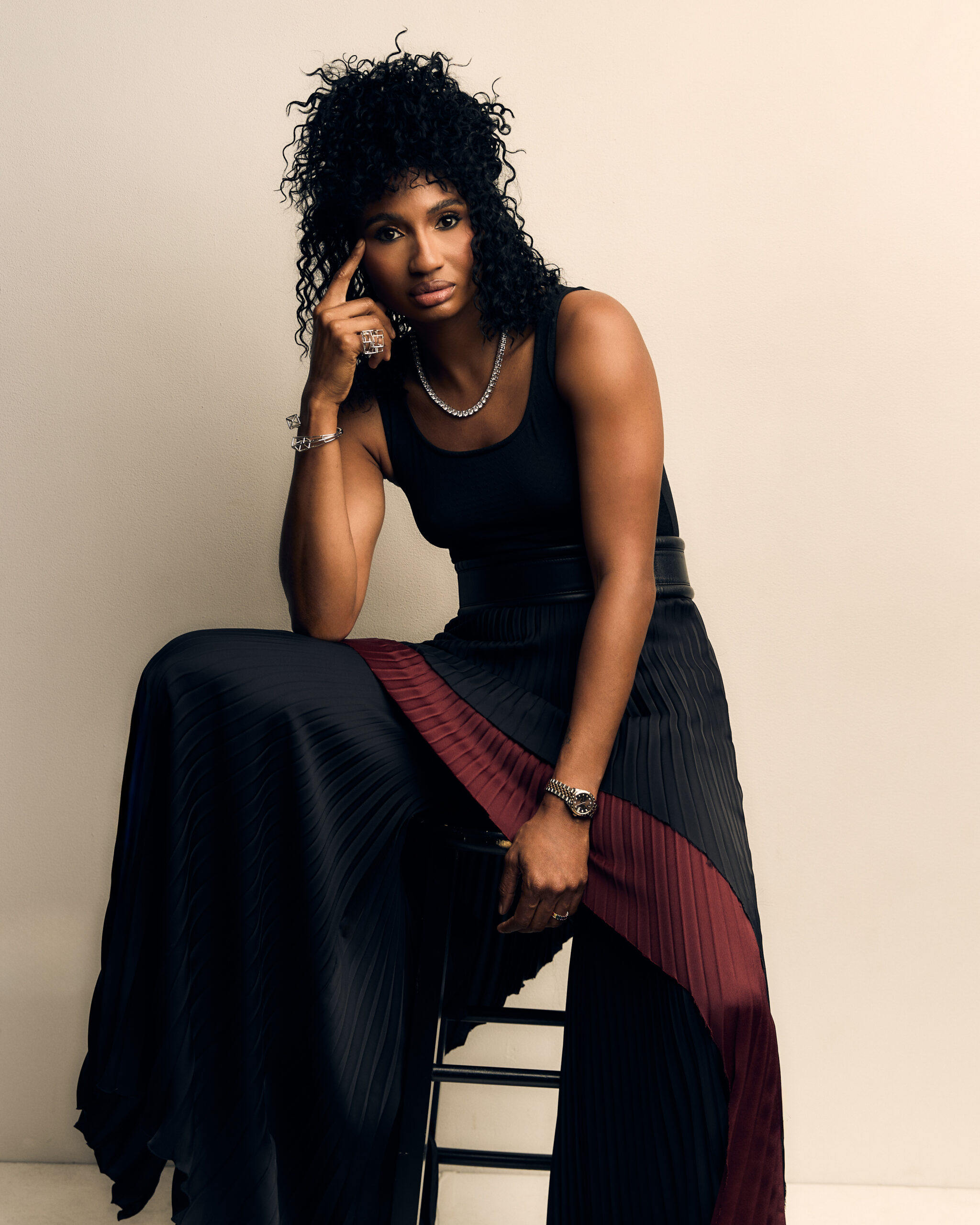
That question stuck. It lingered long enough to turn into action, and action quickly turned into something more. When McCoughtry finally stepped into a creative role and directed her first project, the feeling that followed told her everything she needed to know.
“So when I first directed my first film, it gave me the same adrenaline rush as basketball, and that’s when I knew. I’m like, ‘This is what I’m doing.’”
That moment reframed everything. This wasn’t just a distraction from the uncertainty of her playing career. It wasn’t a side project or a passive investment, the way many athletes approach entertainment. McCoughtry went all in. She began writing, directing, editing — not just participating in the process, but leading it. She built her own production company, McCoughtry Entertainment, leaned into the business side, and started navigating an industry that, on paper, couldn’t be more different from the one she came from.
And yet, the more she settled into it, the more the parallels revealed themselves.
It’s a comparison that might sound simple, but it carries weight. Basketball, especially at the level McCoughtry played, is about far more than physical ability. It’s about understanding people — knowing how to communicate, how to motivate, how to get the best out of a group with different personalities and pressures. On set, those same instincts apply.
“The discipline. The discipline from basketball, how to lead. … In order to be a successful leader, I have to know my personnel and know who could I yell at on a team, who needed a pat on the back, who needed what in which time,” she said.
That awareness, built over years in locker rooms and high-pressure moments, has translated seamlessly into her work as a director. It’s also helped her establish a tone early in her career, one defined less by hierarchy and more by collaboration. In an industry known for difficult personalities and power dynamics, McCoughtry says her experience has been the opposite: “It’s just been so positive, embracive.”
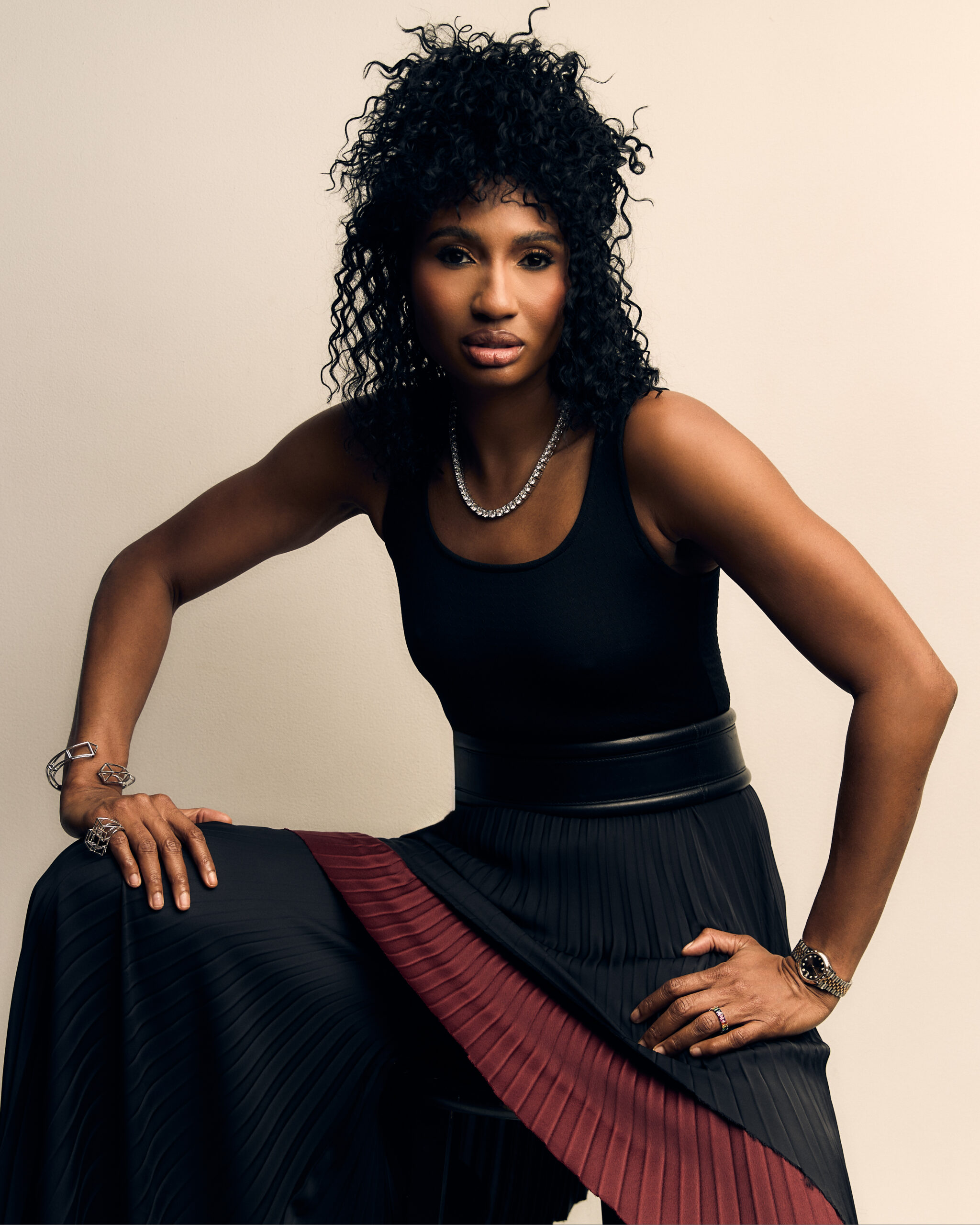
Part of that, she believes, comes from the respect that follows athletes into new spaces, particularly women who have carved out their place in sports. But part of it also comes from how she approaches the work — hands-on, detail-oriented, and fully invested in every aspect of what she’s building.
That investment is already paying off. While her basketball future remains uncertain, her path in entertainment has been marked by steady momentum. Projects are in development, including her feature directorial debut in the thriller Apt 6B, as well as her short film Bygones, available to stream on Prime Video, with more on the horizon. The specifics, including a potential high-profile lead, are still under wraps, but the vision is clear.
“Oh, it’s been great because, like I told you, from getting in the space, people kept telling me how hard this space is and blah, blah, blah. But how I know that I’m meant to be in it is that the doors have been opening. It’s like in a weird way, doors have closed in basketball, which I’ve been trying to reopen, but the doors and film space have opened.”
At a certain point, that contrast stops feeling like a coincidence and starts to feel like direction. For McCoughtry, the message became simple: lean into what’s working, even if it wasn’t part of the original plan: “Maybe it’s just my sign. Girl, walk into the door that’s opening.”
Still, this isn’t a story about leaving one world behind for another. Not entirely. McCoughtry hasn’t closed the book on basketball, and that lingering connection adds another layer to everything she’s doing. She’s not operating from a place of finality, but from one of transition, building something new while still holding onto what came before.
That duality is part of what makes her story compelling. It’s not a clean pivot or a neatly packaged second act. It’s a process, unfolding in real time, shaped by circumstance as much as intention. And within that process, she’s thinking beyond herself as the first WNBA player to direct.
It’s not framed as a headline, but it carries significance. Because for McCoughtry, success in this space isn’t just about personal achievement; it’s about creating pathways. She wants other WNBA players to see what’s possible beyond the court, to explore opportunities in acting, directing, storytelling, and production in ways that haven’t been widely accessible before.
“And so I want to be someone who gives opportunity to WNBA players in this space because there’s no other WNBA player directing.”
In that sense, the throughline from basketball to film becomes even clearer. Leadership doesn’t stop when the game does; it just takes a different form.
And for McCoughtry, that form is still evolving. What started as a response to uncertainty has grown into something far more defined, a new identity taking shape alongside the old one. She didn’t set out to become a filmmaker. She didn’t spend years preparing for this shift. But in the absence of the game that had always anchored her, she found something else — something that offers the same energy, the same challenge, the same sense of purpose.
A different arena, but the same drive. And if the early stages are any indication, she’s not just adjusting to it; she’s building something that could outlast the career that led her there in the first place.
Read More:

The Blueprint: Jessica Holtz Meets the Moment
The Power Broker: Emma Grede Is Just Getting Going
Quiet Power: Imani Ellis on CultureCon, Creators, and Learning to Let Go

The Long Game: How LeBron James and a Few NBA Friends Might Elevate the Game of Golf
Savannah James and April McDaniel on Navigating Money, Friendship, and Business