

The founder of the ever-popular annual conference shares her ideas on leadership, a secret her grandmother taught her, and why she wants to build the A24 for culture.
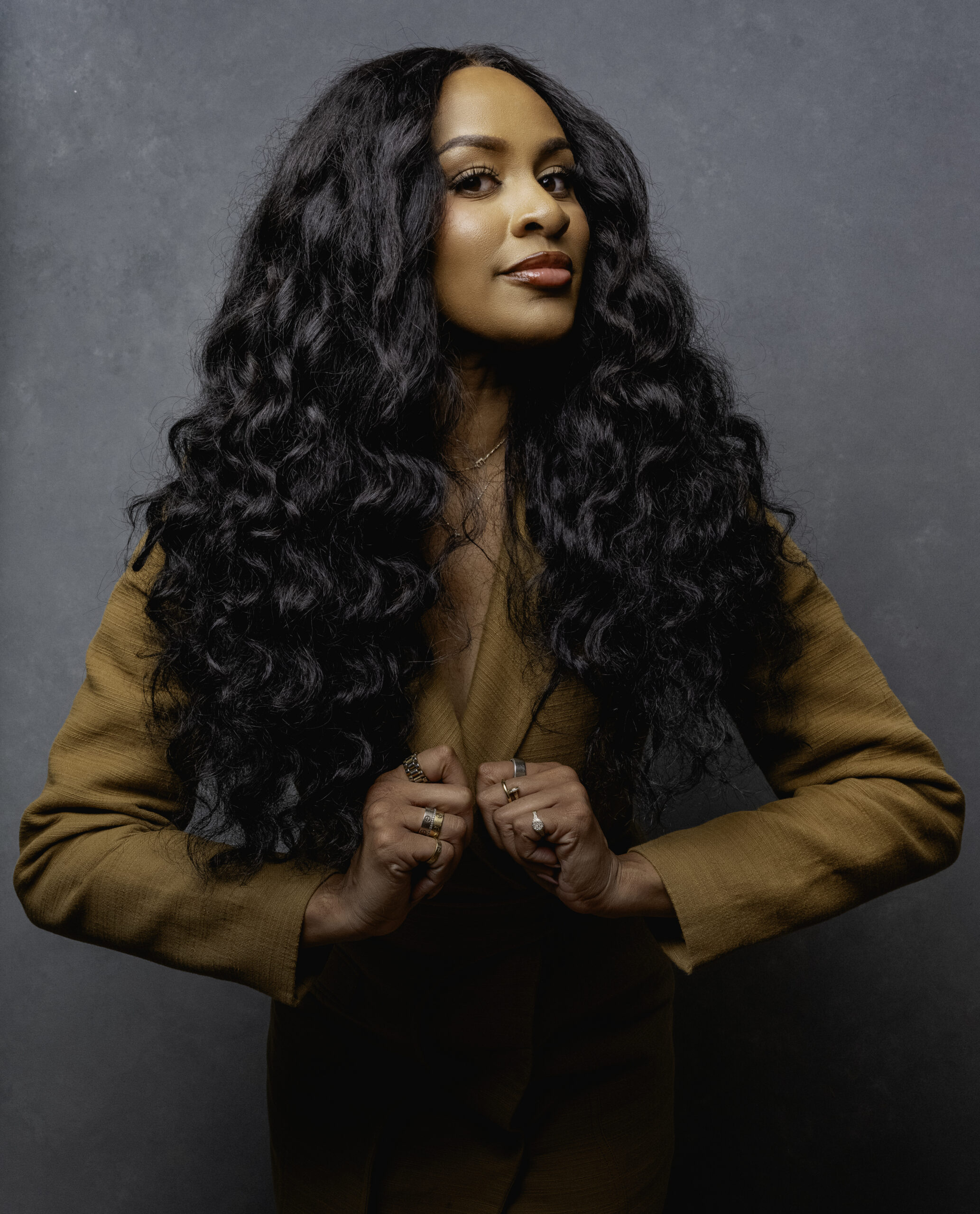
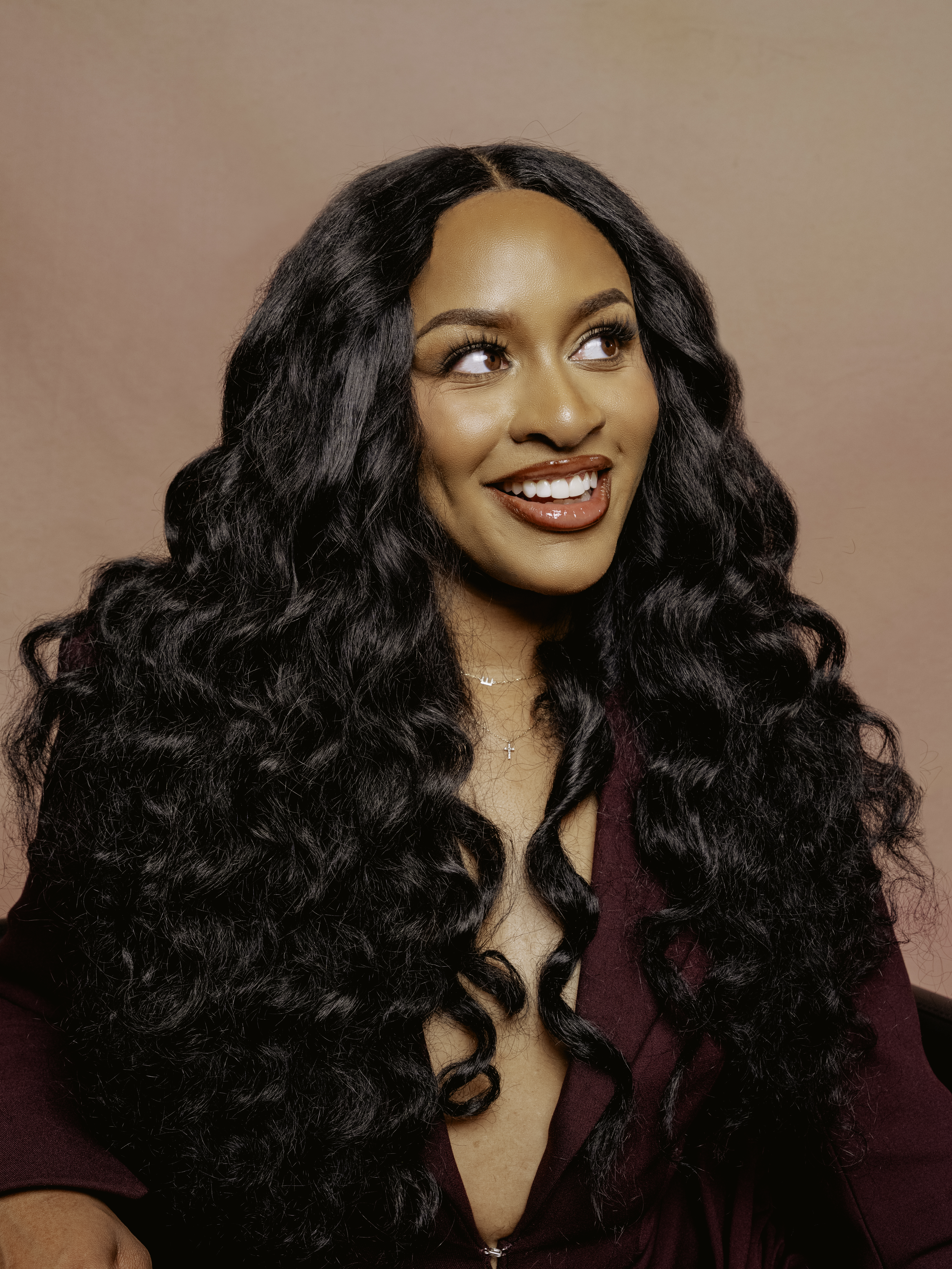
You can tell a lot about someone based on the way they react when you ask them what they think about the word “culture.” To many, it’s an overused catch-all. A term marketers and advertisers use when they can’t quite say what they really mean to say or when they actually just don’t know how to describe the ambiguous, amorphous connective tissue found between all the things your friends are raving about. To others, it’s, well, everything. It’s akin to an heirloom passed down from generation to generation; something to be guarded and protected as well as nurtured and developed. The rub is both POVs are correct. It is a phrase that has become overused to the point of uselessness, but to some people it is the ultimate lodestar. Imani Ellis falls into the latter group.
If you know anything about Ellis, it should come as no surprise. The marketing guru, entrepreneur, and wearer of many hats founded CultureCon in 2017. What is now a wildly popular annual conference and festival for creatives and entrepreneurs started nearly a decade ago in her Harlem living room with about 10 people looking to connect and figure out how to uplift and push culture forward. It went so well that Ellis and Co. decided to invite a few more people (200 by her count) and booked Spike Lee as the keynote. From there it was a wrap. Ellis had tapped into something that many felt was missing from the conversation: A real and true way for people of the culture to meet up IRL and discuss this intangible thing that connects all of them together but is constantly under threat by large interests hoping to use it for a payday.
That first CultureCon was scrappy. There were no walkies, so the team texted each other when Spike showed up. The venue was free, the granola bars were donated, and Ellis stayed up until 2 a.m. cutting out letters to paste on the walls. She figured it was a one-and-done passion project and that everyone would go back to their day jobs. Then her team told her there was already a waitlist of 500 people for the next one, and her dad told her to file for an LLC and a trademark. Fast forward to this October, and CultureCon is expecting over 12,000 people at the Brooklyn Navy Yard. Surprisingly, this year’s theme, The Museum of Us, didn’t come from Ellis, an avid art collector. It came from one of the company’s fellows, who had just graduated from college when she pitched it. In that way, it really shouldn’t be a surprise because that’s the way Ellis has designed the company. She believes in letting great people do great things. And that ideas can come from anywhere. It’s what helps drive the success of her company.
Speaking of the company, these days the festival is only one piece of the business. CultureCon Studios, the company’s agency arm, works with brands all year, and Ellis says it’s close to being as big a profit driver as the festival. She also spent part of this summer judging at Cannes, so I talked to her about what she brought back with her, why she thinks you have to scale intimacy as you grow, and what it would look like for CultureCon to become an A24 for culture.
This interview has been edited for length and clarity.
Boardroom: Before we get into this year’s CultureCon, how was Cannes?
Imani Ellis: Cannes was great. I’m coming now as an entrepreneur. I used to go to Cannes representing NBC, so seeing the journey of how I’ve grown, Cannes is a good barometer of my own growth. There’s nothing like it. It’s such an interesting group of people.
It’s changed a lot, too.
Yeah. I’ve spent a lot of time at Cannes looking at all the art. This year I was a judge, so it felt even more personal because I got to look at my peers’ work and really appreciate the effort that goes into these campaigns. With them opening up the creator vertical, it’s just exploded. I usually go there for inspiration, because I also know that after Cannes, it’s CultureCon season. Cannes is my last little hurrah before I have to get into the lab.
You were on the jury. And I read that you have a film background. How was it to use that background on a stage as big as that?
I minored in film in college because It’s my favorite medium of storytelling. I feel like you can change someone’s mind through film more than almost any other medium. I never knew where I would use that again. We must have watched over 400 submissions, and every submission comes with a detailed breakdown of every part of the campaign. It made me love it. I don’t know if we think about how much work goes into all of these campaigns, and it’s a lot like a CultureCon. You see the iceberg above the water, but there are so many hours of effort and collaboration happening under the surface. It’s not just the talent you’re seeing in the campaign. It’s everything that happened before.
Did you leave there learning anything you can apply to CultureCon?
Totally. Cannes is like Disney World for experiential. There’s so much to learn about large-scale events. CultureCon started with 200 people.
I thought it started in your living room.
Let me back up. Yes, it started in my living room with 10 people. This was in Harlem. We were all crunched around, and everyone could only bring one person. It was guerrilla marketing before we knew what that was. Then it was 20 people, and I said, I think we should do a festival and bring everyone together at the end of the year. At that first CultureCon, Spike Lee was our keynote speaker. We didn’t even have walkies. We were texting, “Spike Lee is here.” There were 200 of us, and I thought it was a passion project. I thought we’d do it once and be done. I had a full-time job that I loved. I wasn’t looking to be an entrepreneur.
There was no money in the first one.
Oh, no. Everything was donations. The goal was just not to lose money. We got the venue for free, we had donated granola bars, and all the talent gave their time. I stayed up until 2 a.m. cutting out Spike Lee letters and pasting them on the walls. We did a scavenger hunt, and we called one room the Spike Lee room. I saw Spike Lee go in, and he smiled.
I’m sure that felt good.
Yeah. So I thought it was over. I said, “Guys, we did it. Let’s go back to our day jobs.” And they said, “Imani, there’s a waitlist for CultureCon next year with 500 people on it.” That was when my dad said, “I think you should file for an LLC. I think you should file for a trademark.” Before that, it was almost like Bible study or history week. Something you give back, not a business.
So you go to Cannes this year, you’ve stepped up, you’re in a different part of the iceberg. What are you taking back to CultureCon?
The details. First of all, Boardroom had a very nice activation.

I wasn’t there, but I saw the photos.
Listen, you guys had fans. Very thoughtful. That’s what I mean. In Cannes, that is a love language. It is so hot. Anyone thinking about the consumer journey in that way is what I’m always taking back, because as you scale — we started with 200 people, and now we’re at 12,000 — you have to scale intimacy. You scale intimacy by making sure the consumer feels seen. A big part of what I learned at Cannes is those small moments: having fans because you know it’s going to be hot, having spaces where you can be less stimulated because you know there are a lot of people, having a lot of analog because you know everyone’s going to be on their phone. Pinterest had a lot of DIY moments. And leaning into nostalgia, because a lot of people come to Cannes to play and party. How do you bridge play and brand integrations? A lot of it is nurturing that inner child. We’re going to bring so much of that back to CultureCon. Our theme is The Museum of Us.
The Museum of Us, in October. Go into that.
Growing up, my mom took us to so many museums. I have two sisters and a brother, and whenever we went to a different city, we’d go to the museum. We went to Memphis, to the Lorraine Motel. We went to Birmingham. My grandmother used to be a waitress for Martin Luther King. She actually gave the civil rights marchers advice: put pepper in your socks for the German shepherds.
She knew that?
She told me this so casually last week. I said, “Wait, Grandma, stop. You saw Martin Luther King?” She said, “Yeah, I was a waitress.” I’m like, “What was he like? What did he smell like?” She said, “He was a very nice man. He was always very kind.” I said, “Was he tall? Was he short?” She said, “He was taller than me.” I asked, “What did you say to him?” She said, “I didn’t say much because I was just a waitress, but I did tell their table to put pepper in their socks.” So I pulled out my phone and recorded her saying it, because she had never told me that before. She grew up in Birmingham, Alabama.
Wow.
So there’s a lineage of history. I’m very curious about fun facts like that, and I’ve always loved museums. Every year, we open it up to our fellows to present ideas for the next year’s theme. The Museum of Us came from one of our fellows, Chloe, who had just graduated from college. At CultureCon, we believe good ideas can come from anywhere. A fellow, which is the equivalent of an NBC page, came up with the theme, and we all fell in love with it. It’s about being both a work of art and a work in progress. We’re going to have 12,000 people, our campus is bigger than ever, and the stage is a huge snapshot of a museum, with art curated by Black artists. This might be my favorite theme yet. It’s very personal.
Reading some of your interviews, it seems like you’re very into the art world. You own a number of pieces, and you’ve facilitated a lot of conversations around art. Where does that come from, and outside of this year’s CultureCon, what more are you trying to do in that space?
Artists are always at the forefront of revolution and storytelling. James Baldwin is one of my favorite artists. When I read his work, he could be writing it today. The way he constructs words moves me. Unfortunately, the world we’re living in is go, go, go, and that’s counterintuitive to the artist, who has a different rhythm. I have so much empathy for artists because they’re up against a world that says produce, and that’s not how it works. At CultureCon, we’re trying to equip artists with the tangible skills and community they need to do the art they need to do. A lot of conferences and festivals focus on one medium. At CultureCon, we’re putting the artist who wants to create art with the operations person who can make sure they make money, because it’s so isolating. Art has always been personal to me because of the storytelling, but at CultureCon we see that actualized. A lot of artists are isolated, and CultureCon brings back the idea that you need an ecosystem. You need people. You need the Basquiat with the Andy Warhol, that balance of pure art plus connection. We’re trying to put artists in that equation so they realize they don’t have to be the starving artist. They can see themselves as entrepreneurs, entities, brands. So we have panels on trademarks. So many artists are so creative that they’re just putting it on the internet.
They don’t think about the other stuff until they have to.
They don’t. Which is why we created CultureCon.
I want to touch on two things you said. One was scaling intimacy. I’m interested in how you plan to do that.
My superpower is that I’m an introvert.
You don’t seem like an introvert.
My team will tell you I’m an introvert. It’s about where you get your energy from. Being an introvert doesn’t necessarily mean you’re shy. It means you recharge by yourself, whereas extroverts recharge around a lot of people. I have a very finite tank. My mom doesn’t. Both of my parents are preachers, so I grew up as a PK times two, and my mom would parade me around. I would tell her, after a certain number of handshakes, I’m done. But the advantage is that when I walk into a room, I feel so much energy. I can usually feel the person standing in the corner who’s trying to get into the conversation, and nobody’s letting them. I think about them when I’m building the CultureCon experience. Remember the first day of school in fourth grade, when everyone was too awkward to go up and talk, and the teacher would do a cheesy icebreaker? Low-key, you were thankful, because everyone was on an equal playing field.

We’ve seen you grow from launching this experience and this company to hosting and doing media on your own. It seems like you’re taking on more. How do you balance growing in that direction with staying aligned with what the company needs?
One of the privileges of coming from crisis is being able to manage a lot of fires and knowing the difference between a level-10 fire and a level two. As our team grows, I’ve learned to let go of being part of every single decision. I’m very clear: you can handle these, you don’t have to come to me. I don’t want to be the bottleneck, where I’m talking to Boardroom and the whole company is at a halt. So I give and relinquish responsibility step by step. The CEO should be the visionary, using their time to make sure the team is good. In the beginning, you don’t have that luxury. You’re everything. But as the team grows, if you’re still doing the same amount and the same kind of work you were doing in year one, that’s a leadership problem. I meet a lot of CEOs who can’t let go, and that means you’ll never scale. It’s never going to grow, if you’re okay with never taking a vacation. For those of us who aspire to take a vacation, you have to understand what your CEO tasks are and what they aren’t. I wouldn’t say CultureCon was ever my baby, but I wanted to shepherd it enough that it could have an identity. Now that it has one, I’m very clear about the things only Imani can do. There are very few of those. Everything else, I have to trust someone, and even if it isn’t exactly how I would do it, if it’s 90 percent there, that has to be okay.
What are the things only you can do now?
Now I have to set the priorities, because every team has its own priorities. I have to raise to the top the three priorities for the whole company, and you have to filter everything you’re doing through those three, regardless of your team’s priorities. The other thing that gets overlooked is company culture. You want to lead by example. That means making sure I’m not so stressed that I’m snapping at people or talking over people. People can feel that. It’s leading by example that this is work, but we also have time for play. And it’s looking around the corner, being able to say, we’ve got this huge festival in two weeks, but it’ll come to an end. What are the priorities going into 2027? How do I make sure we’re getting enough rest, that I’m not burning you all into the ground going into January? I came from corporate for 10 years. I know what it feels like to never stop. I worked so hard that I had to take a 30-day sabbatical in Paris.
I was reading about that.
I took a creative residency. I gave myself an entire curriculum and followed Baldwin all around Paris, because this wasn’t sustainable. So I really am the visionary. There were times I was so busy writing the captions for Instagram that I couldn’t set the Q1 priorities.
Is there a learning experience you’ve had through CultureCon that you take with you now?
So many. CultureCon is business school, but it’s real business. A lot of leaders, especially those building something, fall into a formula that I finally had to see and break. The formula is: I can do it by myself. I don’t need help. No one can do it quite like me. Then you realize you’ve done so many things by yourself that you fundamentally can’t finish any of it, because you’re only one person. So now you ask for help, but because you waited so long, you haven’t created the margin to get adequate help. Whoever you bring in isn’t set up for success, and now you’re frustrated. What I’ve learned is to create the margin for help at the top of the project, before you get to the fire drill. If you don’t, you’re reinforcing that only you can do it, which isn’t true, and that no one else can do it better, which isn’t true. Let people be the experts at what they’re experts at.
Free yourself, my friend. You want to do a paid ad campaign? Here’s your budget. Here’s your KPI. Come back and tell me how it went. Me getting on the call to learn how to do paid campaigns because only I can do it doesn’t make sense. But that’s what I was doing in the beginning. I was joining every single call, because I haven’t taken outside funding, so every penny mattered. Now I hire people who are smarter than me, and I let them tell me I’m wrong. If you’re the only person making all the decisions, that’s scary to me. It feels like the emperor with no clothes. You have so many blind spots. I need people around me who will say, “I don’t agree,” and I usually defer to them if they’re right. Now, if I’m right, well.
You mentioned that at Cannes this year, creators raised the festival’s profile with people who had no idea what it was about. Creators and CultureCon are closely tied. How have you seen that field grow and change?
We were supporting the creator economy before it was trendy. CultureCon has been around since 2017, and we always knew creators were going to become the new marketing campaigns. I knew that early on because I thought about who influences me to do things in my day-to-day. It’s my family, my friends, and people I aspire to be like. By the time the world was saying “the creator economy,” I felt like I was in the Twilight Zone, because we’d been creating for it already. To your point about Cannes, there’s something special about this democracy of who gets to tell the story. Creators are the future of campaigns. They already are. But the future is creators breaking into every industry. We saw it with Kai Cenat and Fashion Week. The brands that understand they need to be co-collaborators with the creative, not just hand them a brief, are the brands that will last for the next 100 years.
How are you facilitating that through CultureCon? How are you teaching creators and brands to work better together?
It’s a both-and. CultureCon is B2B, meaning our clients are brands who know that by coming to CultureCon, they’re reaching millions of people through our creators and consumers. But we’re also educating the creators. Going back to “Do you know what to do when you get a contract?”, we’re doing a live redlining workshop with actual lawyers who take you through a contract and show you in real time how to redline it and what you should be thinking about. We also have the trademark panel, and we’re giving away free consultation services so that before creators put something online, they’ve trademarked it. There’s nothing worse than fighting with someone in Wisconsin because you didn’t trademark your IP. How we stay ahead of the curve is that we believe community is a compound sentence. We’re able to predict the future because we start the sentence: what do you all want more of? What they came back with was, we want more education. We want to learn. So we created a new stage this year called the Creative Business Stage. It’s all about the business of being a creative.
It feels as if everyone has to be their own small business to make it. Is that sustainable?
It depends on what kind of business you’re trying to have. A lot of people equate business with big. But you can have a very profitable cupcake company that serves Atlanta, Georgia. You don’t have to franchise it to the whole world. Sometimes people scale and realize they’ve built themselves into a cage. If you’re a business, you’re a business owner. So what kind of business do you want to have? In the same way that I’ve decided I want to work in a different rhythm, you still have to be really good at what you do to earn the right to build your rhythm. You do need to think of yourself as a business, but beyond that, you need to think about what kind of business you want to have.
I want to go into CultureCon Studios. It seems like a natural step, but what made you want to go that route?
It felt like the perfect storm. There was my background in content, and our brands were always asking us for these things. They’d say, “We want to work with you year-round. Can you produce this content? Can you curate these creators? Can you do this event?” And I said, yes, we can. We’re already doing it. CultureCon Studios is our agency arm. All the brands you see activating at CultureCon are working with us throughout the year through CultureCon Studios. We produce short-form content, we have our partnership with Spotify, we produce CultureCon Uncut, we do social campaigns, we do events. This year we launched CultureCon Cafe, a 10-city tour, and brand partners were able to activate in those pop-ups all over the country. It’s the house that all the CultureCon projects can sit in.
As a business, is it as big as CultureCon now?
Not yet, but it’s close. More brands are realizing that popping up once a year isn’t the best strategy. What people will see is that we have campaigns running throughout the year, and CultureCon is either the finale or the springboard into the next year.
If you look at the pie that is CultureCon, what piece are you most intensely focused on?
The festival and the studio create a flywheel for us. The festival brings everyone in. People are very excited about CultureCon and its growth. We’ve now taken over four or five buildings in the Brooklyn Navy Yard. We started with one. That’s an exciting spectacle, and it houses the CultureCon brand. But my priority is absolutely CultureCon Studios, because content is endless. We’ve created a funnel where brands come to us through CultureCon, then stay throughout the year for CultureCon Studios.
You brought up nostalgia. It can be a great tool, but I think people use it to middling effect. How are you using nostalgia?
It’s an interesting time for millennials. We’re being ushered into actual adulthood. For a while we were saying “adulting.” I think we have to get out of that. We’re adults. And there’s a bit of, wait, where did my childhood go? I’m not sure I’m ready to leave it behind. So for me, it’s prioritizing play. Play is sometimes seen as frivolous, but I think it’s the ultimate form of safety. If you come to my home, I have Legos out, I have coloring books, and on my desk is a Barbie sign that says “Imani.” I decided my home would be for my inner child. At CultureCon, we bring that. We have an arts and crafts station where, if you’re feeling overwhelmed, you can build Legos, color, or make friendship bracelets. Because it’s part of the festival, there’s a permission people give themselves. I don’t know if they’d allow themselves to do that in everyday life, but at CultureCon, you can play again. We also do a lot of fun stuff. I love a truth or dare. You come to CultureCon, you choose a truth or a dare.
I feel like with CultureCon, people go with the intent of leaving with something to use, or to learn something, or to lead better than when they came.
We want to spark a fire so that you go back and there are little fires everywhere. One of the big things we’re talking about is helping our community recognize how they learn. We have different stages based on learning style. The Culture Stage is for people who learn from inspiration, which is how I learn. I’m like a koi fish: put me in a small bowl, I’ll stay small. Put me in a big bowl, I’m going to get big. I learn by seeing what’s possible. I love exposure therapy. Some people learn through frameworks, so the Creative Business Stage is for frameworks. And if you learn through conversation, we just launched Brain Date, community-led breakout groups of around 12 people. We’re going to have over 100 over the weekend. It’s about pushing people to the right stage. If you’re a framework person, don’t sit at the inspiration stage all day. It’s a different language.
The audience you’ve curated has grown from primarily Black to more multicultural and broader. How difficult was it to expand into broader creator and creative communities?
It wasn’t difficult at all. CultureCon did start as my dream, but it’s not mine anymore. When you’re truly in the business of community, that’s very different from audience. Audience is, we’re going to tell you what you like. Community is, I’m going to put this into the potluck, and everyone tell me how it could be better. So many people saw themselves in CultureCon and reached out and said, “Hey, Imani, with love, what about us?” I’ve had so many conversations with people who said, “Let me tell you what culture looks like to me.” CultureCon isn’t us telling people what culture is. It’s creating the room, and then our community comes in, and that’s the mosaic. If you can get out of your own way and admit you don’t know everything, it’s actually pretty great, because that’s the market research. What does James Baldwin say? “If I love you, I have to tell you about the parts that you don’t see.” If I love you, I have to tell you about your blind spots. So I don’t take feedback as, it’s wrong. I take it as, it could be better, and I love you enough to tell you how. Once I started sitting down with people over coffee, I think people were surprised that we put their feedback into place. The feedback was, we want more breakout groups. I said, okay, let’s launch Brain Date. We’re going to have 100 breakout groups over the weekend. The best reward is for people to tell you what they want and for you to deliver it back to them.
Finally, where is the growth? You talked about Studios, which is an obvious growth area. But in five years, does it look the same? Are there new appendages? Will things be dropped that are no longer relevant to the core business?
It’s definitely not going to look the same. A shark that stops swimming dies. There’s a lot of interest in international expansion. We’ve been talking to our friends in Paris and London, and they are so hungry for something like this. People are flying to CultureCon from Puerto Rico, Germany, London, and Paris to experience it. We just reshared a story of Parisians who come to CultureCon every year. I didn’t even know that was a group. So there’s international expansion, and also generating original IP out of the Studios. Right now we’re doing a lot of amazing work with brand partners, but the future is, what does it look like for us to be an A24 for culture? How could we create an incubator where we’re testing these things?
READ MORE:

The Long Game: How LeBron James and a Few NBA Friends Might Elevate the Game of Golf
Savannah James and April McDaniel on Navigating Money, Friendship, and Business

Why Jeff Staple is Bringing His Vision to the Bundesliga
Rare Company: Savannah James & April McDaniel Are Forging Their Own Path Together
Never-Ending Game: Master P on ‘Da Last Don’, Signing Snoop Dogg, & Building No Limit