

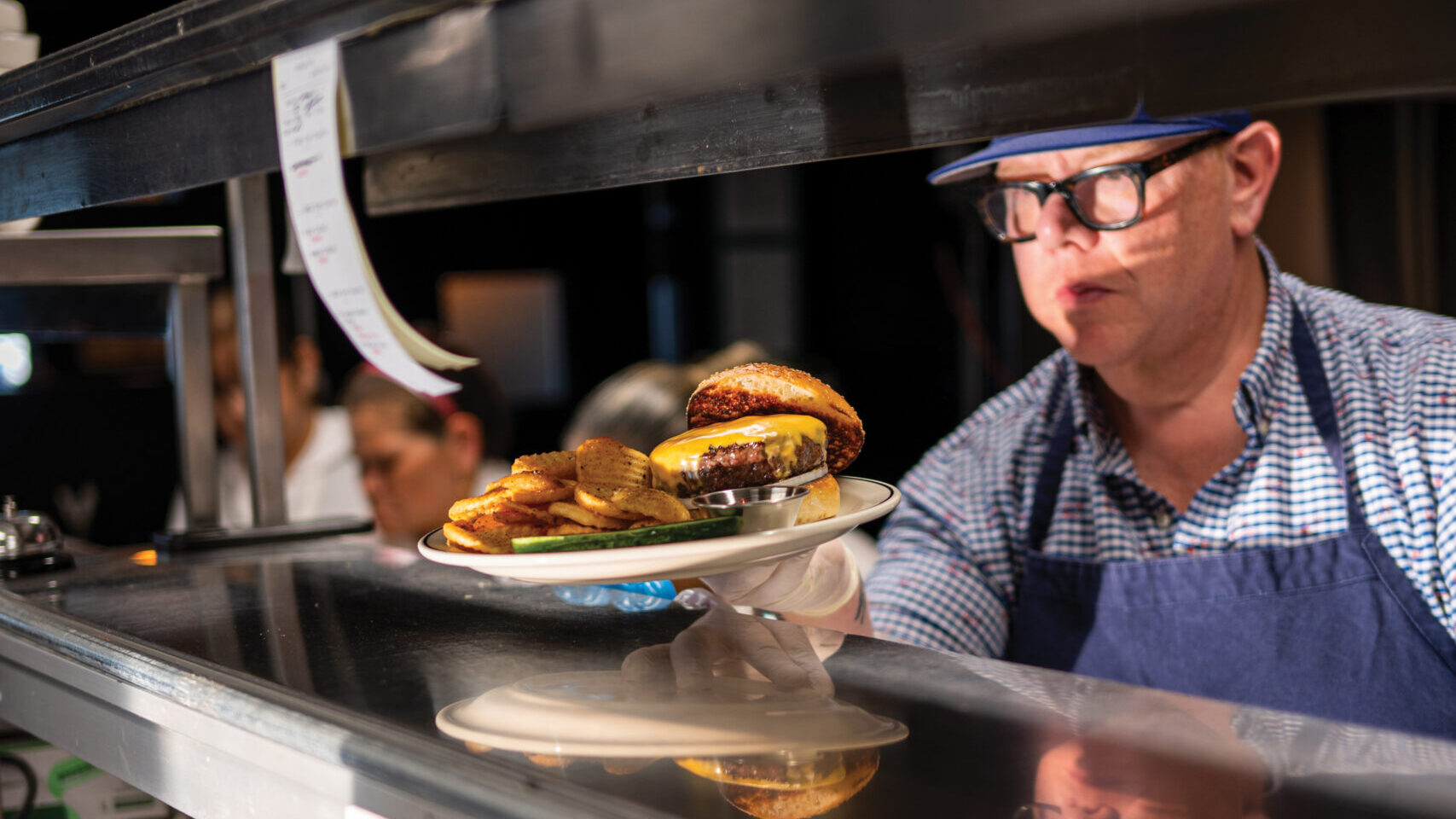
Before his burger became a New York icon, Billy Durney spent years protecting celebrities. Today, he’s chasing a different mission: creating the kind of place where every guest feels like a regular.
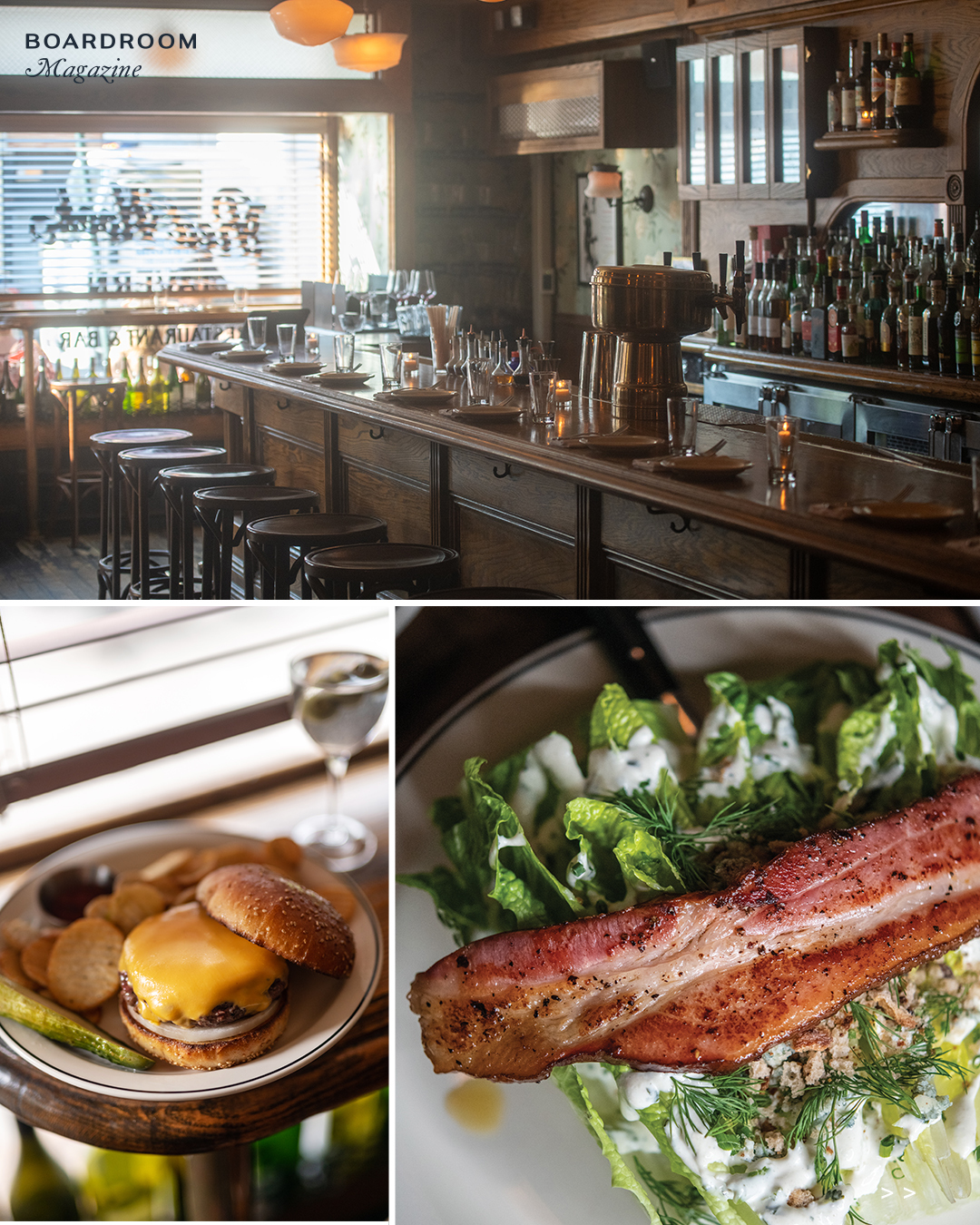
Even in an iconic food destination like New York City, there are only a handful of dishes that become heralded as classics—banana pudding from Magnolia Bakery, a slice from Joe’s, pastrami on rye from Katz’s, and a more recent entry, the burger from Red Hook Tavern. The hulking dry-aged burger topped with American cheese and raw onions has spawned hundreds of viral TikToks and topped many best-of lists, and regularly commands a line down the block of Van Brunt Street.
From the moment it opened in 2019, reviews immediately raved about the restaurant and its star attraction. However, according to Billy Durney, the restaurateur behind Red Hook Tavern and its predecessor, Hometown Bar-B-Que, the burger was never intended to be the focus of the menu. Nor is it Durney’s favorite — that would be the Spanish-style mussels.
There was only one problem: It was conceived as a neighborhood joint — albeit one with a nearly 900-bottle wine list — but thanks to the burger’s massive popularity, the neighborhood couldn’t get in. Nowadays, though, “there are backdoor systems,” says Durney, so if the neighborhood wants to get in, they can, plus the 12 bar seats are up for grabs every day. “It’s only a 40-seat restaurant, but we’re sold out. We could be sold out a year in advance.”
With that kind of demand, when the space next door opened up, taking it over was a no-brainer. Christened Tavern Next Door, the ’70s-inspired cocktail bar opened in May. Durney’s vision was to re-create the memory of a drunken night in Paris years ago, when he and his brother stumbled into a moody, candlelit bar and stayed all night. It’s the disco-going, European sister to the original Red Hook Tavern — and yes, they serve the burger there, too.
The expansion of the Tavern universe is just beginning. Durney and his company, Four Clovers Hospitality Group, are actively looking to open Taverns in other cities, something he never imagined himself doing. How could he, when the concept, the story, and his connection to the community have been paramount to each of his restaurants?
He’s still lamenting missing out on the space at Donahue’s, a 76-year-old Manhattan eatery tended by the owner Maureen Donahue Peters, whose family had operated the steakhouse since 1950 before it closed in June. “Eighty percent of her customers — 80% — were regulars,” Durney says. “I stayed there for two days — all day, all night…. She knew everyone’s drink, everyone’s food order, everyone’s everything,” he says. “I just found that completely remarkable. It reinstated my love of hospitality.”
So, the challenge of Durney’s next chapter: Can you scale the feeling of being a regular at your corner bar?
Born and raised in Brooklyn, Billy Durney grew up dreaming of joining the Army, inspired by his father, a Green Beret who served during the Vietnam War. He tried to enlist during Desert Storm in 1991, but his doctors discovered he had been born with one kidney, rendering him ineligible for military service. Looking to the next best thing, he landed a job in security doing what’s called “advance work” — mapping out walkways, exits, and trip hazards.
In 1998, Aretha Franklin came to town to perform at the Grammys at Radio City. Someone from her security team dropped out, and Durney got the call to fill in. It was his first time doing “close-in,” bodily protection, and he was riveted. “I was like, Wow, this is exciting!” Not because of the proximity to celebrity, but because of the weight of the trust placed in him. “Just the fact that your responsibility in the world is to make sure someone else is OK was always extremely intriguing to me,” he says.
A few years later, in 2004, he was working security in a corporate office building when a colleague gauged his interest in joining someone’s personal protection team. “I show up to a meeting, and it’s Ashley and Mary-Kate Olsen,” he says. Even though they were just 17 at the time, they hit it off, and he was assigned to Ashley’s detail.
Durney began traveling the world with them, enjoying a front seat to their rise and watching them grow up. “I was literally in the car the day The Row, their fashion brand, was conceived,” he says.
Five or so years later, an Olsen appearance was taking the team to Austin, and Durney decided to head down a few days early to get a taste of the barbecue scene.
Prior to the Austin trip, “I didn’t even know what barbecue was,” Durney says. “When you’re a street kid from Flatbush, Brooklyn, barbecue is an event you go to. It’s not a cuisine style,” says Durney.
His first stop was Smitty’s Market in a little two-light town called Lockhart, 30 miles south of Austin. Even more than the “mind-bogglingly good” sausage, it was the romance of the pit room spectacle that hooked him, making him hungry to try more.
But it was Louie Mueller Barbecue, a James Beard Award–winning restaurant in Taylor, Texas, known as the Cathedral of Smoke, that changed his life.
Despite it being a blisteringly hot Texas day in the summer of 2009, there were 200 people in line; Durney was floored. As he proceeded to wait for over an hour, he was further enamored by the community around him. “I saw the best of humanity,” Durney says. “All these people just talking about their kids, or their mom was ill, and someone’s like, ‘Oh, how can I help?’ Or ‘I know a doctor.’”
True to its nickname, the Cathedral of Smoke did not disappoint. When he finally reached the front of the line, he opened the door and was greeted by the billowing smoke of Texas barbecue’s signature post oak wood chips. “It was like the angels were singing,” he says.
“I literally put one foot in there, and I said, ‘I’m going to do that for the rest of my life.’”
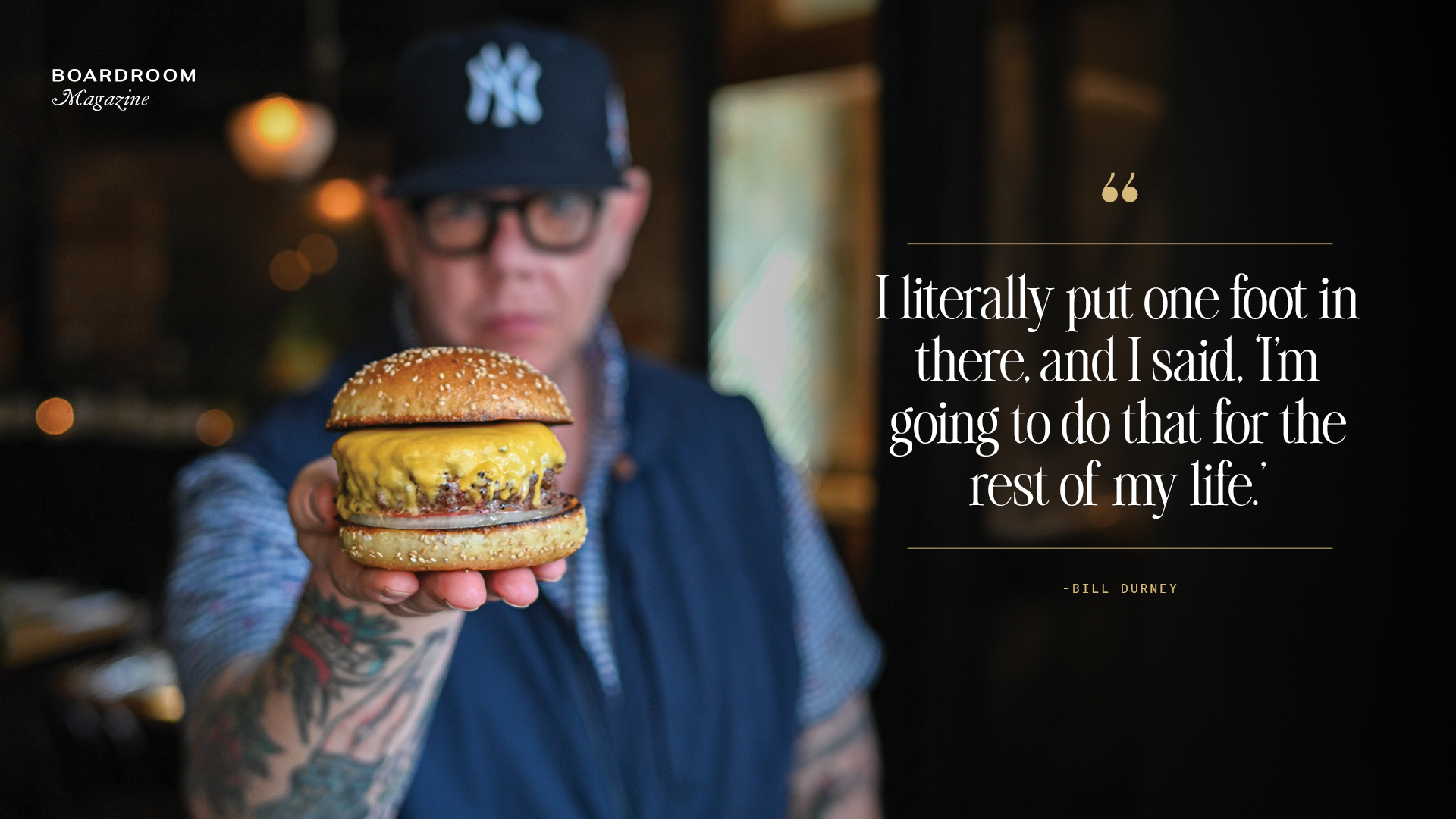
He returned home to New York and promptly informed his confused girlfriend that he wanted to learn how to cook barbecue. “I was in the peak of my career, traveling. Around every major celebrity you can ever think of, musicians. I’m on G5 [jets]; I’m having a great life,” says Durney. But after Texas, he couldn’t shake the feeling that he’d found what he was meant to do.
Armed with a smoker his mother gave him for his engagement, Durney devoted the next year and a half to mastering the craft, often tending fires through the night, waking to the sound of beeping meat thermometers.
When his now-wife Lianna finally declared one of his homemade beef ribs — his re-creation of the one he had at Louie Mueller — “unbelievable,” he knew that his dream was on its way to becoming reality.
In 2013, after borrowing $100,000 from his wife’s brother-in-law, Durney opened Hometown Bar-B-Que. “There were wild dogs running around Red Hook. There was nothing there,” remembers Durney. “But it was the only thing I could afford. It was a broken-down warehouse that was flooded out. I didn’t even have sidewalks.”
The name is an homage to his grandmother, Else Rutz, whose family settled in Red Hook after emigrating from Norway in 1931. He credits her for inspiring his love of food from hours spent cooking with her as a kid.
In the beginning, Hometown was the Billy Durney show: He tended the fires overnight, prepped during the day, carved every piece of meat, and greeted every guest himself.
Not long after opening, he got a visit from Steven Raichlen, a man whose barbecue cookbooks have won him five James Beard Awards. Durney remembers making him Vietnamese lamb belly and Chinese sticky ribs, which are still on the menu today. “He goes, ‘I’ve been to every barbecue restaurant in the world. I don’t know what you’re doing,’” Durney says.
In late 2013, six months after his visit, Raichlen published a list of the best barbecue and grill restaurants in the world, crowning Hometown No. 1.
“That was it,” Durney says. “It was like we were on a lightning bolt.”
After Hometown started to really take off, and Durney began asking himself what’s next, he found the space before he knew what it would be. “It was an old liquor store that had been there for 75 years,” he says.
As with Hometown, the exercise of developing the name and the concept led him back to his family’s Brooklyn roots, specifically his grandmother Else, who had lived through the Depression and been very poor. “I wanted to create a fantasy place that she would’ve went with her girlfriends and had a steak and a martini,” Durney says. “As soon as I said that, I knew what it was going to look like, smell like, feel like,” and he immediately started pouring himself into creating the old-school, ’40s New York atmosphere he’d envisioned.
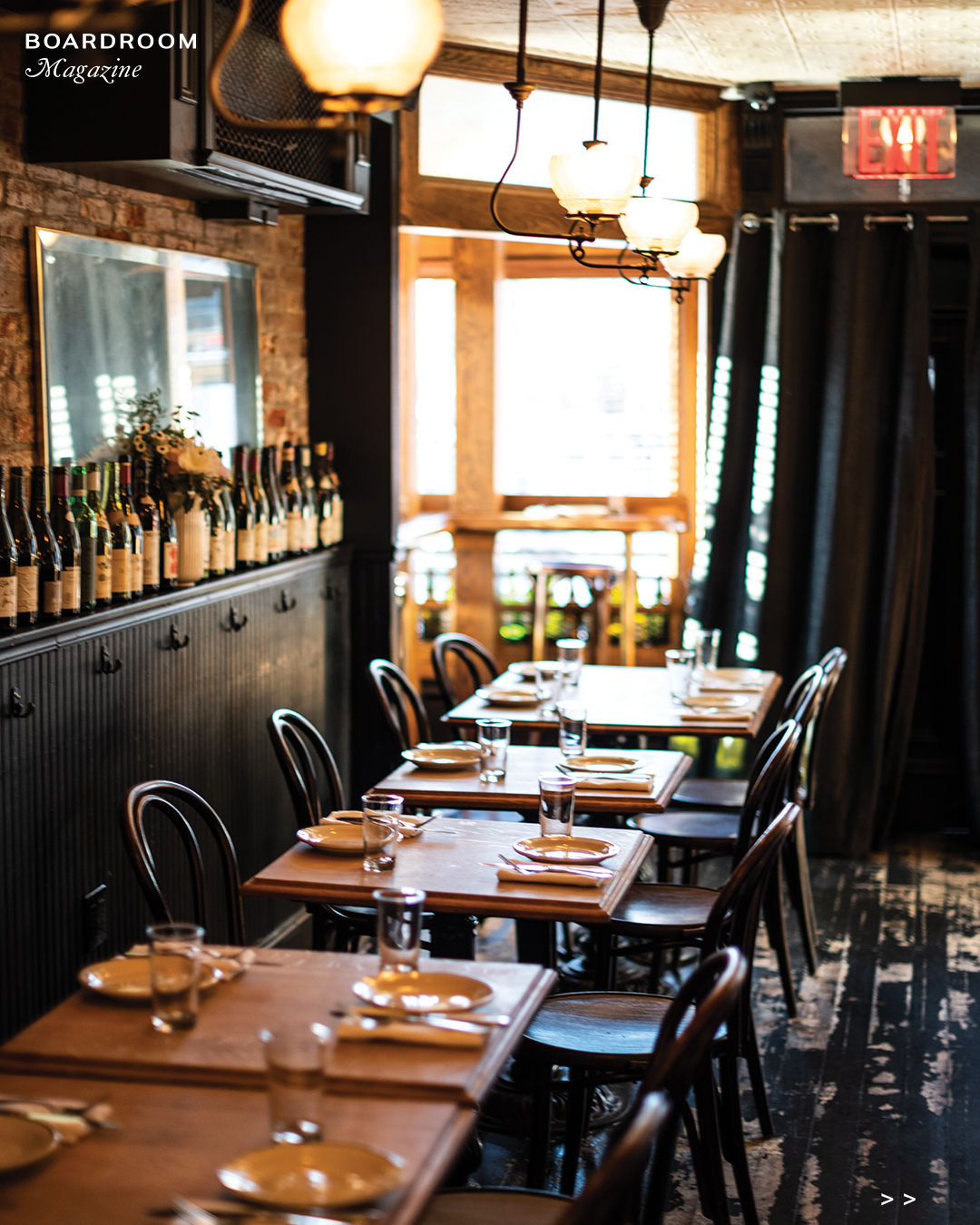
Now, when diners walk into Red Hook Tavern, they’re greeted with a pastel blue floral wallpaper that resembles the one in his grandmother’s home, a tin ceiling, and a row of tables and bar seating beneath electric gas lamps. The menu, too, evokes a certain homeyness: roast chicken like your mom makes, but better, the best mashed potatoes you’ve ever had, and a steak your dad would order every night if he could.
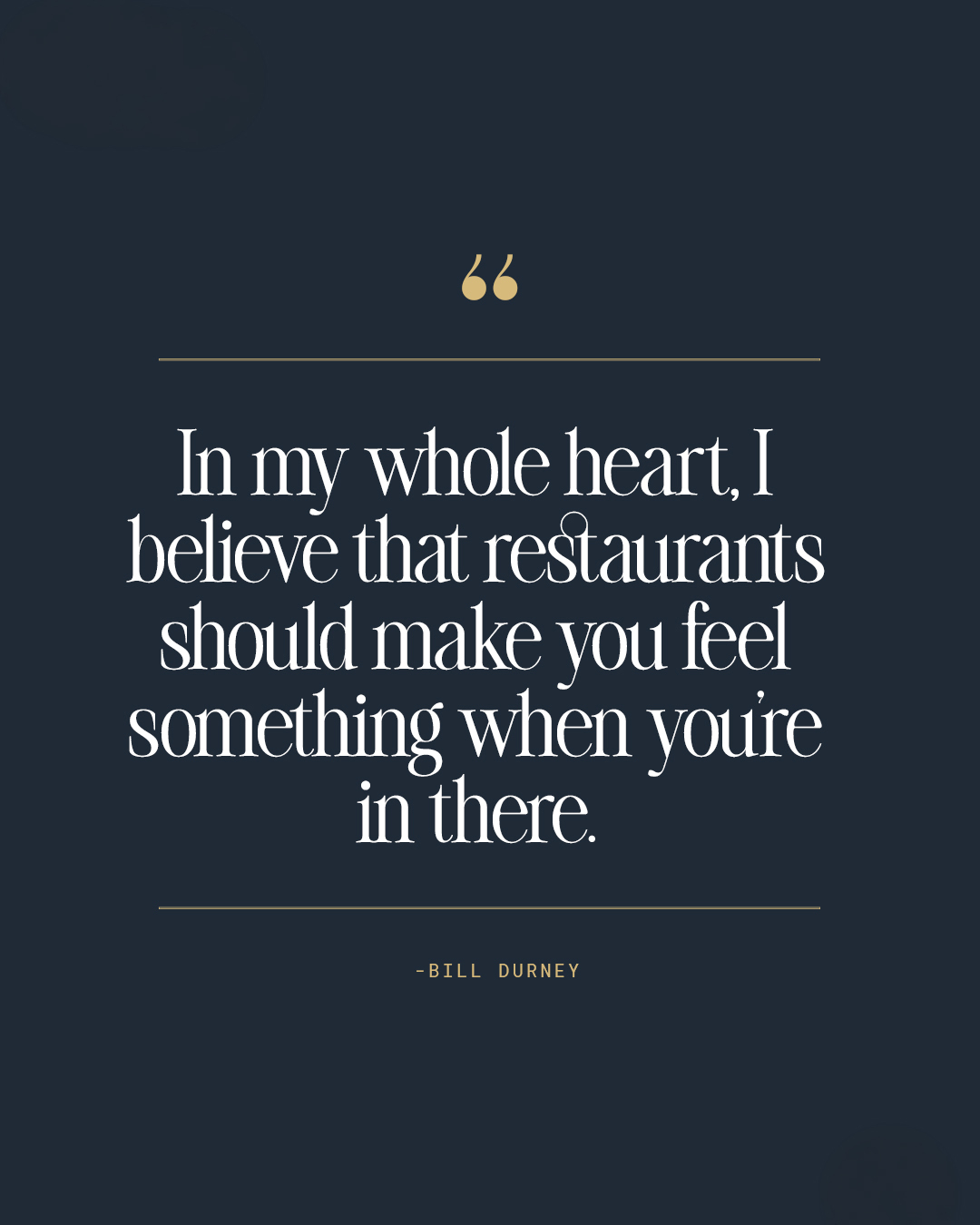
“In my whole heart, I believe that restaurants should make you feel something when you’re in there. Not only talking about the way the food tastes, I’m talking about how you’re greeted when you walk in, what the place smells like, what it looks like, what the bathrooms look like,” says Durney, which is why he continues to replace the $125 candles in the bathroom that are constantly stolen. “It says something about the details.”
Of course, when anything is as successful as Tavern has been, there’s a line of opportunists clamoring for more, more, more — a demand that, for years, Durney resisted, until a conversation with friend and fellow hospitality entrepreneur Mario Carbone shifted his perspective.
“I said, ‘Carbone was this really special thing and this unique experience,’” he recalls. “‘Why would you want to have one in Vegas?’ And [Mario] said, ‘Bill, you know how you make people feel when they come into your space? […] Why wouldn’t you want people to feel like that everywhere?’”
“That was it,” Durney says. “And weeks later, I got an opportunity to come out to this old American Legion Hall in Sag Harbor, and boom, Sag Harbor Tavern was born three years ago.” The Legion hall is still active, by the way, frequented by the veterans who have gone there for years.
This summer, his company, in which he recently sold a significant stake to Kent Hospitality Group, signed a lease for a space in Chinatown, which will be his first establishment in Manhattan. It’ll be bigger, too, maybe 90 seats instead of the original’s 40, Durney says. Plus, they’re looking in Philly and Chicago.
As the brand expands to more cities, and maybe even other countries, one thing Durney wants to maintain at every location is the private dining room. Without a second floor or a big-enough space, “it’s a non-starter,” he says matter-of-factly. According to Durney, the current one is so secure that a former president or Beyoncé could visit without the paparazzi trailing them. It’s a claim that from anyone else would seem exaggerated, but coming from the man who still counts doors everywhere he goes, it’s believable.
Decorated as a 1930s-era salon, the private room is where Durney holds court, as he regales his guests with the origin story of Red Hook Tavern and about his grandmother who inspired it. It’s a space where all the sides of Durney come together — the desire to protect, to nurture, to create intimacy and trust. And, of course, to eat some damn good food.
Read More:
Keanu Reeves’ Next Act Is Built on Two Wheels

The Blueprint: Jessica Holtz Meets the Moment
The Power Broker: Emma Grede Is Just Getting Going

Quiet Power: Imani Ellis on CultureCon, Creators, and Learning to Let Go

The Long Game: How LeBron James and a Few NBA Friends Might Elevate the Game of Golf