
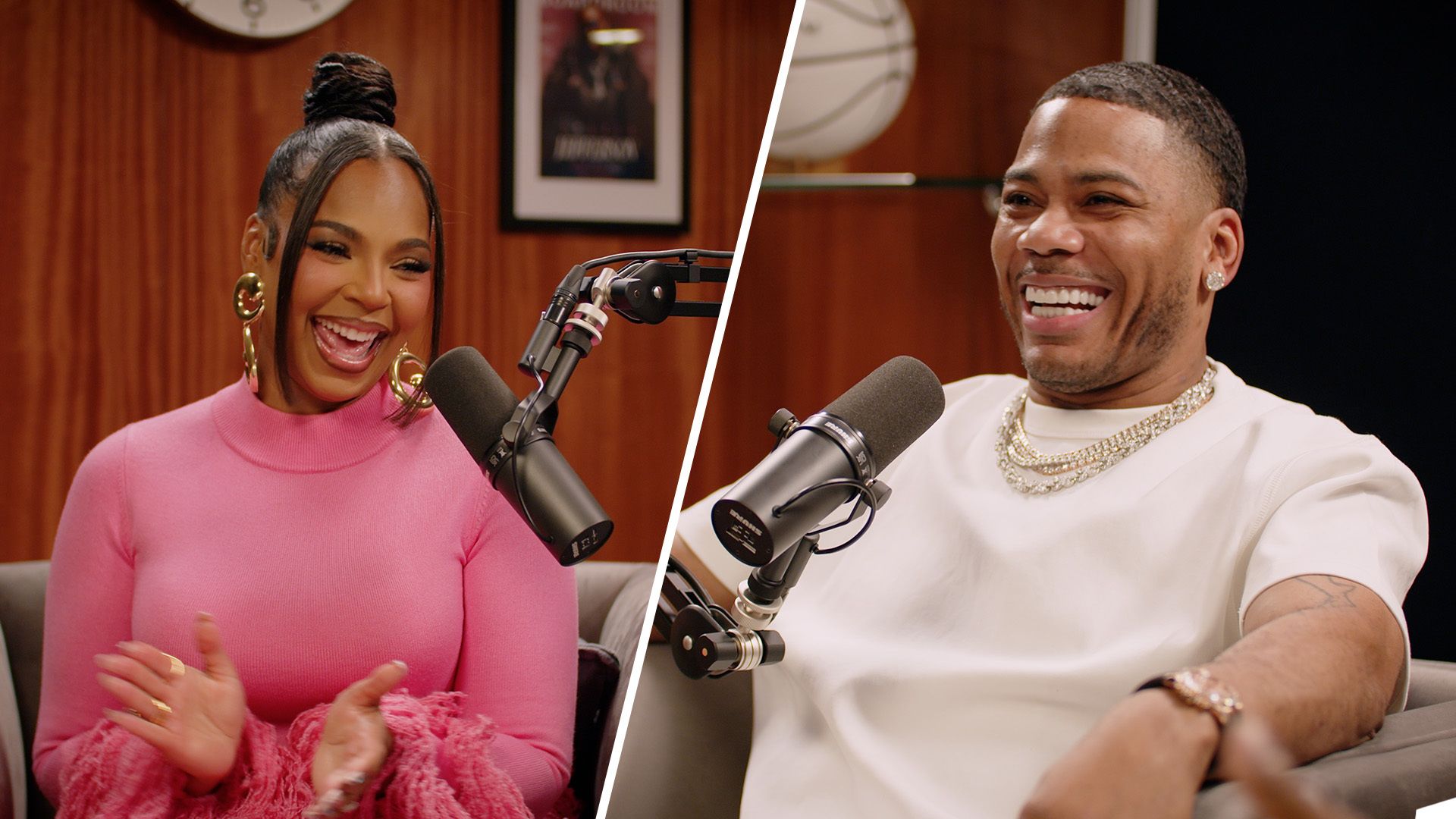
Nelly and Ashanti reflect on the music industry’s evolution, revisiting their biggest hits, reclaiming their catalogs, and building a future together on and off the stage.
It was a line Nelly dropped on The Shop that couldn’t be left alone. “Mine was the toughest era in hip hop ever, ever,” he claimed. Boardroom’s Damien Scott had been repeating it to friends and coworkers for weeks, so when Nelly and Ashanti sat down in New York for the latest episode of Boardroom Talks with him, Scott went straight to the source.
The roster Nelly rattles off still reads like a Hall of Fame ballot: DMX, Eminem, Jay-Z, Lil Wayne, 50 Cent. “All of us are fighting for one spot,” he says. “It’s the hardest era ever.” He’s quick to say he isn’t claiming better music. “I’m saying the economics and the way that hip-hop had evolved into being the main music at that time,” he explains. Fans backed it up with their feet. “People would stay in line for two, three hours to get a record,” he says. “People ain’t standing outside to buy a record right now.”
Ashanti remembers the same devotion. “Now music, you hear it one day or for a week, and you forget about it, you go on to the next, it’s a press of a button,” she says. Nelly asks the question that hangs over the room: “How many artists do you think today would actually be a poster on somebody’s wall?” Today, he argues, the sound matters more than the person making it. “We’re in love with a sound. We’re in a generation of sound.”
That’s where Scott lets his worry show. “I fear the decline of an art form that I love,” he says. Nelly doesn’t flinch. “See, but that’s your judgment.” When Scott points out that rap has slipped from the top of the charts, Nelly answers, “Neither is jazz.” Scott isn’t ready to give in. “I don’t want rap to turn into jazz.” Nelly stays calm. “That’s not saying jazz isn’t iconic and a great music.”
If the charts have moved on, the catalog hasn’t. Young rappers keep sampling Ashanti, including T. Grizzly‘s flip of “Rain on Me.” “This song was out before you were born,” she says. Nelly’s reaction is shorter: “Ch-ching?”
Her own catalog became a fight. When she asked for her stems ahead of a UK tour and was rejected, she found her leverage in the calendar. “Legally, after 20 years, every artist has the right to go in and re-record, and that’s exactly what I did,” she says. “I’m going to take ownership. I’m going to take control of the situation.” The hard part was knowing how faithful to be. “We can’t do it exactly the same because what’s the difference?” she says. “But then we can’t stray too far because we don’t want to mess up the classic.”
Nelly knows something about crossing lanes. When he wanted to go country, “my label thought I was high probably,” he says, and he did it at “the peak of Nelly-ism.” He’s careful with the language, though. “I never call myself a country artist,” he says. “All those influences of music helped make Nelly.”
Away from the studio, the balancing act is simpler to describe and harder to pull off. Their son has just turned 2, and school is on the horizon. The ambition behind all of it is plain. “We want generational wealth to continue to flow and grow in our family,” Ashanti says. Heading into Season 2 of their show We Belong Together on NBC, they want viewers to take away something even simpler. “We just want to show that positive energy of a family unit that I think is missing on television,” Nelly says. “It’s going to be all right, man.”
Then, echoing the show’s title, he says it: “We belong together.”
Read More:
5 Robert Pattinson Deep Cuts to Watch Before He Plays Bond

Jayson Tatum on Achilles Injury, NBA Superstardom, Michael Jordan, and the Drake Story
‘SABAN’ Producers Connor Schell and Aaron Cohen on Telling Nick Saban’s Full Story
How E-40 Outlasted Everybody by Never Chasing Anybody
Bread, Not Cred: CAA Sports’ Mike Levine on Team Over Ego, 20 Years In