

Saudi Arabia’s Public Investment Fund pumped billions into LIV Golf and walked away with nothing. The players who bet their careers on it are about to find out what that cost them.
Less than four months ago, professional golfers Jon Rahm and Bryson DeChambeau were given a life raft. Back in the middle of January, Brian Rolapp made his first big gambit as the new CEO of the PGA Tour and offered a select few players a direct path from the LIV Tour back to their former home. Brooks Koepka took the deal (which was floated once he signaled a desire to move on from LIV), while the other players who were eligible for the exemption — Rahm, DeChambeau, and British Open champion Cameron Smith — ignored the offer.
Now? LIV is on the verge of folding, and the athletes who upended their careers to “grow the game” (read: take a bucketload of cash) are left wondering if all that money was worth the headache that’s about to ensue. Many LIV golfers have tried their hardest to prove a point with their defections, and DeChambeau was a crucial plaintiff in a class action suit filed against the PGA Tour when it announced that all LIV players would be suspended indefinitely. Fast forward to May of 2026, and DeChambeau (and, to a lesser extent, Rahm) is the face of a league that just lost its funding.
What the hell happens now?
A few weeks ago, rumblings first made landfall regarding Saudi Arabia’s decision to stop financing LIV via its Public Investment Fund (PIF). The news was confirmed earlier this week in an extensive Wall Street Journal story by Andrew Beaton, in which he reported that, after spending recent weeks on life support, LIV Golf has lost the funding of its Saudi backers.
Beaton reported that LIV planned to tell players and staff by Thursday that “Saudi Arabia’s Public Investment Fund will no longer bankroll the circuit after this season, according to people familiar with the matter. The move sounds the death knell for the upstart that sowed chaos in professional golf by plowing billions into the sport and poaching A-list players.”
While LIV management insists they’re looking for alternative methods of funding for its 2027 season, PIF ran the operation at a staggering loss during its four-year run. In a story for The Athletic, Gabby Herzig asked if the league would be attractive to other financiers. She posed the question to industry sources and banking experts alike, and came back with a pretty resounding “no” from each source she polled. Said one high-level sports investment banker: “They still have large payment obligations and they still have very large purses to pay out. So if you’re an investor looking at this, I don’t know how you step into it.”
Others were more direct in their assessment. “LIV is so far from cash flow break-even,” said one investor who currently holds a stake in an F1 team. “The math is never going to work. The business model was around selling these franchises to get all that money out. But that investment thesis has completely failed. The teams are not recognizable entities. The Crushers are the Crushers because of Bryson DeChambeau. When he’s not there, who the f–k wants the Crushers?”
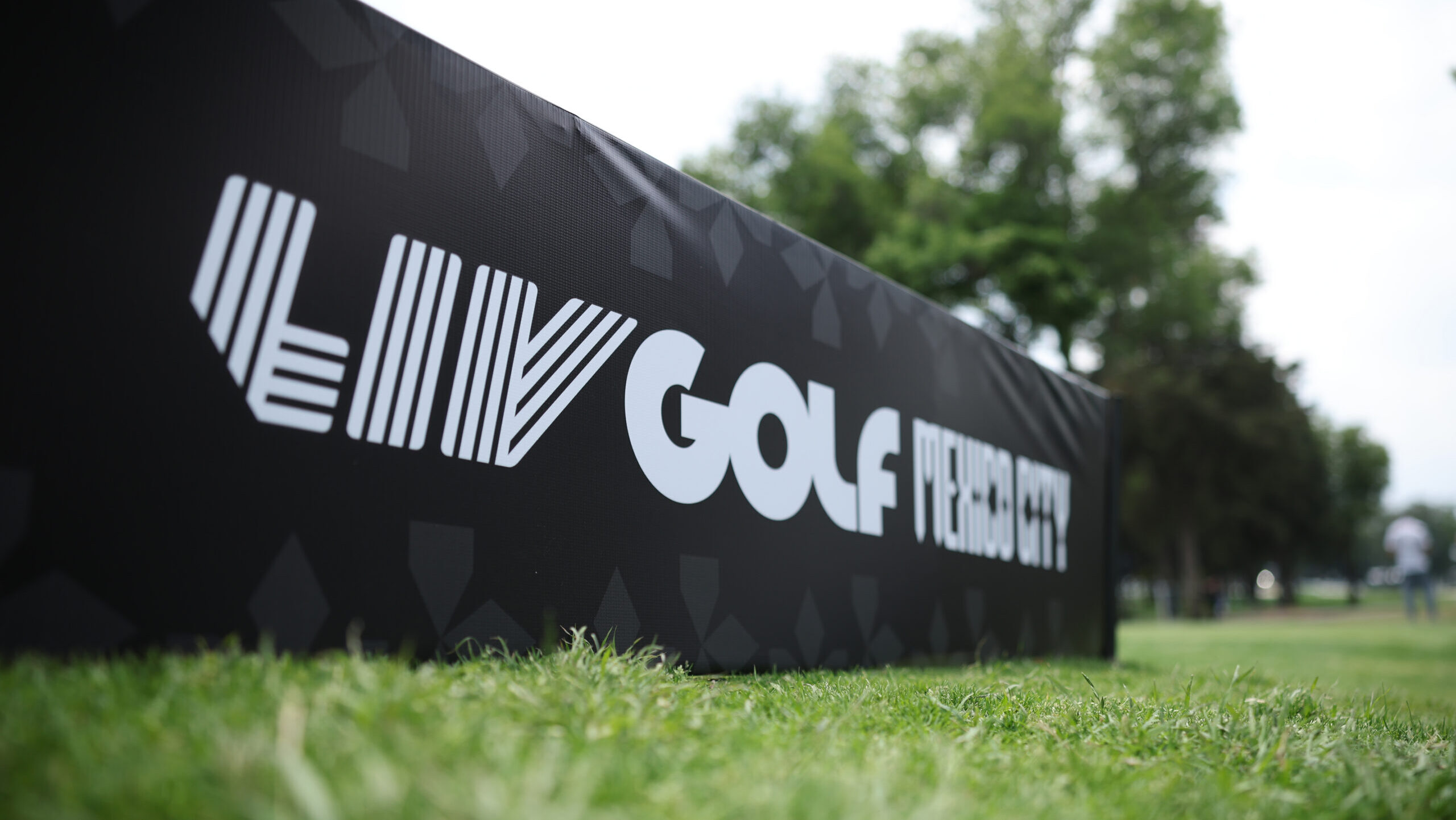
The toughest part of this rapid devolution is that even with DeChambeau on the Crushers, no one really cared. LIV’s most recent event in Mexico City earned an average of 49,000 viewers on FS1 during its final round on Sunday, April 19. It was an event won by Rahm, arguably its most decorated player, and yet the event barely moved the needle. A video of DeChambeau freaking out about the course conditions at the Mexico event generated more buzz than any single shot played during the event.
🚨⛳️🤦🏼♂️ #LIVID — Bryson DeChambeau is NOT happy with the course conditions at LIV Mexico City @BrysonLegion
— NUCLR GOLF (@NUCLRGOLF) April 17, 2026
“You got destroyed grass… oh this is rough.”
“Guys this is what we’re playing on apparently!”
(Via: perisgoIf/IG) pic.twitter.com/bJc8QG9Fq0
As the once-upstart golf league begins what will most likely be a final dissolution, there will be plenty of obituaries, think pieces, and what-ifs about how the league could have and should have operated. All that is moot if we don’t acknowledge a very simple point: The product available to golf fans was always significantly weaker than what they could watch on the PGA Tour. Team golf doesn’t matter when there are no stakes, cultures, or communities attached to the programs. Sure, there’s a Spanish team, an Australian team, a British team — but it comes across as half-baked and slapdash when they go up against a team like the Crushers, which is from…Bryson’s home of Dallas? No one knows.
The league offered an easy way for some middling golfers to make a lot of money, and a slightly more difficult way for world-class players like DeChambeau and Rahm to prove a point about some of the Tour’s shortcomings. Many others simply stayed on the Tour and addressed those issues internally, but DeChambeau has always prided himself on a certain inimitable ingenuity. Only he could think to stall his career for almost half a decade in service of “growing the game.” If he really wanted to grow the game, he wouldn’t have defected to — and then consistently defended — a league that attracted a minuscule number of viewers. This was a money grab, and now LIV golfers are left with whatever PIF checks won’t bounce and fond memories of winning tournaments few cared about.
Some players — Joaquín Niemann, Cam Smith, and Tyrrell Hatton — wasted some of their prime idling away in non-competitive formats. Future stars like Josele Ballester, David Puig, Caleb Surratt, and Tom McKibbin put their futures in jeopardy for this payday. Michael La Sasso gave up an opportunity to play in the Masters for LIV. Phil Mickelson will likely never be a Ryder Cup captain because of his loyalty to the league. All of this has been such a waste — a waste of time, a waste of energy, and a waste of resources. For a bunch of guys that insisted they only wanted to grow the game, they’re now on the outside looking in on a Tour that has adjusted to life without them. What happens next is up to the PGA Tour, and I hope they’re as frivolous, petty, and childish as the golfers who forced this hand in the first place.
Read More:
Michael Che Opens Up About SNL, Kanye, Colin Jost, Cancel Culture, & Comedy
Red Hook Tavern: Where Billy Durney Wants to Know Your Name
Keanu Reeves’ Next Act Is Built on Two Wheels

The Blueprint: Jessica Holtz Meets the Moment
The Power Broker: Emma Grede Is Just Getting Going