
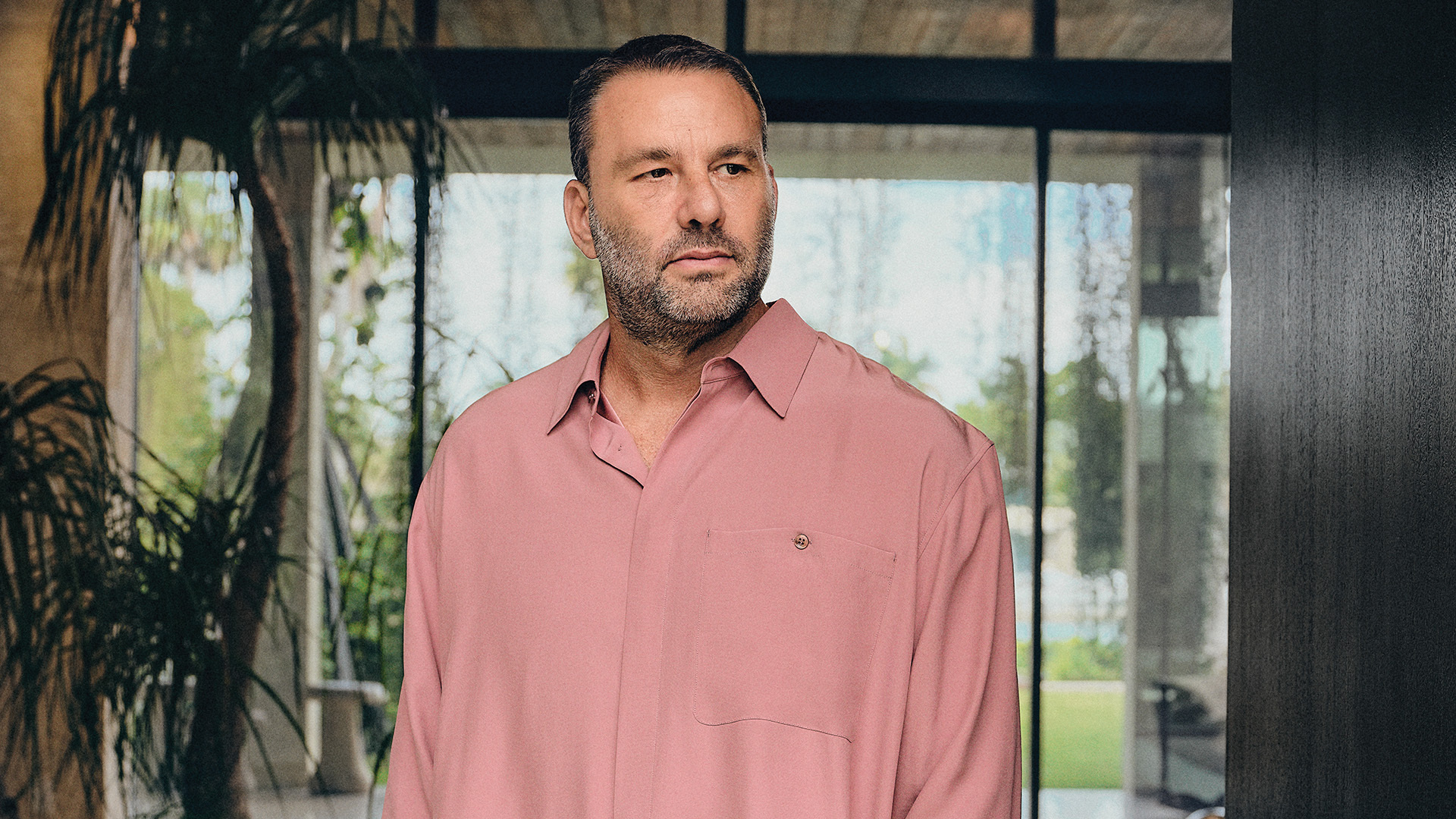
David Grutman has been the most influential nightlife and restaurant operator in Miami for the better part of two decades. That’s not a subjective read — it’s just a fact. LIV became the benchmark against which every other club in the country got measured. Komodo redefined what a restaurant could be in a city already full of great ones. Papi Steak is, right now, one of the most talked-about steakhouses in the country. And Groot Hospitality, the company he built around all of it, keeps growing in markets and categories that most operators wouldn’t attempt from a standing start.
On paper, the story writes itself. Right?
No, because what you’re missing is the system he’s built. It’s not a system, not in the rigid, MBA-approved sense of the word, but in the way that the best entrepreneurs build things: intuitively, iteratively, through a thousand small decisions that, over time, compound into something that just works. Underneath all of it is a philosophy rooted in relationships, value creation, and what it means to care enough about the people around you to actually win. That last part is his words, not mine. He’ll tell you directly: Taking it personally is not a weakness. It’s why he wins.
I’ve watched him operate for a long time. And what strikes me, every time, is how deliberate he is beneath all that energy. People see the room he walks into and think they understand what’s happening. In my experience, they’re usually a few steps behind.
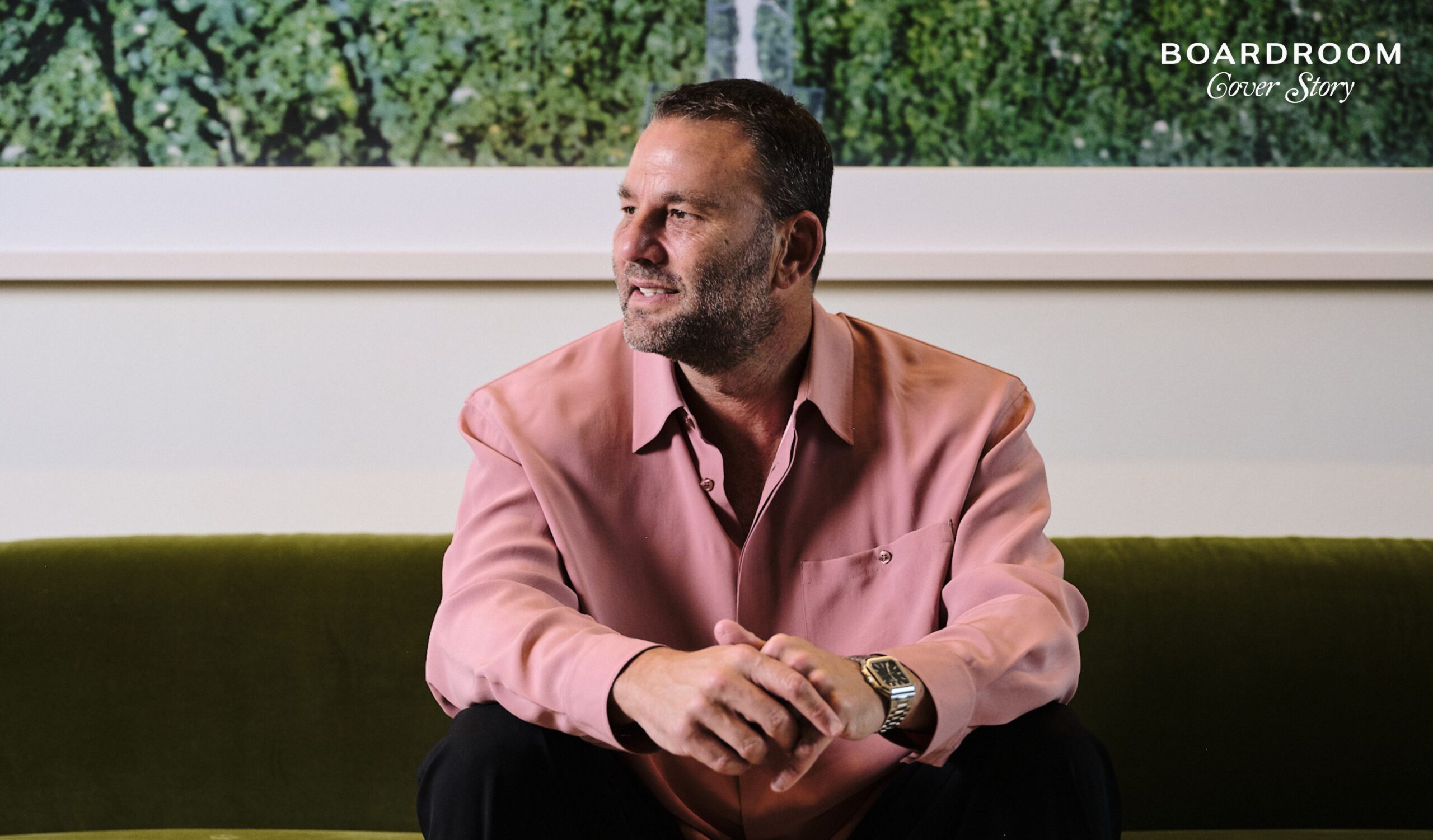
That’s the thing about Grutman’s book, Take It Personal: How to Succeed by Building Relationships and Playing the Long Game, it captures what most business books miss. The tactical stuff is in there — how he thinks about relationships, how he scales a brand, when to be the face, and when to hand someone else the platform. He did that with Papi Steak, backing David “Papi” Einhorn and watching him build something that stands on its own. But the real argument of the book is much simpler: that the way you treat people is a strategy in and of itself. One that doesn’t show up on a balance sheet but is often the only thing that matters.
He taught this in a college course at Florida International University for five years before it became a book. Broke down what he does every day into something clear enough to teach. And the result is a blueprint that works whether you’re running a hospitality empire or opening your first business. The principles don’t change. The stakes just get bigger.
Grutman is in his prime right now. Or, as he says, “the sweet spot.” Hotels on the horizon. A production studio. Consumer brand investments. A membership concept still taking shape. He is not winding down. He is loading up. And Take It Personal is less a look back than a declaration of intent. This is how he got here. And this is how he plans to go further.
This interview has been edited for length and clarity.
Want More from Boardroom? Get Our Newsletter
Boardroom: Of all the things I’d imagine we’d be talking about in this interview, I probably wouldn’t have guessed author. Not that I didn’t think you could and should write a book. I just don’t know if I saw it in your —
David Grutman: You’re saying the ADD is so intense.
How did you lock in and get convinced at this point in your life to write a book?
At FIU, I’ve been teaching a college course for the last five years. That course gave me a great outline. And I thought, why not give someone the blueprint for how I live my life—put everything down on paper? At the end of the day, it’s about building legacy. For me to have a book while I’m still in it is really important.
What does legacy mean to you?
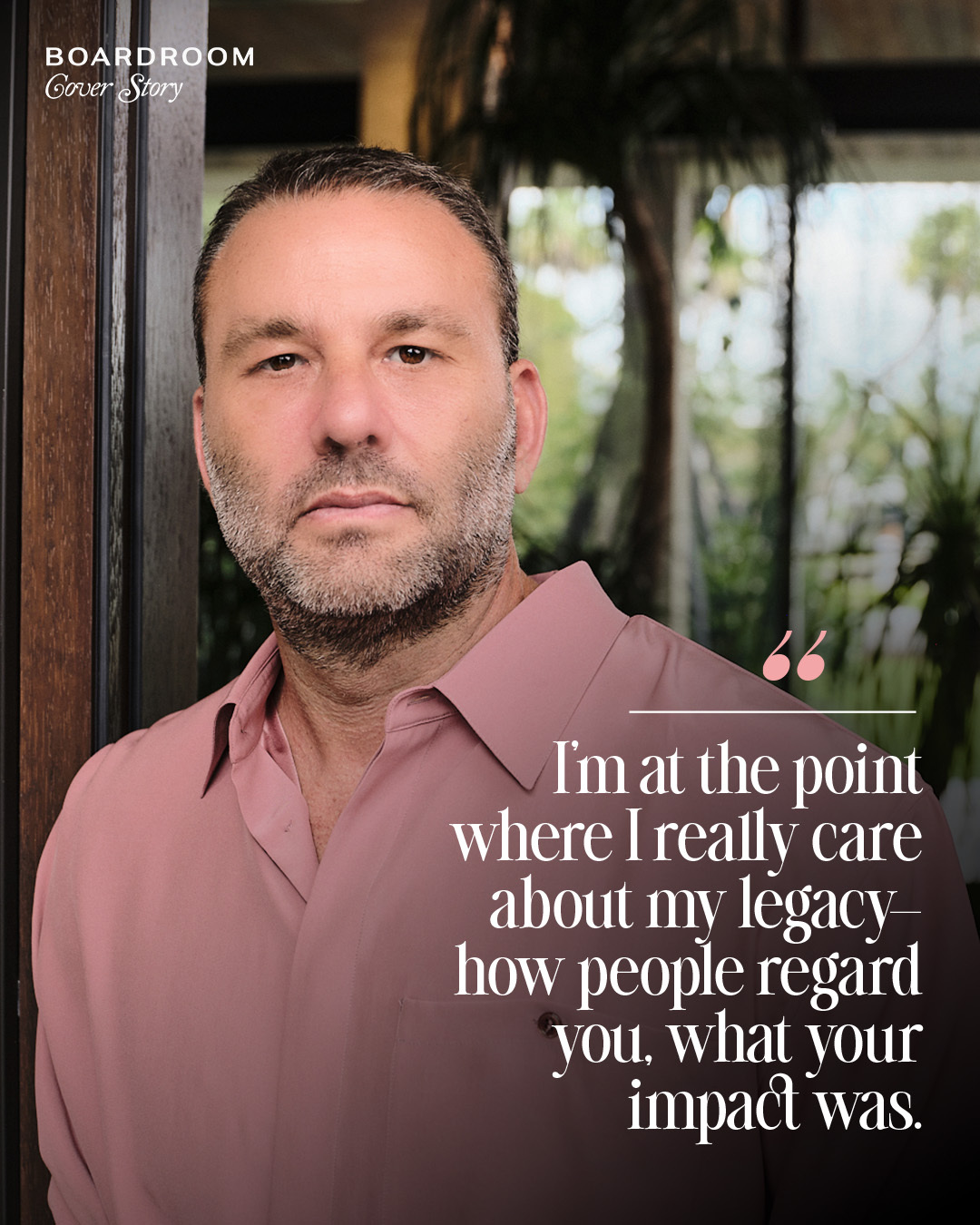
At this point in my life, I’ve checked a lot of boxes. And I’m at the point where I really care about legacy — how people regard you, what your impact was.
The class you taught at FIU — what did you get from it that ultimately put you on this path?
It was about taking the time to break down what I do every day into a syllabus and being able to teach it. People are always asking, “How do you have such great relationships?” To really sit there and break it down takes a lot of time and energy. If I take the time to put it into a book, hopefully it’ll help the next generation.
The title — Take It Personal — I understood exactly what it meant with you. You react to things, and people immediately say, “It’s business. Don’t take it personally.”
When someone says that, that’s crazy. I think it’s why we’re both so successful—we do take it personally. If I don’t take it to heart that you’re not getting this deal done, or you’re not eating at my places, it hurts me so badly that I kind of don’t want to be friends with you anymore. Why don’t you tell the audience, when you do stuff at other places that aren’t mine, what’s that call like?
This dates back to my DJ manager days. You used to get very mad if I booked a DJ at another club.
You used to manage a DJ — we won’t say Mark Ronson — who had a stepbrother who owned other nightclubs in Miami. And you’d be like, “David, his brother owns another nightclub.” And I’d go, “I really don’t care. Don’t you care about your client’s career? Forget the family for a second.” And somehow, someway, that DJ would wind up at one of my spots.
I knew you were different then, because I remember saying, “It’s his family, bro,” and you were like —
“I don’t care. It’s about him playing with us.”
Do you feel like you ever take it too personally?
No. Never.
Do you ever regret a reaction you’ve had?
I’ve had some very bad reactions, and probably some that weren’t justified. But I think that’s why I win. I want to win at all costs.
Relationships are a through line in this book. It’s clear the impact you’ve had on people, from Kim Kardashian writing the foreword to the quotes on the back. You gave me the honor of being listed alongside Mark Wahlberg, Serena Williams, Tom Brady, and David Beckham.
I thought it was important to have you, Rich, since you’ve been there from pretty much day one. You really know me, and I’m so proud of your success — watching how much you’ve grown. I wanted your name on the back of my book.
When people talk about relationships and networking, every entrepreneur talks about the need to build relationships, but it’s not necessarily a recipe you can give to someone else. And yet you clearly found an actual lesson that could be taught.
It started even in college. David Guetta’s agent is my friend. Tiësto’s manager is my friend. I knew them in college. It’s never too soon to start building relationships. People say, “I’ll start doing this when I reach a certain level.” I always thought I am at that level.
You never zero in on the celebrity. You understand the importance of the people around the talent, not just the talent in the room.
Still to this day. As you try to move talent around or get them to do different things, it’s the voices in their ears that make everything happen. And knowing their stories matters, because those people usually control a lot of other people as well.
There’s a part in the book where you talk about doing a deal for Kim Kardashian, and then the founder of the company wanted to offer you shares.
After the deal was done, the owner came to me and said, “As a thank-you, I want to give you this.” It’s happened a few times now. I think it’s so important to be transparent, because for that person to find out I accepted something without telling them first would be really bad. So I never accept it until I talk to them and say, “Your deal’s done. They want to give me a thank-you. Are you OK with it?” I never went into this to even try to get anything. I’m just here to add value. And the response has been the same every time: “Are you kidding? Of course, David. We want you to win, too.”
Did you learn more about yourself writing this book?
Yeah. Just breaking everything down, going through my day, when you slow it down enough to show someone else how to do it, it takes a lot of time and energy.
What did you learn about yourself trying to streamline all that noise?
How authentic it is for me. And, honestly, I didn’t realize how much I really do care about people. More than I think. I really, really care, man.
What would you say is a lesson you wish you’d learned at 25? Or do you feel like everything happened exactly the way it was supposed to?
People always ask, “If you had a hot tub time machine, what would you do differently?” For me, all the mistakes I made are part of the journey that made me who I am. So I want to go through those mistakes. I want to go through those challenges and those failures.
This isn’t a book written at the end of your journey. I think you have some of your most successful years still in front of you. I remember feeling that same angst a few years ago, and I went to see Jimmy Iovine. He broke it down simply: Unless you’re Mark Zuckerberg, LeBron James, or Jay-Z, your best earning years are from 45 to 60.
I’m in the sweet spot.
You’re in the sweet spot. Let’s talk about your business. Over the last decade, you built Groot Hospitality into a real enterprise. Where are you today?
On the hospitality side, it’s LIV Miami, LIV Las Vegas, LIV Beach, Casadonna, Gekkō, Papi Steak—which is growing in multiple markets — and, of course, Komodo, my first restaurant, now in three markets and expanding.
Let’s talk about Papi Steak. It’s almost like you built a whole other world, and this character who’s bigger than life, which is hard to do in your shadow.
David “Papi” Einhorn is my partner and really the face of Papi Steak. It’s great to see someone take a platform and just run with it. I’d love to say this is all my shtick — this is Papi. He’s used the platform and really made it his own. I’m so happy to just be along for the ride. I back him up differently than I’d back myself — operations, some marketing—but at the end of the day, it’s his shtick that’s on fire right now.
As my career gets longer, I’m investing in other founders whose faces should be out front, and I’m just adding value where I can. How important is patience in building these relationships? Understanding that the opportunity is in the longevity, not the transaction?
People think it has to happen right away. They’re here for two days, and if they don’t get something out of it — OK, man. I’m so happy years and years later when someone randomly calls: “Dave, what do you think about doing something together for F1? Or “what’s going on in Miami?” Even when we were both doing tennis events, we were strategic together — how do we help each other?
Tennis has been a big part of your life the last few years. Is that your release?
It’s not about release. I never had any hobbies. My only hobby was to dominate. When I went on my fitness journey, I wanted to find a sport I’d become obsessed with. By owning the Prince brand with Authentic Brands Group, I thought, I have this iconic tennis brand — how could I not play? During COVID, I started hitting, and I just became completely obsessed. I play every morning from eight to nine. When it rains in Miami, and I can’t play, I get very upset.
Where do you want to evolve the hospitality side of the business now?
I like it being a springboard: an ecosystem for my production studio and consumer-brand investments to see how they all work together. I also want to build a members club. I have the fun, exciting restaurants, but I also want to give something different. As we get older, we want to be around like-minded people and have more of a luxury product.
You talk about hotels in the book as the epitome of legacy.
Through this whole journey, I’ve learned what my people react well to. Anytime I do something mid- or low-budget, they don’t react well. They expect a certain experience from me. When I did a hotel with micro rooms — 150 square feet — you’re my friend, and you love me, but you’re not staying in a 150-square-foot hotel room.
Did you enjoy writing the book?
I loved it, man. I think you should do one, Rich.
I’ve thought about it. Think you have another book in you?
Let’s hope so. Let’s hope the story keeps going.
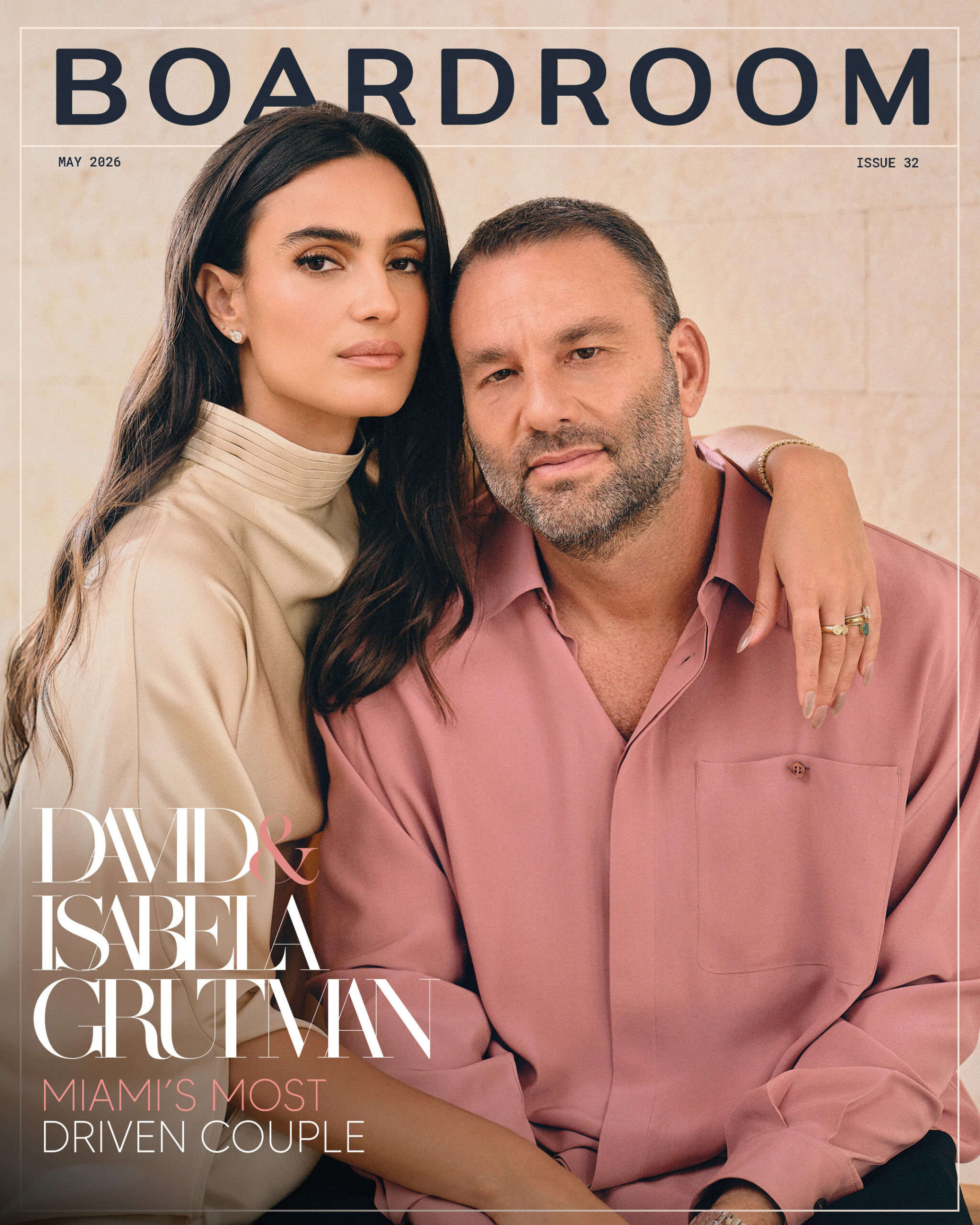
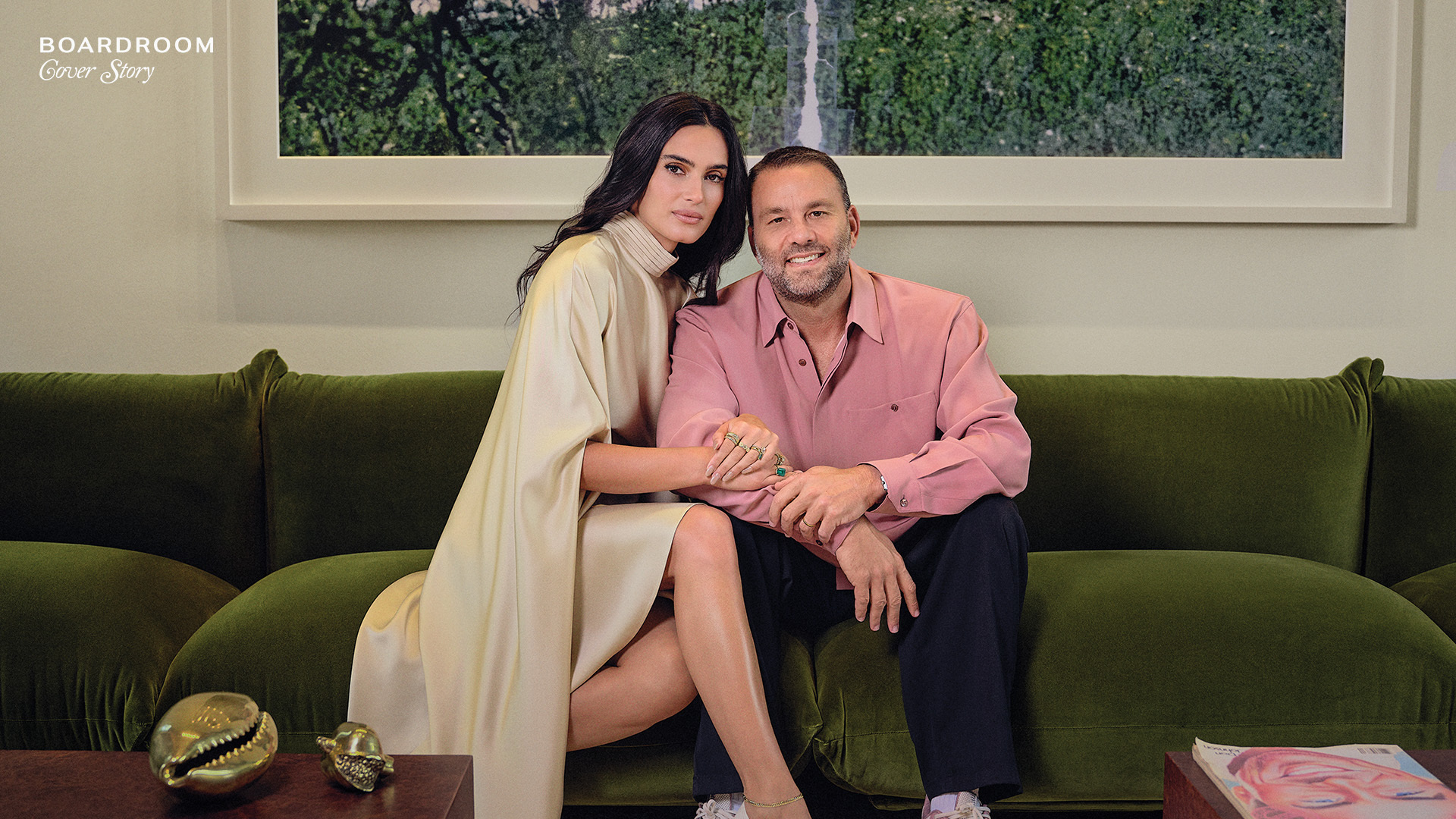
And while Grutman has built Groot Hospitality into one of the most recognizable names in the business, his wife Isabela is quietly constructing an empire of her own — from her jewelry and fashion brands to a starring role on a Prime Video docuseries. Read her Cover Story here.
Interviewer – Rich Kleiman
VP, General Manager – Paul Beckles
VP, Content – Damien Scott
VP, Revenue & Brand Partnerships – Abigale Smith
VP, Partnership Strategy & Marketing – Bernadette Doykos
Art Director – Michelle Lukianovich
DP, Sr. Producer – Craig Newton
Director, Producer, Camera Op – Audrey Blackmore
Video Editor, Camera Op – Matt Strickland
VP, Social Media – Yoni Mernick
VP, Audience Development – Jonathan Wiener
Sr. Manager, Content Operations – Griffin Adams
Sr. Director, Marketing & Content Operations – Stephanie Talmadge
CMO – Sarah Flynn
Co-Founders – Rich Kleiman & Kevin Durant
Photographer – Erik Umphery
Read More:

Quiet Power: Imani Ellis on CultureCon, Creators, and Learning to Let Go

The Long Game: How LeBron James and a Few NBA Friends Might Elevate the Game of Golf

Savannah James and April McDaniel on Navigating Money, Friendship, and Business

Why Jeff Staple is Bringing His Vision to the Bundesliga

Rare Company: Savannah James & April McDaniel Are Forging Their Own Path Together