
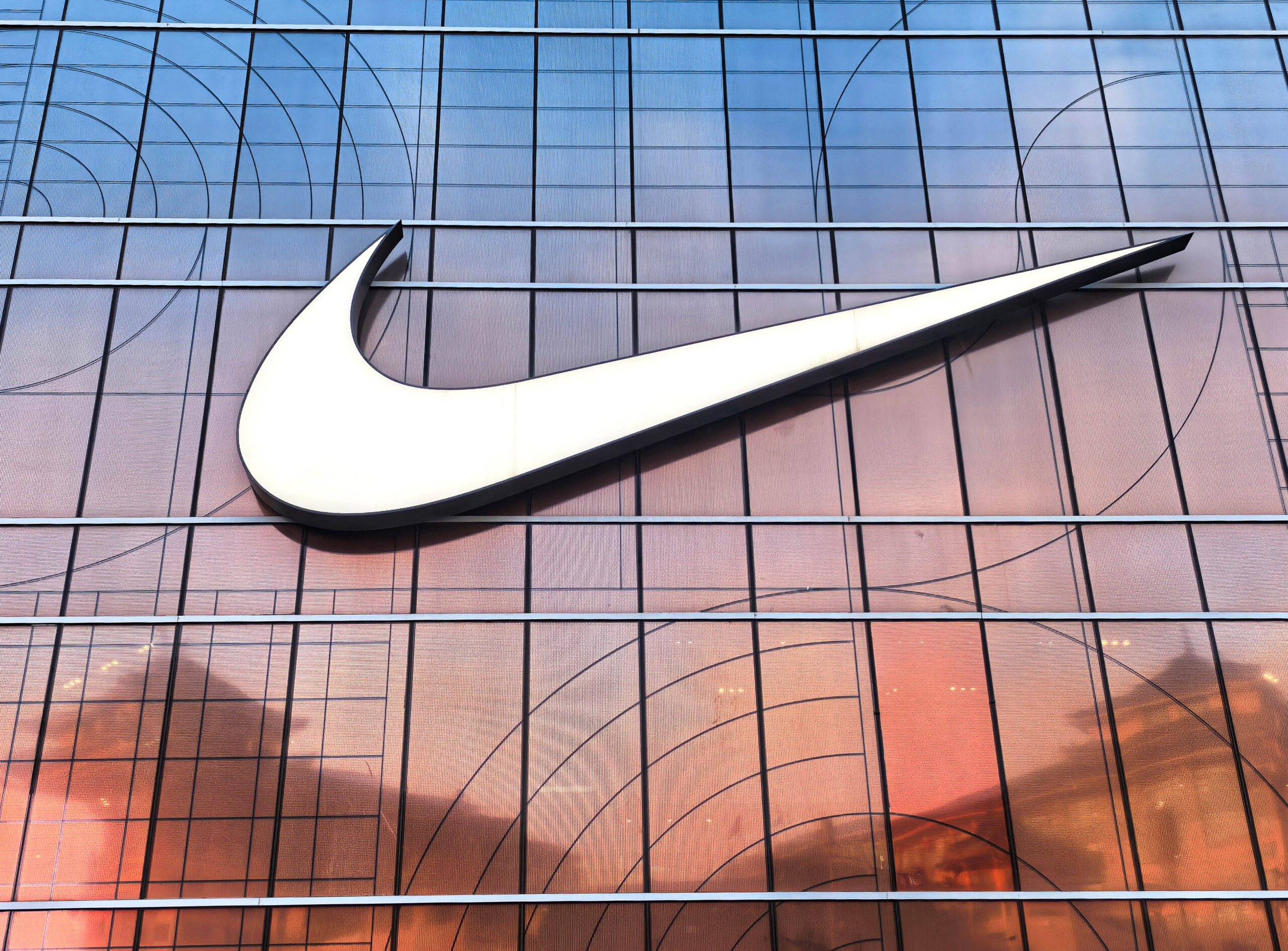
These are the logos that have transcended the brands for which they were created.
A logo is the smallest unit of trust and connection that a company owns.
It lives on the side of a cup, the back of a sneaker, the corner of a screen. It doesn’t explain itself. It either lands or it doesn’t. And the ones that land tend to do so because someone made one right decision at the right moment, sometimes as an afterthought.
This is a list about those decisions. Ten logos that have become something closer to infrastructure than imagery. Marks so embedded in the visual environment that most people stopped seeing them the way you see a design and started seeing them the way you see a stop sign.
What’s worth understanding, for anyone who builds brands or runs companies or thinks about the relationship between image and value, is how contingent most of these were. Nike’s founders didn’t love the Swoosh. The Coca-Cola script was written by an accountant. McDonald’s almost dropped the arches. The Google logo was knocked together in free software by a grad student before anyone knew what Google was going to become.
The logos outlasted the moments that produced them. That’s the real trick. Not the design itself, but the hope that these marks will become culturally and globally indelible. And the discipline to leave something alone long enough for it to mean something.
Here are ten logos that passed that test.
10. NBA
Founded: 1946
Logo Designer: Alan Siegel
Revenue: ~$12B
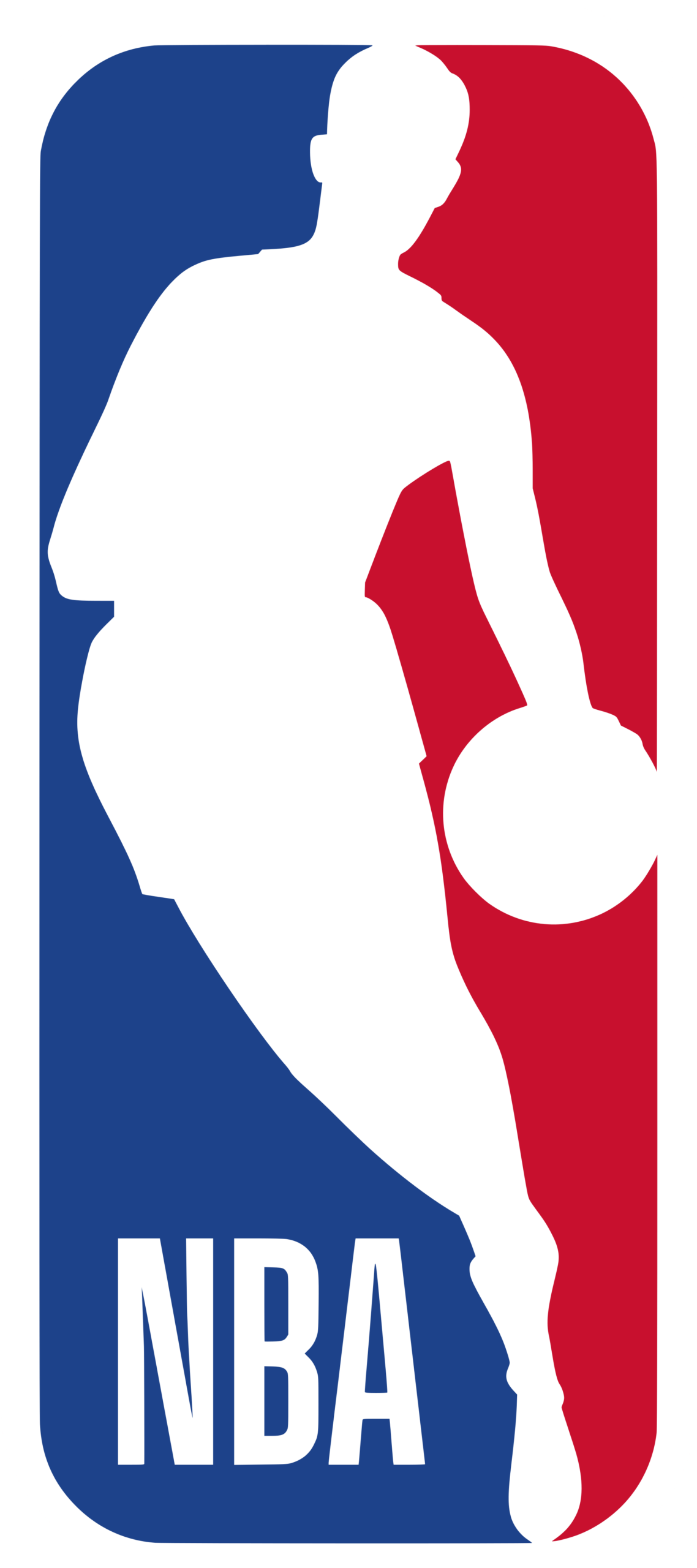
Designer Alan Siegel created the NBA logo in 1969 using a photo of Jerry West. The silhouette of a player dribbling in mid-stride, set in red, white, and blue, was modeled after a technique used in Major League Baseball’s logo. Although West himself has confirmed it’s him, the NBA has declined to acknowledge it, perhaps preferring that the figure remain an idealized abstraction of the game rather than one player’s legacy. The logo has remained essentially unchanged for over 50 years, which is nearly unheard of in professional sports.
9. Disney
Founded: 1923
Logo Designer: Walt Disney
Revenue: $91B
The Disney logo is built on handwriting. Disney’s handwriting specifically. A stylized signature derived from Walt’s own hand, though the exact letterforms have been a matter of design debate for decades. Some historians attribute the current refined version to imagineer Tom Eastman. The distinctive D — more abstract flourish than legible letter — became the brand’s primary icon, with the castle from Sleeping Beauty added beneath it in modern usage. Few corporate signatures carry this kind of biographical weight. The script implies personal authorship, a single imagination behind everything, which is precisely the mythology Disney has sustained for a century. It may be the only Fortune 50 company whose logo is essentially a person’s name.
8. Starbucks
Founded: 1971
Logo Designer: Terry Heckler
Revenue: $36B
Designer Terry Heckler pulled a 16th-century Norse woodcut of a twin-tailed siren from a maritime history book and used it as the basis for Starbucks’ original logo. The founders, drawn to seafaring mythology and the romance of the high seas, approved it immediately. The early version was far more explicit. The siren was topless with the twin tails spread wide on either side of her. Each major redesign has moved the figure closer and cropped tighter: by 2011 the name was dropped entirely, leaving only the siren’s face and the crown of tails. It’s a logo that got more abstract with scale. At Starbucks’ current size — over 35,000 locations globally — the face alone is enough.

7. YouTube
Founded: 2005
Logo Designer: Chad Hurley
Revenue: $36B
YouTube co-founder Chad Hurley, who had a design background, created the original logo himself — the word “Tube” set in white inside a red rounded rectangle meant to evoke a television screen, paired with “You” in black beside it. The TV-set shape was the smart decision: it made the platform’s entire purpose legible at a glance. The design held for twelve years with only minor refinements. The 2017 overhaul by Google’s in-house team was the first major structural change. Separating the icon from the wordmark entirely so a standalone red rectangle with a white play button could function as an app icon. It now does. In a media landscape where the platform has effectively replaced television for entire generations, the play button has become as associated with video content as a clapperboard.

6. Amazon
Founded: 1994
Logo Designer: Turner Duckworth
Revenue: $620B
Amazon’s logo contains one of the most elegant pieces of visual communication in corporate identity: the orange arrow curving from the letter A to the letter Z. The meaning is explicit — Amazon sells everything from A to Z — but the arrow doubles as a smile, implying customer satisfaction without stating it. Turner Duckworth finalized the current iteration around 2000, though the A-to-Z concept had existed in earlier versions. The logo is entirely wordmark-based, which is unusual for a company of Amazon’s scale, but the legibility demands of e-commerce favored clarity over abstraction. The smile/arrow has since taken on a life of its own, appearing on boxes delivered to hundreds of millions of households each year.
5. McDonald’s
Founded: 1940
Logo Designer: Jim Schindler
Revenue: $25B
The Golden Arches began as architecture. Brothers Dick and Mac McDonald enlisted architect Stanley CLark Meston to design their Phoenix, Arizona restaurant in 1953 with two yellow semicircular arches on either side of the building. When viewed from a certain angle, they formed an M. Designer Jim Schindler formalized that M into a logo in 1962. There’s an often-cited story that psychologist Louis Cheskin advised keeping the arches because they resembled breasts and carried subconscious nurturing associations. McDonald’s has neither confirmed nor denied it. All we know is that it works. The yellow-on-red combination is engineered for hunger: yellow signals energy, red triggers urgency. It is among the most globally recognized symbols of any kind.

4. GOOGLE
Founded: 1998
Logo Designer: Ruth Kedar
Revenue: $350B
The original Google logo was made by co-founded Sergey Brin using GIMP, the free and open source Photoshop alternative. Ruth Kedar refined it into the version most users remember: a primary-color wordmark in Catull that broke the rules by inserting a secondary green where a primary color should be. The current logo, introduced in 2015, made the leap to a custom geometric sans-serif called Product Sans. The color sequence — blue, red, yellow, blue, green, red — has remained constant through every redesign. The four-color approach was a deliberate signal that Google didn’t follow rules, while the primary palette kept it approachable. It’s a logo built for a search bar.

3. Coca-Cola
Founded: 1886
Logo Designer: Frank Mason Robinson
Revenue: $46B
The Coca-Cola script is the oldest logo on this list and arguably the most unchanged. Frank Mason Robinson, the company’s bookkeeper, created it in 1886 using Spencerian script, the dominant penmanship style of American business correspondence at the time. His reasoning was that the flowing letterforms would stand out against competitors’ block type. He nailed it. Minor refinements have been made across 140 years, but the essential letterforms remain intact. Red was standardized in the 1920s partly to distinguish the brand’s barrels from alcohol barrels while in transportation during Prohibition. It is one of the few logos that has never needed a redesign.

2. NIKE
Founded: 1964
Logo Designer: Carolyn Davidson
Revenue: $51B
Carolyn Davidson was a graphic design student at Portland State University when Phil Knight paid her $35 to create a logo for his new shoe company. The Swoosh she delivered, a curved checkmark suggesting motion and a wing, was accepted reluctantly. Knight reportedly said he didn’t love it but figured it would grow on him. It did. The mark eventually became so synonymous with the brand that Nike dropped its name from the logo entirely in 1995. Davidson, for her part, later received Nike stock and a diamond Swoosh ring. The $35 commission is now a footnote in the most underpriced design job in history.

1. Apple
Founded: 1976
Logo Designer: Rob Janoff
Revenue: $391B
The bitten apple is one of the most recognized marks in design history. Rob Janoff created it in 1977. A silhouetted apple with a single bite removed, originally rendered in a rainbow stripe that lasted until 1998. The bite was functional: without it, the shape read as a cherry. The rainbow was Steve Jobs pushing for color at a time when Apple II was one of the first personal computers to display it. The monochrome version that followed clarified it. Today, the mark appears on over a billion active devices worldwide, carrying the full weight of the most valuable company ever to exist.
Read More:

Can ‘Disclosure Day’ Break Through in 2026?
The 15 Best Steven Spielberg Movies

Shedeur Sanders Broke Tom Brady’s Record Before He Ever Really Got Started
Why Apple Doesn’t Need to Win the AI Race
Lamine Yamal Talks Spain’s World Cup Expectations, American Eagle, and Playing Without Fear