
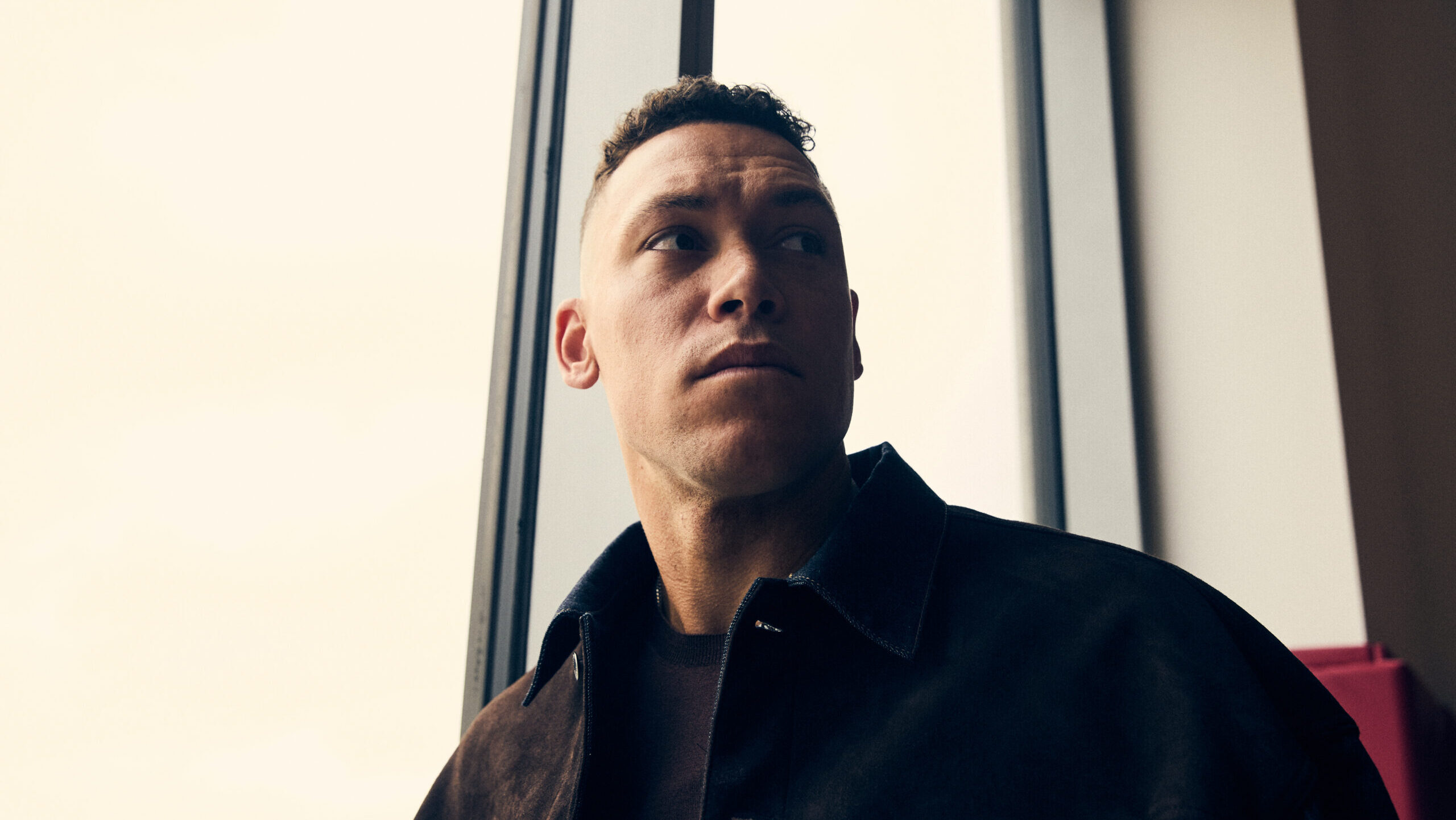
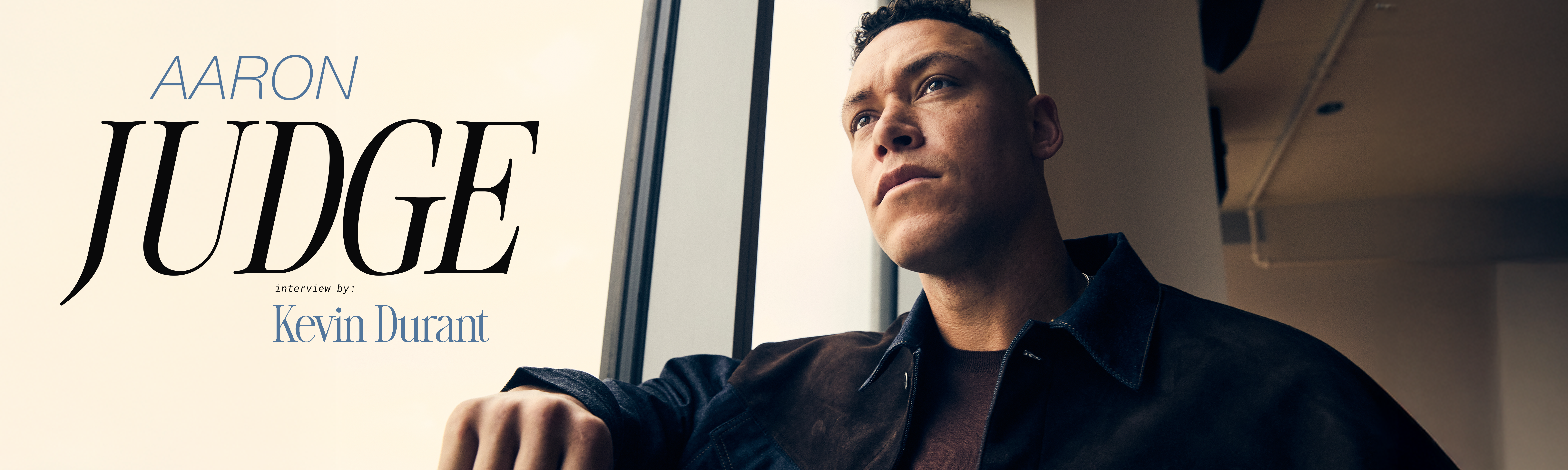
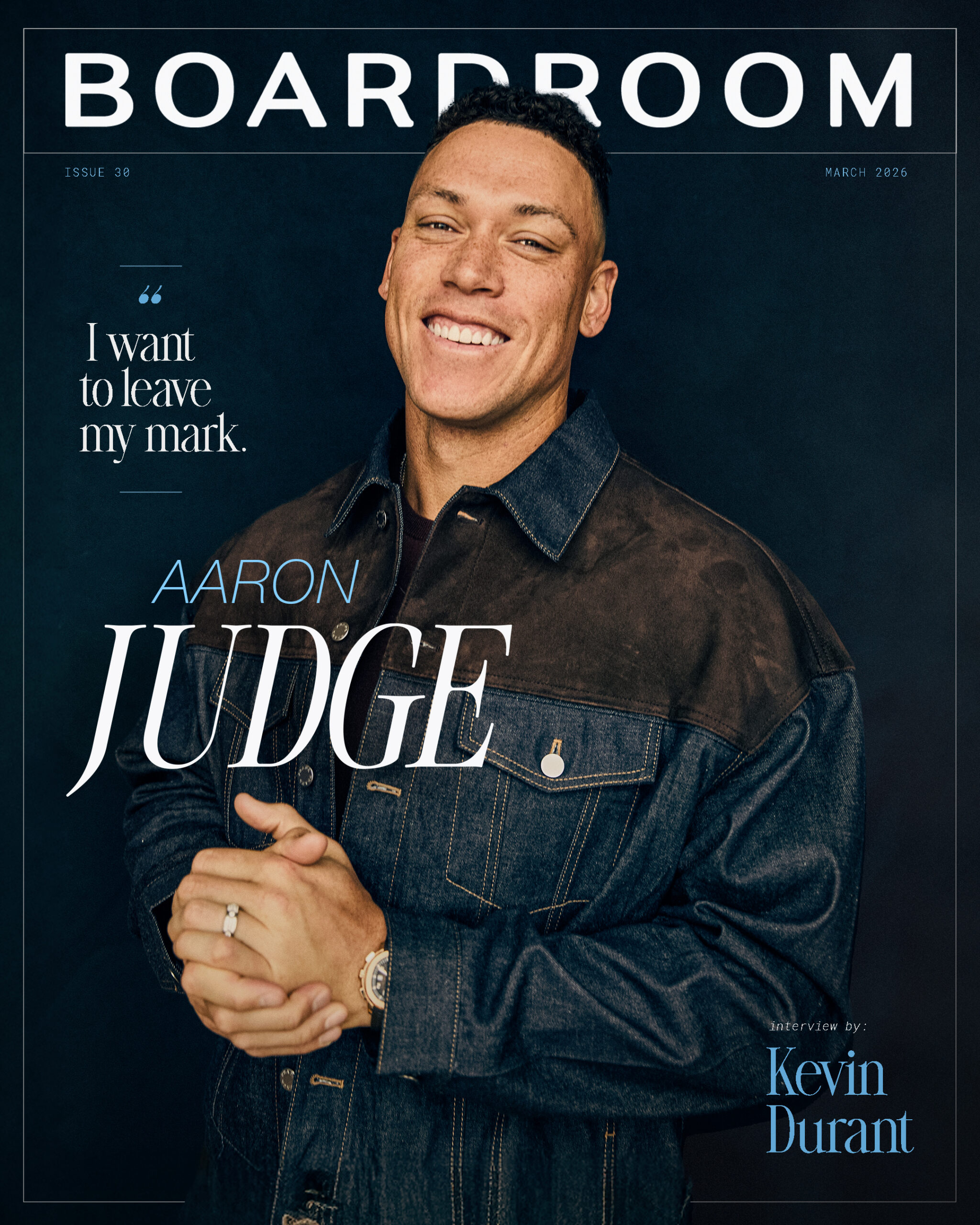
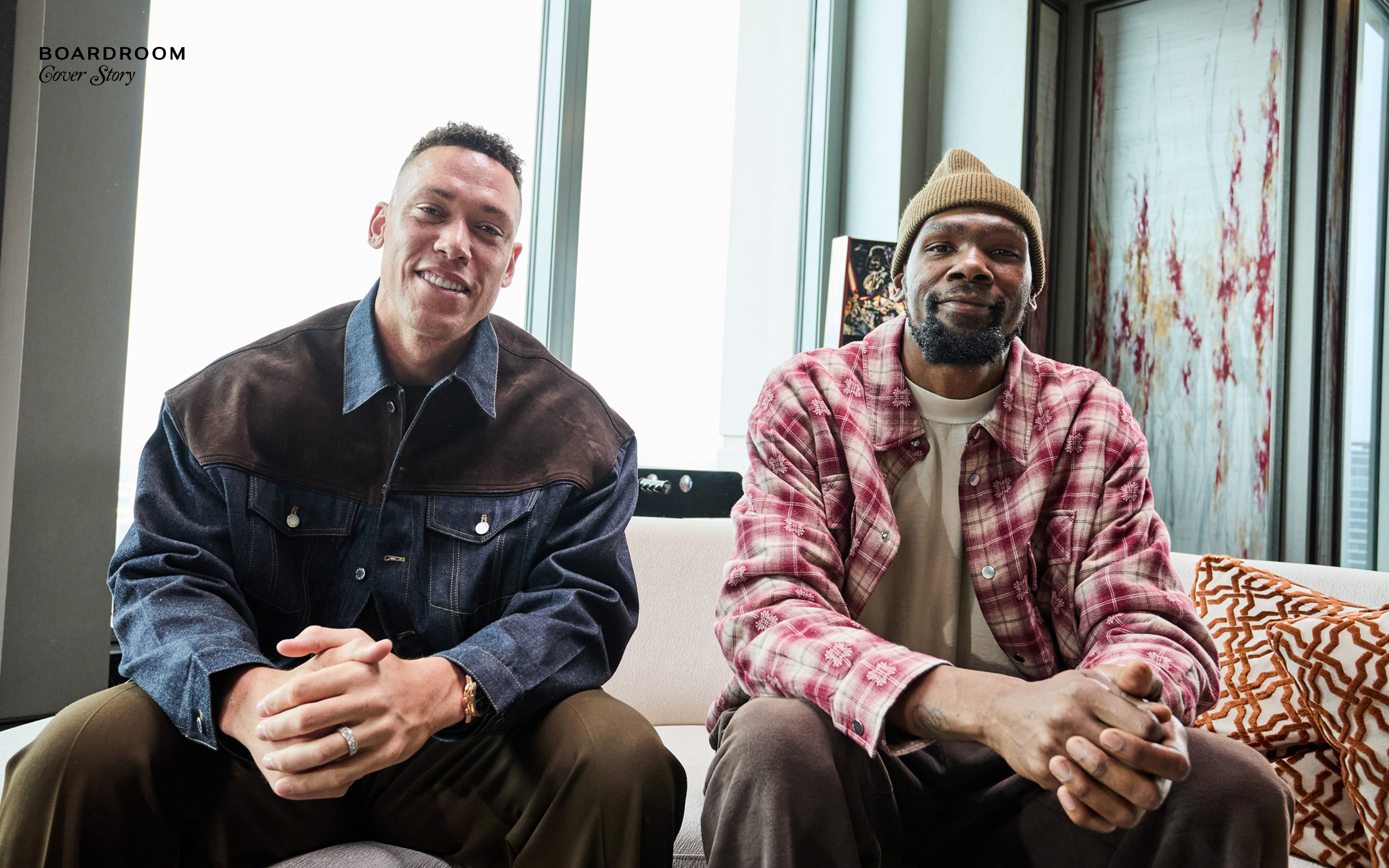
There’s a certain level of respect that doesn’t need to be explained when two all-time greats sit down together. It’s understood. Felt in the pauses, in the way they nod at each other’s experiences, in how quickly the conversation skips past surface-level talk and lands somewhere deeper.
That’s where Aaron Judge and Kevin Durant meet.
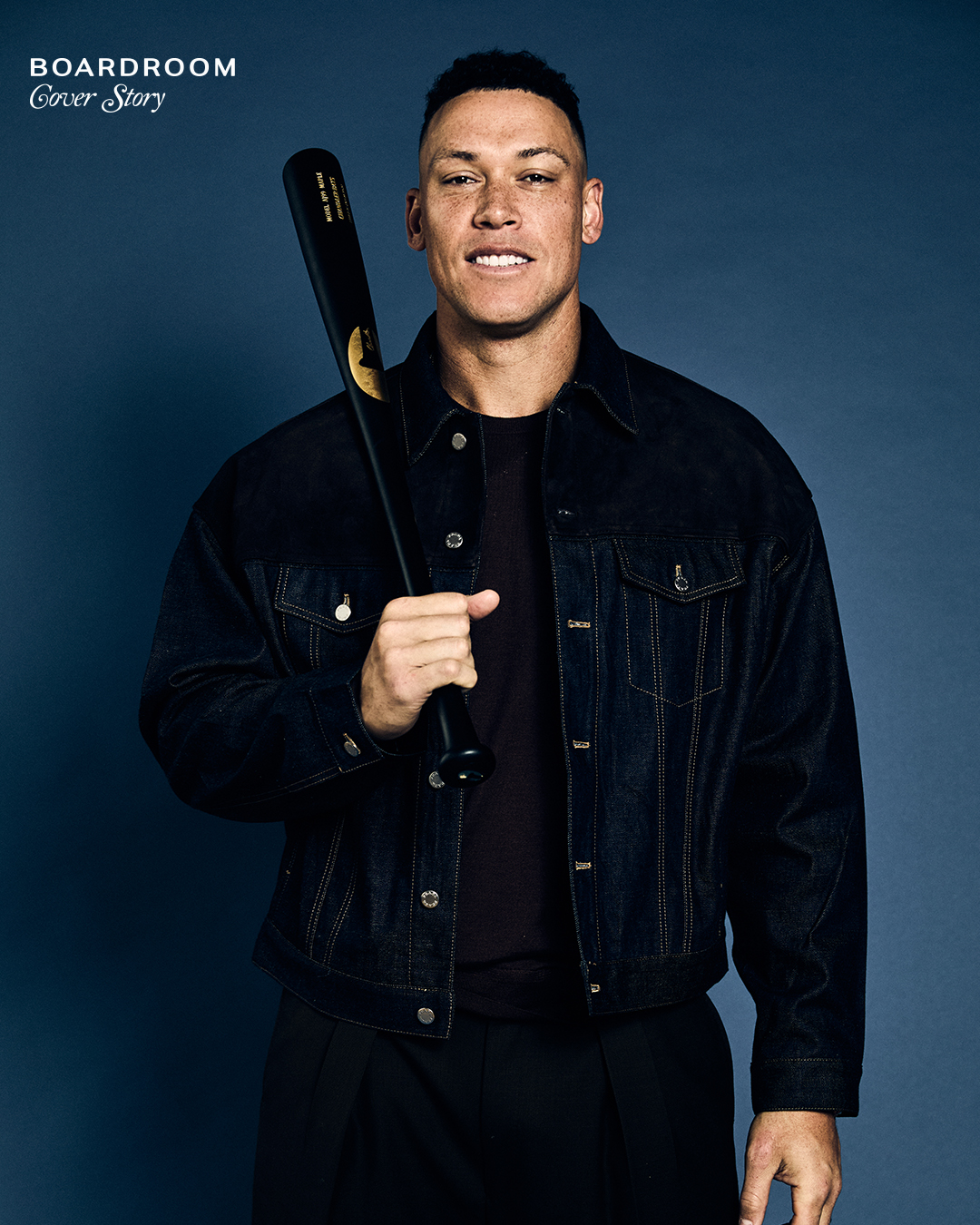
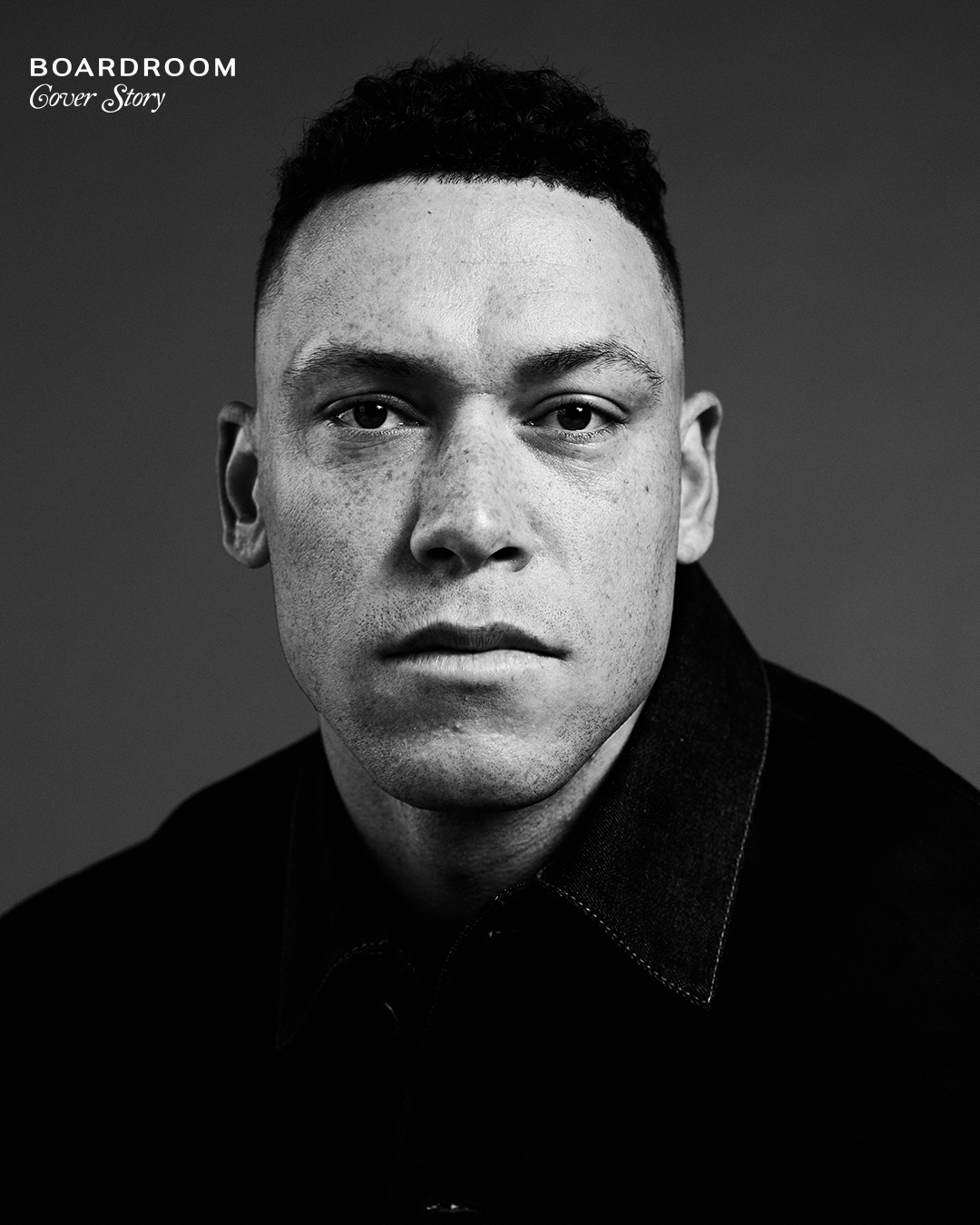
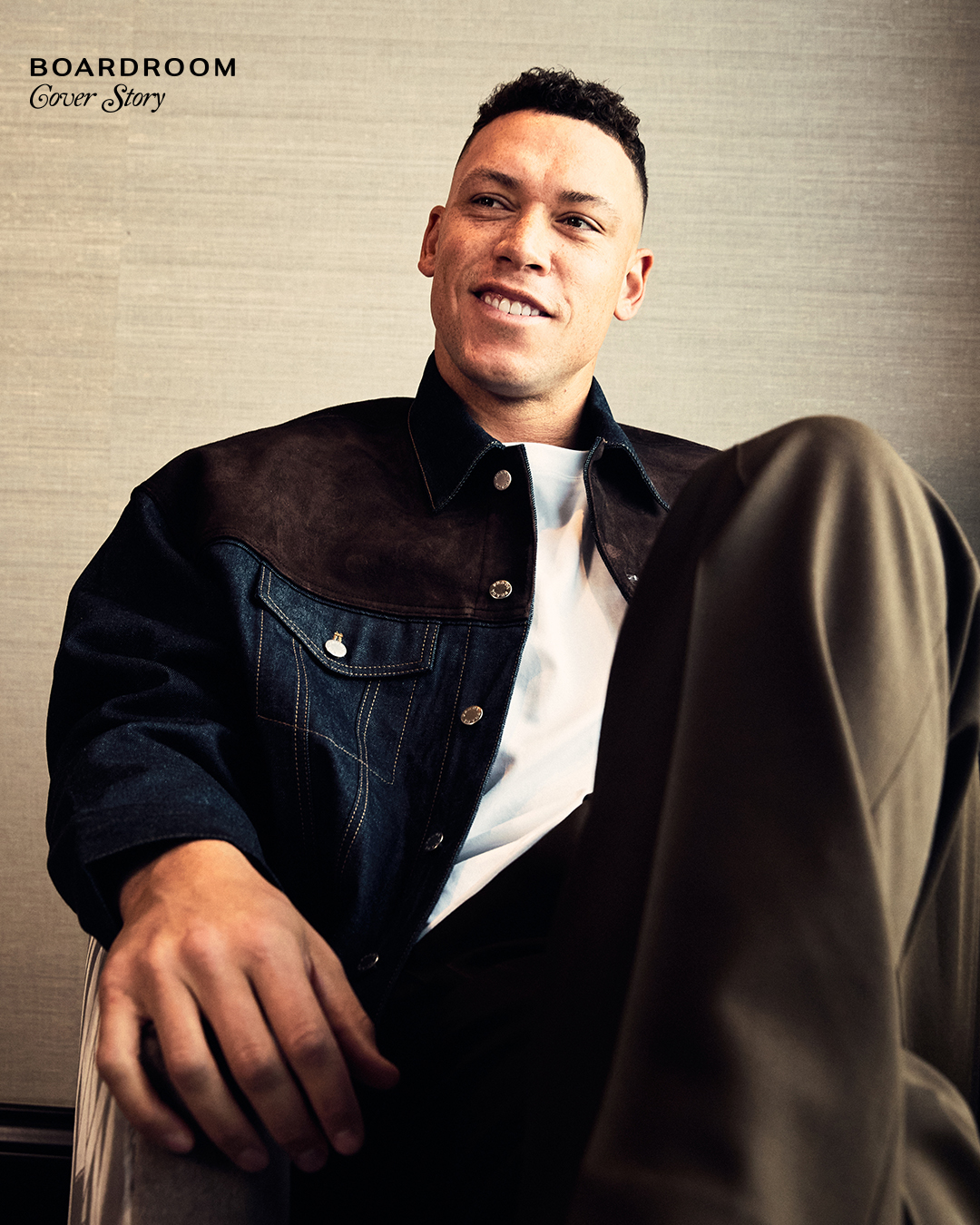
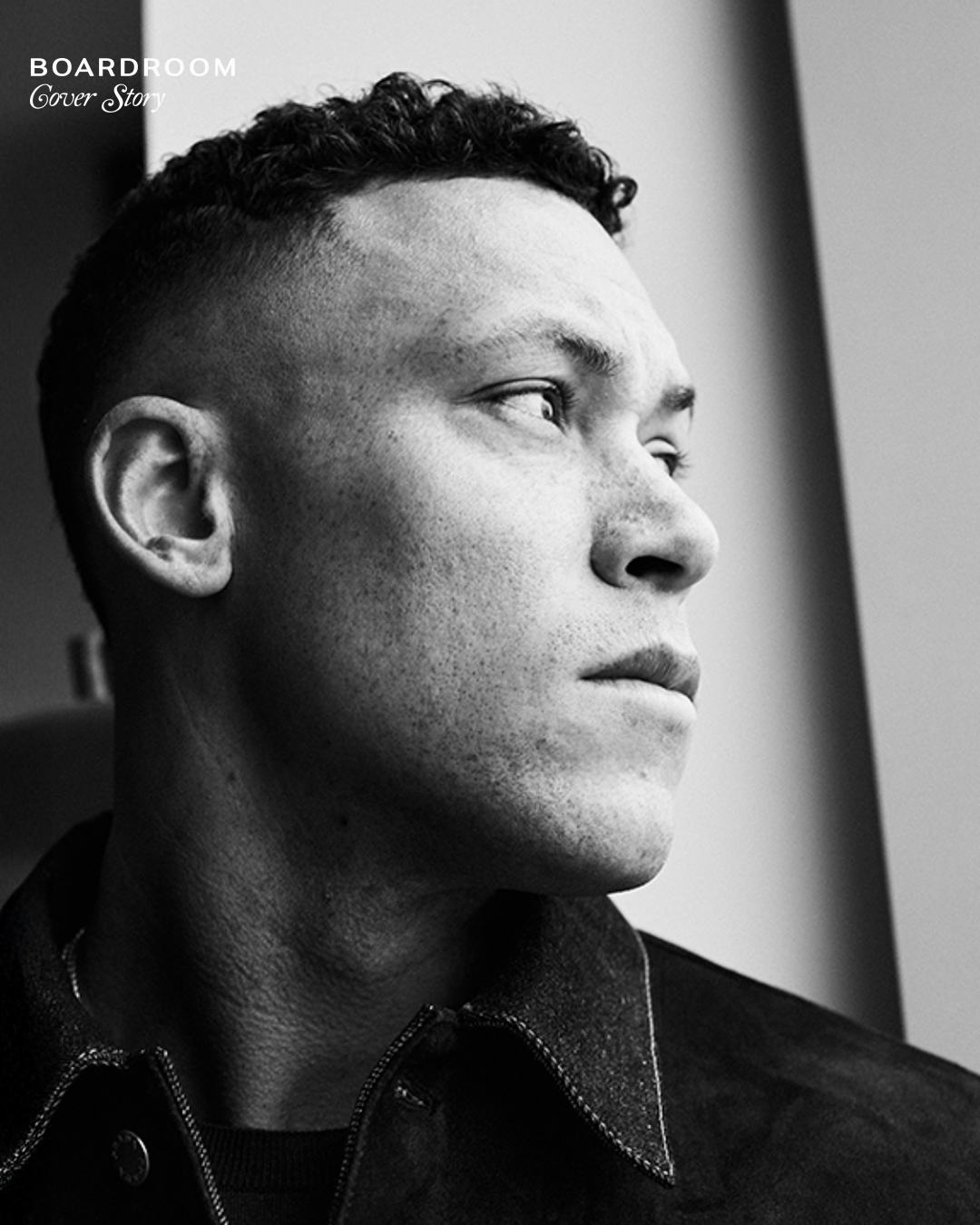
For Boardroom’s March Cover Story, Durant sets the tone immediately, framing Judge not just by accolades, but by impact — “a walk-in legend,” as he calls him — before diving into the question that defines so many elite careers: When does passion become commitment?
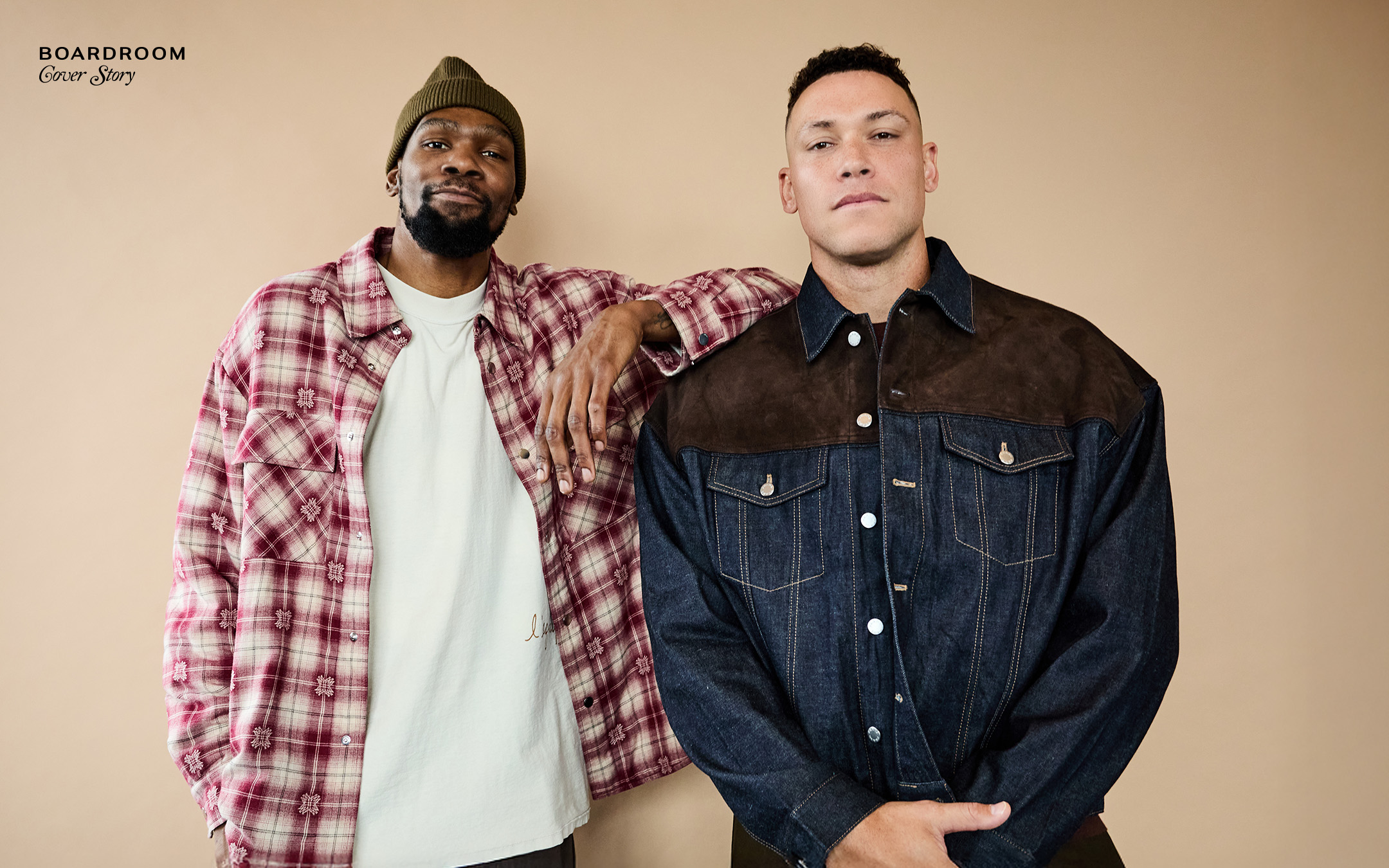
For Judge, the answer wasn’t instant. Growing up in California, he didn’t specialize early. He played everything — football, basketball, baseball — moving season to season, chasing the rhythm of competition. “I honestly loved switching seasons,” he says. “By the time football was over, I was ready for basketball… and then by the time basketball’s over, I was ready for baseball season.” It wasn’t until high school, when everything sharpened, that he realized, “Man, I think this is it.”
That late clarity shaped everything that followed. Unlike prodigies who dominate from the start, Judge’s path was defined by being humbled early and often. At Fresno State, he remembers hitting .170 in fall ball, sitting by the water cooler as his coach warned him, “Hey Judge, you better get used to that seat right there.” The moment stuck; not as discouragement, but as foundation.
It’s a theme Durant immediately connects with. The grind, the repetition, the self-driven standard. Both understand that talent might open the door, but routine keeps you in the room.
For Judge, routine didn’t truly click until he reached the majors. Watching veterans move with precision — same time, same work, every day — he started to build his own structure. “I could look up at the clock and be like, ‘OK, it’s 4 o’clock, bam, he’s in the weight room,’” he says. That consistency became his edge. By the time the game starts, there’s nothing left to question.
Durant leans into that idea, the freedom that comes after the work is done. The point where preparation gives way to instinct. It’s a shared language between them, even across sports.
But baseball, unlike basketball, forces patience in a different way. Judge spent years in the minors, riding buses, grinding through long seasons with no guarantees. It’s a phase he doesn’t romanticize, but one he values deeply. “You got to learn how to get yourself out of that,” he says. “When you get kicked down … you got to pick yourself up.”
That self-reliance becomes essential when the stakes rise. And there are few stages like New York.
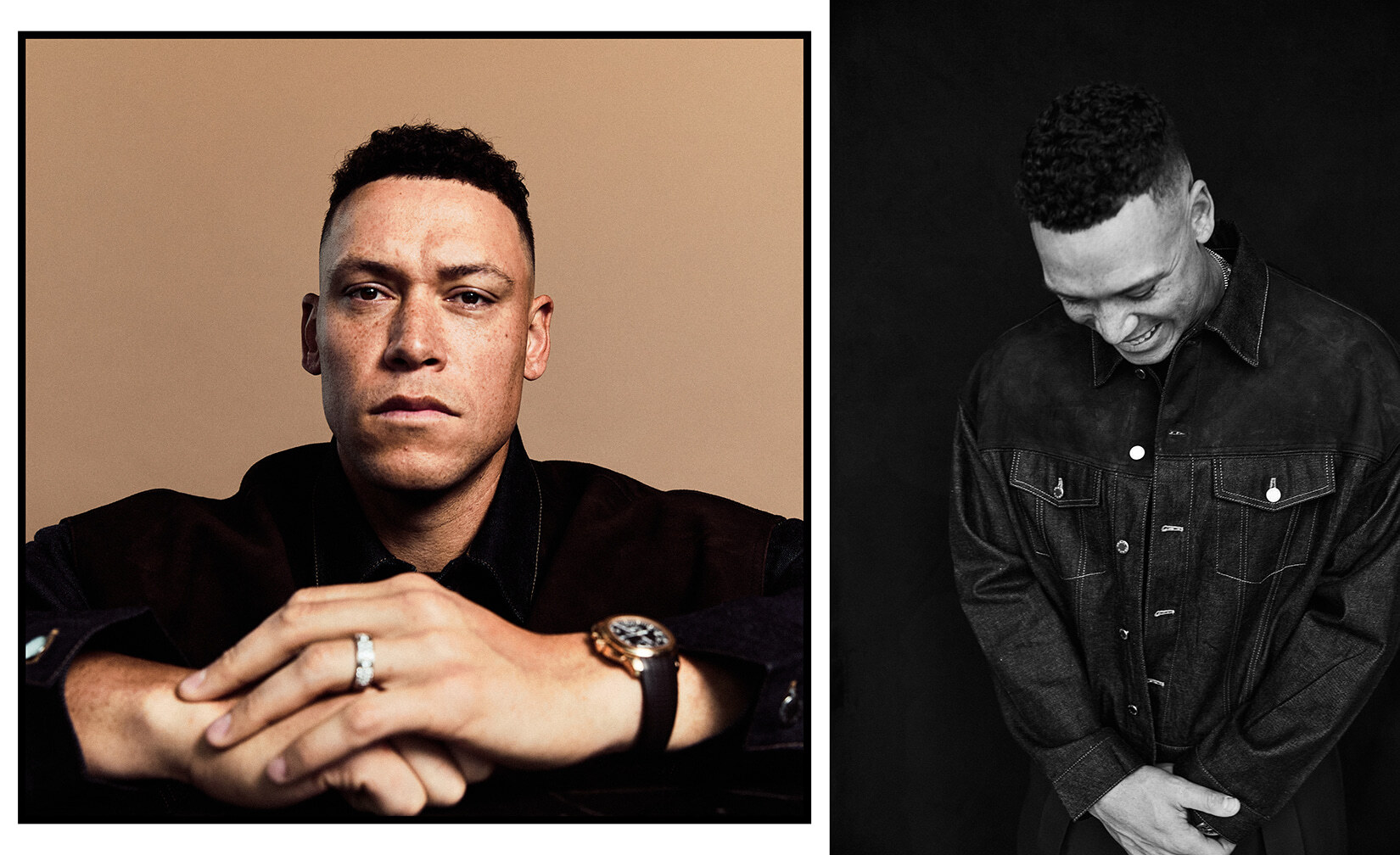
As the face of the Yankees, Judge operates under constant expectation. Championships aren’t a goal; they’re the standard. Yet, he doesn’t run from that pressure. If anything, it mirrors what he already demands from himself. “My expectations are already high,” he explains. “So you guys booing me or getting on me? I’m booing myself too.”
It’s a mindset Durant understands intimately. The external noise, the legacy conversations, the comparisons; it’s all there, but neither player is interested in looking back too soon. Judge frames it simply: “I still feel like I’m in the middle of mine.”
That awareness shows up in the way he talks about history. Not as something owed, but something earned. Walking through Yankee Stadium, surrounded by legends, he notices the empty spaces as much as the filled ones, especially among the World Series titles, with the last one dating back to 2009.
Still, the conversation never drifts too far from the game itself. From the joy of it. Whether it’s hitting the court with teammates, chasing milestones, or embracing the grind, both Durant and Judge circle back to the same truth: at the highest level, the game has to stay fun.
Because beneath the pressure, the expectations, and the legacy talk, that’s what sustains it all.
“You get to compete,” Judge says. “Now, you get to play the game.”
And for two athletes who have built their lives around mastery, that might be the simplest and most important part of the story.
This interview has been edited for length & clarity.
Want More from Boardroom? Get Our Newsletter
Kevin Durant: Cover Story here. We got today, my boy Aaron Judge — a walk-in legend, in my opinion. Let’s jump right in. You are an all-around athlete. When was that moment when you decided to stay committed to baseball?
Aaron Judge: That was years ago, but first, a lot of respect for you. That’s why I come out and do something like this. A lot of respect for what you’ve done for the game, not only basketball but worldwide. It covers all facets — every sport, culture, everything. I played soccer, basketball, football, baseball — everything. I loved basketball. That was my true love. My dad was a basketball coach. He was always pushing that.
What made you choose Fresno State?
My dad got an email that said, “Hey, this is Fresno State baseball camp. If you want to check it out, we haven’t been to Fresno in a long time.” I said, “Yeah, sure. Let’s check it out.” After the second day, the head coach came up and said, “Hey, your parents here?” I said, “Yeah, they’re up in the stands.” He said, “Go grab them real quick.” I grabbed my parents.
I thought I was in trouble, but he took us to the office and said, “Hey, we’ll make you a Bulldog, so what can we do about this?” That was the first offer I ever got. We talked it over with my parents, and I think it was the best decision I ever made.
The Yankees, when they come into other stadiums, it’s usually Yankee fans. They travel well.
My favorite place to play is Anaheim. We play the Angels, and it’s literally a Yankee game. Might’ve been 2019. Mike Trout — he’s on pace for another MVP — and it’s bottom nine. We got Chapman in, and he struck out to start the ninth, and the whole place erupted. I was out there in right field.
Oh, that’s the worst. When I was with the Nets, it was like that when Steph [Curry] came in. He’d hit one 3, and it’d be pandemonium. Those games are hard to win against a hostile crowd. But that franchise history — fans have been around for 60, 70 years. You usually stay a few days in each city, right?
Yeah. We’ll play three or four games a city. You pop in, get used to the city, check things out, hit a breakfast spot, have dinner with the team.
Not a lot of time, though. You guys go hotel, ballpark.
We’re more at the ballpark than anything. Your schedule — you get a little shootaround, come back, chill, go back to the game. I would love that. If I could just go to the field early, hit BP, come back…
It’s so much lag time in the NBA. For an 8 p.m. game, what time are you getting to the ballpark?
For an 8 p.m. game, we usually bus around 2 p.m. We’re getting there, stretching, training room, meetings.
2 p.m.? We play at 8, and the first bus is at 5:30. We might have shootaround from 10 to 11 and then sit around for hours. What are you doing for that long?
My wife jokes I’m just hanging out with my friends all day.
That’s really what it is, right? Kicking it in the clubhouse.
We’re kicking it, but meetings take a while. Batting practice is an hour, and you prep before that. We eat, BS a lot, but it sneaks up. You get to the field, go through your routine, and before you know it, it’s 7 p.m.
What percentage of that time is your mind somewhere else? Daydreaming in the outfield?
After a pitch — ball, strike — I’ll step back a little and check the stands. What’s that guy eating? What’s going on? Then I step back in.
Seriously? You can lock in so easily.
With your guys’ schedule, I don’t know. When you get there at 5:30, are you full-on with a routine, or do you have time to chill?

Last night we played at 7, left the hotel at 4. As soon as I get to the arena, I eat my pregame meal, hop on the training table, stretch soft tissue for about 20 minutes, then on the court for 10–12 minutes. From 4:45 to 5:45, I’m doing something. Then I’m waiting. From 5:45 to 7, I’m chilling — Normatech, songs for about 30 minutes, on my phone, watching film of the last game or their last game. If it’s 20 minutes before tip, the coach comes in, we go over the scout report, watch film again, then we’re ready.
It creeps up fast. It feels like a lot of time, but I look up, and I’m ready.
When you do pregame stuff — shootaround after you eat — are you a headphones guy or do you feel the crowd? Do you like the music?
I used to be a headphone guy. I don’t mind either, but I like to feel the crowd and talk to coaches. I’m in headphones all day before the game anyway. Once I’m on, I feel the court and the people. I used to be a headphone guy. Are you?
I bounce. Early in my career, I used headphones, but now it’s tough. I like feeling the crowd, but people scream, and it’s distracting when I have work.
I say that all the time. It’s like, “Hey, can I get a picture?” It’d be like a 6-year-old. I got work, youngsta, this is my job. You know what I’m saying? But I also, now, I started working out before everybody gets into the arena. … But BP is like an open practice.
Everywhere. People are behind where we’re hitting. At home, it’s usually empty, so you can work. On the road, it’s a full show.
What makes New York different from every other scene?
The passion — nothing like it. You can’t replicate that. Can’t copy that. It’s one of a kind.
In the offseason, how long do you take off after the season?
Usually, a couple weeks. Do things in New York, be a tourist, get off the radar, spend time with family, vacation, if I can. This year, I had an elbow injury. Trainers said keep it moving, so I took maybe a week and a half off, then got back to it.
Do you get paranoid when you don’t do anything?
Oh, 100%. For me, it’s about 10 days in, I feel like somebody else is getting better. We have great trainers in New York. They kind of put out a whole program for me, and “Hey, let’s follow this. ” And it just helped me.
Do you stay in New York year-round?
New York and Florida. I bounce between them. When New York gets too crazy, I go to Florida.
Who are some of those guys that you, some of those hitters that came up in high school, college, that you watch and try to emulate, pull pieces from their game and put it into yours?
Grew up in the Bay Area, so Barry Bonds was my…
My favorite athlete, I just love that dude.
There’s nobody like him. Nobody. There’s nobody that’s going to touch his records and what he’s done. And for me, it made the game fun. I’d watch him on TV, me and my dad would watch the games late, and he’d just be hitting these things out. And I played in San Francisco. It’s hard to get them out there in the bay.
I still can’t believe how good he was.
I loved Albert Pujols, Miguel Cabrera. Just guys that, they were bigger guys that could hit homers, but they were good hitters. At the end of the day, they were good hitters. They’ll drive the guy in, they’ll move the runner over. They’ll kind of do the little things that help your team win. So they just made the game fun for me, and I love watching them.
And I had a question for you too, with the routine. I’ve seen your pre-game work. Has that always been the same for you since you were in Texas all the way through, or how’d that work for you?
I started building my routine around college. In high school, I worked hard, but coaches set it up. In college, I tailored it around school. I decided not to freelance anymore, make a routine, adapt over the years. Early on, I figured out what I needed to feel comfortable playing. When you get to bat, now you feel comfortable knowing you checked the boxes.
You get to compete. Now you get to play the game instead of worrying about, “I didn’t do this, or I’m not ready for this.” It’s like, nah, kill this dude.
Exactly. Confidence comes from knowing you put the work in and then letting it flow. Superstitions and overthinking can be draining. As you get older, you know how to approach a game without thinking too much.
Fresno State — was Derek Carr there when you were there?
Yeah, Derek Carr was there. I had a little bit of PG before I came. Devante Adams and Monte were there. We had a good group of athletes coming through. I’d go to football games and see them balling out. Basketball wasn’t the best at Fresno then, but Paul George showed out.
How quickly did you adapt to the college game?
It took a minute. Freshman fall ball — long hours. You’re out there all day and play 16-inning games. I hit .170 the whole fall. It was brutal. I remember striking out, sitting on the bench next to the water cooler, and the head coach said, “Hey Judge, you better get used to that seat right there, man. You’re going to be next to that water cooler all year long.” It woke me up. You come out of high school thinking you’re the best, but you get humbled. Fresno prepared me for life — everything’s going to beat you down.
Baseball is routine-based. When did routine and craft become a focus?
In college, I loved to work. My roommates and I would go to the hitting barn at midnight to hit and throw. It didn’t become routine until the big leagues. Early on, it was random. Then I saw older guys’ schedules and realized they had something figured out. By my second or third year in the majors, I locked in, and things took off.
Making the big leagues is hard. For you, how stressful was being drafted and waiting to be called up?
It was quicker than most nowadays. Teams call guys up faster, and they get paid quicker, which is good. I got drafted in 2013 and called up in 2016. First year was rookie ball, then I spent half-years at Low A, High A, Double-A, Triple-A before the big leagues. You need that grind. I got kicked around in college and learned to pick myself up. The minor league grind — long bus rides, bad travel — builds that.
Playing Double-A is the toughest with travel. Once you get to the big leagues, you want to stay because guys get brought down, too.
Yeah, 100%. You appreciate it. One older player told me, “It doesn’t matter if you’re in Low A, Double-A, Triple-A — treat it like the big leagues.” Prepare every day like you’re taking right field for the Yankees. That mindset helped, instead of feeling sorry for yourself.
That’s the most important thing. Are you conscious of your place in history as a player, as an individual player, or do you not even think about that?
Man, I feel like if I stop and think about it and kind of look back, that’s going to stop me from wanting to keep pushing, keep moving forward, because I can sit here and try to like, “OK, I got MVPs, I got All-Stars, all this. Let me compare myself to these guys.” But man, these guys had 20-year careers, their story’s over with, and I still feel like I’m in the middle of mine.
But you want your name up there with these guys.
Oh yeah. Since I got drafted, I wanted to bring a championship to New York and lead the organization. I want to leave my mark and have my teammates’ pictures up there. Yankee Stadium has photos — Jeter, Posada, Yogi Berra, Mickey Mantle — all legends. … It’s almost like haunting. We’re in Yankee Stadium. They don’t have AL championships. They don’t have All-Stars. They have World Series champs, and it’s all around the stadium. And I see this little empty spot right past 09, man; that’s what we’re chasing.
Every day it’s championships and greatness. Do you feel you have to be on point every day?
Yeah, just probably like you, you got high expectations for yourself, and you know what you can do on the court, what I know I can do on the field. So my expectations are already high. So that’s where it was great getting drafted by a franchise and organization and a fan base that expects the same thing. So it was never any pressure or I got to raise my standard. It was like, my standard’s already there. So you guys booing me or getting on me? I’m booing myself, too, right now. And if I sit there and think about the pressure or think about what I haven’t done yet, man, it’s going to take me off the path from what I need to accomplish.
I go into the facility, and I see championships and retired jerseys, and I want that. I want to be held to a standard so people know I’m coming every day. I don’t shy away from outside noise. I want to prove people right and wrong, be me, and work so my game lasts. I had to own that as I got older. I do care about my production and want to be up there with the greats … So, I ask a lot of athletes if they truly care because deep down, when we’re by ourselves, we’re not doing this just to do it. We want to see ourselves when we’re done playing, when they talk about the generation of our generation, you want to be spoken about.
Yeah, 100%.
On another note, it’s been cool to watch your career. I’d see you at Golden State and see No. 35 jerseys, then in Brooklyn, see 7s everywhere. It’s cool to see the power you bring from your craft. You show up to a new city, and fans instantly buy in.
Exactly. I feel I have to show them every night. I can’t lean on what I did before I got here. I have to show them every night what I’m about. Speaking of teams, but it was a certain part, a certain time in your life where you had to make that decision too, and you decided to stay with the Yankees, but how tough was that process knowing it?
It was a blast. Vets always say, “Wait till free agency — you’ll love it.” It’s fun to have the freedom to go anywhere and talk to teams. But it was stressful. You lose the safety net. You go from knowing you’re with the Yankees to being a free agent — it’s all on you.
How many guys called? Did a lot try to contact you?
A couple — mostly Yankees guys. Anthony Rizzo said, “You can’t leave me like this.” When offers come in, it becomes real, and your mind shifts from “I’m a Yankee for life” to “Maybe something different.”
I’m glad you stayed. I’d love to see you with the Giants, but Yankees — you’re a legend. Who on your team is underrated and might break out? Who do you feel is the X factor for y’all to take that next step?
There’s so many. I’ve got three guys. Jazz Chisholm, our second baseman — he had a 30-30 year. He’s talented and can be one of the greats. With free agency coming, this could be a big year for him to take a leadership role.
I’ve seen that; he fit right in.
Our catcher, Austin Wells — we drafted him. He controls the pitching staff and calls the game. I think this will be a big year for him. He hit a big homer for the Dominican in the WBC. And our third baseman, Ryan McMahon, we got him from the Rockies. He’s a Gold Glove defender, and I think his bat will take off with us. If those three take the next step, we’ll be in a great spot.
I appreciate you, man. Thanks for coming out and talking to us. Like I said, you one of the greatest athletes I’ve ever watched. I ain’t know you was that tall either. You out there doing it the way you’re doing it. I appreciate you and be locked in all year.
Interviewer – Kevin Durant
VP, General Manager – Paul Beckles
VP, Content – Damien Scott
VP, Revenue & Brand Partnerships – Abigale Smith
VP, Partnership Strategy & Marketing – Bernadette Doykos
Art Director – Michelle Lukianovich
Director, Video Editor – Craig Newton
Associate Director, Video Producer – Audrey Blackmore
VP, Social Media – Yoni Mernick
VP, Audience Development – Jonathan Wiener
Sr. Manager, Content Operations – Griffin Adams
Sr. Director, Marketing & Content Operations – Stephanie Talmadge
CMO – Sarah Flynn
Co-Founders – Rich Kleiman & Kevin Durant
Clothing Stylist – Marcus Paul
Photographer – Jimmy Fontaine
Photo Assistant – Greg Aune
DP – Shaider Divina
Camera Op – Jeovany Villatoro
Camera Op – Uziel Luis
Grip – Michael Winland
Gaffer – Esteban Caicedo
Audio Technician – Ferrick Hallaron IV
BTS – Inmer Ascencio
Read More:

The Gold Standard: Jay-Z, LeBron James, Teyana Taylor, Spike Lee, Megan Thee Stallion, & More

Justin Jefferson Knows Who He Is
Peter Schrager: Myles Garrett, Joe Burrow, the Cowboys, & More NFL Storylines to Watch in 2026

Ben Shelton on the US Open, Playing in NYC, & the Future of American Tennis

Lindsey Vonn On Why Winning Must Come Before Money