
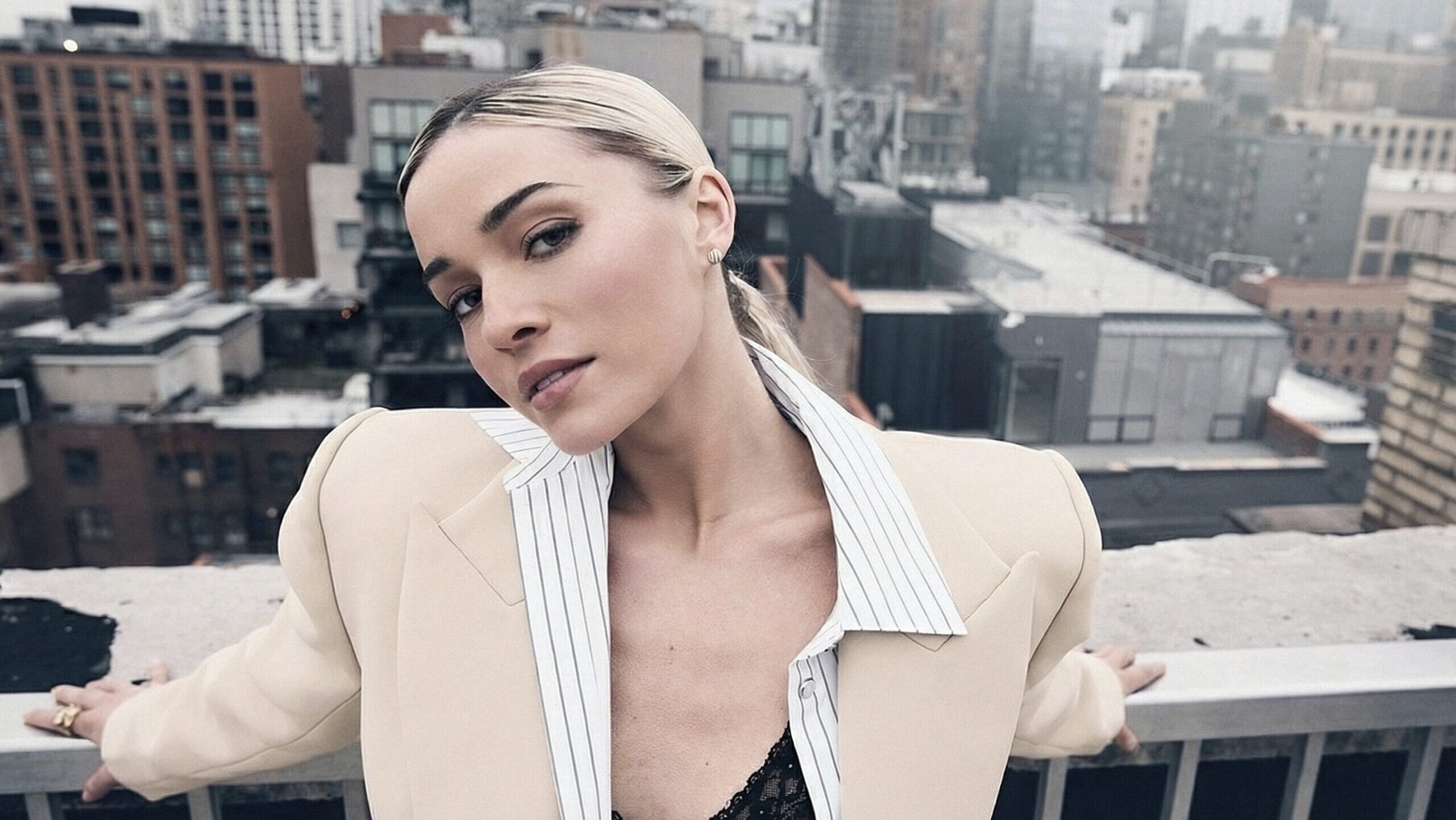
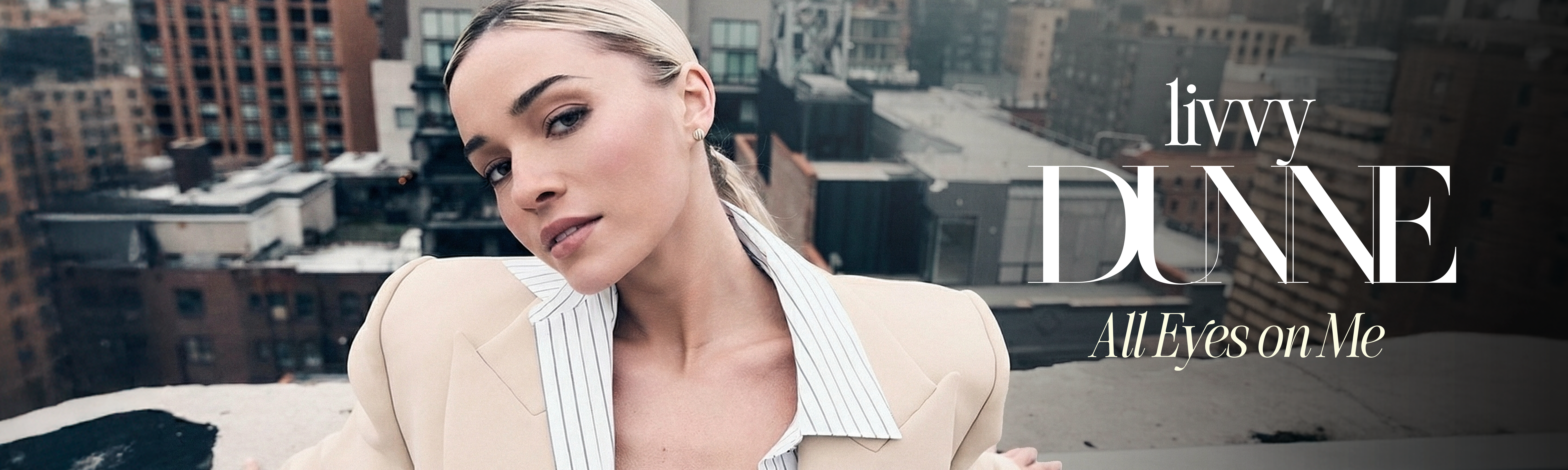

Livvy Dunne is focused. As a child growing up in New Jersey, she would come home from training at the ENA Gymnastics facility in Paramus, set up her mats, and keep going long after her coaches and parents begged her to stop. There was no off switch.
There still isn’t.
That relentlessness carried her from a Level 4 gymnast at age 7 to Junior Elite at 11 to a member of the U.S. Junior Women’s National Team at age 15. It carried her through broken bones and a potentially career-ending ankle injury, all the way to Baton Rouge, Louisiana, where she became one of the most decorated athletes in LSU history and helped deliver a national championship to a program that had fought for its survival for four decades. Along the way, she quietly built something else entirely — a media and business empire that no female gymnast, and few athletes of any kind, had ever attempted.

When name, image, and likeness (NIL) rules changed in 2021, Dunne was already ready. She’d spent years studying what worked on social media, following the analytics with the same precision she applied to her floor routines, reverseengineering the careers of models and lifestyle influencers
to ask a question nobody else was asking: Why couldn’t a gymnast do this too? The answer, it turned out, was that she could-and better than almost anyone. Today, she boasts one of the largest social followings of any college athlete in history, equity stakes in brands like NOBULL alongside Tom Brady and Mike Repole, and a burgeoning acting career.
What makes Dunne genuinely interesting, though, is not the follower count or the brand portfolio. It’s the clarity. She knows who she is, where she comes from, and what she’s building. She credits her mother — ever-present at every meet, never having missed one — as her greatest role model. She credits Nastia Liukin for showing her that an elite athlete could have an identity beyond their sport. And she credits the discipline of gymnastics for giving her the tools to walk into any room-an audition, a boardroom, a photo shoot-and compete.
She’s done harder things than this her whole life. That part, she’ll remind you, is not up for debate.
This story originally appeared in Boardroom’s Spring Issue print magazine and has been adapted for online publication.
Want More from Boardroom? Get Our Newsletter
Boardroom: You grew up here in the Northeast?
Livvy Dunne: Yeah. Jersey girl.
What was childhood in Jersey like for you?
Oh, man, childhood in Jersey? Well, I was a gymnast my whole life until this past year. So I mean, I was training most of my childhood. I was homeschooled. I would train in Paramus, New Jersey, at ENA. And, I mean, I sacrificed a lot to be an elite gymnast and compete for the United States.
Was there a moment when it clicked? When you realized you were different than the rest of the girls in your class?
When I was very young, I felt like I was different than everybody. I would get skills super easily at practice and I never wanted to stop. I would go home, I would set up my mats and I would tumble. I would try and get new skills and it would scare my parents and my coaches. They’d be like, “Please stop.” But I just could never find an off switch in my brain and I loved it, loved the thrill. My parents were so supportive and they were there to help me chase my dreams. And even my sister, she would come to my meets with my parents. And I mean, it was a bumpy road, but we did it. It was cool.
Did you love the work?
Yeah. I mean, the hardest part about being a disciplined athlete, I think, is the sacrifices you have to make. I had to not go to football games, not go to school dances, not go on field trips. So I think the sacrifices were the hardest part of giving up part of your childhood, but I mean, the reward was priceless.
Was there a coach who really impacted you early on?
So one of my role models growing up was Nastia Liukin. She won the gold in 2008. She’s a great person. Her dad actually coached me in the USA Gymnastics program, but I always looked up to her because she obviously was the best at what she did. She won gold, but she had an identity outside of gymnastics. And that’s something I really admired, because it didn’t fully consume her. She loved fashion. She loved social media. She was constantly posting about other things she loved, which is so hard to find when you’re a top-level athlete. Usually, your athletics consume you. So she was an amazing mentor. I still will talk to her every now and then. She’s just lovely.
As you got more successful and you start looking back on that time, does it hit you how much your family had to put to the side to help you chase your dream?
My family is everything to me. My mom is truly my mentor. She is my biggest role model. I want to be just like her. She’s so smart and business savvy. She sacrificed everything when I was younger. My whole family would drop anything to try and make my dreams come true, me or my sister. Come to all my meets. My mom never missed one college meet, whether I was competing or not. She went to every single one, and that really meant the world to me.
How do you get in the system with Team USA? How do you even begin that?
I feel like your talent will shine through, and you’ll kind of know that you’re different than everybody else when you’re getting skills so quick. And I kind of just flew through the levels at a rapid pace. I was a level 4 when I was 7, and then by the time I was 10, I was a level 10. And then I started the Hopes program, which is a lead into elite gymnastics. And then when I was 11, I qualified for Junior Elite for the first time. So that really was my whole childhood. And your initial thought immediately when you’re a young girl is, “I want to go to the Olympics.”
That was the prize. You want to wear the medal. And as I got older, I thought, “You know what? My body hurts. I feel like I can find success in another way other than going to the Olympics. There’s got to be a way.” And I was like, “You know what? Let’s make college gymnastics the new thing, that young girls are like, ‘I want to go to college. I want to go be a badass college gymnast.”‘
The injuries and the wear and tear are really real. How was it to compartmentalize that? Because you’re young and you’re dreaming of something, but you see your body breaking down at times.
With gymnastics, you’re doing it as you’re going through puberty, and it can really hurt your body. I’ve broken multiple bones. I feel like I would always find a silver lining somehow. I would be hurt, and I would post on social media, and I would try to take the bad with some good. I think my first major injury was an OCD in my ankle. I broke my ankle. I had part of my bone that died when I was just a young girl. And that can be career-ending sometimes when your bone dies. So I was like, “How do I make light of this situation?” And I really dialed into social media.
When does a college approach somebody to compete at D1 level?
College-recruiting rules are very different now. I think you have to be a junior, if I’m not mistaken, to be recruited. Back when I was being recruited to go to school, I think I got my first recruiting letter when I was in fourth grade. It was crazy because how are you supposed to know where you want to go to college when you’re in fourth grade? Honestly, the first time I got my recruiting letter from LSU, I liked them because it was purple and it was like, tigers. So I took a deeper look into LSU as I got a little bit older. I ended up committing to LSU when I was 13 or 14, just still so young, and crazy to think about. I went on three recruiting trips. I went to LSU, University of Michigan, and University of Florida. And I chose LSU at a young age, and it all worked out.

What’s winning a national championship like?
It was obviously the most rewarding feeling, doing it with the group of girls. When you’re on a team, you go through hardships, you go through lows, you have some highs, but to make school history …. To be able to do it for something bigger than yourself is so cool. I love LSU, and I love my teammates. I love my coaches. And one of the head coaches, D-D Breaux, she’s a badass woman. She started LSU Gymnastics. The program was almost cut by LSU multiple times when she was first starting it up. She kept the program alive for 40-something years until she retired. Doing it for her, for Ms. D-D, that was really cool.
Was that time in your life — in many ways you were living college life — did you feel like you caught up on some of what you had to give up?
Definitely. I mean, as much as your college coaches don’t want you to go out — we would have dry seasons at LSU — it’s still college, and you’re still surrounded by so many people, and you’re on a team. Elite gymnastics, it’s individual. Yeah, you’re competing for Team USA, but you don’t all live together in the same place. You’re all from different parts of the country. LSU, you’re all in it together. You have a team of girls.
When did the phrase NIL first come into your mind?
The phrase that changed my life. LSU has always had athletes with star power, and they were never able to capitalize off of their star power and their NIL. My freshman year, I wasn’t able to capitalize on my NIL that whole year, but I didn’t really care because I just loved to do social media. I didn’t know
the money and the opportunities that could come with it until the rule did change. I was upset at the time when, during my freshman year, I wasn’t able to take a free sweatshirt. I didn’t really know what could come with being the highest-earning female athlete.
So when that rule changed in 2021, the first thing I did was take my time picking the right agency and people that I trust. I feel like the biggest downfall is having people around you don’t trust. My mom, my sister, my dad work heavily with me, and I love my agents; they’re amazing. I took my time with [picking the right team] and made sure that everything was right and I wasn’t rushing.
I have two daughters, and at this point, I feel it’s impossible to control it. It’s not about whether you have it or not. It’s about having somewhat of a healthy relationship with your device and with social media. Do you remember when you first got your phone, when you first got social media?
I think I was 6 years old, but it wasn’t an iPhone. It was just a little flip phone. My mom gave it to me because I was always at the gymnastics facility training with the older girls and my mom was worried about me. But my first iPhone, I think in fifth or sixth grade. I always loved social media. I think I started doing it when I was 10. I would post gymnastics videos, meet with my friends. I just loved to watch what worked and what didn’t. I think I had a video of me doing a slow-motion leap on floor. It got 30,000 views, and that was when I was 10 or 11. I was like, “Oh, my gosh!”

How was your relationship with the negativity that comes with it?
I feel like the best part about social media is you get to put out there what you want. You don’t have to put out there what you don’t want. You don’t have to put everything out there. And if you don’t like a comment on your post, you can delete it. If I see something I don’t like, I just delete it. These people don’t know me. My family knows me, my boyfriend knows me. These people don’t know me. So I mean, yeah, it can hurt your feelings sometimes if you let it creep in, but you have control of your own destiny. And I think that you can tune out that negativity and don’t compare yourself to people. I think it probably has to do with gymnastics, because you could think you just did the best routine in the world or in social media terms and you could post something that you think is amazing and then you can get a bad score in gymnastics. Someone could essentially leave a hate comment. I kind of see it in the same way. It’s all subjective.
Knowing how to speak to an audience and knowing how to utilize social media, all of it is a skill. Was that something that you knew or something that also came natural to you?
I just really loved to look at the analytics, like I was saying before. I’d follow Victoria’s Secret models Kaya Gerber and Hailey Bieber. I just loved their style and the way that they interacted with their fans. And I thought that their lifestyles were cool. And I was like, “Why can’t I have the best of both worlds?” I tried to find an athlete that did that, and no athletes really did that other than Nastia. She was done with gymnastics at that point, though. I thought, “What if I was a gymnast and I posted lifestyle content?”
Did you realize how valuable it could be in building a business?
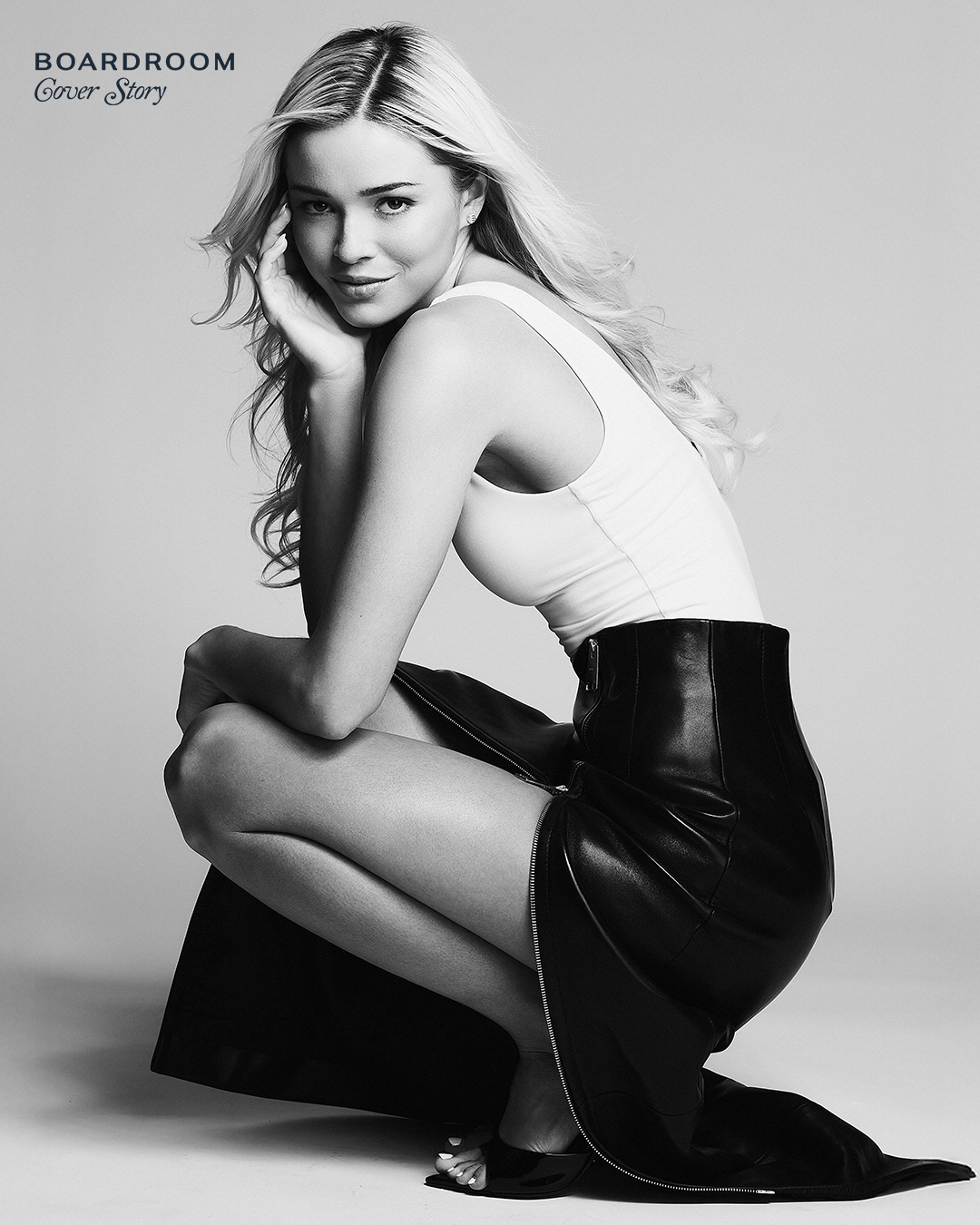
When the rule first changed, I was just happy to get my first brand deal, which was Vuori. I still work with them to this day because even from day one, I think I knew and I had enough feel to know that Vuori was authentic to me and that I wanted to have long-term deals. It wasn’t just a one-off deal. I think that authenticity really shows, especially when it comes to working with brands, because Vuori necessarily isn’t my brand, but it is authentic to me and I do wear it every single day. I wore it here to the shoot today.
That says a lot. That’s the goal for anyone who has brand deals as part of their business: Have brands that you can start to call legacy brands that grow with you and show up for you when there’s something philanthropic you want to do.
I think Vuori was so authentic because I was with them since they were relatively young. I feel like they were first a men’s clothing brand. The first pieces of female clothing they sent me were a sports bra and shorts. I was in California. I remember I was wearing it to the beach, loved it. And then I decided
I wanted to work with them because I genuinely loved the product, and now look at them. It’s huge. I wish I got equity.
As you’ve started to build out your business, what makes a brand deal attractive to you outside of liking the product?
First of all, I think that it’s cool that brands want to work with a female gymnast. Nobody turned their head to think that a female athlete, especially a gymnast, is going to be at the forefront of NIL. So it was cool that these brands reached out to me and took a chance, and it worked out because I really did work for the following that I had and the engagement. So that was really cool. What do I look for in a brand that I’m getting equity in? I would say if they’re sustainable. Who’s in charge? If they have had any past success in other businesses.
That’s three great ones. What are the brands that you’re working with?
Yeah, I have equity in NOBULL. I just announced that today, which is really cool, with Mike Repole and Tom Brady.
Two people who have done it before.
They’ve done it before. Mike Repole, he is freaking awesome. He started Body Armor, Smartwater, Pirate’s Booty. It’s like, OK, he’s got it going on, and he has a great family and I’m very family-oriented as well. So it just felt like it aligned for me. And I also work with W by Jake Paul. Amazing. I have equity in that brand, which has been really cool because, I mean, I keep seeing it everywhere, whether it’s Jake wearing his logo on some of the biggest stages or Jutta [Leerdam], his amazing fiancée, winning the Olympic gold. I just think that I look at that and I’m like, “That aligns with me.”
What else do you want to do? I could imagine you acting. I could imagine you running your own brand and business and enterprise. What are some of the dreams that come out when you and your team all sit in your brainstorming sessions?
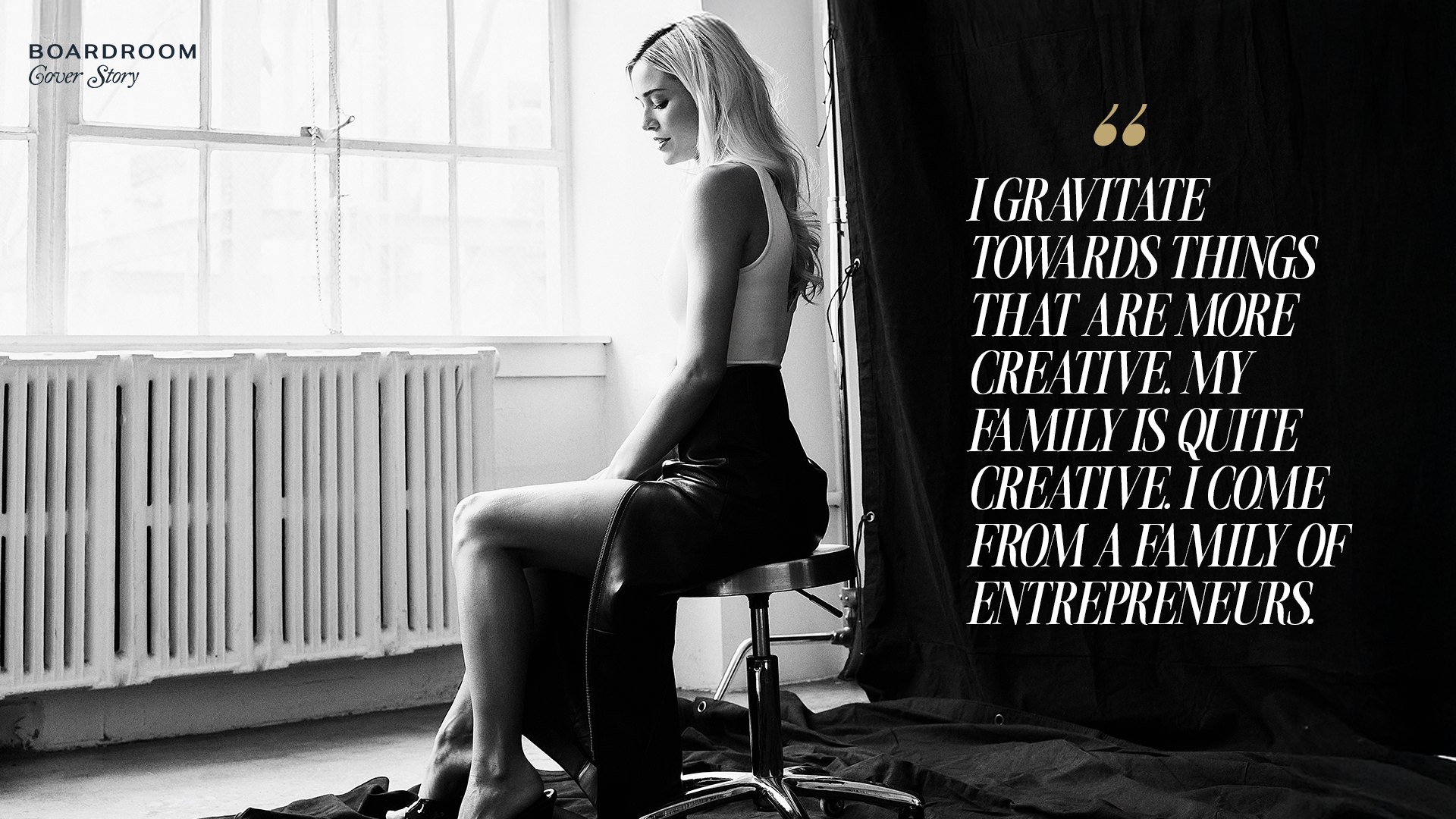
Naturally, I gravitate towards things that are more creative. My family is quite creative. I come from a family of entrepreneurs. I would love to dive into acting. I’ve been doing lots of auditions and rehearsing scripts and getting used to that lifestyle, which has been amazing because it’s something I’ve been passionate about ever since I was in college. I couldn’t find the balance between being a student athlete and working with brands. So it’s something I took on after college and it’s been so much fun. I have my mom standing there helping me memorize the scripts. I have an amazing acting coach. So I would say things that are creative, that’s where my family really thrives. And I really want my own thing one day. I look at Hailey Bieberactually I saw her a few weeks ago at the Super Bowl and I just was like, “You’re a badass businesswoman.” I look at that and I think it’s really amazing and honestly inspiring to young women, because I want to be like her.
Are auditions scary or is it something that, as a gymnast who’s been judged her whole life by scores, is not as daunting?
So, actually, my first audition ever was in person for a big show. Am I allowed to even say? I don’t know. I didn’t get it, but it was for White Lotus, Season 4.
That must have been scary.
I was obviously a bit nervous at first. I was like, “Oh, man, what if I forget the lines?” Pause. I’ve done things way harder than this in my life. Whoa. I flipped on a beam in front of 13,500 people. It’s different. I think I would rather have done a backflip in front of the casting director, but I mean, I went there, I put
it all out there. It was my first audition. I didn’t know what to expect, and it was honestly really fun. And I’ve done a few more auditions since. Not in person, but that one was pretty cool. I did enjoy doing it in person. It felt like I was an athlete again.
And being a gymnast, you’re an entertainer. There was always a level of showmanship and entertainment that came with a floor routine.
Oh, yeah.
You like how I said that? Floor routine?
Yes, that was beautiful.
That was cool, right?
That was perfect lingo. Getting the choreography, perfecting it. I’m a perfectionist. I feel like all athletes are to some extent. And that’s how I approach acting. It’s something you have to get good at or else you’re not going to be credible in that world. There’s just too many talented people out there to just think that you can book an audition or book a part. So it’s something I’ve been really passionate about getting good at.
You are so inspiring, and you do have this incredible perspective that I think young women and young people in general could benefit from. And I know you started your fund, the Liwy Fund. As you continue to grow your whole organization, what’s important for you to kind of be a messenger for and to help people as you continue to shine?
I want female student athletes to know that they can do it all. You don’t need to be boxed into one certain category, and don’t be embarrassed of putting yourself out there. When it comes to NIL deals, you have to put yourself out there to work with these brands. If you don’t do it, then you might not ever get that opportunity.
If you love to paint, you can paint and be a student athlete. I think it’s so cool now that you can do whatever you want and capitalize on it. So, go out there, do something, make something. It’s tiring when you’re in college. You have so much stuff going on to begin with already. But I feel like when you’re a student athlete, and you’re a female in college, there’s not a lot of professional leagues after college. So it’s important while those eyes are on you to really capitalize off of it.
Interviewer – Rich Kleiman
VP, General Manager – Paul Beckles
VP, Content – Damien Scott
VP, Revenue & Brand Partnerships – Abigale Smith
VP, Partnership Strategy & Marketing – Bernadette Doykos
Art Director – Michelle Lukianovich
DP, Sr. Producer – Craig Newton
Director, Producer, Camera Op – Audrey Blackmore
Video Editor, Camera Op – Matt Strickland
VP, Social Media – Yoni Mernick
VP, Audience Development – Jonathan Wiener
Sr. Manager, Content Operations – Griffin Adams
Sr. Director, Marketing & Content Operations – Stephanie Talmadge
CMO – Sarah Flynn
Co-Founders – Rich Kleiman & Kevin Durant
Clothing Stylist – Marissa Pelly
Styling Assistant – Sevn Rodriguez
Styling Assistant – Jordan Kennedy
Hair Stylist – Adam Maclay
Makeup Artist – Jodie Boland
Photographer – Andrew Arthur
Photo Assistant – Mitchell Mylius
Audio Technician – Matthew Patterson Curry
Read More:
There Is No Offseason: KLUTCH Sports Group COO Fara Leff on Commanding the Sports Calendar
Michael Che Opens Up About SNL, Kanye, Colin Jost, Cancel Culture, & Comedy
Red Hook Tavern: Where Billy Durney Wants to Know Your Name
Keanu Reeves’ Next Act Is Built on Two Wheels

The Blueprint: Jessica Holtz Meets the Moment