

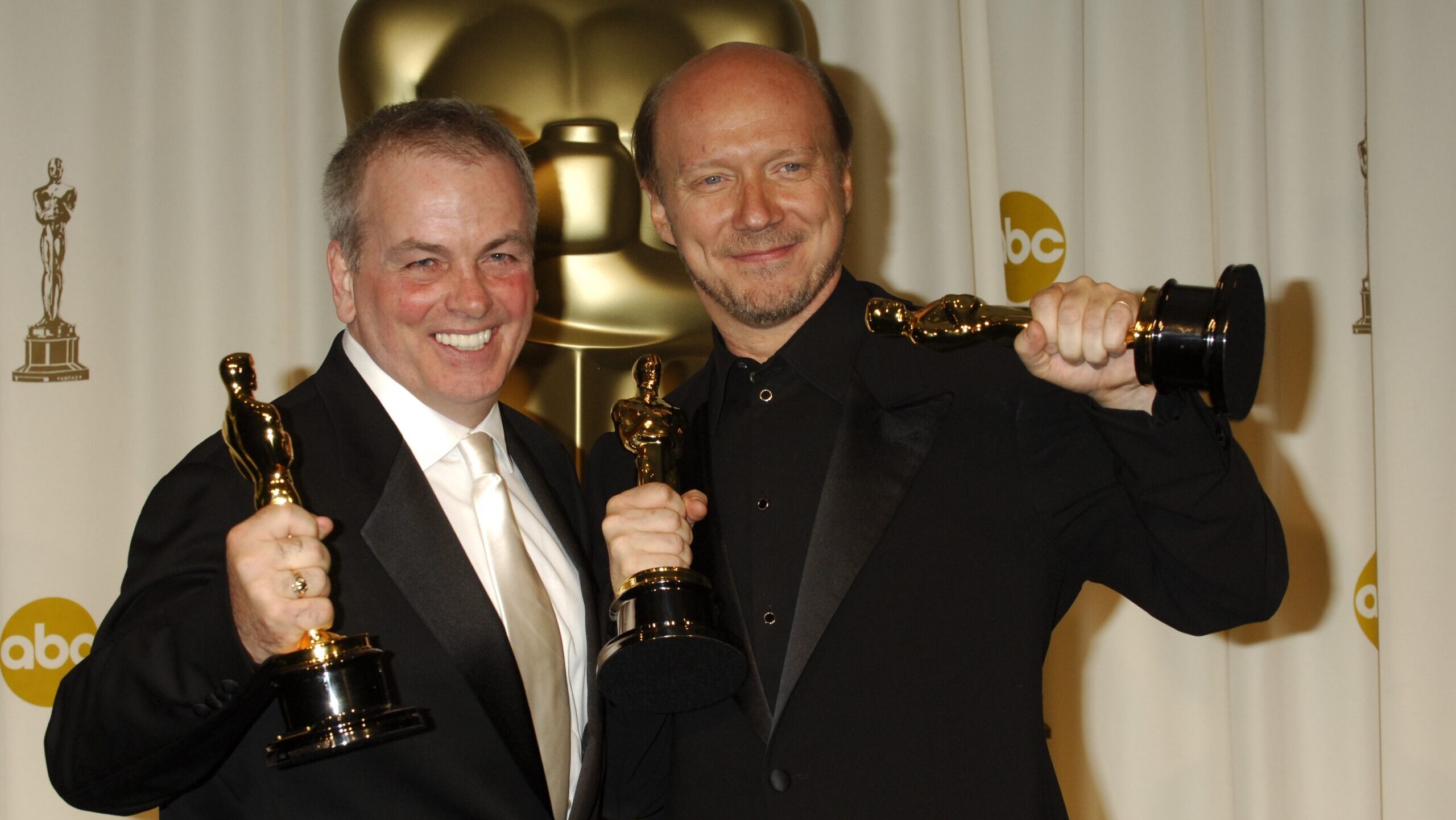
Every Oscar injustice creates the next one. Just ask Al Pacino. Or Denzel Washington. Or Chris Rock’s face.
As Hollywood rolls into that hallowed time of year when dozens of artists and craftsmen hope to awake to find a little gold statuette under their Oscar trees, we’re sure to be reminded of the award show’s biggest snubs and travesties. Such as the year The King’s Speech bested The Social Network, or when Crash1 beat Brokeback Mountain. To say nothing of films like Do the Right Thing not even getting nominated, while Driving Miss Daisy went on to win Best Picture. These controversial wins are all indelibly etched into the annual discourse. It’s hard to even mention Dances with Wolves without bringing up the fact that “it probably shouldn’t have beaten Goodfellas, though…”
What is important to remember, and it happens mostly with the acting categories, is that every Oscar snub has a ripple effect that can roll through decades of film history, turning into consolation prizes or makeup awards.
Art Carney’s win for 1974’s Harry and Tonto is often cited as one of the all-time biggest Oscar blunders, having beaten both Jack Nicholson for Chinatown and — even more egregiously — Al Pacino for The Godfather Part II. Al Pacino’s work in the Godfather films has been canonized over and over and is rightly held up as some of the best film acting in history. Harry and Tonto is a lovely little film, and Carney is great in it, but it’s not The Godfather. Nor is it The Godfather Part II, or even Part III. It’s possible that the Academy was collectively punishing Pacino for his boycotting of the ’72 Oscars. He was protesting the fact that he was nominated as supporting actor for the first Godfather film, when he had more screen time than lead actor nominee — and eventual winner — Marlon Brando. It’s possible that people just loved Carney from his role in “The Honeymooners” and thought this might be the last chance to honor him (it was). Whatever the reason for Pacino’s snub, its ripple effects persisted.
Pacino was nominated three more times, losing for Dog Day Afternoon in 1976, …And Justice for All in 1980, and Dick Tracy in 1991, before he finally won for his hoo-ah performance in 1992’s Scent of a Woman. Pacino’s win was seen by many as a consolation prize — the illustrative example of an actor not winning for the work they should have won for and instead winning later for a fine performance that’s significantly below their best. Scent of a Woman isn’t even the best performance Pacino gave in 1992. That would be his turn as Ricky Roma in Glengarry Glen Ross. Pacino finally got his Oscar, but in doing so he became the Art Carney to Denzel Washington’s — well, him. Washington was nominated for Malcolm X and, like Pacino in Godfather Part II, delivered some of the greatest film acting of all time.
It must have felt like déjà vu for Washington, having already lost to Sean Connery at the 1988 ceremony in another consolation win2. Washington didn’t win for lead actor until 2001 for Training Day. Training Day is one of the best crime thrillers ever made, Washington’s Alonzo is an — all caps necessary — ICONIC movie character, and it was absolutely the best lead performance of that year. But if the Academy had correctly honored Washington for Malcolm X a few years earlier, would they have been so quick to give him another Oscar? Training Day isn’t the most stereotypical Oscar fare — the protagonist smokes meth in the first half-hour. A much more stereotypical Academy movie is Michael Mann’s Ali. The Academy loves to honor actors embodying real-life people3. If Washington doesn’t win for Training Day, does the Academy give Will Smith his first Oscar for playing Muhammad Ali? If Smith already has an Oscar, is he still so tense at the 2022 ceremony that he temporarily loses his mind and slaps Chris Rock in the face?
Did Art Carney slap Chris Rock?
As another dubious Oscar winner once stated, “What we do in life echoes in eternity.” Each terrible Academy Award win reverberates through several generations of Oscar ceremonies. Each time the Academy passes the buck, it creates a cycle of continuing miscarriages of artistic justice.
By the early 1980s, Katharine Hepburn was already the most decorated actor of all time, having been nominated for 12 Academy Awards and winning three. She certainly didn’t need another to cement her status as the GOAT — Meryl Streep was just starting her ascent. In 1981, she starred opposite Henry Fonda in On Golden Pond, a film doubling as a final denouement for Hollywood’s golden age. Legendary critic Pauline Kael called the film “uplifting twaddle” and further used it as a cudgel against weak-minded filmgoers. In short: It’s perfect Oscar bait. And the bait worked. Both Hepburn and Fonda won their final Oscars — also Fonda’s first — and both wins are due to other actors never winning.
Fonda had been nominated twice before, for The Grapes of Wrath in 1940 and again in 1958 for 12 Angry Men. If our theory is correct, his win for On Golden Pond was his Scent of a Woman Oscar — meaning it was a “this is probably our last chance to honor him” Oscar. But in winning, he denied Warren Beatty — who to this day does not have an acting award — an Oscar for Reds. Fonda also beat Paul Newman, who was nominated for his role in Absence of Malice, which in turn meant Newman needed his own makeup award, which came in 1987 for The Color of Money, thus denying James Woods an award for his incredible performance in Oliver Stone’s Salvador. (Has James Woods ever played a role that could not use the modifier “sleazy?”)
Alternatively, Hepburn beat Susan Sarandon’s performance in Atlantic City. Sarandon then got her own makeup Oscar in 1996 for Dead Man Walking, a film no one has thought about in 30 years. Her win denied Sharon Stone an Oscar for Casino, where she turned in arguably the best performance in any Scorsese film.
The Oscar butterfly effect doesn’t always work the same way. Sometimes it isn’t a makeup award for past losses. When Jack Nicholson won for As Good as It Gets in 1998, he already had two Oscars in the bank, but the Academy doesn’t like to award young actors the top acting prize. Leonardo DiCaprio wasn’t even nominated for Titanic, and Matt Damon, had he won at 27 for Good Will Hunting, would have been the youngest actor ever to win best actor. The average age of best actor winners is 44. To this day, only Adrien Brody has won the award in his 20s. Damon has been nominated a few other times but still has yet to win for acting.
Of course, art is completely subjective, and there’s no scientific way to say who should have won — only who did win. Will Ethan Hawke win an award this year for Blue Moon, recognizing his incredible breadth of work, and shut out Timothée Chalamet for another year? Will Matt Damon finally win for The Odyssey next year? Will he take the statue out of the hands of a younger actor, perpetuating the cycle yet again? The trends of the Academy point to yes, but as with all of life, anything can happen. The Oscars are not the be-all and end-all of what movies and filmmakers are important — case in point: Neither Stanley Kubrick nor Alfred Hitchcock nor David Lynch ever got one. But it would be nice if the right person won at the right time a little more often, because sometimes Art Carney wins and then Chris Rock gets slapped in the face.
1  Another annoying side effect of Crash ‘04 winning Best Picture is that I constantly have to specify I'm talking about David Cronenberg's sicko masterpiece from 1996 and not 2004’s abomination when I mention how good Crash is.
2 Untouchables. Although my favorite supporting performance from that year wasn’t even nominated. I will forever stan for Nicolas Cage’s Ronny “I lost my hand!” Cammareri from Moonstruck.
3  See Daniel Day-Lewis (Lincoln), Jamie Foxx (Ray Charles), Meryl Streep (Margaret Thatcher), Charlize Theron (Aileen Wuornos), Rami Malek (Freddie Mercury), Sissy Spacek (Loretta Lynn), and Cate Blanchett (Katharine Hepburn) and about 1000 others.
Read More:
Keanu Reeves’ Next Act Is Built on Two Wheels

The Blueprint: Jessica Holtz Meets the Moment

The Power Broker: Emma Grede Is Just Getting Going

Quiet Power: Imani Ellis on CultureCon, Creators, and Learning to Let Go

The Long Game: How LeBron James and a Few NBA Friends Might Elevate the Game of Golf