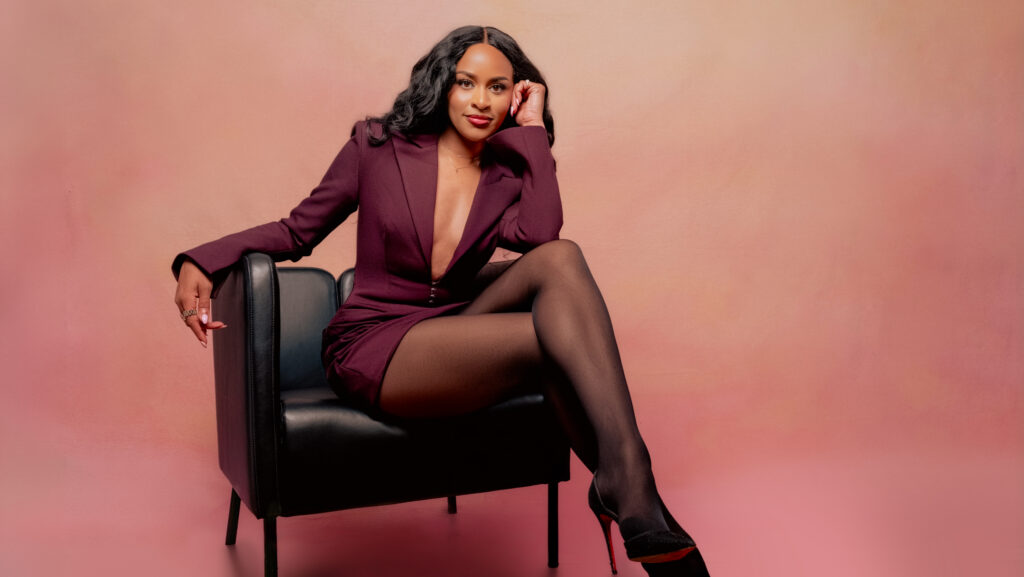


Ogwumike sits down with Taylor Rooks to reflect on her career, 2016 championship, leadership, WNBA retirement, and what comes next.
On the ten-year anniversary of the championship that made her a legend, Nneka Ogwumike sat across from Taylor Rooks for the latest episode of Boardroom Talks with news she’d been carrying quietly: After 15 seasons, she is retiring from the WNBA at the conclusion of the 2026 season. But before she got to that, she did the thing she has always done best — deflected the credit outward. Asked what came to mind when she looked at her old MVP trophy, she didn’t talk about herself first. She talked about her teammates, about “the journey that it takes to get to the summit,” about the flood of memories that comes rushing back once you’ve reached a peak, and finally have a moment to turn around and look at the climb behind you.
It’s a habit Rooks pressed her on almost immediately; the way Ogwumike always seems to route her own greatness through other people. Ogwumike didn’t deny it. She said something that has clearly shaped how she moves through the world: “I think we’re never really satisfied with how we exist in this world as women, as Black women, as women in sport.” Competitiveness, for her, has never meant individualism. It means community, and she can’t separate the two.
That instinct toward curiosity over certainty is, she said, the throughline of her whole career — a lesson she once discussed with Lisa Leslie about staying a student of the game no matter how decorated you become. “Maintaining a perspective of curiosity is something that can always teach you how to adapt,” she said. It teaches you to reflect. It allows you to circle back and learn from people all over again, no matter how long you’ve been doing this.
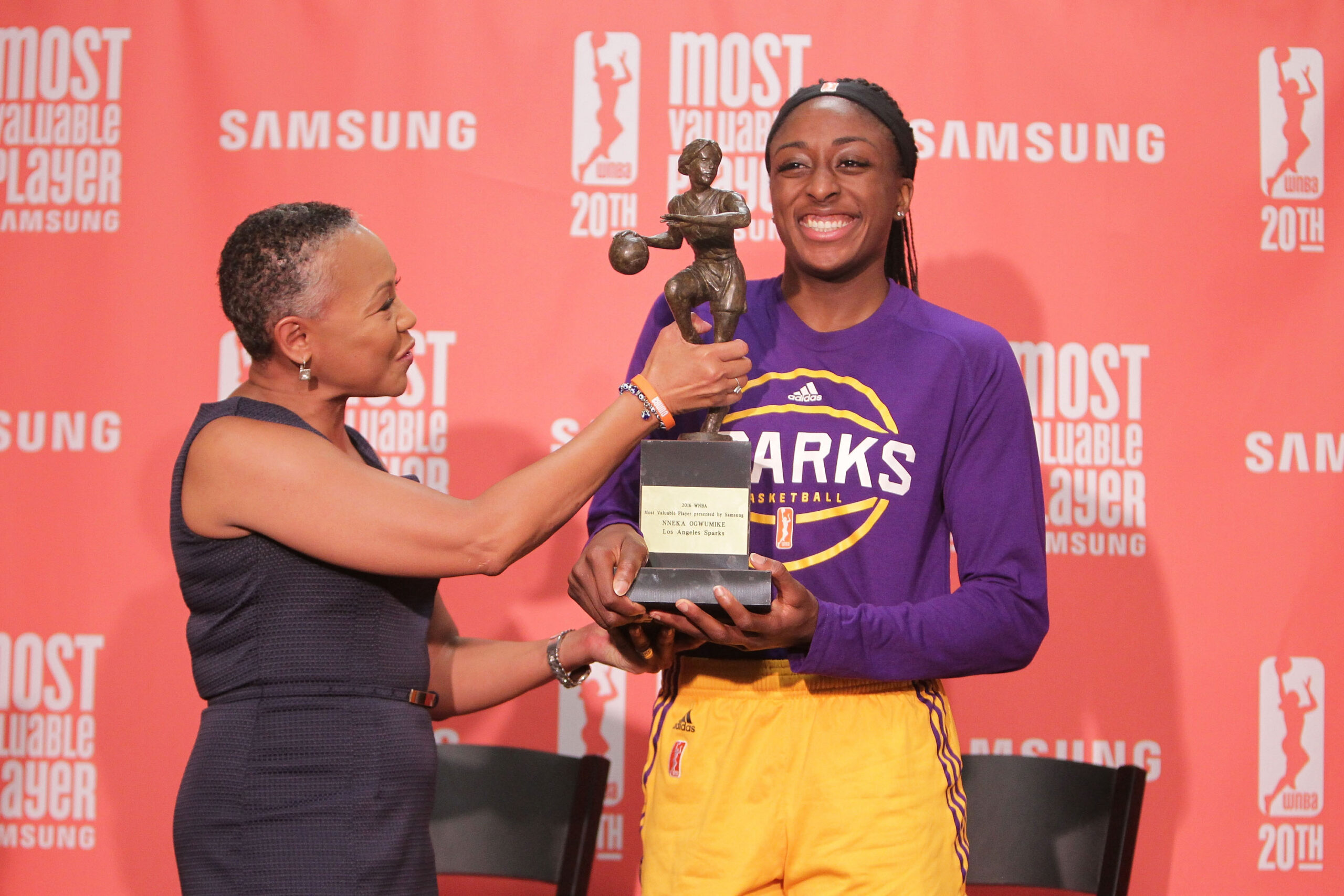
Ten years is a strange unit of time to hold up against a life. When Rooks asked what had changed and what had stayed the same since 2016, Ogwumike answered the harder question first — sameness — because it was, in her words, “probably a little easier.” She is “very disciplined,” a “creature of habit,” someone who treats her training with reverence because she’s watched that reverence pay off again and again. What’s shifted isn’t the discipline itself, but her relationship to the empty stretches in between — the plateaus, the seasons where nothing seems to be moving. She used to feel anxious in those in-between moments. Now, she understands them as the price of the eventual jump.
She never expected to still be playing at this point. At Stanford, she had one foot already out the door toward medical school, until a young journalist — her close friend, Shanae — told her something simple that redirected her whole life: School will always be there. Ogwumike leaned into basketball instead, not knowing what kind of player she’d become, not knowing the league would still feel like home fifteen years later. “I am that player that I never thought that I would be,” she said, “but I was laying the foundation to become.”
And then, in the middle of a conversation about legacy and gratitude, came the news itself: She is retiring from the W. Not because her body has entirely given out — though she admitted, half-laughing, “it’s a little bit my body” — but because she has arrived, on her own terms, at a kind of fullness. She is averaging 16.8 points and 8.8 rebounds per game this season, shooting near 51 percent from the field, still elite by any measure. That’s precisely why the announcement lands as a shock. Most retirements are quiet admissions of decline. Hers is something else; a decision made from strength, not exhaustion.
She traced the decision back to a single evening in San Diego, during training camp, walking along the beach after a whirlwind stretch that had included a grueling CBA negotiation, free agency, the college draft, and the start of a new season all crashing into one another. Somewhere on that walk, something settled in her. “I feel like I’ve done it,” she remembers thinking. That night she called her people and told them this was it.
When they asked how sure she was, she told them 98 percent. They were stunned by the certainty; she wasn’t.
Much of what made this season so heavy, she explained, was the 18-month fight to negotiate the league’s new collective bargaining agreement, a process she lived through as WNBPA President. She described nights that stretched into local midnight on emergency calls, only to wake at 4 in the morning to train, because that was the only window she had left for herself. The hardest part, she said, “was having to fight for people who would probably not fight for you at times.” She learned, this time around, to lean on the people who could hold her, a lesson she hadn’t learned during the bubble-season negotiations years earlier, when she pushed through alone and came out the other side depleted.
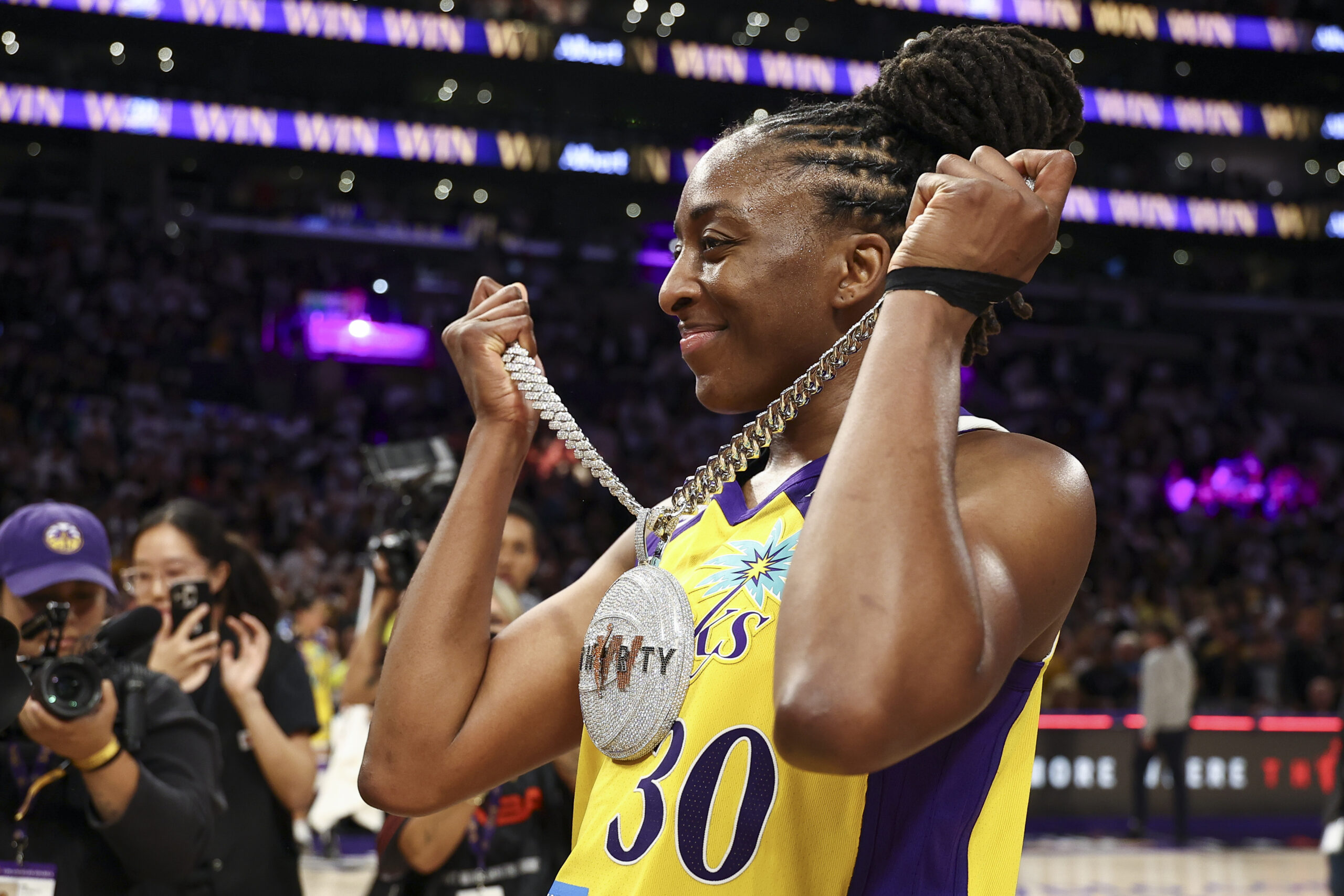
What comes through, listening to her talk about all of it, is a woman actively refusing to let this ending look like the endings she’s watched other players endure, the ones who get pushed out the door instead of walking through it on their own terms. She wants to leave, in her words, as “a whole person,” not in pieces.
Near the end of the conversation, Rooks asked what she hoped people would take away from all of this — not the stats, not the accolades, but the woman underneath them. Ogwumike didn’t reach for anything grand. She talked, instead, about connection: how much she loves the relationships built over 15 years, and how strange it will be to lose the daily version of that closeness.
And then, almost as a final thesis for the whole hour, she offered the phrase that Rooks had handed her earlier in the conversation and that she chose, deliberately, to claim as her own. She isn’t leaving the game so much as she is being “pulled toward more.”
Read More:
Michael Che Opens Up About SNL, Kanye, Colin Jost, Cancel Culture, & Comedy
Red Hook Tavern: Where Billy Durney Wants to Know Your Name
Keanu Reeves’ Next Act Is Built on Two Wheels

The Blueprint: Jessica Holtz Meets the Moment
The Power Broker: Emma Grede Is Just Getting Going