
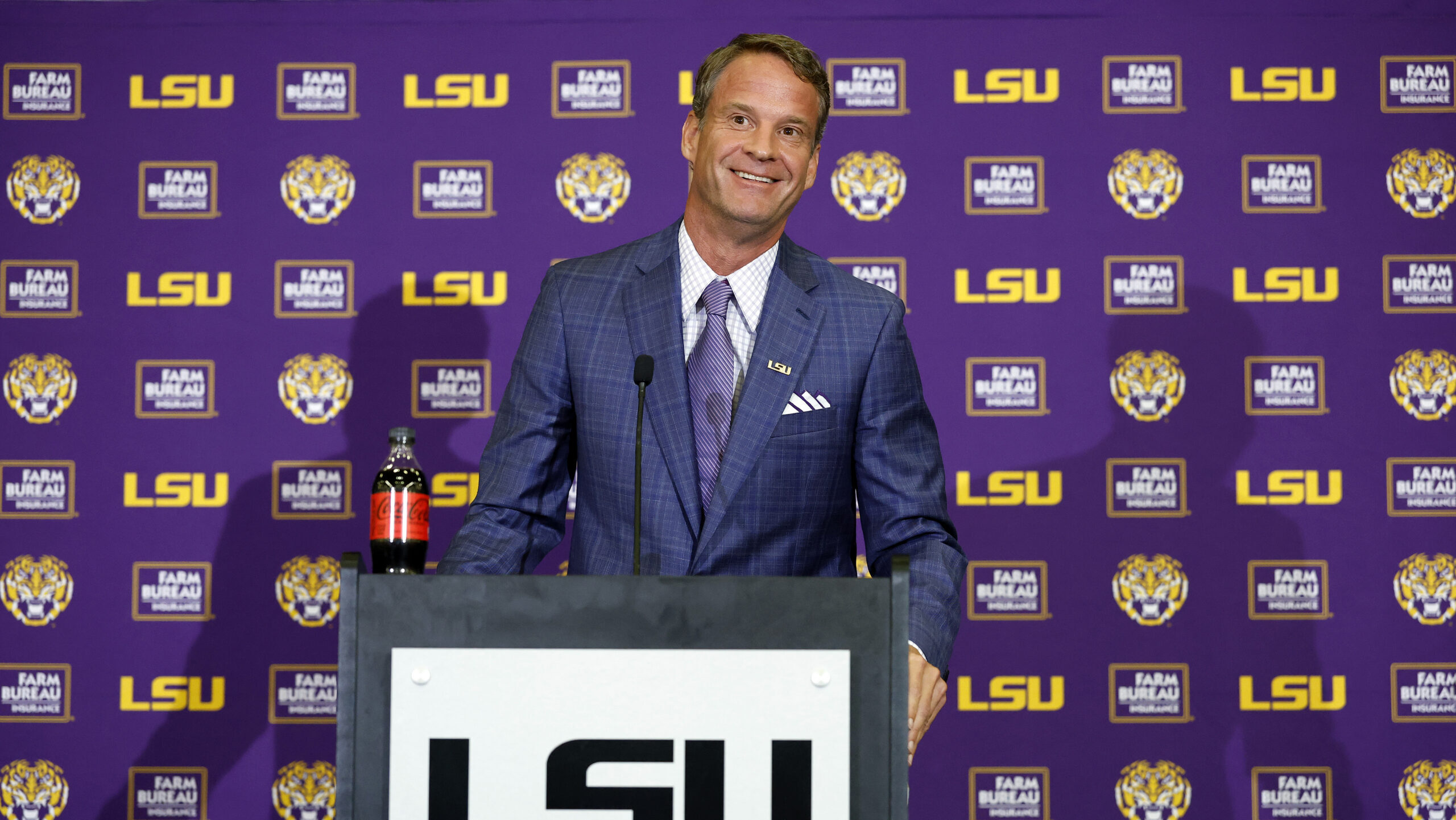
Kiffin gets real with Boardroom on his first season at LSU, NIL, the transfer portal, player compensation, and the future of college football.
Lane Kiffin has never been shy about saying the quiet part out loud. Long before revenue sharing and NIL checks became standard vocabulary in college football, Kiffin was arguing that players should be paid for the value they create — a stance that, by his own admission, got him labeled a “clown” in an era when the sport still pretended to be strictly amateur. Now heading into his first season at LSU, with one of the most talked-about transfer portal classes in the sport’s history and a fanbase whose expectations he calls “the best job in football,” Kiffin finds himself at the center of a game that finally looks the way he always said it would.
That perspective, equal parts pragmatist and provocateur, is what makes Kiffin one of the most compelling voices in college football right now, on and off the field. He’s coached through the sport’s slowest era of change and its fastest, from the old recruiting model to a world where rosters can turn over in a single transfer cycle. He’s watched the portal go from a workaround to the primary way programs are built, and he’s been outspoken about the need for more structure around it, including his pitch for a “rookie cap” that would bring some professional-sports logic to how incoming players get paid. But for all his willingness to poke at the sport’s business side, Kiffin is just as clear about what he thinks the money shouldn’t touch: the identity of a program, and the loyalty of the fans who show up for it every Saturday regardless of who’s wearing the jersey that year.

That loyalty is exactly what brought Kiffin into DoorDash‘s new “Don’t Fan for Free” campaign, alongside two other names who know plenty about bending the sport’s old rules before it was fashionable in Heisman winners Jameis Winston and Reggie Bush. It’s a partnership built on a simple idea: If everyone else in college football has a deal these days, from players to coaches to mascots, the fans who fuel all of it deserve one, too. For Kiffin, sharing a set with Winston and Bush wasn’t just a brand exercise; it was a reunion of sorts, drawing on history that goes back to his own days at USC, with plenty of stories, needling, and, apparently, a persistent debate about crab legs along the way.
Ahead of his first season leading LSU, Kiffin chatted with Boardroom about all of it — what he’s learned about the program and Baton Rouge since taking the job, how he’s approaching roster-building in an era he says requires programs to “create a new box” rather than think outside an old one, and what he believes college football stands to lose if the sport doesn’t get a handle on player movement and compensation. He also talked about what a successful first season in Baton Rouge actually looks like, and why he thinks the identity LSU builds this year matters just as much as the record it finishes with.
This interview has been edited for clarity and length.
BOARDROOM: As college football continues to evolve, partnerships like the DoorDash campaign have become a bigger part of the landscape. How do you decide which brands are the right fit for you, and what made this partnership stand out?
Lane Kiffin: You look for things that feel authentic and that you’re actually going to have fun doing. DoorDash was an easy yes. The campaign is built around the idea that fans deserve a deal too, which, when you look at what NIL has done for everyone else in the sport, is honestly pretty hard to argue with. And they wanted to have fun with it. Nobody was asking me to be someone I’m not or pretend I don’t know what Twitter is. Food is also a massive part of the game-day experience, so the fit made sense, and getting to do it with Jameis and Reggie made it a lot more interesting than a standard brand deal.
What was it like teaming up with two of the best to ever do it in college football, Jameis Winston and Reggie Bush? What did you enjoy most about working with them?
It’s not every day you get two Heisman Trophy winners on the same set. I’ve known Reggie for a long time going back to USC, so there’s obviously a lot of history there. And Jameis is electric. You genuinely don’t really know what’s coming next with him, which made the whole thing entertaining. I’ll just say the crab legs came up more than once and leave it there. When you put three people who’ve been in college football that long and love it as much as we do, there are plenty of stories and material to draw back to and connect with.
You’ve been at LSU long enough now to have a real feel for the program and Baton Rouge. What have you learned about this team that you didn’t know when you took the job, and what excites you most about the group you’re taking into Year 1?
You don’t really understand how different LSU is until you’ve come here and experienced it. I really meant it when I said in December that I believe this is the best job in football. I’ve coached at a lot of places, and what I can tell you is that LSU is different. The expectations are real, the passion is real, the student section is unreal, and honestly that’s exactly the environment I want to coach in. We’ve brought in a lot of talent, and the thing I’m focused on is turning that into a team, which is a different challenge. We’ve got a roster that I think can do something special, and I know our players can’t wait to get out there.
You made an enormous investment in the transfer portal this offseason, bringing in one of the most highly regarded portal classes we’ve ever seen. What did you learn through that process about building a roster in this new era of college football, and how different is it from building a team when you first became a head coach?
We’ve always said we can’t just think outside the box. We have to create a new one. The portal has changed everything about how you build a roster, and the programs that are going to win are the ones that figure that out the fastest. The bigger challenge now isn’t finding talent, but building a culture that makes guys want to stay.
There’s no shortage of outside expectations for LSU this season, particularly given the talent you’ve brought in and the resources invested in the program. How do you define a successful first season, and how do you keep those external expectations from becoming a distraction for your players?
I don’t spend a lot of time worrying about the coaches poll or whatever the internet has decided about us this week. None of that wins a game. What I care about is how we look in practice and how we’re developing. What I’ll tell you is, I’ve liked what I’ve seen in camp, on both sides of the ball, especially from our first-team defense in our most recent scrimmage. But predictions in August don’t mean much. Ask me in January.
When you look across the country heading into this season, what are the biggest storylines in college football that you’ll be watching most closely?
I will leave that to you guys in the media. Our team’s focus solely is being good at what we can control, which is getting better at both sides of the ball and staying focused on building a winning culture here.
You’ve been one of the coaches most outspoken about how quickly the business side of college football is evolving. From your perspective inside the sport, what has changed the most over the last few years, and what do you think people outside the sport still don’t fully understand about that change?
The model has completely changed, and I think some people in the sport are still catching up to that reality. NIL, the portal, revenue sharing. It’s not going away. The coaches and the programs adapting the fastest are the ones winning. There are now a lot more factors that go into building a program, managing personnel, and building a winning culture. And honestly, I’ve always been for players being compensated for the value they create. I said that before it was popular to say it.
There’s now a much more direct connection between the money a program invests in its roster and the expectations that come with it. As a head coach, how do you balance treating players as people while also acknowledging that college football has increasingly become a business?
The business side has changed, but that part of the job hasn’t. These are still 18- to 22-year-olds trying to figure out their lives, and your job is to develop them as people first. That said, you’d be naive to pretend the dynamics haven’t shifted. Players have leverage now as they should, but they have to earn it. There are clear expectations, clear consequences, and clear rewards.
You’ve talked about the need for more structure around NIL and the transfer market, including the idea of a “rookie cap” for incoming players. What do you think the sport needs to get right over the next few years to create a system that works for players, coaches, schools, and fans?
I’ve been pro-player pay since before it was popular, and I got called a clown for it. The rookie cap isn’t anti-player. It’s just common sense. It’s about paying proven players more and creating a rational system for everyone else. That’s how every other professional sport works. The NFL figured this out and we can too.
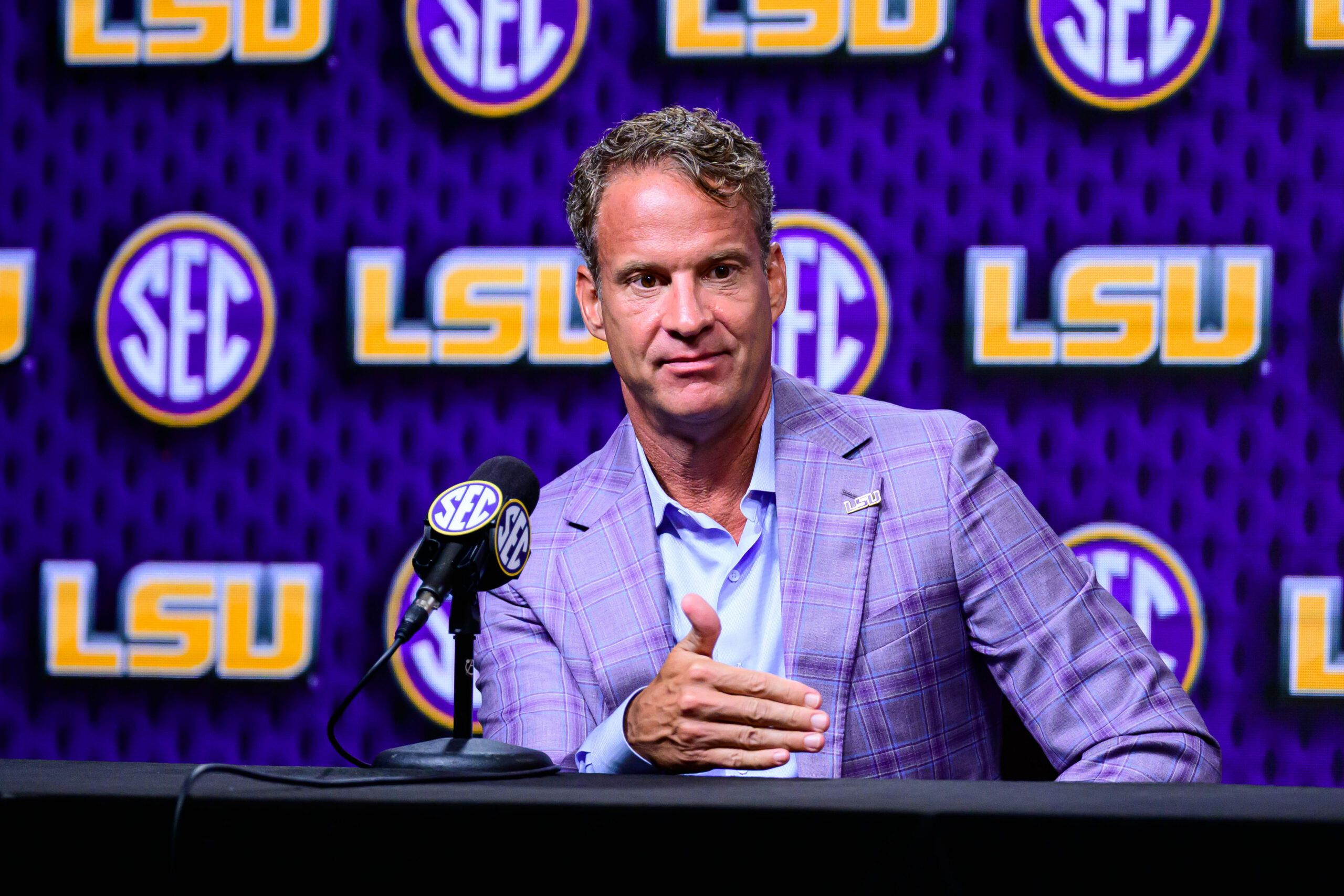
One of the biggest changes for fans is that the players and teams they become attached to can change so quickly. What do you think college football risks losing if roster turnover, player movement, and the business side of the sport continue to accelerate?
That connection is the thing worth protecting. What I’d hate to see is fans slowly stop investing emotionally because they never know who’s going to be on the roster in October. That’s a real risk. The players change. The school doesn’t. Our job is to make sure that still means something. Honestly, part of what drew me to the DoorDash campaign is that it’s built around exactly that: the fans who show up every single Saturday no matter what. That loyalty deserves recognition.
You’ve been through just about every version of college football, from the old recruiting model to the transfer portal and now revenue sharing. If you could change one thing about the current system, what would it be, and if you could preserve one thing from the old version of college football, what would you keep?
If I could change one thing, it’d be creating a consistent system around player movement and compensation. What I’d preserve is the identity piece. A player comes somewhere, develops there, graduates there, and carries that school with them for the rest of their life. That’s unique to college football. You can have fair compensation without losing that.
Ultimately, what do you want LSU football to look and feel like by the end of this season, not just in terms of wins and losses, but in terms of the identity you’re building and the relationship between this team and the LSU fan base?
By the end of the year, you want to see a group of players that’s really connected, not a collection of talented players but an actual team. You want our fans to be proud of how we play. The passion around LSU football is unlike anything I’ve seen, and our job is to give them a team that matches that energy every game day. Obviously, wins matter; that’s why they keep score. But if we build that identity the right way, the wins usually take care of themselves.
Read More:

The Blueprint: Jessica Holtz Meets the Moment
The Power Broker: Emma Grede Is Just Getting Going

Quiet Power: Imani Ellis on CultureCon, Creators, and Learning to Let Go

The Long Game: How LeBron James and a Few NBA Friends Might Elevate the Game of Golf
Savannah James and April McDaniel on Navigating Money, Friendship, and Business