
Melhado and Weiss built their reputations outside the major-label system. Now they’re running Jive.
This story appeared in Boardroom’s Summer Issue print magazine and has been adapted for online publication.
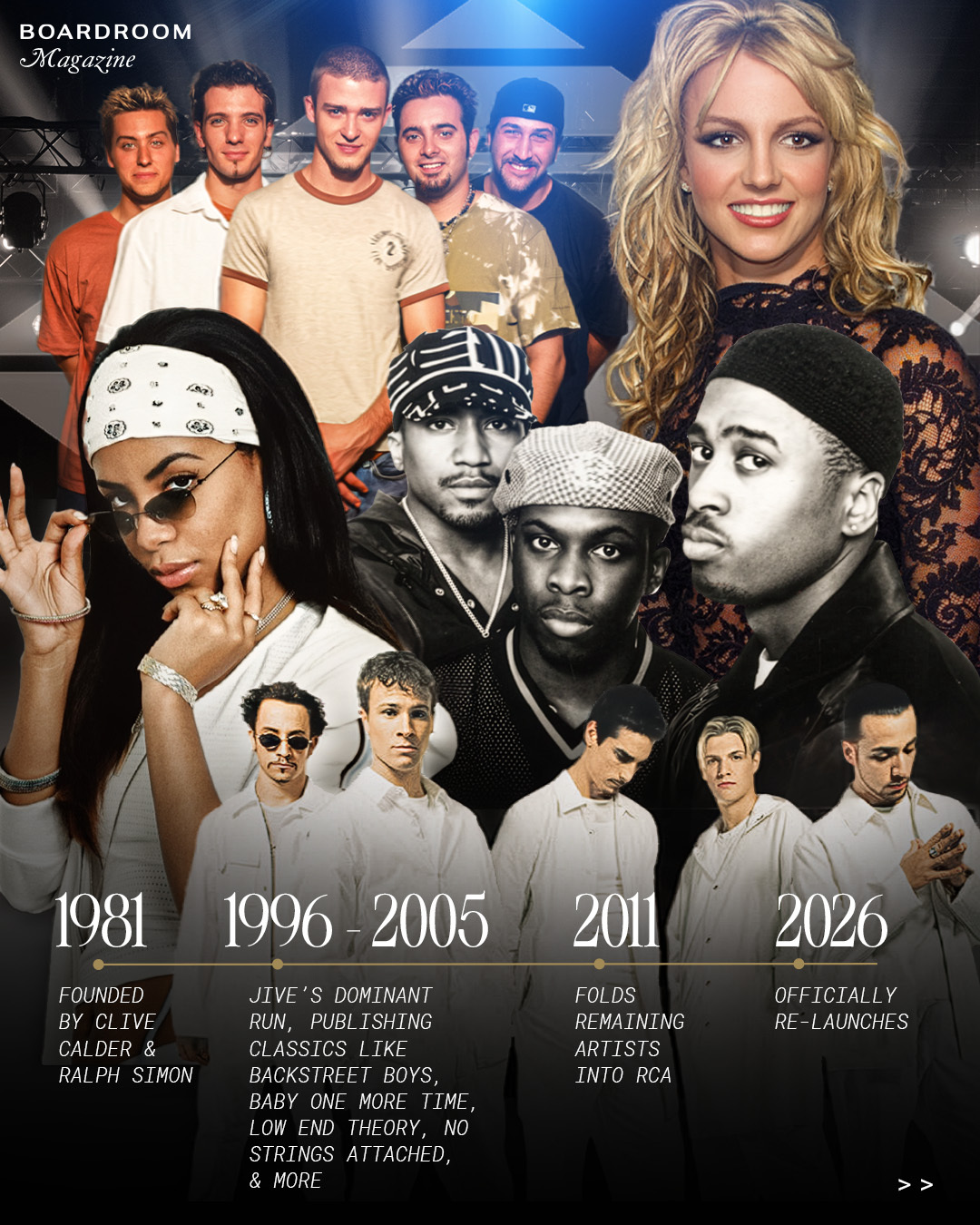
You know the story because you know the names: Aaliyah, A Tribe Called Quest, Britney, Justin, DJ Jazzy Jeff & the Fresh Prince, UGK, 8Ball & MJG, NSYNC, Too Short. For a stretch of two-plus decades, Jive Records was where culture went pop. The catalog the label built in that run is one of the most consequential in American music. Jive has been quiet for a while now. It’s getting loud again.
Jive, formed 45 years ago as a way to distribute artists managed by founders Clive Calder and Ralph Simon, is back. And the two people Sony and RCA have handed the keys to — David Melhado and Mike Weiss, named co-presidents earlier this year — are betting that the label’s history is an asset, not an anchor. The bar Jive set in its first run is daunting: It broke the boy-band era of pop, helped scale Southern hip-hop, signed some of the most-played artists of the CD age, and was, by Weiss’s own measure, “the most successful independent record label in history.” Picking that name back up is not a casual undertaking.
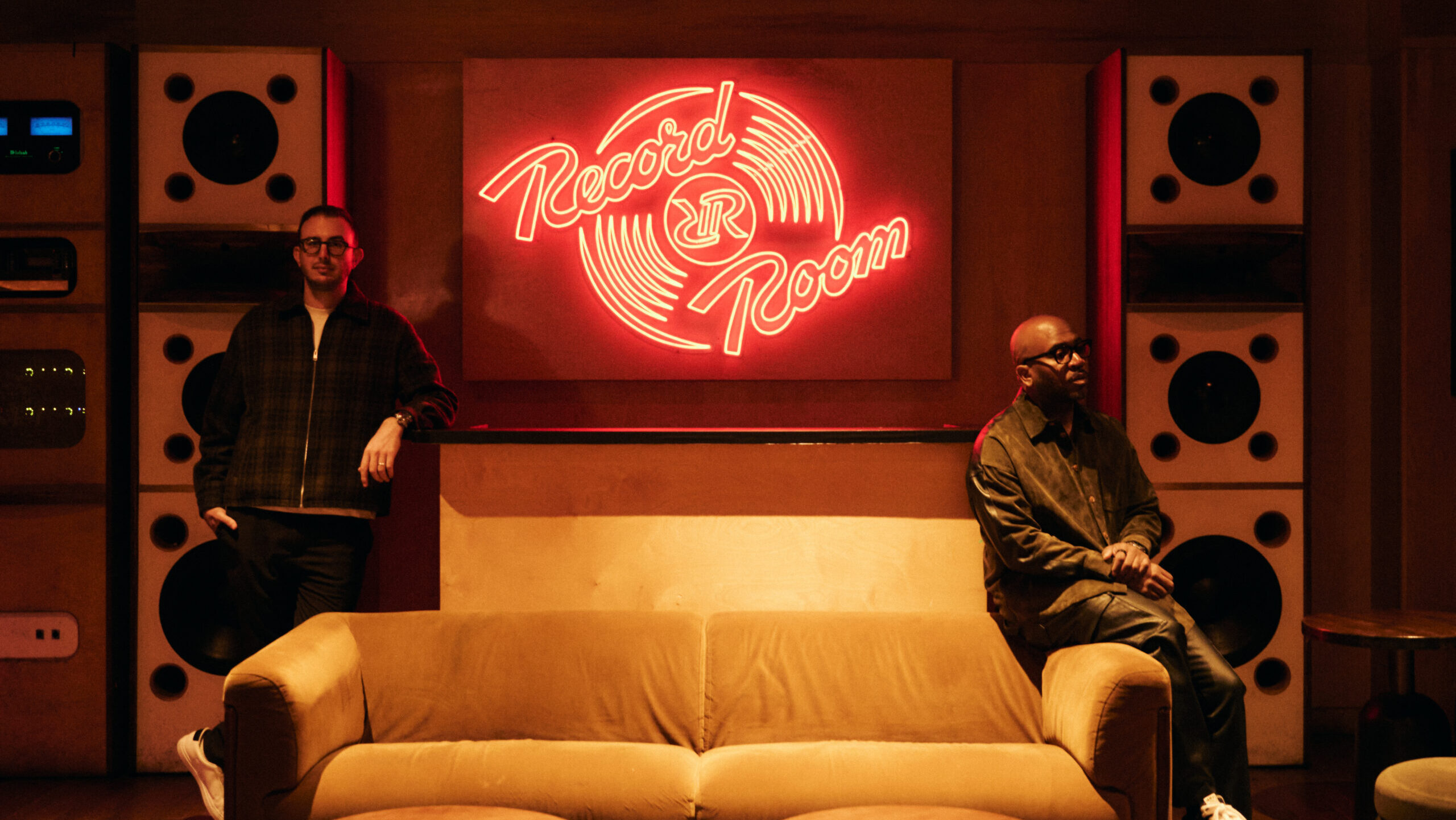
I sat down with Melhado and Weiss at Record Room in Long Island City, a lounge whose walls are lined with classic vinyl LPs from floor to ceiling and whose sound system is so powerful that the amp hums softly—giving off a low, steady chirp like crickets in the countryside. It’s a fitting room for this conversation. The two of them came up at UnitedMasters, where, over seven years, they built a multi-tier label that broke artists like BigXthaPlug, Tobe Nwigwe, NLE Choppa, Brent Faiyaz, and the viral phenomenon Superstar Pride. They did it by ignoring most of what major labels said the rules were. Now they’re inside the system, running one of its most storied imprints and trying to keep that same outside-in perspective intact.
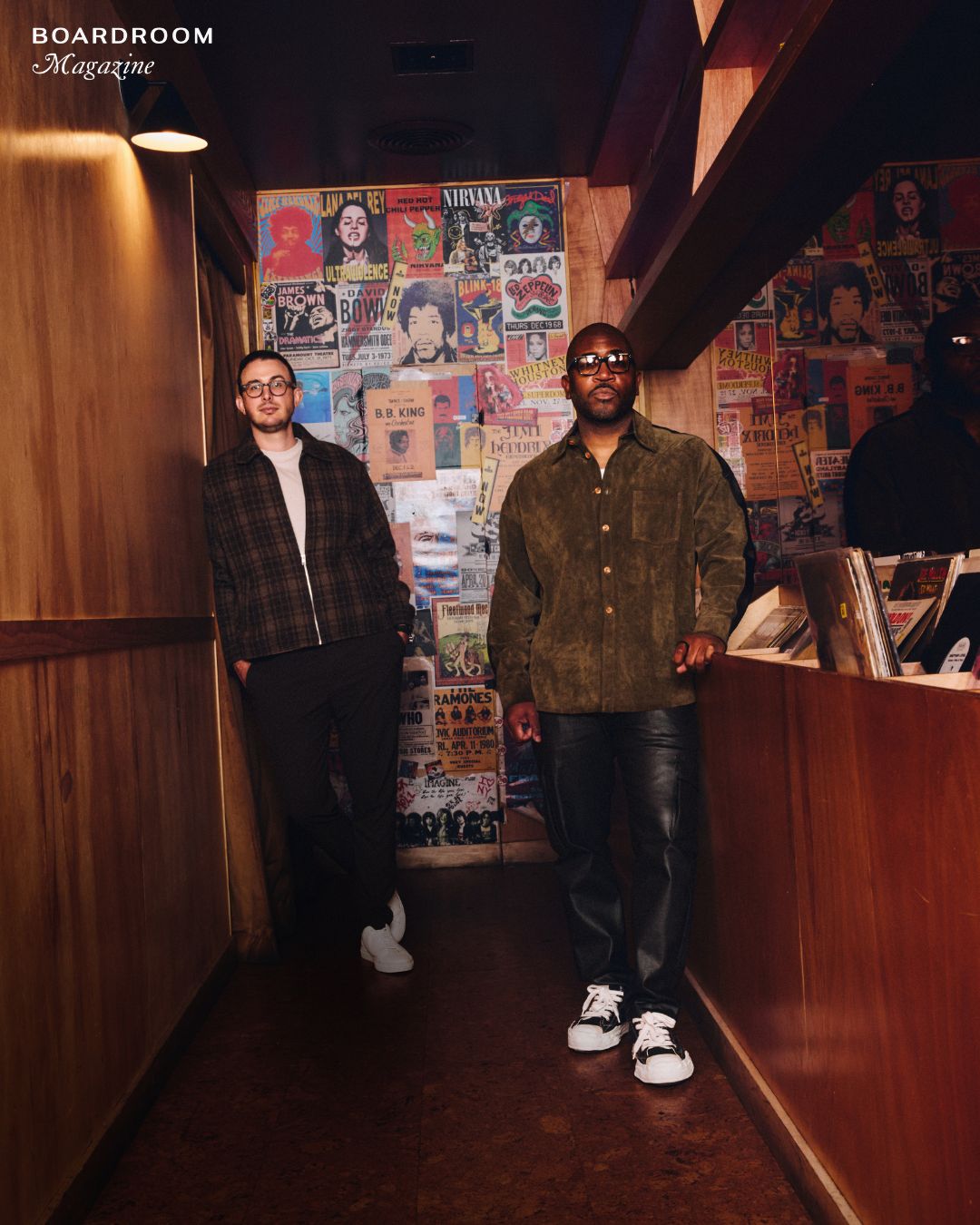
You don’t have to spend much time with them to see why Sony and RCA moved on the pair instead of an individual. Melhado and Weiss finish each other’s sentences. They hand off thoughts mid-paragraph without missing a beat, and each is comfortable letting the other speak on his behalf. “If you have a conversation with one of us,” Weiss says, “consider it as though you’ve had a conversation with both of us.” When pressed on a big disagreement they’ve worked through, Melhado waves the question off—It’s not even disagreements.” It’s two perspectives, pressure-tested against each other 12 hours a day, until alignment lands.
Both of them came to this from unlikely angles. Melhado found his way in through musicjobs.com—a long-dead website where, after his mother told him “We’re not paying for you to stay in Tampa for the summer,” he sent emails to every employer he could find and ended up an unpaid intern at Atlanta’s Mauldin Brand agency, designing LED visuals for Bow Wow’s tour stop on a jailbroken copy of Photoshop. Weiss, by contrast, is third-generation industry — his father, the legendary Barry Weiss, was the longtime Jive boss, and his grandfather and great-uncle ran their own labels before him. He grew up listening to one side of his dad’s phone calls and trying to piece together the other half. “It’s not like he ever sat me down and was like, ‘Here’s how marketing works, here’s how digital works,’ Weiss says. The education was osmotic.
What follows is a conversation about all of it — how they got here, what they took from UnitedMasters, how they reckon with the Jive legacy without becoming hostage to it, what they make of the constant doom narratives around rap and R&B, and why every major label seat in 2026 seems to come in pairs. They’re calling the new chapter Jive 2.0. As Melhado puts it, the brief is “a modern major with an independent spirit.” It may make you roll your eyes, but spend a little time with them, and you start to believe it.
Boardroom: Dave, walk me through how you got into music.
Dave Melhado: My parents are from the Caribbean—my dad’s from Jamaica—and every day he would always be playing some sort of music in the house. Bob Marley, Céline Dion, Beres Hammond, Mariah Carey, Whitney Houston, Luther Vandross, Kenny G. So it exposed me to different types of music early.
In college, my mom one summer told me I had to come home. She said, “We’re not paying for you to stay in Tampa for the summer.” I was, like, “What if I find a job?” She said, “If you find a job, you can stay.” There used to be this website called musicjobs.com. I sent emails to every place I could find. Mauldin Brand agency reached out a day later—I caught a ride up to Atlanta for the interview and flew back on a buddy pass on JetBlue to Tampa that same night. So I found a job working for Scream Tour but not getting paid. That was my entry point.
That internship showed me it was possible. I went in as a marketing intern, but by the time I was done, I was designing the visuals for Bow Wow when he was performing—the things on the LED screen. I learned graphic design with a jailbroken version of Photoshop, downloading fonts from dafont.com.
I went back to school at the University of South Florida. I walked across the hall at So So Def and said to the woman sitting at the desk — I think her name was Norma Davis — “Can I be a college rep?” She allowed me to be a college rep. That gave me some authority to say I had a foot in the door with a record company. I started promoting artists, throwing parties. That led to the radio station, 95.7 The Beat, driving the wrapped Tahoe on campus. I became known as the college promotions guy.
Mike, your family is music royalty. Was it like that for you, with parents discouraging it?
Mike Weiss: I was not encouraged to do it. There was never any time I would bring up the fact that I wanted to work in music that my dad wouldn’t tell me to do something else, that it was such a difficult business, the people you have to deal with, the nonsense, just how impossible every aspect of it was. And that was in a time period exponentially easier than it is today.
Did he say why he didn’t want you to be in it, outside of it just being difficult?
Weiss: It’s just not that enjoyable of a career. The highs are high, but the lows are low, and there’s so many moments that are just brutal and difficult. He had the greatest path possible—starting at a record label a year out of college, being there for 25-plus years, and having that label become the most successful independent record label in history, becoming CEO and president of a number of major labels. For him, there wasn’t even that need to bounce between multiple jobs and find different opportunities. His path had more stability than most do in the music industry.
My parents were pushing me to find a more stable career. I was an accounting major. Their philosophy was that accounting is a backbone of any business. I took the LSAT—I was going to go to law school as an initial path as well. From the time I was [old] enough to understand what my dad did, I was listening to one side of phone calls, trying to piece together what was happening. It’s not like he ever sat me down and was like, “Here’s how marketing works.”
What made you want to be a part of it outside of your family?
Weiss: I felt like it was something I understood more than anything else at that time. My dad’s in the record industry, my grandfather was in the record industry and owned his own label, my grandfather’s brother had his own label, my dad’s cousin’s in the industry. I grew up hearing how unique the music industry is.
There was nothing I really spoke about with a level of conviction as I did the music industry from the time I was in middle school. When kids were talking about “screw the labels,” I was the one kid on the playground at recess defending all the things a record label did, me versus 20 kids talking about why their favorite artist who hates their label at the time.
What made you believe you could have an impact on such a sprawling, immovable industry?
Melhado: Mike and I both started off as managers. As a manager, you’re touching so many different parts of the business, and when your client gets to a certain level, people would tell you, “This is the way it’s done,” or, “These terms are standard; they can’t be changed.” For me, the artists I was building were unknown before I started working with them. The idea that I would accept standard didn’t sit well with me.
I had a writer who wouldn’t get paid from writing songs—only off publishing. If the producer was getting paid, I would fight for my writer to get a writer’s fee. I refused to believe the only way to be successful is for you to be the superstar artist. I wasn’t going to let anyone, whether a record executive or an attorney, tell me it wasn’t possible. Everyone who has been massively successful has gone against the grain, has fought against the idea of normal.
Weiss: My answer’s a little different. One of the greatest benefits I had—being third-generation—was getting an understanding of how the industry has changed over time. I didn’t look at it as the industry is this big, grand, immovable object. I looked at it through the lens of a decades-long trend, understanding where the industry is going to go and how to help guide it rather than force it in a direction.
From my grandfather’s era — the mafia-gangster time period of the music industry, where payola was created and invented as a form of getting music out there and the record labels were the dominant power — to my dad’s era, the original Jive prime run, which was a commercialization of music, mass market, being able to sell a full album based off of people wanting to buy a single, selling 10, 15 times the price of what you’re selling, with so much barrier to entry to getting your music out globally. Then, into the digital era, which I consider more my era, taking away elements of those barriers that were going to naturally happen.
UnitedMasters was a path where, if there wasn’t a barrier to entry to getting a hit record anymore because of streaming, why was there the same barrier to entry to getting a record deal? I wanted to go somewhere I could help shepherd a business modeled after where I saw the industry going. Effectively guiding the path of the river of where it’s going rather than saying, “This is where it has to be.”
What was the connective tissue across the artists who broke at UnitedMasters — Superstar Pride, BigXthaPlug, Tobe Nwigwe, NLE Choppa, Brent Faiyaz?
Weiss: First and foremost, authenticity. Because the industry has changed so much over the past 20 years, there’s not one marker of what success is. Each of them has accomplished significant success that is wholly different from the others. Not every artist is going to be Taylor Swift, Drake, or Kendrick. Not every artist needs to be. That’s not what success is anymore.
While every other business is becoming globalized — the Amazons, the Walmarts — the music industry is almost becoming the opposite. There are artists that can be a healthy middle-class artist that has a good touring business, a real fan base. They’re not going to be explosive and they don’t need to be. The second they step outside, trying to be this thing they’re not, is the second that audience that’s been there from day one is going to feel like, “We don’t know who this is anymore.” That authenticity piece is essential.
Melhado: Each one of those artists had some level of commitment to consistency before they even saw what they were doing was working. Tobe is an example. He was releasing music every single Sunday. He didn’t conform to industry standards of saying, “We’re going to release on a Friday.” He always led with short-form content that was social first. Artists are now making short-form content the same way Tobe was doing.
With BigX, we signed him at 500 monthly listeners. We started from a regional perspective, promoting him in Dallas, then targeting all our promotion to say he was rising out of Texas and the Midwest. The narrative widened as we developed him. Over four years, you see an artist who has crossed genre lines to create a country project, to be coined as country music’s favorite rapper. He was always authentic to who he wanted to be—a kid from Texas who wanted to tell his story.
The philosophy at UnitedMasters celebrated independence. Now that you’ve left, how do you reckon with that mission?
Weiss: The industry has changed dramatically since we started at UnitedMasters. The deals that occur at a major label now are no worse than what you’re finding at independent companies. If anything, independent companies are getting better deals than majors at this point because of such bad branding that has been out there.
The notion of what is independence has become such a nebulous definition. If you’re signed to The Orchard, are you independent or not? If you’re signed to a full-on royalty deal to an independent record label that puts their music out through Fuga, are you independent? Independent became a buzzword because you needed a clear, identifiable language and term in order to talk about what the problem was in the industry. You don’t really need that anymore, because the deals out there are a lot more artist-friendly. Master ownership at all points was binary—you were either independent and owning your masters, or you were signed to a major label and you didn’t. That is absolutely not the case anymore.
At the end of the day, it really just matters who is your team, who are you surrounding yourself by, who believes in the shared vision you have as an artist. Whether they’re distributing through Fuga, Sony, Universal, or Warner doesn’t really make as much of a difference.
Melhado: At UnitedMasters, we were really championing the idea that artists are entrepreneurs. Artists are no longer signed to major labels with the idea that “I’m just going to show up and the label’s going to take care of everything else.” They want their own videographer, input into the creative. They’re thinking about how to use this as a catalyst to build business around themselves, whether it’s merch, touring, how they participate in a larger share.
We talked about our artists as our partners, not as signed to us. That’s the same way we’re looking at it at Jive now. Mike is the first person to say, “What is their unique proposition, what is their unique perspective?” before we get into business with them.
Walk me through how this new Jive role came about.
Weiss: We built a multitier distribution label business within UnitedMasters that was very clearly competitive in terms of the level of service, the level of artist we were breaking. When you’re properly A&Ring records, properly rolling out marketing campaigns, building a holistic world around an artist, people take notice.
I wouldn’t say we were necessarily looking, but we kind of imagined what an opportunity would look like for us. We were just open, and the right opportunity revealed itself. The way we see the industry is unique, coming from outside the major label system. Being able to keep that ethos was very important to us. Very plainly, it’s one of the most storied labels of all time. Aaliyah, A Tribe Called Quest, Britney, Justin—the names are crazy, the legacy is crazy.
How did you think about honoring that legacy?
Weiss: The idea of reimagining a major record label that has been sunsetted has been done a number of times. We can look to a lot of other labels that have been relaunched, that have paid homage to the original founders while building their own identity. With Jive, I learned the industry through the lens of Jive Records. The ethos—for us, starting in hip-hop, with more regional acts — was very similar to what we were doing at UnitedMasters. BigX in Texas, you could say, is more akin to how they had UGK and 8Ball & MJG in Atlanta. They built a business that was very structured and strategic in the early days.
You can’t hold yourself to something that happened in a completely different time period under completely different circumstances. We’ve had conversations with Clive [Calder], many conversations with my dad. We look to them for guidance.
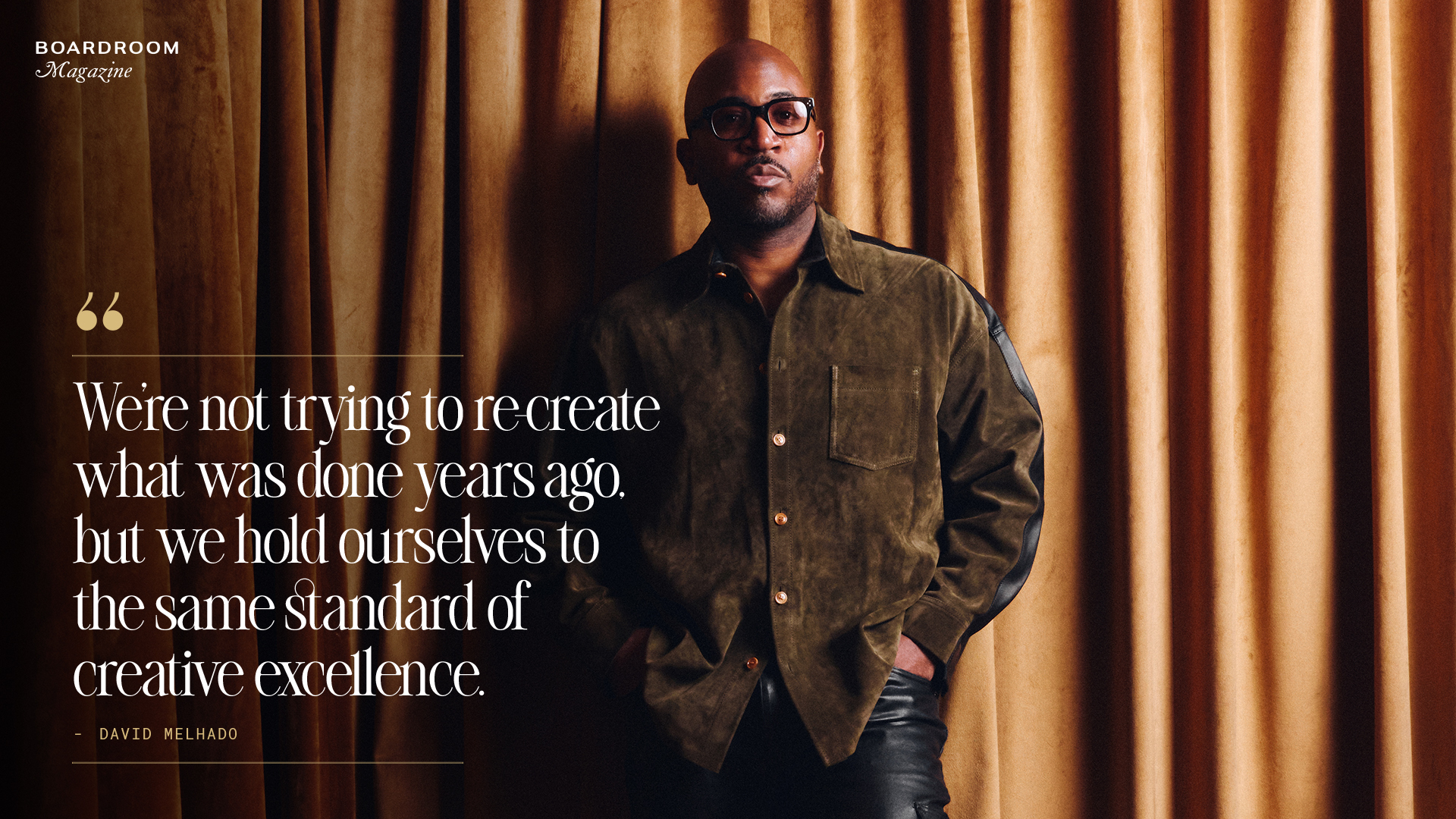
Melhado: We’re not trying to re-create what was done years ago, but we hold ourselves to the same level of standard of creative excellence. The independent spirit Jive was when it first started—that is how we’ve operated over the last seven years. We’ve coined this Jive 2.0: a modern major with an independent spirit. That means we have to continue working in the same ways we did when we were working in a startup environment, because that’s what the business requires today.
We laugh about the college football analogy with Indiana this past season—they went out and found people from the transfer portal, athletes who had the experience but never really had a shot to start, and they built a winning team and winning formula by just committing themselves to excellence. That’s a lot of how we look at it every single day. To be competitive and do good work today, it can’t just be based off the ideas we had years ago.
Are rap and R&B in a healthy space right now?
Melhado: Music in general, no matter what genre, is always going through years of recalibration. R&B’s resurgence this last year is after years of everyone not investing in R&B because they thought it was dying. More than anything, it’s a great time for rap and R&B because it allows us to push ourselves to create again, to express ourselves in authentic ways.
Regardless of the headlines and the narratives they want to create, artists are still creating authentically to the things they’re experiencing in their lives. Now it’s an opportunity for them to not have to conform to creating a viral TikTok hit. They can create in the way that feels right for them. When I think of artists like Don Toliver and Kendrick, and rising artists like Gabriel Jacoby, all these artists are creating in their own authentic ways. Olivia Dean coming out of nowhere after years of refining the way she shows up in the world—that gives me hope. When I listen to Kehlani’s album, which I think will be one of the best albums this year, that’s an incredible body of work. Anytime artists or executives start to feel like their backs are against the wall, that’s when the best quality of work comes from them.
Weiss: The health of hip-hop—we just need to be clear what we’re comparing it to. Hip-hop has been the strongest streaming genre by a significant amount. The volume of listeners and consumption has been absolutely massive, astronomical.
There’s a calibration happening. Because it’s so big still, the second there’s anything with momentum or buzz in hip-hop, the deal that gets made for that artist is massive. When you have a massive deal, there is no time to nurture and grow that artist. There is immediate success that is necessary. If you don’t have immediate success, you’re trying to force it, which is going to take away the long-term position of where that artist could be, and you’re effectively stifling the authenticity of where they are now.
With BigX, it feels as though he’s been untouched by a lot of the nonsense of the industry, because when we signed him in 2021, the whole industry post-pandemic was looking at viral TikTok. We said, “We’re not going to compete in that game. We’re going to compete by developing artists.” Hip-hop artists need development, they need patience, they need the right infrastructure in the same way a pop artist does. There are a number of artists right now being developed who may not be visible right now that in the next six months to two years we’re going to see a nice, healthy crop of hip-hop artists that are going to be the next wave.
Melhado: As we were developing BigX—every week of 2021, he did 30 million streams, and every week of 2022, he did at least 50 million streams a week. When he put out his country album, he went up to 70 million streams in a week. We made a long-term investment in BigXthaPlug, and you see the fruits of that today.
How do the two of you actually make decisions day-to-day as co-heads?
Weiss: I decide. No, I’m just kidding. We’ve been battle-tested. Our working relationship starts from the foundation that we have a shared vision and understanding of what we do, of what our responsibility is to the artists. It’s grounded in shared respect. There is no ego in the equation when we’re having discussions. We can both be as brutally honest with each other as possible because we know that when we’re challenging the other one, we’re doing it purely for the best result. It’s not about whose idea wins. There have been so many circumstances where one of us has been in the position to do something that is best for themselves but not best for the collective, and at every single time we’ve done what’s best for the collective.
Melhado: It’s not even disagreements. We have two different perspectives, and when we’re co-leading a team, it forces you to have clarity in every decision. He’s going home, I’m calling him at 10 p.m., we’re talking about decisions we talked about during the day, and the things we need to do for the week ahead. Every single day, we make deposits into the outcome we want.
Weiss: Our team at UnitedMasters knows this, and the team at Sony now knows this — if you have a conversation with one of us, consider it as though you’ve had a conversation with both of us. We are in so much communication with each other at all times that my daughter, who’s not even 2, if there is a phone sitting on a table, she will pick it up and go, “Hello, Dave.”
We debate way more than we agree. I wouldn’t want to do this with anybody other than Dave, and Dave wouldn’t want to do this with anybody other than me.
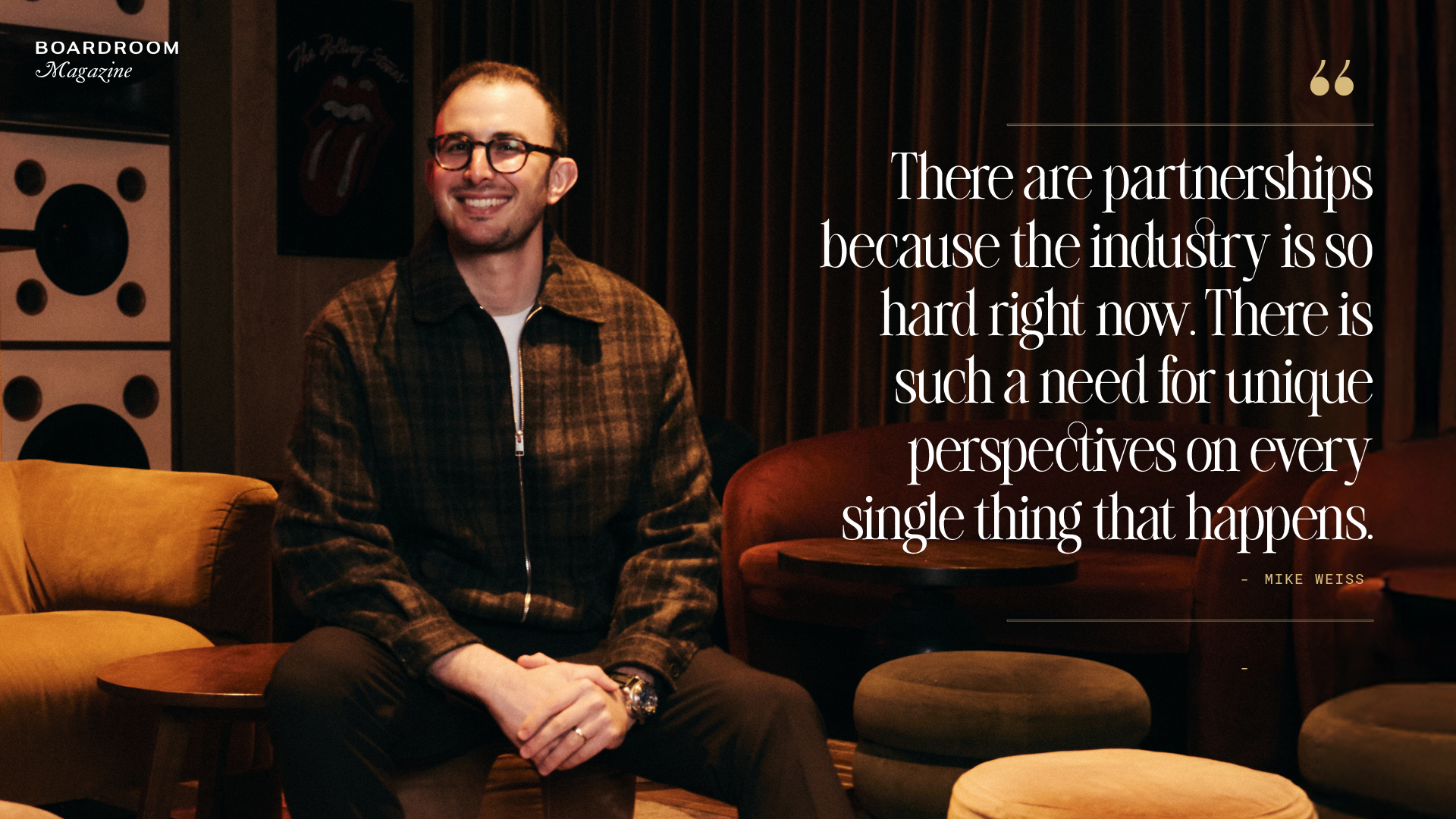
We are very much in a time period right now of label partnership. It used to be Berry Gordy, L.A. Reid, Lyor Cohen—your individual one names. Now it’s partners. You’ve got Imran [Majid] and Justin [Eshak], Monte and Avery [Lipman] (brothers who run Republic Records), Tyler [Arnold] and Ben [Adelson] (Mercury Records), Dave [Cobb] and Mike [Harris] (Universal Music Group), Peter and John, Aaron [Bay-Schuck] and Tom [Corson]. There are partnerships because the industry is so hard right now, because there is such a need for unique perspective on every single thing that happens, because every decision needs to be looked at so carefully. You need two people who have mutual respect and a shared vision to be able to build a label, build a business, build artist careers.
Read More:

The Blueprint: Jessica Holtz Meets the Moment
The Power Broker: Emma Grede Is Just Getting Going

Quiet Power: Imani Ellis on CultureCon, Creators, and Learning to Let Go

The Long Game: How LeBron James and a Few NBA Friends Might Elevate the Game of Golf
Savannah James and April McDaniel on Navigating Money, Friendship, and Business