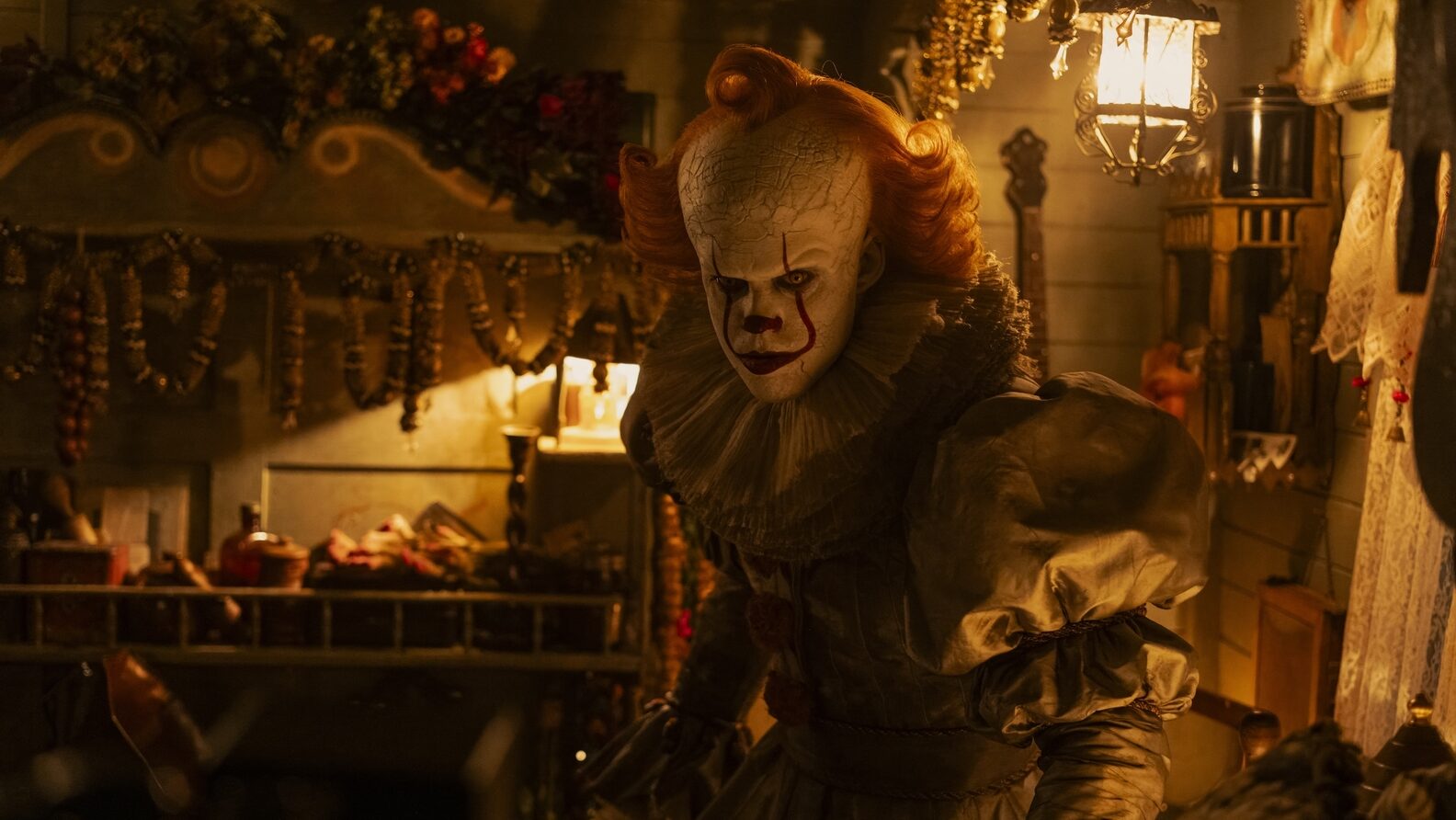
By weaving together It, The Shining, and generational trauma, HBO’s It prequel series shows how much bigger this story can be. Welcome to Derry was only a noteworthy starting point.
It: Welcome to Derry doesn’t just revisit familiar ground. It widens it.
What begins as a prequel series anchored in dread quickly reveals itself to be something more ambitious: a deliberate attempt to connect Stephen King’s body of work into a shared, living universe. Set decades before the events of It (2017) and It Chapter Two (2019), the series returns to Derry, Maine — a town that has never been innocent and never will be. Pennywise looms over the story as an inevitability rather than a surprise. The series leans into the idea that Derry itself is the monster. The evil here is cyclical, inherited, and embedded in the town’s history.
The series follows a group of kids navigating a version of Derry shaped by fear, silence, and cruelty, both supernatural and painfully human. As disappearances mount and strange occurrences ripple through the town, the kids begin to realize that something ancient is feeding off Derry’s worst impulses. The horror escalates gradually, but once it gets a grip on the fear of Derry, it doesn’t let go.

Derry as the Center of Something Larger
One of the most compelling choices Welcome to Derry makes is introducing a younger Dick Hallorann, a character King fans will immediately recognize from The Shining. Seeing Hallorann here reframes everything we know about him. Long before the isolated terror of the Overlook Hotel in Colorado, he was already sensitive to something darker and more cosmic. His “shine” isn’t framed as a gift yet, but as an awareness that sets him apart and puts him in danger.
By the end of the season, the breadcrumbs are clear. Hallorann is headed toward Colorado. Toward the Overlook. Toward the story that will later define him. That connective tissue matters. It suggests this series isn’t just filling in backstory for It, but laying groundwork for a much larger narrative web — one that finally treats King’s universe the way Marvel treated comic books: interconnected and expansive.
That ambition extends further with the introduction of several parents of the Losers’ Club. These aren’t just Easter eggs for fans of the films. They are emotional anchors that show how trauma passes through generations in Derry. The kids who eventually confront Pennywise didn’t come from nowhere. They were raised in a town already steeped in fear, denial, and survival instincts. Seeing that lineage deepens the mythology without flattening it into nostalgia.
A Much Darker Kind of Fear
From a performance and storytelling standpoint, the show also doesn’t pull its punches. The horror these kids face puts the Stranger Things crew to shame, and I say that as someone who loves Stranger Things down. This is not spooky-bike-rides-at-dusk horror. This is oppressive, relentless, sit-with-it terror. I was genuinely scared. Not jumpy — scared. There’s a difference.
By the final stretch of episodes, I had to watch during the day, in the office, surrounded by people. Alone at night was not an option. The show understands that true horror isn’t about monsters popping out of shadows. It’s about making you feel unsafe even when nothing is happening.
Part of what makes Welcome to Derry so effective — and so difficult to watch at times — is its setting. The series doesn’t shy away from the political and racial climate of the 1960s era. The horror isn’t just supernatural; it’s systemic. Bigotry, violence, and institutional cruelty exist alongside Pennywise, not separate from him, and the cosmic being literally feeds off of that. That choice adds weight, but it also makes the viewing experience heavier. This isn’t escapist horror. It asks you to sit with uncomfortable truths about who is allowed to feel safe and who never is.
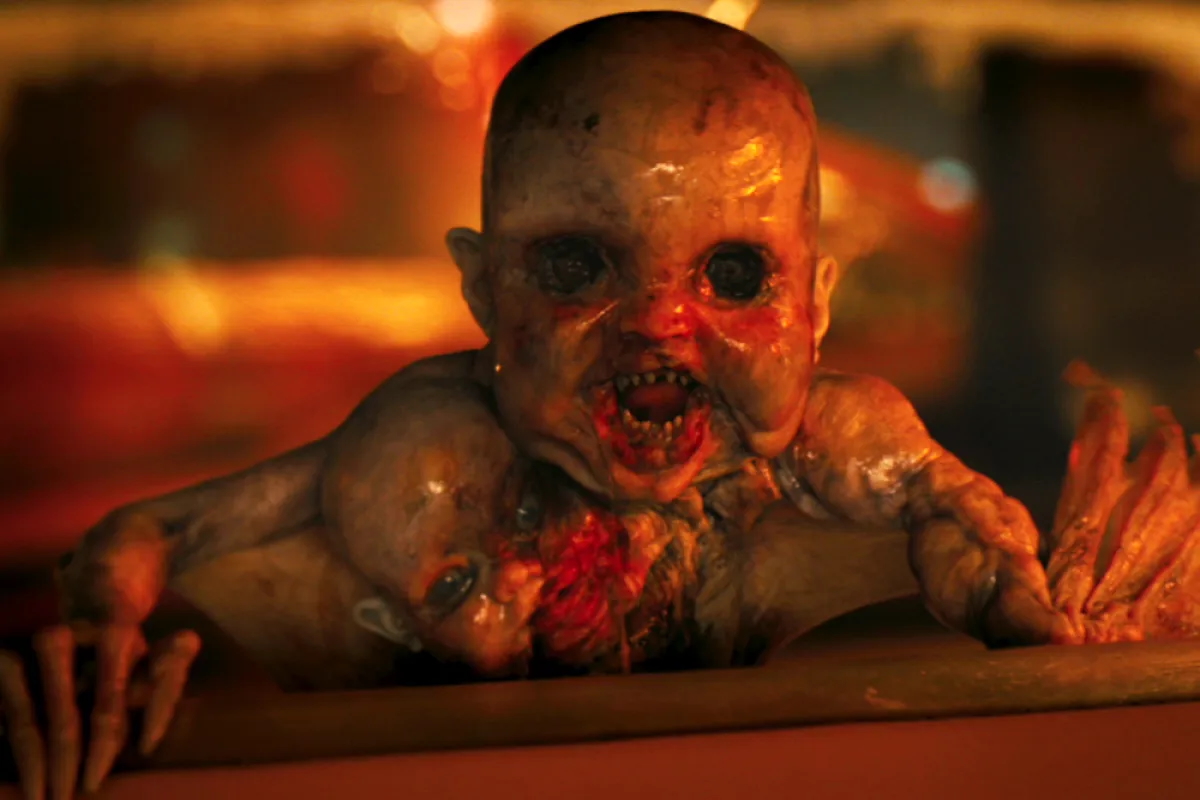
Toward the end of the season, however, the show starts leaning a little too hard on Pennywise as a jump-scare crutch. Early on, Welcome to Derry feels bold in how it treats the entity as something far more cosmic and unknowable than a clown, especially with that baby-bat nightmare in Episode 1 that still hasn’t left my brain. That kind of shapeshifting horror was where the series felt most inventive. By the final episodes, though, Pennywise appears so frequently that it reminds me that I already know how this story ends. We’ve already spent two films watching the entity terrorize Derry in clown form; this series didn’t need to return there so often. The real opportunity here was to show how boundless and imaginative this evil can be, and the moments when it does are far more unsettling than seeing the clown pop up again.
Still, the series’ success speaks for itself. The Welcome to Derry Season 1 finale delivered a series-high 6.5 million U.S. viewers across HBO and HBO Max within its first three days, marking a 12% jump from the previous episode. According to Warner Bros. Discovery, the freshman season is now averaging nearly 20 million viewers globally and 11.5 million in the U.S., officially placing it among the top three original series debuts since HBO Max launched — behind only The Last of Us and House of the Dragon. For a horror prequel operating in an already well-known universe, that kind of growth suggests viewers weren’t just curious; they stayed. This isn’t background TV. People are watching, reacting, and talking about it.
A Franchise Pointing Forward
What excites me most is where the show is headed next. Season 1 deliberately runs up against the timeline of the films, aligning the mythology without collapsing into repetition. That gives future seasons room to move sideways instead of forward, taking audiences deeper into King’s universe rather than closer to an ending we already know.
There’s so much potential here: more crossover characters, more shared mythology, and a chance to explore how different manifestations of evil operate across King’s worlds. If Welcome to Derry is the foundation, it’s a strong one.
I loved this show. It scared the hell out of me. It challenged me. And it made King’s universe feel bigger, richer, and more connected than it ever has on screen. I can’t wait to see where it goes next, even if I have to watch with the lights on.
Read More:
5 Managers Manchester United Could Turn to After Ruben Amorim
Lamar Jackson Needs Renewed Commitment From Ravens, But It’s Complicated
No Perfect Ending: Reflecting on ‘Stranger Things 5’ and the Weight of Expectation
Kevin Hart Partners With Authentic Brands Group to Scale Brand and Business
How the Biggest NIL Deal in College Football History Went Down