
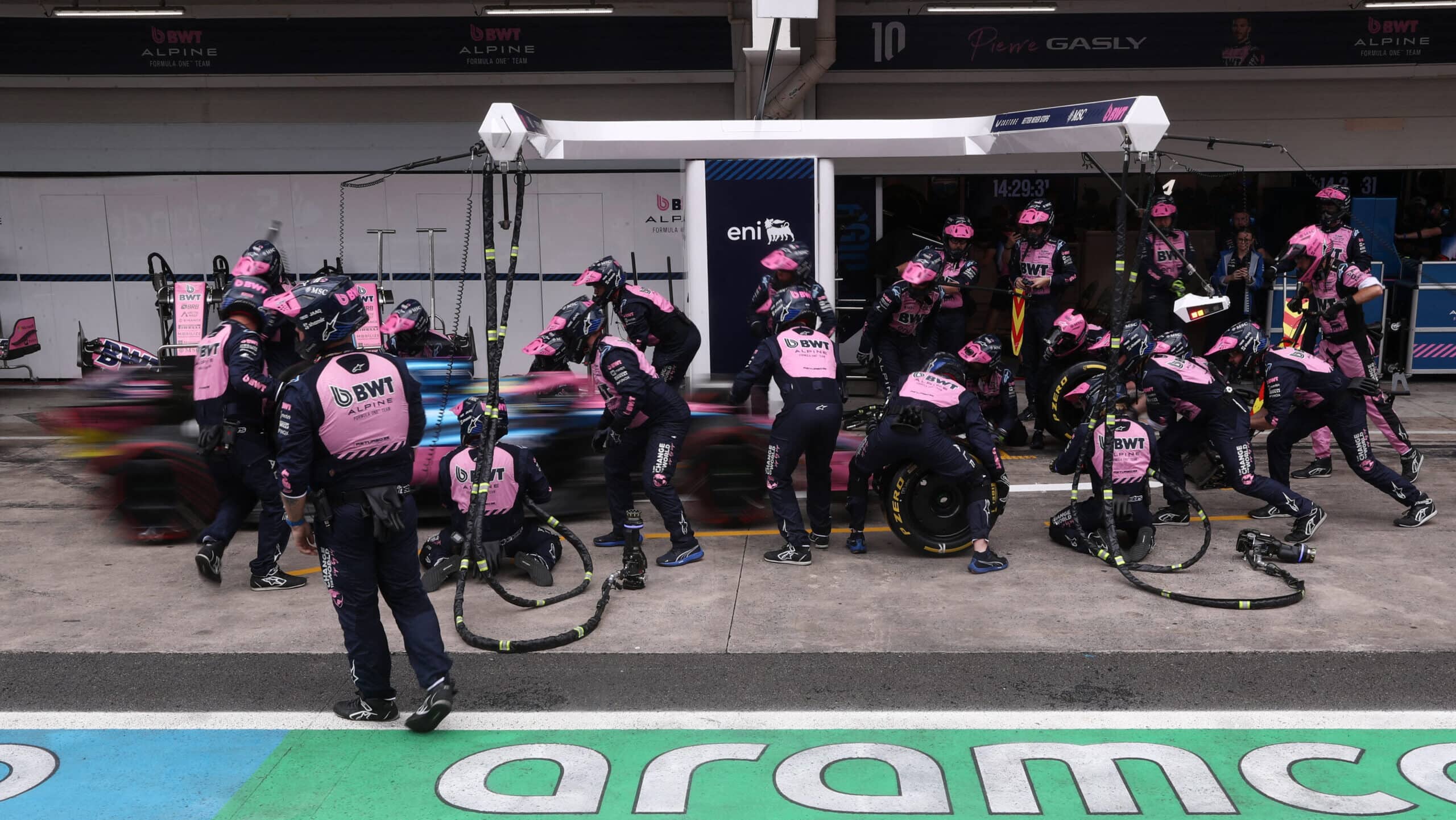
Boardroom spoke to Pete Webster to understand how the BWT Alpine F1 team manages hydration, recovery, and body maintenance across the most intense race weekends on the calendar.
When fans think of Formula 1 performance, they picture drivers pushing machinery to its limits, or the intensity of a two-second pit stop.
But behind the scenes, an entirely different kind of endurance test plays out, one that most fans never see. The traveling race teams move from country to country under grueling conditions, contending with shifting time zones, extreme temperatures, long workdays, and physical labor that, for many teams, rivals the demands placed on competitive athletes.
Not every F1 team travels with a dedicated physical therapist, but the BWT Alpine F1 team does. Their physio, Pete Webster, is responsible for the health, recovery, and physical readiness of a traveling staff of roughly 80 to 90 people. His job requires managing the bodies and minds of mechanics, engineers, support crew, and anyone working long hours on their feet. Unlike drivers, garage crew members aren’t trained athletes by default; yet, their bodies are expected to function like elite performers during race weekends.
Webster approaches the job as part clinician, part coach, part caretaker. Before the season begins, each team member undergoes individualized fitness testing. These assessments determine how quick their reactions are, how much strength their specific job requires, and how efficiently they recover. From there, personalized programs help maintain the baseline fitness needed for long days, unpredictable climates, and physically demanding tasks, especially pit stop duties involving heavy lifting, repetitive force, and precision under pressure.
Once the season begins, Webster’s role becomes a blend of prevention and repair. As he puts it, he spends a lot of time “piecing people back together.” This includes addressing sore backs, tight forearms, heat exhaustion, muscle tension, and long-term joint stress. He constantly monitors hydration, nutrition, and sleep, especially with the heavy travel schedule, where jet lag and consistent time changes can impact both reaction time and mood.
Race weekend conditions vary dramatically depending on the location, and these environmental factors significantly alter the entire approach. In humid climates like Singapore, maintaining a low body temperature becomes a life-or-death priority. In drier, hotter environments, such as desert circuits, dehydration and overheating can be silent threats. Alpine uses cooling scarves, cold-fluid ingestion, and electrolyte routines to stabilize the body’s internal temperature.
With only two medical staff — a physio and a doctor — supporting nearly 100 people, communication and trust become essential. Webster tracks each crew member’s injuries, tendencies, and recovery patterns over an entire season. His goal is not only treatment but education. The future of performance, he believes, lies in empowering crew members to better understand their own bodies — how to travel smart, sleep strategically, fuel themselves correctly, and recognize early warning signs before injury takes hold.
The result is a team that functions like a family, working together to push through challenges. And in a sport where milliseconds matter, the physical well-being of the garage crew is just as critical as the performance of the car.
Read More:

‘Gail Daughtry and the Celebrity Sex Pass’ Is a Hollywood Romp Done Right

Women’s Hockey Superstars Hope Olympics Bring Momentum Home To PWHL

How Unrivaled’s Philly Stop Redefined Expectations in Women’s Basketball

Jalen Brunson on MSG, Cade Cunningham and the Pistons, and Knicks Playoff Expectations

The Seattle Seahawks Owner Is Dead, And He Wants To Sell The Team