

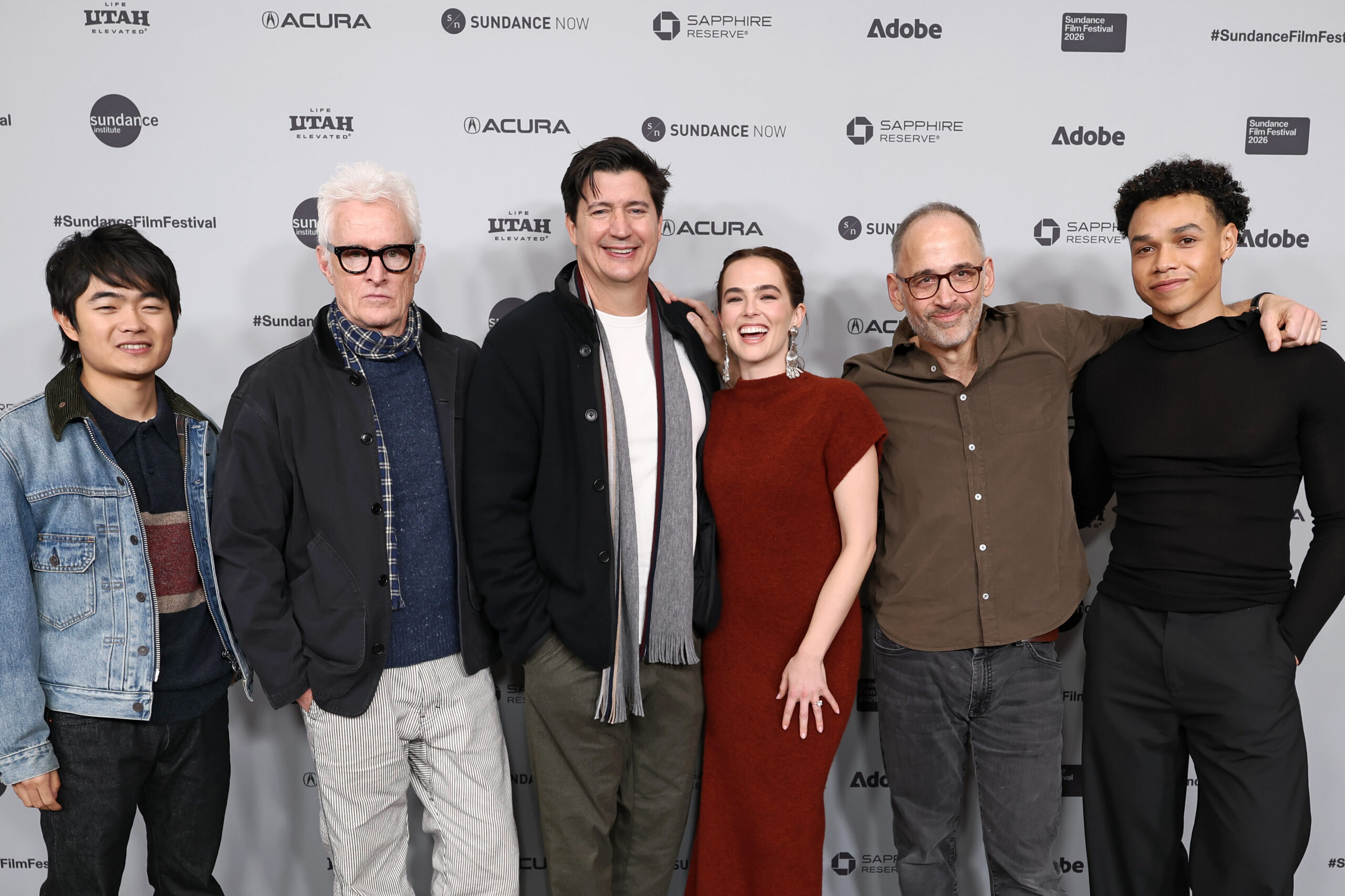
With long-standing creative chemistry and a loose Wizard of Oz homage, David Wain and Ken Marino’s new indie film lets silliness do the heavy lifting.
There’s something quietly refreshing about a comedy that doesn’t pretend to be anything other than a good time.
Most comedies about Hollywood fall into one of two traps: they’re either too cynical to be funny or too star-struck to be biting. David Wain and Ken Marino—the minds behind the cult-classic Wet Hot American Summer—have spent thirty years perfecting a third option: the “silly fun romp” that treats absurdity with the deadpan seriousness of a high-stakes thriller.
Gail Daughtry and the Celebrity Sex Pass takes a suburban legend and turns it into a neon-soaked, slightly grimy scavenger hunt through the streets of Los Angeles. The film leans into ensemble chaos, industry in-jokes, and absurd commitment to a premise that feels both ridiculous and oddly grounded. It’s not typically my vibe on paper—but in execution, it ended up being one of the funniest films I saw at the Sundance Film Festival, second only to I Want Your Sex.
At its best, the film feels like a love letter to Los Angeles and to the long-standing creative relationships that shaped it. As the cast and filmmakers noted during the Los Angeles Times Talks at the Chase Sapphire Reserve Lounge during Sundance, this is a movie born out of friendship, repetition, and trust, qualities that translate clearly on screen.
By the time the credits roll, it’s clear that while the plot is about chasing a movie star, the real magic is in the chaos of the chase itself.
Follow the Yellow Brick Road (to Jon Hamm)
The film centers on Gail Daughtry (Zoe Deutch), a tightly wound, hyper-earnest woman whose life gets flipped upside down by the sudden appearance of a celebrity sex pass—a once-joking relationship loophole that spirals into a full-blown, city-wide odyssey. What begins as a domestic curiosity quickly turns into a strange, sprawling adventure across LA, complete with unexpected violence, escalating absurdity, and a surprising number of emotional pivots. I did not expect the loosely structured Wizard of Oz homage that swaps the Emerald City for Hollywood Boulevard and a tin man for a junior talent agent (played with pitch-perfect incompetence by Ben Wang)—but I thoroughly enjoyed this take.
During the post-screening Q&A, the filmmakers explained that the celebrity sex pass came first and that the Oz-inspired structure emerged later to organize the chaos. That choice works—mostly. I admittedly went too deep trying to map each character to an Oz counterpart, only to realize the film isn’t interested in being that precise. Instead, it treats the reference as playful scaffolding rather than strict mythology.
Tonally, this is a Hollywood hangout movie disguised as a marital farce. Impressively, it was shot in just 21 days on the actual streets of LA. Whether it’s a frantic sequence on Hollywood Boulevard or a leg-in-the-door gag (IYKYK) that serves as a masterclass in comedic editing, the film understands that the funniest jokes are often the simplest. The jokes come fast, and not all of them land evenly, especially if you’re not steeped in the shared history between the cast and creative team. Some Easter eggs and references flew right over my head, but enough of them hit to still make me belly laugh.
My main critique of the film is its overt product placement for McDonald’s and Starbucks, especially given the current political conversations surrounding both brands. It pulled me out of the story more than once. And while the male ensemble is undeniably strong, I did find myself wishing there had been one more consistent woman in the core group to balance the dynamic alongside Deutch. Sabrina Impacciatore was a marvelous villain. I wanted more of her on screen.
Performance Check
There’s an unmistakable ease amongst the cast, something Wain and Marino openly addressed at the Chase Sapphire Reserve Lounge panel. The pair talked about how they first met as students at NYU in 1988, and within a year, they co-founded what would become the influential sketch comedy troupe The State. The cast talked about how creating this film felt like making a movie with friends, calling it a privilege and that sense of safety and playfulness shows up in every scene.
The chemistry between The State veterans and the newcomers is electric, creating a world where John Slattery playing a satirical version of himself feels just as natural as a non-speaking Penn Jillette in a golf cart.
Gail is relentlessly uppity—a choice Deutch carries with impressive commitment, channeling a Kimmy Schmidt-esque naivety. While it stays true to the character, there’s a friction between her supposed homebody past and her sudden, spontaneous bravery in the wild. You find yourself wanting her to tone down the excitement just a hair, even as you admire what Deutch brings to the role.
Impacciatore is laugh-out-loud funny in her appearances, though I wish she’d been more consistently present throughout the film. One scene involving multiple men punching her character in the face landed uncomfortably for me—it didn’t read as funny, and it briefly disrupted the film’s otherwise buoyant tone.
Then there is the object of pursuit himself. Hamm remains the ultimate comedic straight man, even when he isn’t in the room. The film leans into the public’s iconic perception of Hamm, using him as a carrot on a stick to drive Gail—and the audience—into increasingly ridiculous situations. It’s a toxic cocktail of celebrity worship and mutual loathing that works. There’s a specific final scene involving Hamm—clearly positioned as the film’s Oz—that neatly circles the story back to its Wizard of Oz homage in the silliest way possible.
Check out more of what the cast and film creators had to say about the raunchy comedy.
Final Credits
Gail Daughtry and the Celebrity Sex Pass is The Hangover meets Hollywood, minus the alcohol and plus a surprising cherry on top of fight sequences and gore. It understands that laughter is increasingly needed on feature film screens, as David Wain told the Sundance crowd.
It’s a tonal masterwork of editing and ego-free performing that trusts its audience to keep up with the inside jokes. Despite some pacing issues in the second act and a few gags that overstay their welcome, the film earns its place in the Wain/Marino canon. It’s a messy, joyous, and often illegal love letter to cinema that leaves you rooting for the underdog—even if that underdog is just trying to get laid.
The Jaylen Brown Trade Changed Everything for the Sixers
A24 Built Its Brand on Artists; Now It’s Betting on AI

Get Rich Or Die Tryin’ (In ‘GTA’): How Rappers Like Tee Grizzley Have Made Millions Streaming, Hosting
The Case for LeBron Going Home One Final Time

The New Playbook: Inside Pat Connaughton’s $600 Million Real Estate Business