
A deep look at Divine Tree, the athlete-driven company founded by Tunsil and Sanni, focused on personalized athlete ecosystems and media.
Not every business partnership starts with a pitch deck or a perfectly mapped-out plan. For Laremy Tunsil and Laolu Sanni, it started with something much simpler — music, proximity, and a shared perspective that, at the time, didn’t feel like anything more than a casual bond.
Back at the University of Mississippi, the two crossed paths as students moving in different directions within the same environment. Tunsil was a star on the football field, already on an NFL trajectory, while Sanni was trying to find his footing after transferring in and ultimately not making the team. Instead of forcing it, he pivoted. He started a clothing brand, tapped into the locker room organically, and built relationships with athletes who gravitated toward both the product and the person behind it. Tunsil was one of them, but more importantly, he became a constant.
Their relationship wasn’t built on business, not at first. As Sanni tells it, they really connected over J. Cole at a time when everyone else was tuned into Kanye West’s Yeezus. It sounds like a small detail, but it speaks to something bigger: They were aligned early, even if they didn’t realize what that alignment would eventually turn into.
“At first, it wasn’t no working relationship, that’s just been my dog,” Sanni told Boardroom.
After leaving school and moving to Miami, Sanni’s role in Tunsil’s life — and the lives of other athletes he’d built relationships with — began to shift. The calls started coming in more frequently. Questions about agents, opportunities, and navigating a world that doesn’t come with a clear instruction manual. Sanni didn’t have a formal title, but he had perspective and, more importantly, trust. What started as casual advice slowly turned into something more structured, even if it didn’t look like a traditional business yet. For about two years, he operated in that gray area, connecting dots and learning the industry in real time.
“And it was probably a transition for two years, just consulting and just doing things for athletes, which turned me into sports management,” Sanni said.
The idea for Divine Tree had been forming during that stretch, but the moment it became real didn’t happen in a conference room. It happened in Miami, on the way to a night out. Tunsil had just been drafted, and Sanni had a business plan sitting on his phone — a pitch he couldn’t stop thinking about. Even as they were heading to Tootsies, Sanni’s focus wasn’t on the night ahead; it was on getting Tunsil to see what he had been building.
“It was a night out … but in my head the whole time, I’m just trying to show him this PDF I got,” Sanni said.
He finally showed him, got an immediate positive reaction, and left it at that. But the real confirmation came the next morning, when Tunsil brought it back up on his own and made it clear he was serious about moving forward. That’s when Divine Tree officially began to take shape.
At its core, Divine Tree isn’t trying to reinvent representation; it’s trying to reframe it. Sanni describes it as “the gift that keeps giving,” but the philosophy goes deeper than a tagline. The goal is to build individualized ecosystems around athletes, not force them into preexisting molds. For some, that might mean philanthropy or community impact. For others, it could be fashion, media, or business ventures that extend well beyond their playing careers. The common thread is personalization, something Sanni felt was missing from an industry where too many athletes were being treated the same way.

That perspective was shaped by experience. Before launching Divine Tree, Sanni had been around enough athletes to recognize a pattern — the same agencies, the same strategies, the same expectations. Players often defaulted to what had worked for others instead of evaluating what made sense for themselves. Divine Tree was built as a counter to that, a model that prioritizes alignment over convention. It’s not about whether an athlete has an agent or not; it’s about whether everyone involved is working toward the same vision.
“The main complaint is everybody’s doing everything the same. It’s not personalized for the athlete,” Sanni said.
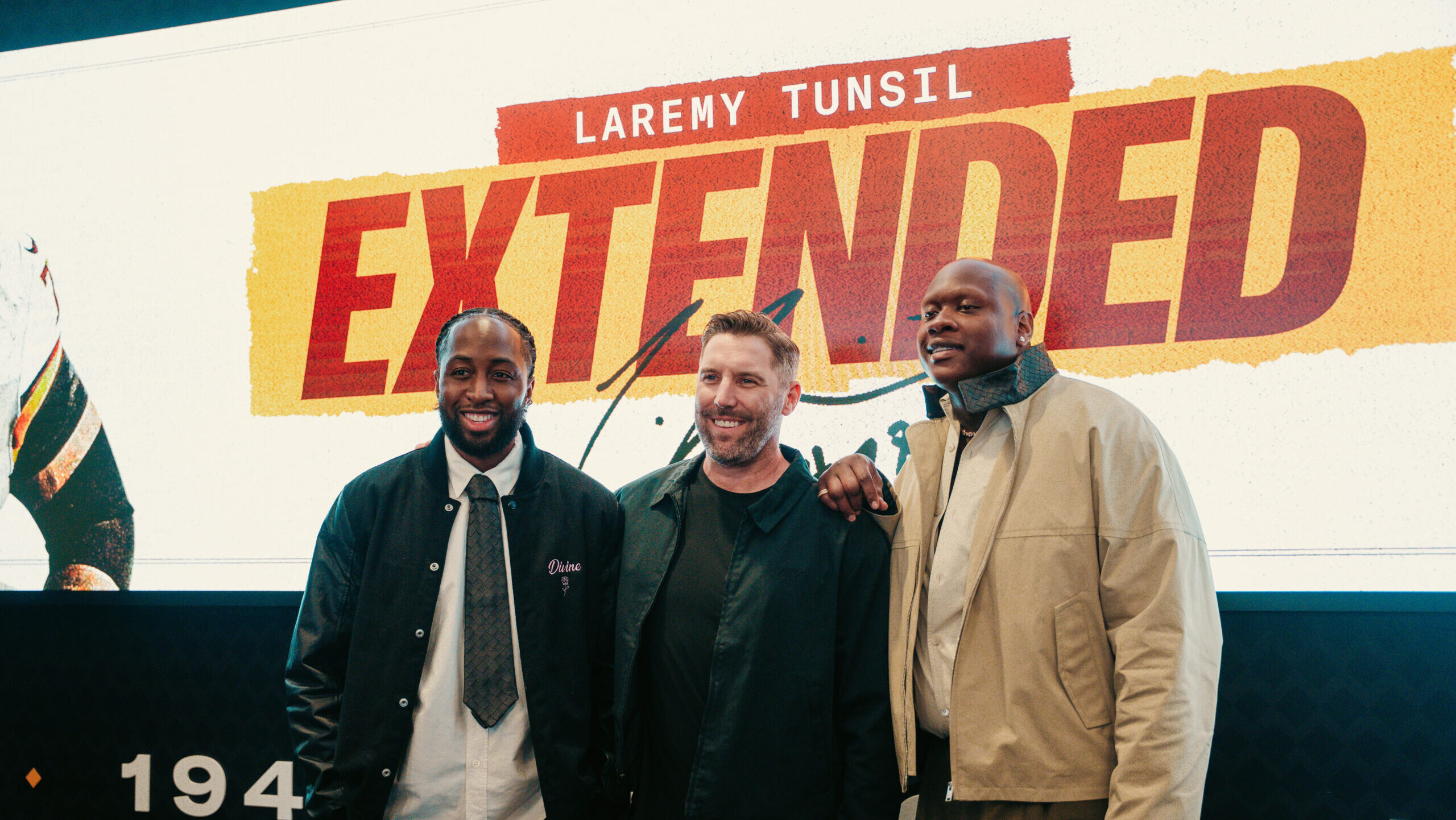
Tunsil’s career offers a clear example of how that plays out. As one of the top offensive tackles in the NFL, he has reset the market multiple times, most recently doing so without a traditional agent when he signed his two-year, $60.2 million extension last month, becoming the first offensive tackle in NFL history to crack the $30 million per year mark. It was extra special because all the negotiations were their own.
“This time, it was strictly Divine. It was just strictly him and me,” Sanni said of the most recent extension negotiations.
That decision wasn’t made to prove a point as much as it was a reflection of comfort and trust in the system they had built together. This latest negotiation cycle was handled entirely in-house, just Sanni and Tunsil, building on years of experience and preparation. It’s an unconventional approach, but it’s one that works for them — and, importantly, one they don’t position as a universal blueprint. As Sanni is quick to point out, every athlete’s situation is different, and what works for one might not work for another.
“My biggest thing would be I tell every athlete to just evaluate their situation for themselves,” he said. “Just because [Tunsil] did it without an agent, don’t mean you should do it without an agent. … A lot of these athletes, you’ll see the first-round picks, they just signing with an agency because that’s what [Peyton Manning] did. He signed with him, this and that, but you might be allergic to what he’s selling. … It’s too many puppets in the sports world.”
Beyond contracts and negotiations, Divine Tree is expanding into media and content, most notably through its Protect the Tree series. What started as informal YouTube vlogs has evolved into a more intentional, documentary-style look at the full ecosystem surrounding Tunsil and the brand. As Sanni explained, “We used to just drop YouTube vlogs, and we named it Protect the Tree because LT, he plays left tackle, and he’s the best protector in the NFL in our eyes, but it’s not just an LT show, this is the show about the whole ecosystem, but centered around LT.” The idea, he added, was to move with more intention and show people things they don’t usually get access to, from how deals get discussed to the real dynamics behind an athlete’s world. In his words, they wanted to “really give insights into things that people can’t usually see for an athlete.”
Looking ahead, the vision for Divine Tree extends beyond a single athlete or even sports as a whole. Sanni sees it as a platform that can support not only athletes, but also managers and creatives who want to build tailored ecosystems of their own. Whether it’s helping a client break into fashion, produce high-level content, or launch community initiatives, the focus remains the same: meet people where they are and build from there. The company has already begun to move in that direction, with additional clients, a growing production arm, and partnerships tied to major cultural events.
“The whole business plan is personalized, the ecosystem for what the athlete means, and different athletes have different pillars,” Sanni said.
If there’s a unifying idea behind all of it, it’s growth — not just in the traditional sense, but growth that extends outward and creates opportunities beyond the original scope. The name Divine Tree isn’t accidental. It’s meant to represent something that continues to expand, branch out, and outlast the people who started it. And in many ways, that traces all the way back to the beginning, when two college students connected over shared interests without any expectation of what it might lead to.
Everything since then has been an extension of that foundation, built slowly, intentionally, and with the understanding that the best outcomes don’t always come from following a predefined path. As Sanni puts it, “The goal is to plant seeds that go beyond us.”
Read More:
There Is No Offseason: KLUTCH Sports Group COO Fara Leff on Commanding the Sports Calendar
Michael Che Opens Up About SNL, Kanye, Colin Jost, Cancel Culture, & Comedy
Red Hook Tavern: Where Billy Durney Wants to Know Your Name
Keanu Reeves’ Next Act Is Built on Two Wheels

The Blueprint: Jessica Holtz Meets the Moment