
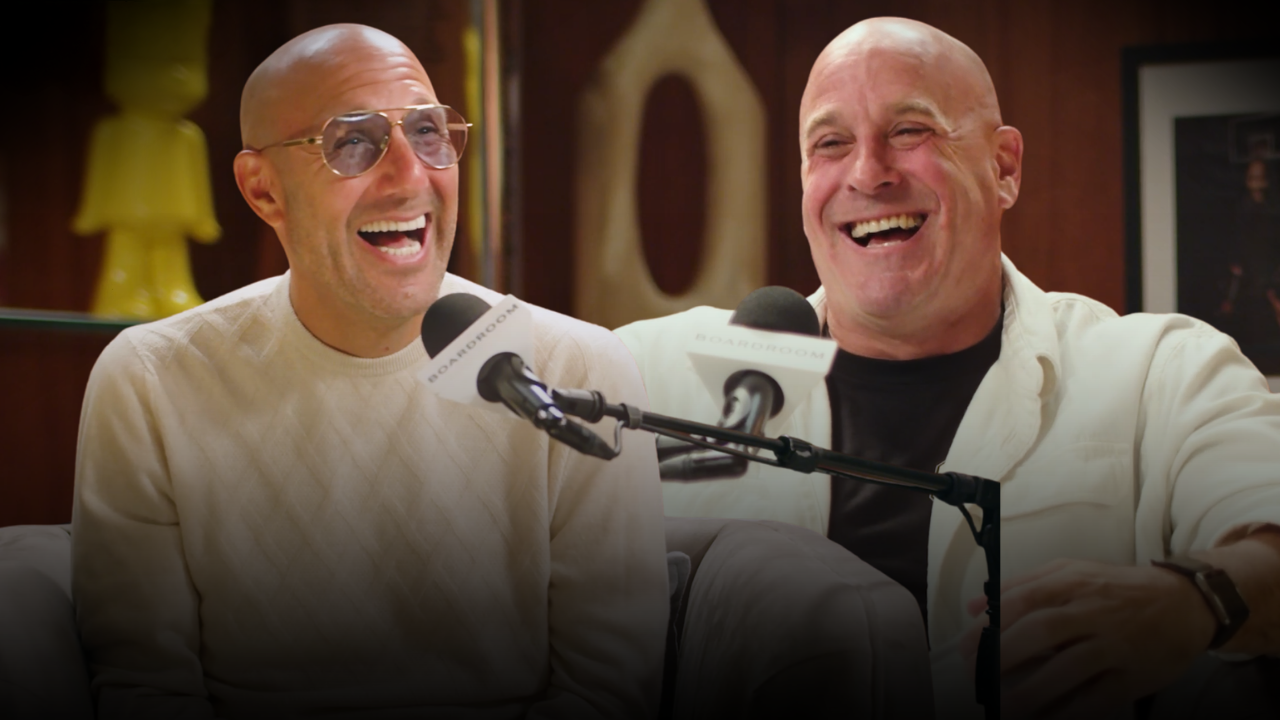
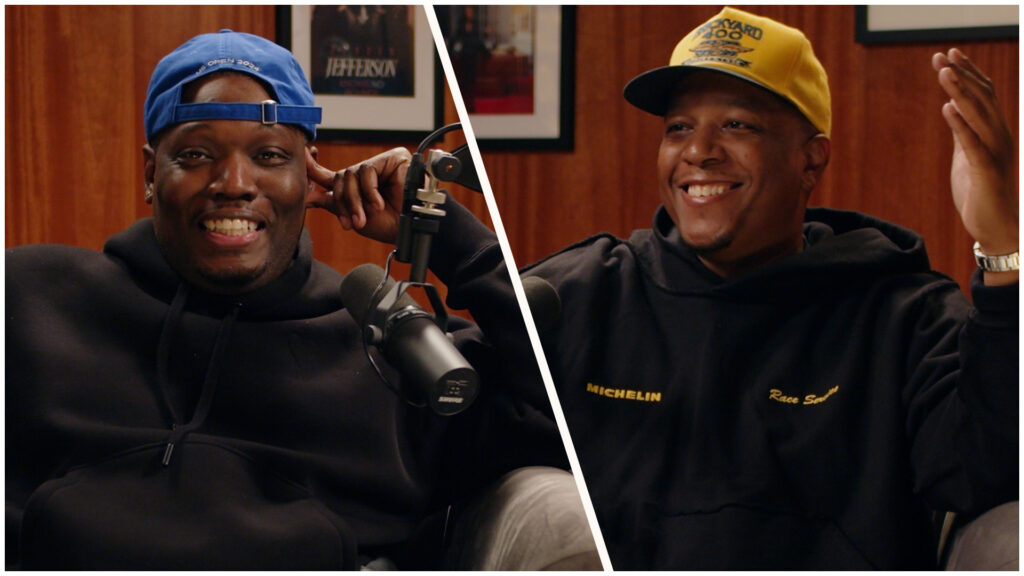
The man they call Vino sits down with Rich Kleiman on Boardroom Talks to explain how one of sports’ biggest agencies got big by staying quiet.
Barry Sanders never did much celebrating. He’d score, hand the ball to the official, and jog back to the sideline. For Mike “Vino” Levine, the head of CAA Sports, that is also a business model.
“We are taking a Barry Sanders approach for better or worse,” Levine tells Rich Kleiman on the latest Boardroom Talks. It’s a philosophy that runs against the grain of an industry that prizes the chest-pounding agent. It traces back to CAA’s founding in the mid-’70s, when a group of William Morris defectors replaced “elbows up, my client, get out of my way” with a simpler idea: everyone represents everyone.
When Levine, Howie Nuchow, and Paul Danforth took over in 2006, they weren’t scared of the blank page. They saw “unskied powder snow.” Stars like Leon Rose and Tom Condon signed on because they bought into the team concept. Levine compares it to picking squads in the street as a kid, and he says leadership is just letting your best people cook. “I lead the way I wanted to be led,” he says.
That approach has produced a monster. CAA Sports now employs more than 1,400 people, with revenue split roughly 55/45 between the U.S. and the rest of the world. Talent, the part everyone watches, is only about 40 percent of the business. Around it sit 450 brand consultants (22 of their brands activate on the Formula One grid every weekend), CAA Icon’s work on 42 venues worldwide, an executive search arm that has placed 350 to 400 C-suite leaders, and Portus, the consulting shop that gave them a foothold in the Middle East. “Talent on one side, brand on the other,” Levine says. “In the middle is the part that very few people know anything about.”
The blueprint for what comes next, he says, is Dwyane Wade. As D-Wade’s interests moved from fashion to fatherhood to ownership, the agency followed. Now CAA is bridging its sports and TV departments to chase athlete ambitions like Josh Allen’s Skydance deal and Chris Paul’s production company merging with Connor Schell’s Words + Pictures. The agency is also moving beyond pure service work. “We are evolving into becoming principal,” he says.
Then there’s the mantra: “Bread, not cred.” Levine borrowed it from two CAA endorsement execs, Steve Lashaver and Peter Hess. He says they do hundreds of millions in deals, including 23 Super Bowl spots last year, while staying largely anonymous. “I do not care whether we’re relevant or not,” Levine says. He recalls looking at the books of well-known industry names and finding tiny businesses. He recalls walking away from a large acquisition because its 14 percent margins sat against CAA’s 29 or 30. His goal is simple. “I want our people to be rich.”
None of it makes losing a client hurt less. Levine can recall the date and the phone call for the ones who left, and says an agent getting fired is “like a bad breakup with a girlfriend.” What keeps him steady is advice from his old college lacrosse coach, Richie Moran: “Hey kid, don’t get caught reading your own press clippings.”
Lacrosse comes up with the PLL, the seven-year-old league Levine backs. It plans to sell franchises over the next 12 to 24 months, and he’s blunt about the stakes. A league, he says, is only “as strong as its weakest owner.” He floats a 401(k)-style pool of league equity for players in the next round of bargaining, a nod to Stephen Curry’s recent comments. He also admits shock at the reports surrounding the Clippers’ salary cap penalty.
The conversation ends at Madison Square Garden. Levine lights up talking about Leon and Wes Edens, who helped deliver the Knicks’ first title in 53 years while barely raising their voices. Levine says they’re the same people they were the day they got the job. “It’s family.” He’s wearing Wes’s custom Size 13 Jordan lows as proof.
The Barry Sanders way, it turns out, wins championships.
Read More:

Isack Hadjar Talks Favorite Rappers, ‘Iceman,’ and What Makes a True Sports Car

The 15 Best Horror Sequels to Watch This Halloween
YG on Making ‘My Krazy Life’, His West Coast Legacy, & Reinventing Himself
There Is No Offseason: KLUTCH Sports Group COO Fara Leff on Commanding the Sports Calendar
Michael Che Opens Up About SNL, Kanye, Colin Jost, Cancel Culture, & Comedy