

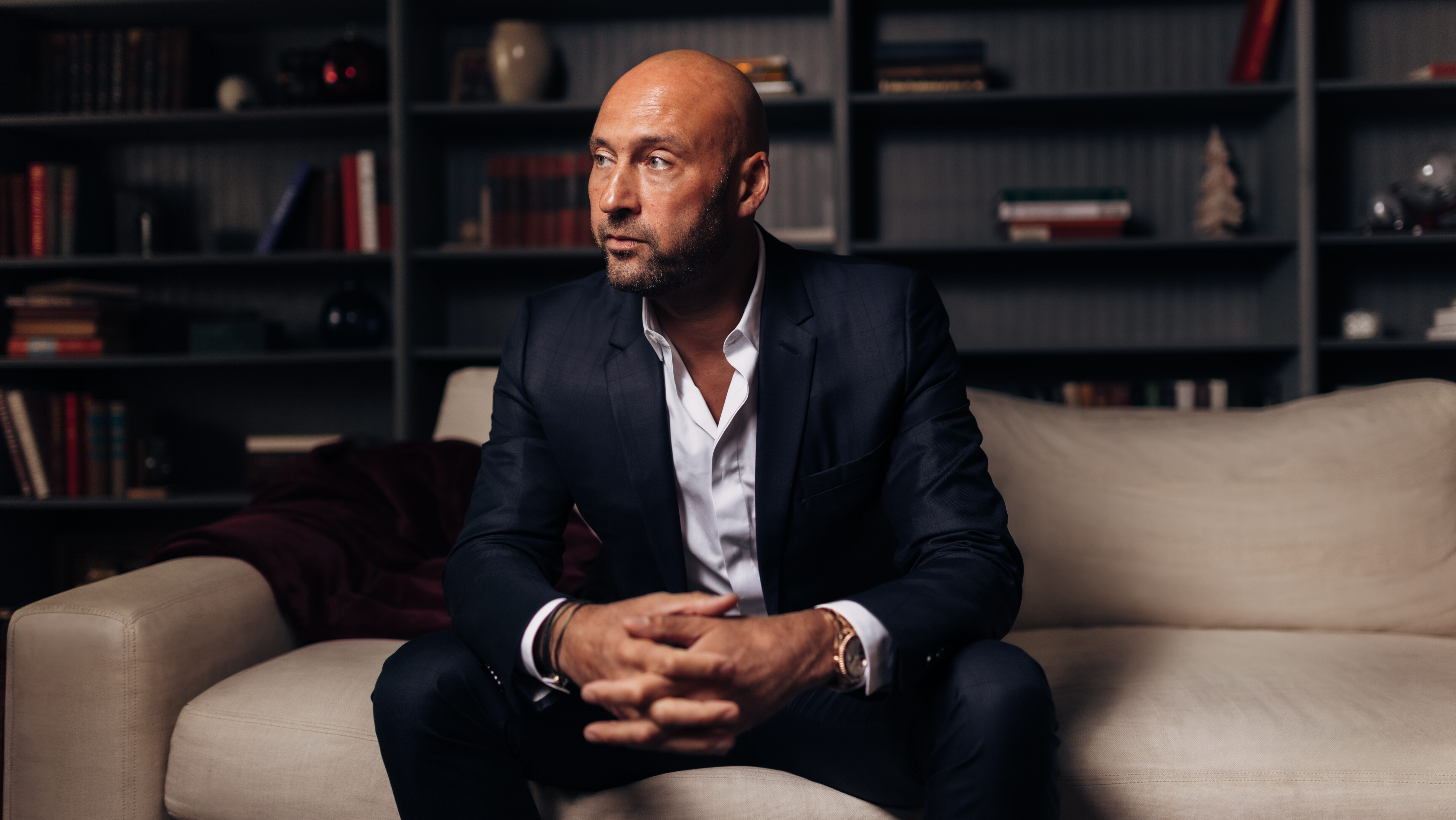
Jeter joins ALUM as investor, board advisor, and brand ambassador for a new luxury hospitality brand built for America’s college towns.
There are few figures in American sports whose name carries the weight of permanence quite like Derek Jeter‘s. Five World Series rings, a plaque in Cooperstown, and a career defined by consistency over flash. So when the Yankees legend puts his name, his capital, and a seat on the board behind a new venture, it’s worth paying attention to what he saw in it.
His latest venture is with ALUM, a new luxury hospitality brand betting that America’s college towns — places built on decades of loyalty, tradition, and Saturday-afternoon ritual — are an underserved market hiding in plain sight. Jeter has signed on as an investor, board advisor, and brand ambassador, a three-pronged commitment he says was deliberate: “I wanted to be part of building it, not just attached to it,” Jeter exclusively told Boardroom.
The appeal, for Jeter, traces back to Michigan. “Anyone who grew up around college sports in Michigan understands what I’m talking about,” he says. “That passion isn’t something you can manufacture.”That’s the emotional core ALUM is trying to build a business around: private members’ clubhouses, condo-hotel residences, chef-driven dining, and programming designed to give alumni a reason to show up long after the final whistle blows on a Saturday in the fall.
It’s a concept that, on paper, fills an obvious gap. College towns generate some of the most loyal fan bases in the country, yet most offer nothing in the way of destination-grade hospitality to match that devotion. ALUM’s first property is underway in Tuscaloosa, with additional locations already in active negotiation in markets including Michigan, Ohio State, Oregon, Oklahoma, Kentucky, and Notre Dame — a footprint that signals ambitions well beyond a single flagship.
For Jeter, the calculus behind the investment sounds a lot like the discipline he’s talked about applying to his post-playing career more broadly. “I look for a strong team, a clear vision, and something that’s built to last,” he explains, pointing to ALUM founder David Vialli‘s hospitality background as a key factor in his decision.
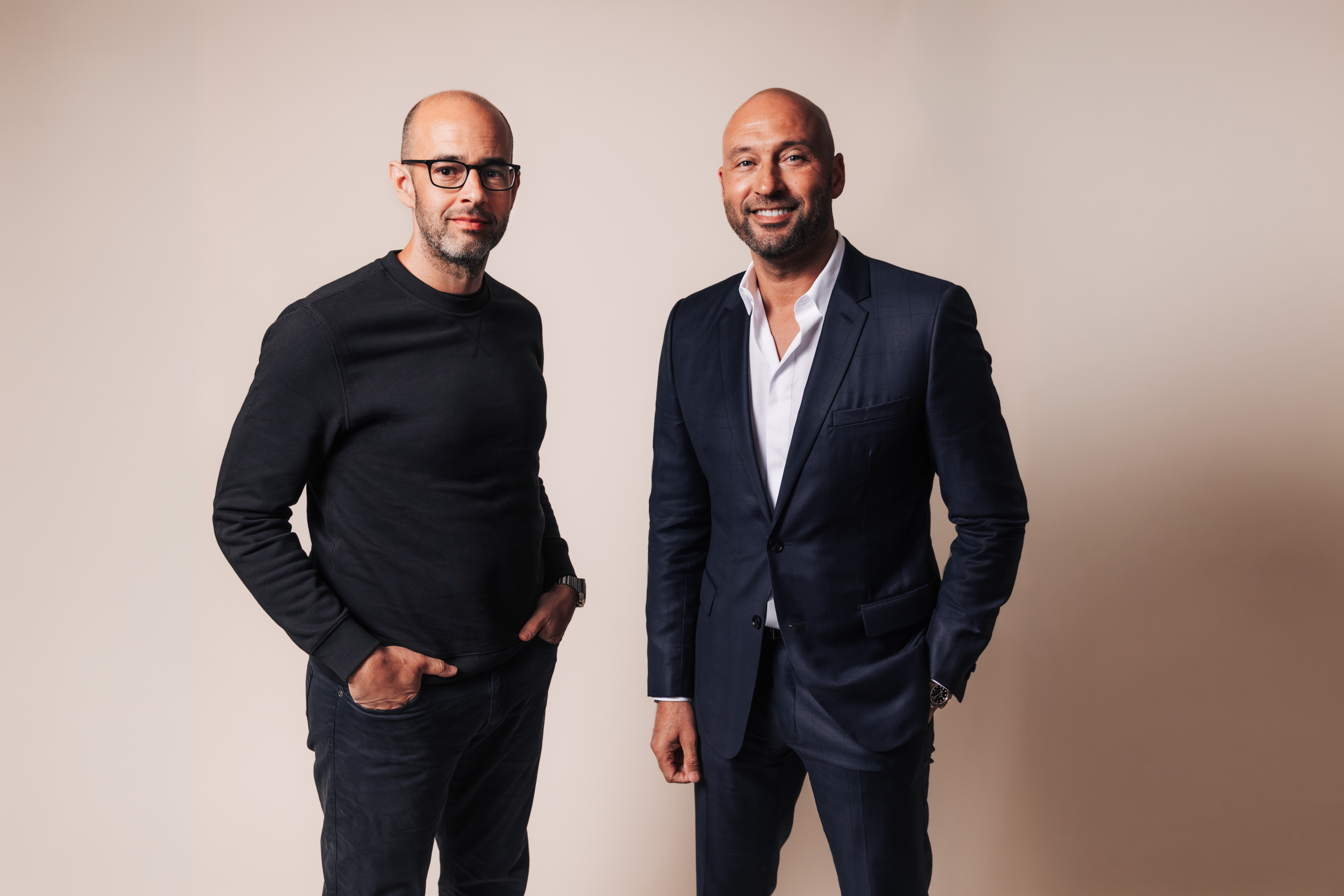
There’s also a cultural parallel Jeter keeps returning to, one that maps neatly onto his own playing days. “In baseball, the clubhouse is where trust gets built and where you figure out who you are as a team,” he says, and he sees ALUM’s clubhouses chasing the same thing in a different context.
Whether that vision translates into a scalable hospitality brand remains to be seen. But Jeter’s involvement signals a bet that college towns are ready for something they’ve never quite had: a permanent home for the passion that already exists there.
BOARDROOM: You’ve built a successful business portfolio since retiring from baseball. What stood out about this opportunity that made you want to invest, serve as a board advisor, and become a brand ambassador, not just lend your name to it?
JETER: When I connected with David Vialli and learned what he and the ALUM team were building, it was clear what they were bringing to life would fill a gap in this space. College towns are some of the most passionate, loyal communities in the world, and there was nothing that matched that energy from a hospitality standpoint. From the Clubhouse and the residences to the gathering spaces and sense of shared passion that would come from this concept, I wanted to be part of building it, not just attached to it.
You said growing up in Michigan shaped who you are and that the pride and sense of community never leaves you. How did those experiences influence your decision to get involved with a brand focused on America’s college towns?
Anyone who grew up around college sports in Michigan understands what I’m talking about. They are a core pillar of the local community that builds a sense of pride within you and fosters deep connections with those around you. That passion isn’t something you can manufacture. ALUM truly understands that and is building something with that in mind, and that approach resonates with me.
When you evaluate investment opportunities today, what are the qualities you’re looking for? Where did this company check those boxes?
I look for a strong team, a clear vision, and something that’s built to last. David has spent his career in hospitality, understands the product from the inside out, and has selected a great group to work alongside him. There’s nothing else like this in the market, and the model is built for the long term. The real estate, membership, food and beverage, and programming are all anchored around something that doesn’t go away: college fandom. That’s a permanent part of American culture, and ALUM speaks to that.
As an athlete, you always have to be thinking long-term, both on and off the field. What kind of long-term potential do you see for this brand and the college-town hospitality space?
There’s so much potential here. There are hundreds of college communities across this country with passionate, loyal alumni bases and no destination-grade hospitality to match. ALUM is starting in Tuscaloosa and has 12 properties in active development — Michigan, Ohio State, Oregon, Oklahoma, Notre Dame — but this can scale to 30, 40 properties and beyond. Every new market is its own community, its own culture, and its own story. The brand will only get stronger with every location it opens, and I hope ALUM will be synonymous with the college experience.
Your role goes beyond being an investor; you’ll also be advising the board. What perspectives or experiences from your playing career and your business career do you hope to bring to the company’s leadership?
One of the biggest things I learned from playing baseball is that the details matter. Preparation, consistency, and doing things the right way every single day can separate good from great. I want to help infuse that throughout the standard the ALUM team has already set. When someone walks into one of our Clubhouses, every detail of that experience needs to reflect the quality and care that the community deserves. From a business perspective, I’ve also learned a lot about building trust with partners, with fans, community, and the people who believe in what you’re doing.
Post-playing, you’ve transitioned from being an elite athlete to an entrepreneur and investor. What have been the biggest lessons you’ve learned about business over the last decade that you’re applying to partnerships like this one?
The biggest lesson is that you have to be selective. Alignment and your personal belief in something are critical. You have to share the same vision as the people you’re working with, believe in the product, and know that you can add genuine value, not just visibility. With ALUM, all of this is true. I’m not just lending my name here. I’m invested in this company and committed to helping it grow the right way.
Your personal brand is built around authenticity and trust. How important is it that any company you partner with reflects your own values and reputation?
It’s a huge part of any project I’m involved in, and I’ve made an effort throughout my career, on the field and off it, trying to do things with integrity. When I put my name behind something, I’m telling people I believe in it. ALUM’s commitment is to create something genuinely exceptional for these communities — not just another hotel or another club, but something that feels like it belongs there. That’s a standard that is important to me.
Whether it was building championship teams or building businesses, success usually comes down to culture. What similarities do you see between creating a winning clubhouse and helping grow a successful company?
The word ‘Clubhouse’ is very fitting here because the parallels are real. In baseball, the clubhouse is where trust gets built and where you figure out who you are as a team. A great clubhouse is built intentionally, through the way people treat each other and the accountability they share. That’s exactly what ALUM is building in a different context. It’s a space where people feel like they belong, where the standards are high, and where the experience is something they want to come back to again and again.
Looking ahead, what would success look like for this partnership five or 10 years from now?
Success looks like ALUM becoming the place that college communities point to with pride, in every market we enter. It looks like alumni who’ve been away for twenty years walking through the door and immediately feeling like they’re home. It looks like the memories they have built over a lifetime of fandom for that university. And it looks like a club that is rooted in both luxury and comfort. That’s what David and the team are building toward, and that’s what I want to help them achieve.
Read More:

The Blueprint: Jessica Holtz Meets the Moment
The Power Broker: Emma Grede Is Just Getting Going

Quiet Power: Imani Ellis on CultureCon, Creators, and Learning to Let Go

The Long Game: How LeBron James and a Few NBA Friends Might Elevate the Game of Golf

Savannah James and April McDaniel on Navigating Money, Friendship, and Business