

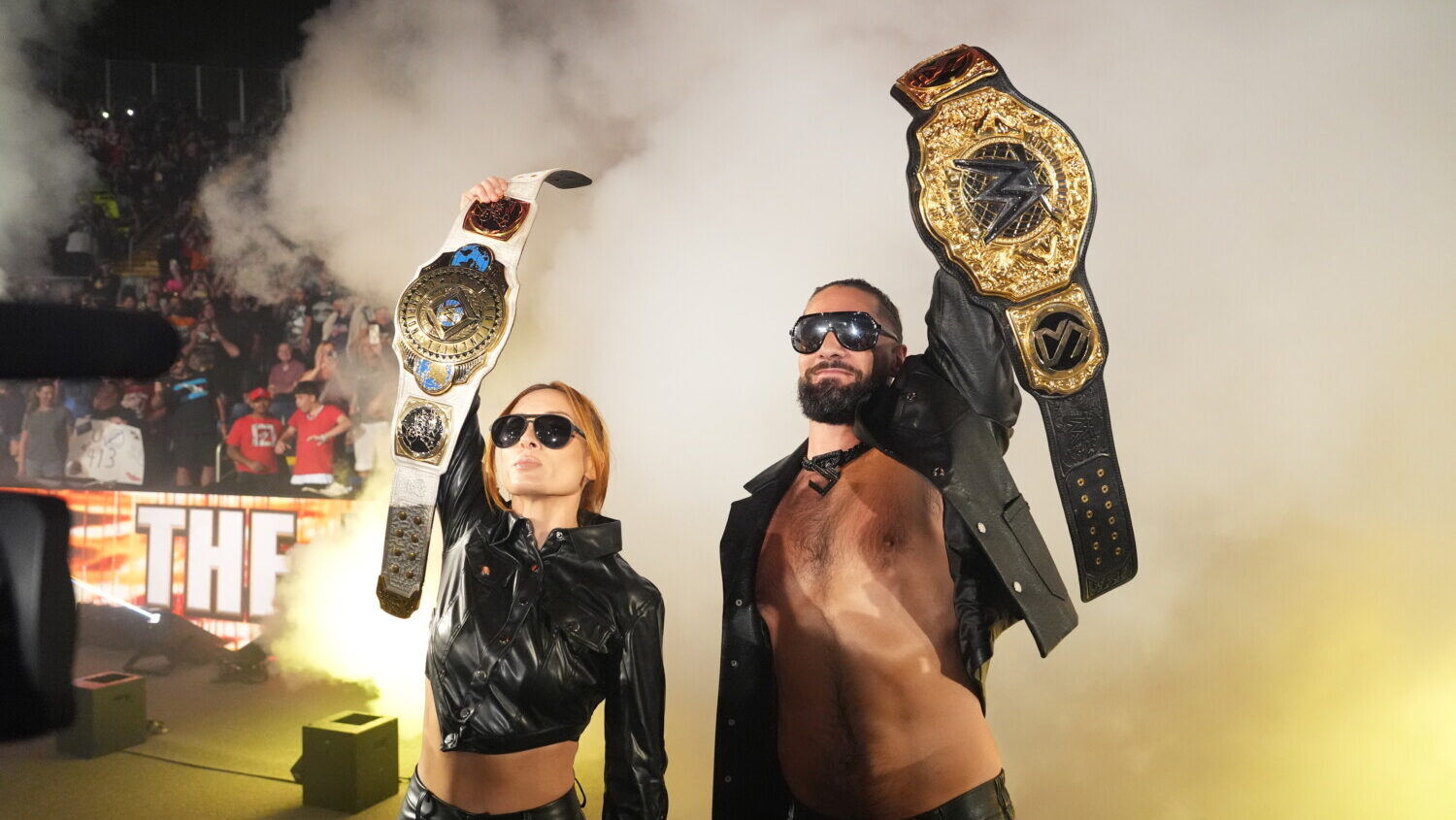
Fewer local events, rising prices, & new platforms—Boardroom breaks down why American wrestling fans are starting to feel pinned down.
There’s no question that TKO‘s business plans across WWE and UFC have been successful.
UFC wanted to double its US rights fees on its next deal and accomplished that last month when it inked a seven-year, $7.7 billion media rights contract with CBS and Paramount+. Q2 revenue increased 10% across TKO Group, with WWE revenue on its own up nearly $100 million year over year. That August earnings report proved TKO’s ambitious global plan was working.
WWE Premium Live Events (PLE), formerly known as pay-per-views, were held in Saudi Arabia in June, Paris over Labor Day weekend, and will travel to Perth, Australia in October. As part of a longstanding lucrative agreement between the Gulf nation and the company, January’s Royal Rumble will take place in Riyadh, and last week WWE announced Saudi would host the first ever WrestleMania held outside North America in 2027. WrestleMania has for decades been wrestling’s Super Bowl, with diehard fans making annual religious-like journeys across the US for a week’s worth of experiences. That almost certainly won’t be possible for a majority of those folks in 18 months from now.
“Saudi’s doing UFC, WWE, and tennis. The doors are open for business,” Mark Shapiro, WME Group president and COO and TKO President and COO told me earlier this year. “Their audiences are clearly thirsty for more sports and entertainment, and we are excited to help fill that void.”
Saturday night’s star-studded, newly-created Wrestlepalooza in Indianapolis marks the first PLE under a new five-year, $1.6 billion domestic contract with ESPN after WWE’s contract with NBC/Peacock ended six months early. It’s a big win for ESPN’s new direct-to-consumer platform, but a loss for fans who, instead of paying $10.99 per month for Peacock, will now have to dole out $29.99 a month for ESPN DTC, which is not yet automatically included as part of all cable subscriptions and significantly more costly for cord cutters (Disney is offering a bundle deal that also includes Disney+ and Hulu for the first year).
Even just factoring in fewer American PLEs and the increased cost of watching them, following the WWE in the US is becoming a worse experience.
But wait, there’s more.
WWE’s nonstop road show of live events—including its flagship “Monday Night RAW” show which is now streaming on Netflix and Friday night’s “Smackdown” that airs on USA Network—traveled to Europe for episodes this year for the first time ever. In March, WWE spent three weeks in Europe before returning to the U.S. for two weeks in August, streaming “RAW” live in the afternoon since the show is no longer tied to a specific time or length on cable. After “RAW” and “SmackDown” head to Perth in October, the shows already have scheduled dates in January in Berlin, Dusseldorf, London, and Belfast.
And now, with the fewer amount of weekly WWE shows in the U.S., ticket prices have spiked under TKO since Vince McMahon’s scandal-ridden departure. A study released earlier this year showed that average WrestleMania ticket price has increased 140% over the last 10 years, and SummerSlam prices have doubled.
“Vince McMahon was primarily pricing tickets for families and wasn’t totally focused on maxing the opportunity there,” Shapiro said last week at an annual Goldman Sachs conference.
“WWE has just gotten into the business of dynamic pricing and having dynamic pricing tools,” he said earlier this year at a Morgan Stanley conference. According to Shapiro, reducing the number of live non-televised events each year is “creating demand and the demand is giving us more pricing power.”
That pricing power looks incredible on a balance sheet, but that power can also price out diehard fans and their families who want to watch their favorite WWE superstars live when they come, now less frequently, to their city.
“We have to keep bringing the brand to different towns and regions and then letting consumers and fans of pure entertainment get out and sample it,” Shapiro told me back in March. “We’re building audience. And in order to build audience, you have to take the show on the road. That takes time, patience, and a lot of marketing investment.”
Those who can no longer afford to go to “RAW” or “SmackDown” may have to pay more for PLEs on ESPN’s new DTC platform starting Saturday, September 20. TKO’s global business plan may have revenue and profits comfortably in the black, but it may also in the short and long-term leave the same American fans that helped build WWE into a worldwide colossus feeling blue.
There Is No Offseason: KLUTCH Sports Group COO Fara Leff on Commanding the Sports Calendar
Michael Che Opens Up About SNL, Kanye, Colin Jost, Cancel Culture, & Comedy
Red Hook Tavern: Where Billy Durney Wants to Know Your Name
Keanu Reeves’ Next Act Is Built on Two Wheels

The Blueprint: Jessica Holtz Meets the Moment