

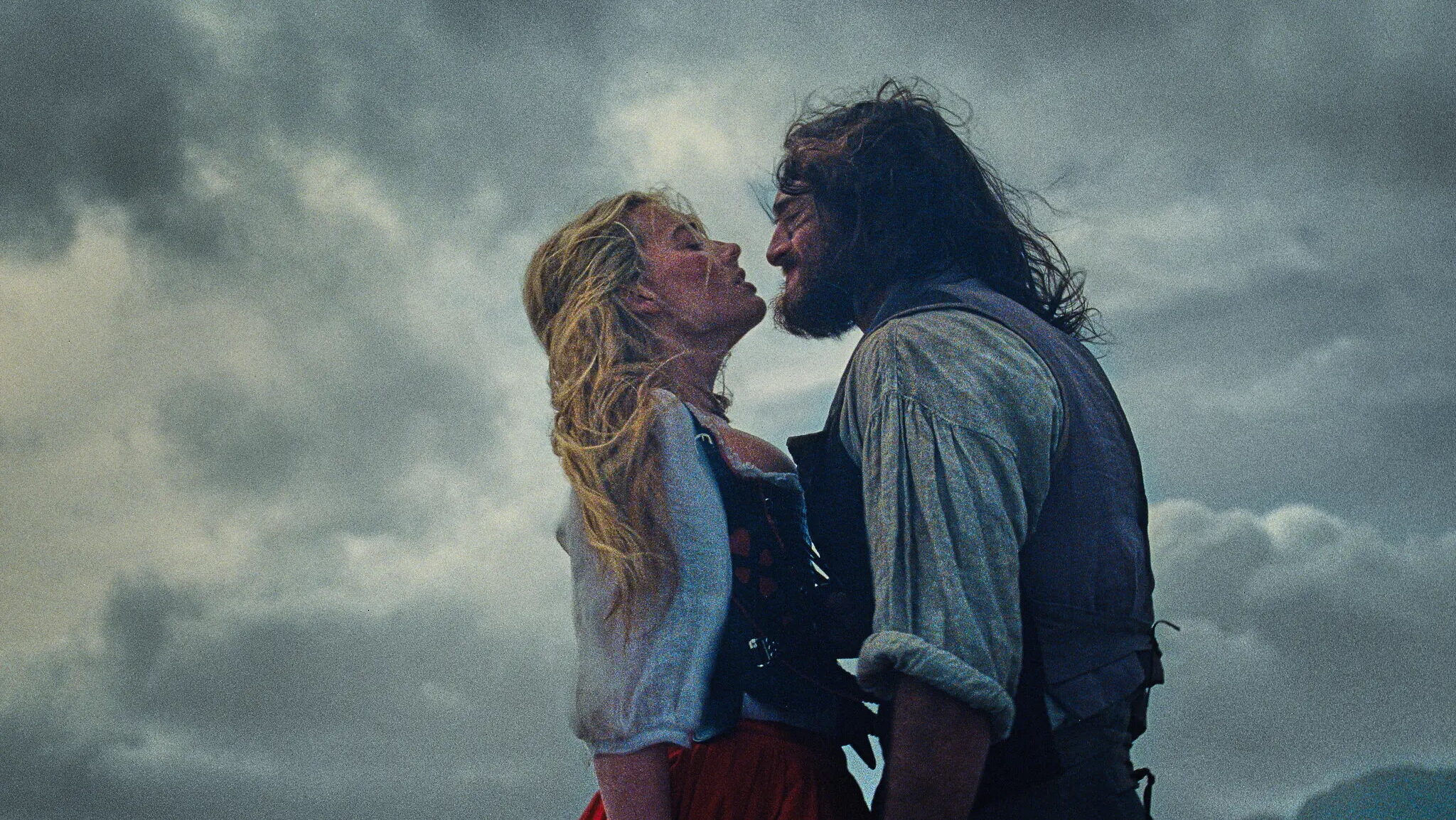
The $83 million Valentine’s Day hit sparked endless essays and debate, but beneath the glossy Gothic aesthetic, this adaptation strips away the very tension that made Emily Brontë’s novel transgressive.
Essays, hot takes, and threads dissecting Emerald Fennell’s Wuthering Heights have been flooding my timeline since the movie dropped on Feb. 13.
The film hauled in $83 million worldwide in its opening weekend, the biggest debut of the year so far, strategically landing on Valentine’s Day weekend. Which feels ironic, because whatever this movie is, it’s not a love story. The debate has been relentless. Some are calling it daring and misunderstood. Others are writing it off entirely. I find myself less interested in arguing about whether it’s brilliant or disastrous and more focused on a simpler question: Did this story need to be retold this way?
For me, the answer is no.
I didn’t go in armed with rigid expectations. I’m familiar enough with Emily Brontë’s 1947 novel, I saw the new adaptation’s trailer, and I tried to let Fennell’s interpretation breathe on its own terms. But even with that open posture, something felt off almost immediately.
Gothic or Just Glossy?
The film opens with a public execution staged with such heightened sensual tension. I understand that 18th-century England was violent and unforgiving, but framing a hanging as something intoxicating rather than horrifying sets a tone that feels more provocative than purposeful. It signals early on that this adaptation is less interested in psychological rot and more invested in aesthetic shock.
From there, Fennell makes her intentions clear: We are meant to ache for Heathcliff (Jacob Elordi) and Catherine (Margot Robbie). The windswept landscapes, the charged glances, the urgent physicality; everything screams epic yearning.
But I didn’t ache for them. I mostly found myself frustrated.
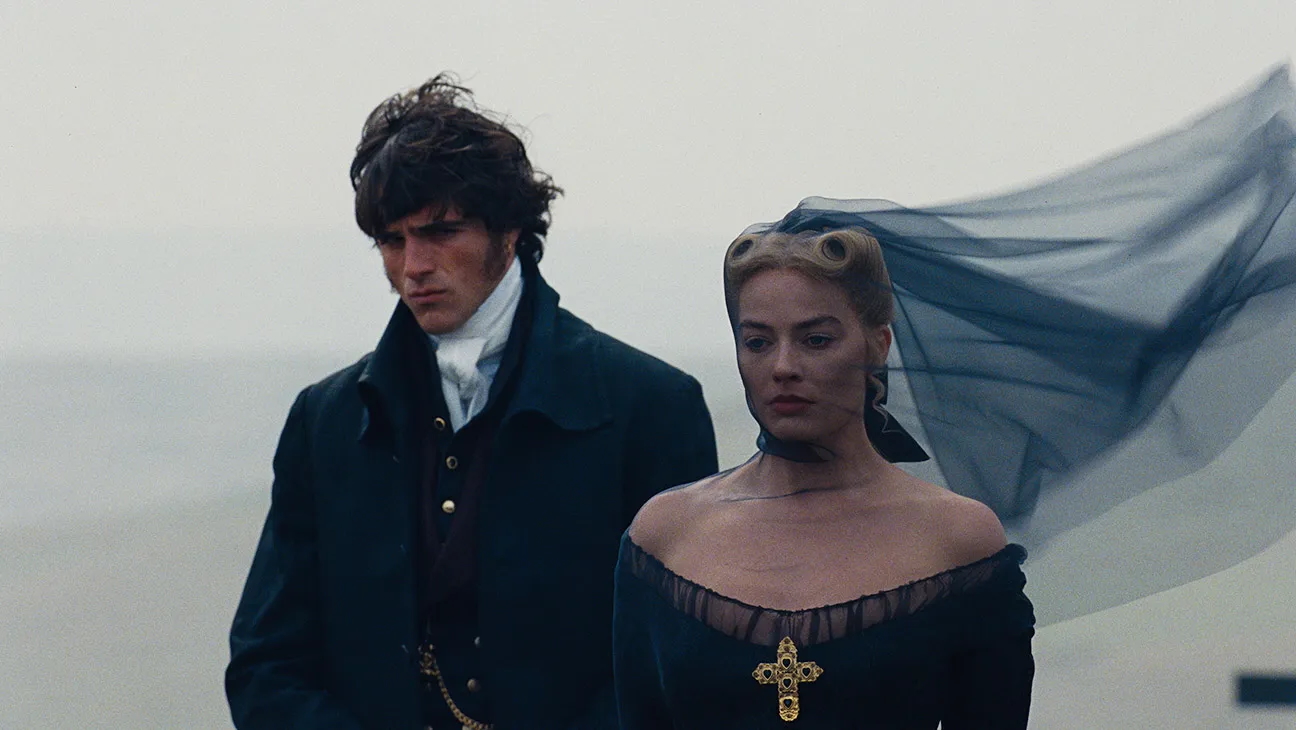
Elordi and Robbie are beautiful people playing deeply messy ones, but the film renders their adult relationship as petulant rather than tragic. They move through the story like impulsive, privileged adolescents trapped in grown bodies. Strangely, the younger versions of Heathcliff (Owen Cooper) and Catherine (Charlotte Mellington) feel more emotionally coherent. As children, their bond has weight, and the uncontrollable giddiness makes much more sense. As adults, it often feels like they are just being ignorantly naive.
The larger issue is that the film sands down the novel’s most volatile edges.
In Brontë’s text, Heathcliff’s racial ambiguity — his dark skin, his outsider status, the way he is described as a “gypsy” or a “lascar” — is essential to the story. He is marked as other in a way that shapes his treatment and fuels his rage. That ambiguity creates tension both socially and psychologically.
In Fennell’s adaptation, that tension evaporates.
Casting Elordi isn’t inherently the problem; it’s what the film does — or doesn’t do — with the implications of Heathcliff’s identity. Adding a gold tooth and earrings as shorthand for upscale roughness doesn’t replace the racialized alienation embedded in the source material. Without that dynamic, the social barrier between Heathcliff and Catherine feels dramatically thinner.
Which leads to a frustrating domino effect. If Heathcliff amasses wealth and proximity, what is actually keeping them apart? Why doesn’t Catherine just run off with him after he returns? Why doesn’t Heathcliff just knock on Catherine’s door when his letters go unanswered? They were a mere five miles apart.
In the end, the tragedy felt more engineered than inevitable.
Supporting characters don’t fare much better. Nelly (Hong Chau) and Edgar (Shazad Latif) are portrayed by actors of color, yet they function as the narrative obstacles standing between the white central couple. It’s an uncomfortable visual dynamic, especially in a film that already sidesteps the novel’s racial complexity. Isabella’s (Alison Oliver) arc is also simplified and watered down. Where the novel grants her a degree of resilience and eventual escape, the film leans into BDSM obsession and submission, stripping away nuance in favor of heightened melodrama.
Catherine’s death should devastate the audience. I didn’t feel that devastation. The film wants her heartbreak to land as inevitability, but the logic doesn’t fully support the weight it demands.
Fennell has described this as a Gothic love story. But Gothic isn’t just fog and longing. It’s decay. It’s suffocation. It’s dark. It’s the slow unraveling of morality. What we get instead feels glossy: beautifully composed, meticulously styled, but rarely spiritually corrosive.
If Saltburn flirted with Gothic aesthetics while prioritizing spectacle, Wuthering Heights follows a similar path.
Performance Check
Where the film does come alive is in its younger cast.
Cooper’s Heathcliff carries a raw vulnerability that makes his outsider status believable, even when the script softens its racial implications. Mellington’s young Catherine matches him beat for beat, delivering a version of Cathy that feels at the level of drama and exaggeration we’d expect of her character. Their scenes have a sincerity that the adult timeline struggles to sustain.
I’ll give it to Robbie; she doesn’t do anything halfway. She throws herself fully into the volatility and feral energy of her character, and there are flashes of something haunting in her performance, especially when she stops flaring her nostrils and lets her face go cold and hard. But the problem isn’t her effort; it’s that Fennell wrote this version of Catherine as a Pinterest mood board for Gothic romance instead of a person. She’s framed as this luminous, mercurial idea of a woman, but we never actually get to see the logic behind her spiral. It’s all vibe and zero interiority. I needed more grounding and a lot more humanity, but instead, she just felt like a beautifully styled symbol of obsession. I couldn’t understand her choices.
And let me make this clear: The film’s plot and themes are very easy to grasp. That makes Robbie’s job much harder here since there’s no complex storyline to hide behind.
Elordi definitely understands the brooding heartthrob assignment, but Heathcliff is supposed to be so much more than just a dark cloud in a coat. He’s a character defined by rejection and a very specific, racialized otherness that Brontë was intentional about, and none of that weight actually lives in Elordi’s performance. It felt totally muted. Without the actual wound of being a socially exiled foundling, he just comes across as another toxic, privileged white guy who is down bad for a woman who hurt his feelings. Elordi did what he could, but the script gave him a gold tooth cap and a vibe when he needed a real, devastating history to play.
What this film is missing is emotional conviction. It feels like Fennell was so focused on the fantasy of an aesthetic that she forgot to give the characters a pulse. Although I have to admit I was absolutely obsessed with the wardrobe, shoutout to Jacqueline Durran for the costume design. And Charli XCX’s Wuthering Heights album is the only thing currently giving me the actual elegant, brutal Gothic energy this movie lacked.
Final Credits
This adaptation asks you to romanticize obsession without fully wrestling with its social consequences. It aestheticizes cruelty while stripping away some of the very elements that made the original text transgressive. Even without deep familiarity with Brontë’s novel, something in this version feels misaligned. This may be a commercially successful retelling. It may continue to inspire dissertations and debate.
But as far as necessity goes? We could have done without it.
Read More:

Red Hook Tavern: Where Billy Durney Wants to Know Your Name
Keanu Reeves’ Next Act Is Built on Two Wheels

The Blueprint: Jessica Holtz Meets the Moment
The Power Broker: Emma Grede Is Just Getting Going

Quiet Power: Imani Ellis on CultureCon, Creators, and Learning to Let Go