
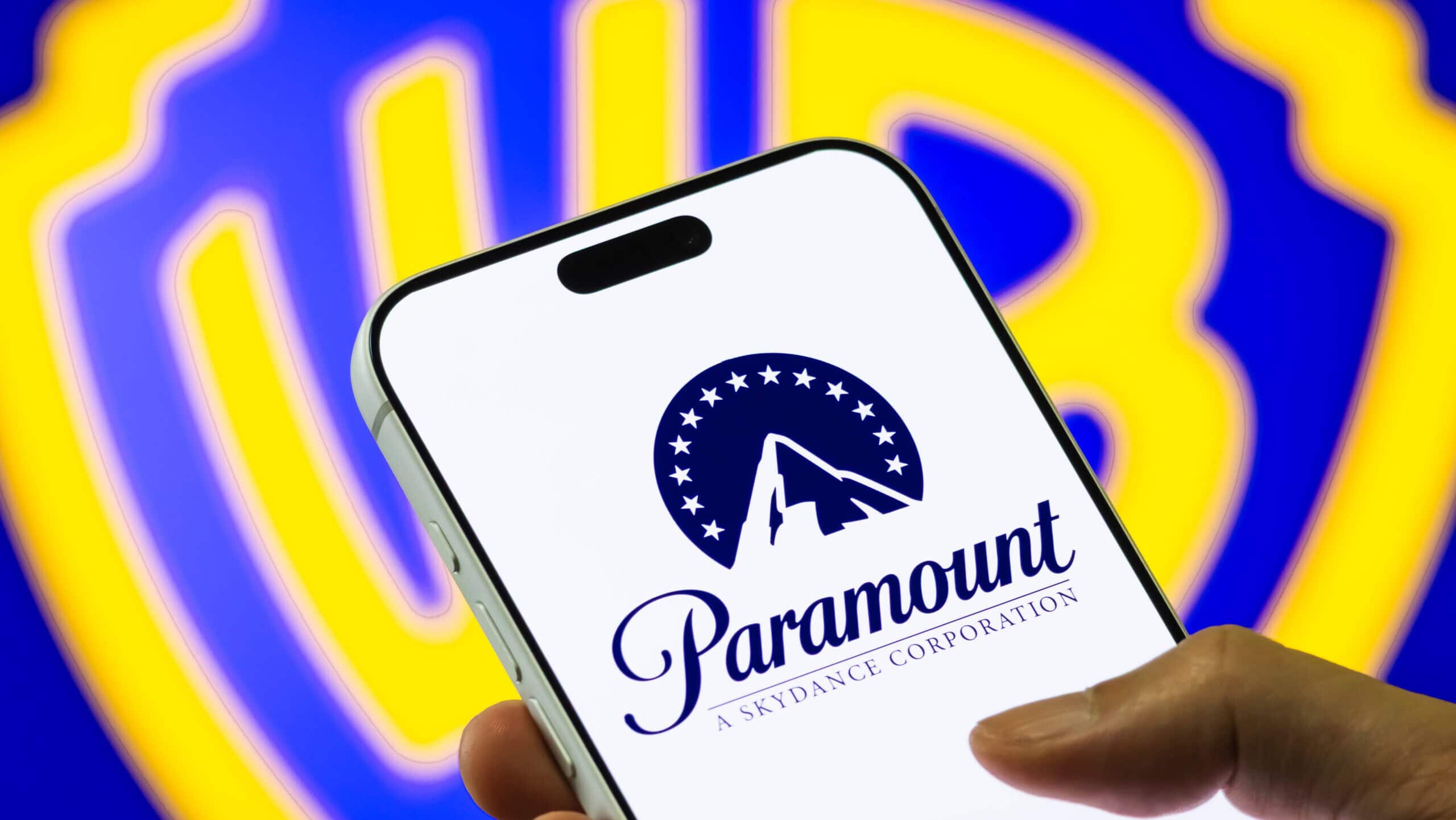
The hostile offer may outmuscle Netflix on price, but WBD’s decision hinges on competing futures: a clean reset under Paramount or a deeper strategic alignment with the world’s dominant streamer.
Netflix barely had time to celebrate its deal on Friday before Paramount stormed in with a hostile counteroffer for Warner Bros. Discovery — one that’s bigger, cleaner, and built to disrupt the industry.
At $30 per share, the all-cash bid values WBD at $108 billion, nearly $18 billion more than Netflix’s mix of cash and stock. It’s the kind of number that makes Wall Street perk up. But here’s the thing about deals of this scale: the biggest check doesn’t automatically win. If it did, corporate America would be locked in endless bidding wars. What matters is certainty, strategy, and the future the acquirer is selling. Right now, Paramount and Netflix are pitching two very different versions of what WBD’s next chapter could be.
Paramount’s Pitch: Take the Cash, Skip the Chaos
Paramount’s offer is deliberately straightforward: Buy all of WBD, including the global networks segment, and pay every shareholder in cash. No collars, no leftover linear TV company, no exposure to Netflix’s stock price. The offer is fully financed, backed by the Ellison family and RedBird Capital, with $54 billion in debt commitments ready to go. Paramount argues that Netflix’s deal is too complicated, too risky, and too slow. It leaves WBD shareholders with a highly leveraged cable business and a payout tied to Netflix’s future performance. It invites a lengthy, multi-country antitrust review for a company that “would entrench its monopoly with a 43% share of global Subscription Video on Demand (SVOD) subscribers,” Paramount reported in a press release.
But Netflix is selling something Paramount can’t: a strategic future. Their proposal pulls Warner Bros., HBO, and Max under the world’s most powerful streaming engine. It’s a merger that reshapes the competitive landscape for decades, and that kind of alignment carries weight inside a boardroom. Netflix doesn’t want WBD’s entire empire. It wants the crown jewels: the studio, the franchises, the brands. What’s left behind — the overleveraged Global Networks business — becomes a separate company for WBD shareholders to manage. That structure is messier, but strategically coherent. And despite the antitrust concerns, Netflix is betting that regulators ultimately see streaming as a global, competitive market rather than a U.S.-only consolidation play.
The Industry’s Mood: Chatter and Curiosity
Paramount’s offer hit Hollywood and Wall Street like a plot twist, not because they made a bid — everyone knew they were circling WBD — but because they went public after claiming WBD ignored six proposals. Netflix’s co-CEOs even said they expected a move like this.
Dealmakers and analysts are split. Shareholders are drawn to the cash premium, especially after years of watching WBD’s stock underperform. Creators tend to lean toward Paramount, seeing it as the option that avoids giving Netflix even more control over the content pipeline. Strategists, meanwhile, worry about the heavy debt load a combined company would carry. And regulators, at least privately, seem far more comfortable with a Paramount–WBD merger than a Netflix–WBD one. Still, almost everyone agrees on one thing: this has instantly become the most high-stakes takeover battle Hollywood has seen in years.
Netflix’s stock barely budged when it announced its acquisition on Friday, a sign investors saw the deal as ambitious but not reckless. After Paramount’s bid, Netflix’s stock dipped slightly, reflecting the market’s fear of a bidding war or a prolonged fight that could push Netflix into higher concessions. Still, the pullback was mild. Investors don’t yet believe Paramount can pry WBD loose. But they do believe Netflix may have to defend its offer more aggressively.
What Does WBD’s Future Hold?
Paramount has unquestionably complicated Netflix’s plans. A fully financed, all-cash offer for the entire company is a hard thing for any board to ignore. It’s cleaner, faster, and carries far less regulatory uncertainty. But Netflix’s deal still has the strategic edge. If WBD wants to bet on scale and long-term positioning, Netflix offers a future that Paramount — even with new leadership and deep-pocketed backers — can’t match.
This decision won’t come down to who offered more money. It will come down to which future WBD’s board believes in:
- A cash-rich reset with Paramount, or
- A platform-powered transformation with Netflix.
And until WBD shows its hand, expect both companies and the entire industry to hold their breath.
Read More:
Aaron Judge Names Jazz Chisholm, Austin Wells, Ryan McMahon as Yankees X-Factors

Aaron Judge Emulated His Game After Barry Bonds, Albert Pujols, Miguel Cabrera

Aaron Judge Opens Up to Kevin Durant on Yankees Expectations, MVP Mindset & MLB Journey
Kevin Durant Reflects on a Life Centered Around Basketball
Kevin Durant Looks at Anthony Edwards, Luka Dončić as Next All-Time Scoring Threats