
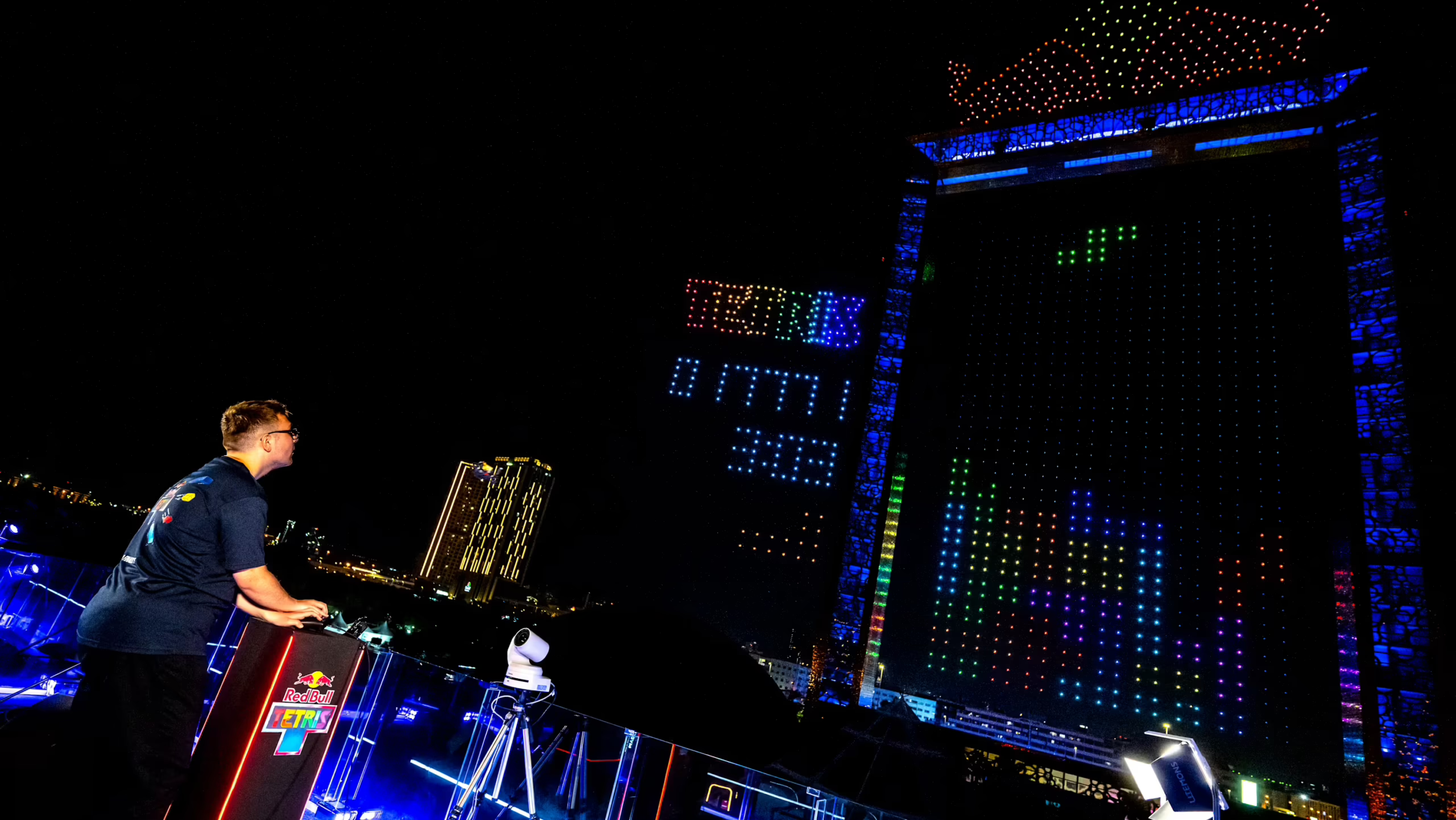
At the Red Bull Tetris World Final, a 40-year-old puzzle game stepped off the screen and into the sky via thousands of drones, proving simplicity, not spectacle, is what gives Tetris its staying power.
When I joined Red Bull in Dubai to see the championship Tetris matchup come to life, I wasn’t there to learn how the event worked; I was there to feel what it meant.
The mechanics, the drones, the engineering feats were going to get documented regardless. What mattered more was the sensation of watching one of the most enduring games in history step off the screen and into the sky, without losing the gaming cultural pull that has kept people playing it for more than four decades.
The Red Bull Tetris World Final wasn’t just a tournament. It was a cultural experiment: What happens when a game built on simplicity, repetition, and focus is scaled up to a global stage — and a literal skyline — without breaking its purpose.
A Game Built on Simplicity
Tetris has always occupied a rare space in gaming culture. It’s not tied to a single device, generation, or type of player. People play it on consoles, PCs, and phones with equal comfort. It can be competitive or meditative, casual or obsessive. Few games move so fluidly between platforms, or between moments of boredom and moments of mastery. That universality was reflected in Dubai, where players from more than 60 countries gathered for a World Final that felt less like a conventional esports event and more like a shared cultural moment.
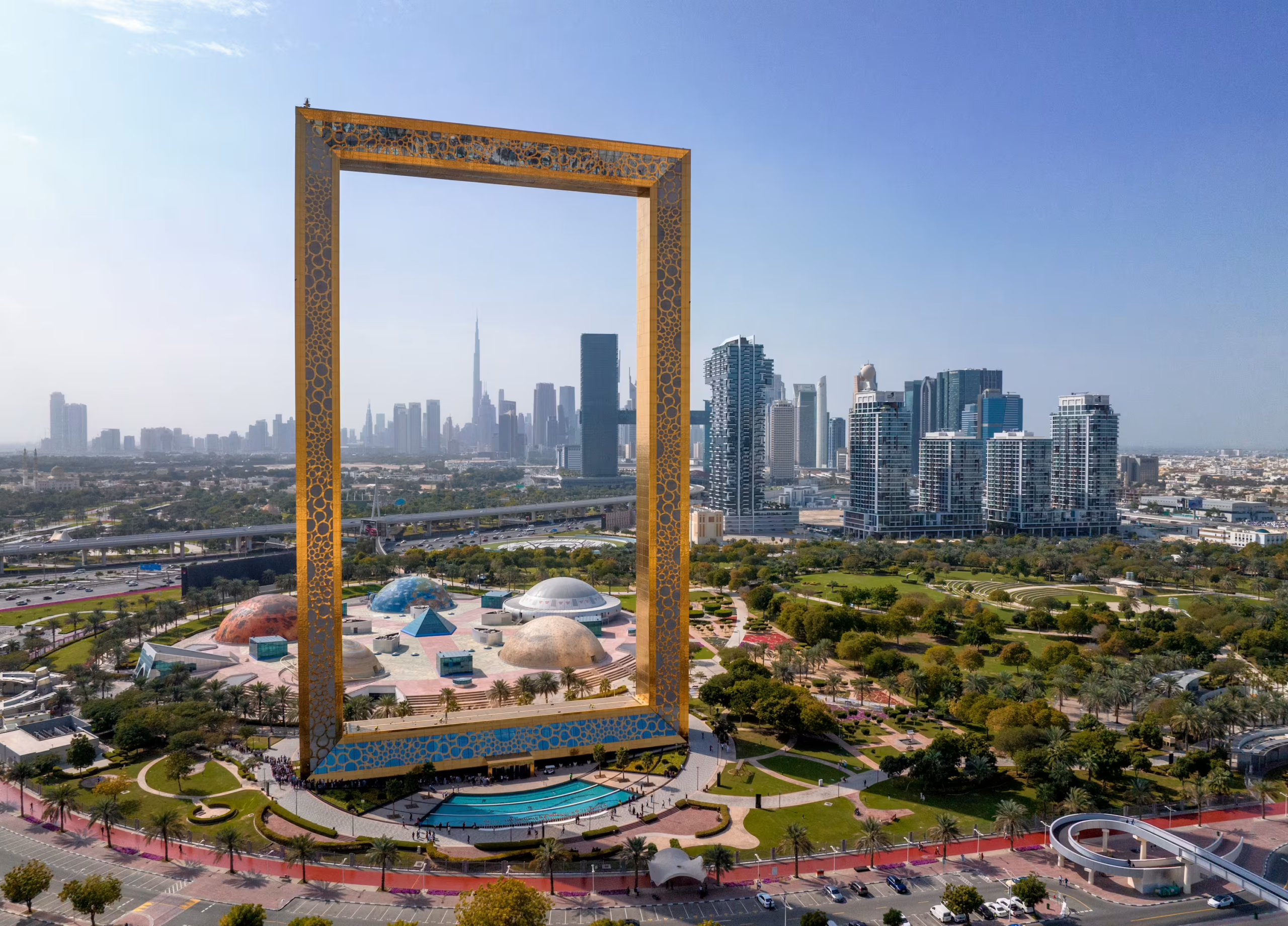
At its center was a live, head-to-head championship match between Turkey’s Fehmi Atalar and Peru’s Leo Solórzano. This event marked the first time Tetris had ever been played as a live, free-standing game in open airspace. Every move the players made was mirrored in real time by thousands of drones arranged inside the Dubai Frame, transforming falling Tetriminos into something physical and collective. It was history-making, yes, but it was also strangely intimate.
That intimacy is what has allowed Tetris to last.
“Tetris has endured because Alexey Pajitnov created the perfect game,” Maya Rogers, CEO of The Tetris Company, told Boardroom. “Its simplicity makes it instantly intuitive, its depth makes it endlessly challenging, and its design makes it universally appealing across generations, gender, and culture. The combination of simple rules, infinite replayability, and accessibility on every platform has allowed Tetris to grow into the global icon that it is today.”
That idea, accessibility without dilution, sits at the core of Tetris’ longevity. As platforms have multiplied and gaming habits have shifted, the game hasn’t needed reinvention so much as careful stewardship. For Rogers, who took over the company from her father, Henk, that responsibility is both personal and strategic.
“Our philosophy is to innovate without losing the heart of what makes Tetris special,” she said. “Tetris is timeless and universal; it satisfies the human need to create order out of chaos. Whether we expand into new platforms, new formats, or new technology, the guiding principle remains the same: preserve the core experience — the 7 Tetriminos, the satisfying gameplay, the iconic music — while finding creative ways to invite new audiences into the brand.”
That philosophy shaped how the Red Bull partnership came to life. The World Final didn’t add narrative layers, characters, or gimmicks. Instead, it changed the canvas. The game remained the same; the setting did not.
From a cultural perspective, that distinction matters. In an era where spectacle often overwhelms substance, the Red Bull Tetris World Final used scale to amplify familiarity rather than replace it. The drones didn’t distract from the gameplay; they made its rhythm visible. The tension of stacking blocks, the panic of a misaligned piece, the relief of a clean line clear, all of it played out at city scale, but with the same emotional cadence players have felt since 1984.
What Tetris in the Sky Signals About Longevity
That emotional consistency traces directly back to Pajitnov, who originally created Tetris purely for fun.
“It brings me back to a very simple moment,” Pajitnov said when reflecting on the World Final. “A small room, a primitive computer, and curiosity. The first version had no real graphics, only text symbols, but when the blocks began to move and interact, they felt alive. I remember realizing very quickly that I could not stop playing it, even before the game was finished. That was the first signal to me that something special was happening. Seeing it now on a global stage reminds me that Tetris was never about technology. It was about the relationship between a person and a screen.”
That relationship has survived because Tetris never tried to be anything other than what it is. It doesn’t rely on story or spectacle to remain relevant, and that’s precisely why it can scale so effectively when spectacle is introduced thoughtfully.
“What surprises me most is how long it has remained meaningful,” Pajitnov said. “Many things are successful for a short time. Tetris continues because it never depended on a story, characters, or trends. It is abstract, neutral, and human. People project themselves into it. That quality allows it to survive changes in technology and culture without becoming old.”
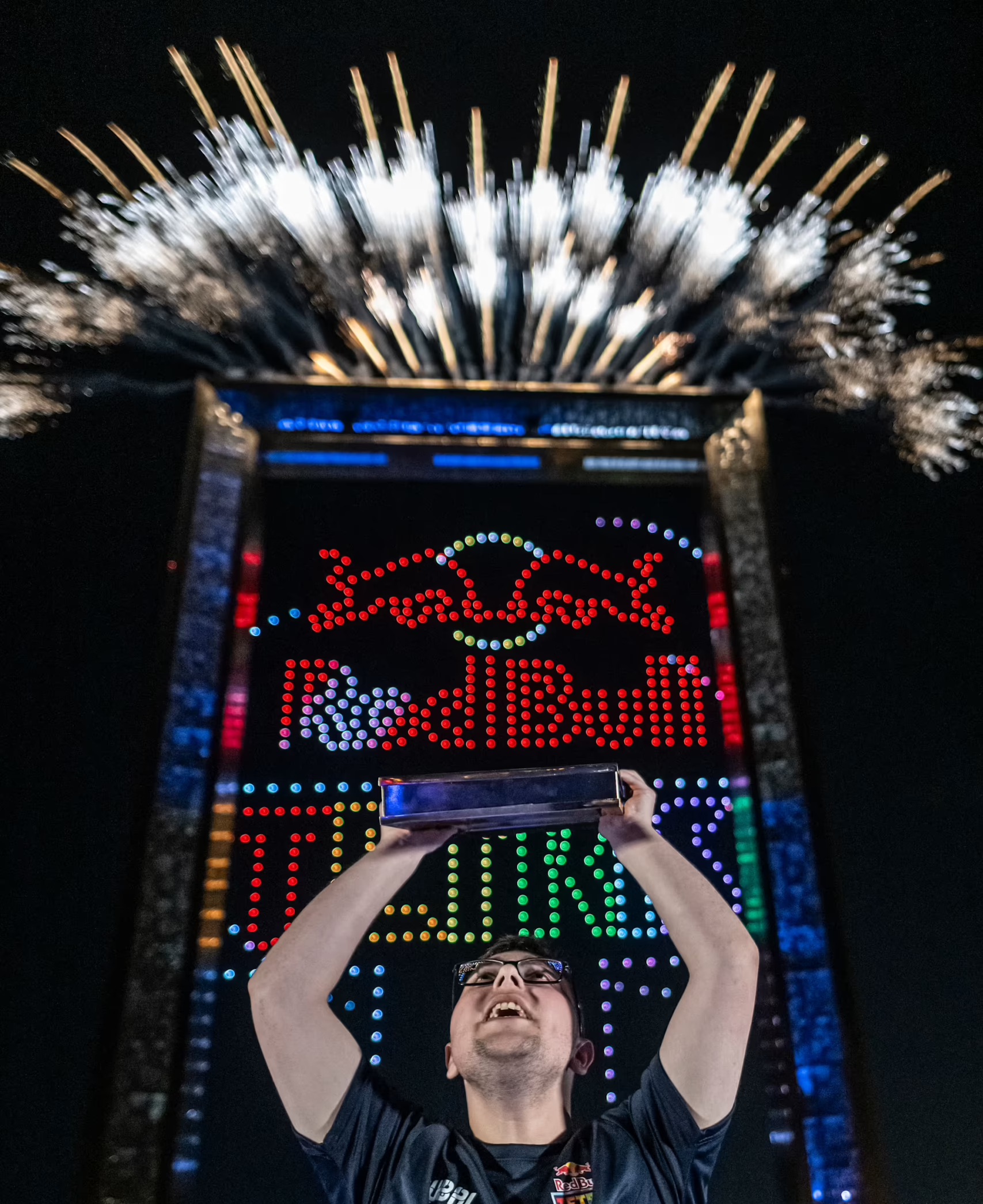
Dubai underscored that point. While the drones represented a year of preparation, custom-built systems, and real-time synchronization, those details faded into the background once the game began. What remained was the familiar logic of Tetris — order emerging from chaos, one decision at a time.
“No, never,” Pajitnov said when asked if he ever imagined something like this. “At the beginning, I was focused only on the screen and the brain behind it. The idea that Tetris could exist physically in the sky is far beyond what I imagined. But what I find beautiful is that even at this scale, the experience is the same. The shapes, the rules, the logic all remain familiar. Only the canvas has changed.”
That line could serve as the thesis for the entire event. The Red Bull Tetris World Final didn’t redefine Tetris; it reaffirmed it. By resisting the urge to overcomplicate, the event highlighted why the game continues to resonate across consoles, PCs, and mobile devices.
“For me, it represents the joy of creation without destruction,” Pajitnov said. “Tetris is a constructive game. You are always trying to fix something, to bring order out of chaos. Seeing that idea celebrated globally tells me that this instinct is universal and still very powerful.”
Standing beneath the Dubai Frame as blocks formed and vanished above, that universality felt tangible. Tetris didn’t need an explanation, even at this scale. People understood it instinctively — just as they always have.
In a media landscape obsessed with what’s next, the Red Bull Tetris World Final offered a reminder of something quieter and rarer: longevity earned through design, restraint, and trust in the player. Forty years on, Tetris still fits — no matter the screen, the platform, or the sky.
Read More:

Now That Paramount Has Outbid Netflix, What’s the Plan for Warner Bros.?

Inside the Making of the Coolest Golf Collab of the Year (So Far)

Shaun White’s Second Act: Redefining the Business of Snowboarding

Beyond the Game: Chris Paul, Candace Parker, and Kristyn Cook on Legacy & Leadership
Floyd Mayweather-Manny Pacquiao Set For Rematch on Netflix