Boardroom’s Michelai Graham breaks down Derek Cianfrance’s strange-but-true heist story about a man who hid inside a Toys “R” Us, and how producer Jamie Patricof helped turn it into a film about guilt, grace, and second chances.
Sometimes a true story is so strange that Hollywood can’t resist turning it into something bigger, funnier, and more heartfelt.
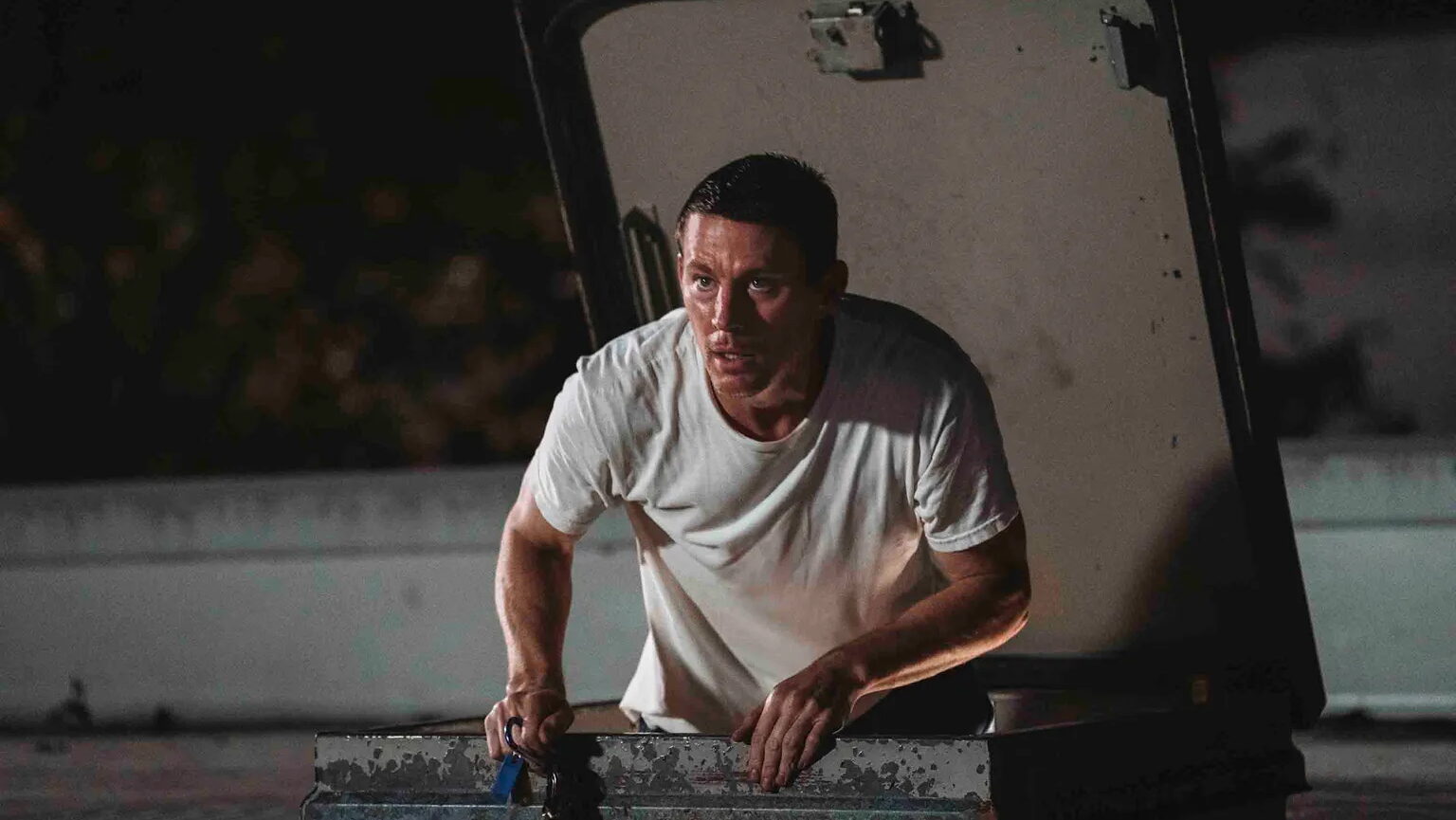
Roofman, directed by Derek Cianfrance (Blue Valentine, The Place Beyond the Pines), tells the bizarre yet deeply human story of Jeffrey Manchester, a former Army ranger who escaped prison and secretly lived inside a North Carolina Toys “R” Us after planning a string of rooftop robberies.
The film opens with a bang, literally, as Channing Tatum’s Jeffrey breaks into a McDonald’s through the roof, armed with precision and politeness. Within minutes, we learn he’s the “nice guy” criminal. He locks employees in a freezer but gives one his coat to stay warm. He’s not ruthless; just desperate. Discharged from the military and struggling to provide for his daughter, Jeffrey turns his uncanny ability to “see things other people don’t see” into a misguided survival skill.
It’s this duality — between ingenuity and guilt, tenderness and crime — that drives Roofman. The movie uses humor and absurdity to peel back a deeper story about forgiveness, the American justice system, and the human instinct to create home wherever possible — even inside a toy store ceiling.
A Producer’s Perspective
I had the chance to host a Q&A with producer Jamie Patricof during a special screening of the film hosted by the Boardroom Members Club. Patricof has worked with Cianfrance for more than two decades, from Blue Valentine to I Know This Much Is True. When I asked what drew him to Roofman, his answer was simple:
“Someone comes to you and says there’s a story about a guy who robbed almost 50 fast-food restaurants, got arrested, broke out, and lived in a Toys ‘R’ Us for six months,” Patricof, said, “if you don’t find that interesting, I don’t know what you’re gonna find intriguing.”
Patricof shared that Roofman was a five-year process from start to finish, which is unusually fast by Hollywood standards. Cianfrance spent hundreds of hours speaking with the real Manchester from prison, piecing together his story with empathy and skepticism in equal measure.
“Derek told me Jeff liked to call him ‘Doctor Derek’ and said he’d lie down during their calls, like he was in therapy,” Patricof jokingly shared.
Beyond the humor, Patricof spoke deeply about what the story represents. While Roofman is undeniably entertaining, a slick blend of crime, romance, and dark comedy, he hopes audiences look deeper.
“It’s a lot about forgiveness,” he said. “It looks at justice, at family, and it finds humanity in someone who made terrible choices.”
Throughout our conversation, Patricof emphasized how difficult it still is to get an offbeat story like this financed. Despite its A-list cast, Roofman wasn’t easy to make. It’s a reminder that even seasoned producers fight uphill battles for originality.
Inside the Toy Store
The world inside the toy store is a character of its own.
Production designer Inbal Weinberg (a frequent Cianfrance collaborator) worked with crews to transform a long-abandoned big-box store into a fully realized late-’90s retail space, complete with 2,000 ceiling lights, linoleum tiles, retro signage, and rows of period-accurate toys that would’ve lined shelves in 2004, when Manchester was actually living in hiding.
Every inch of the store buzzes with the warm fluorescence of an early 2000s era, an amber-tinted memory of consumer joy. There’s a faded Geoffrey the Giraffe banner dangling above the registers, dented red shopping carts lined in uneven rows, and an entire bike aisle. The filmmakers reportedly found a defunct Toys “R” Us location stripped of copper wiring and tiles, then rebuilt it from the ground up over several months, sourcing toys and signage from eBay, collectors, and vintage warehouses to recreate a space that felt as lived-in as it did lonely.
The setting also captures the real timeline of Manchester’s crimes, between 1998 and 2004, when he robbed dozens of McDonald’s restaurants across the South before his first arrest. By rooting the story in that pre-smartphone, pre-surveillance boom era, the film evokes a strange tension: a world where technology existed, but not enough to close every blind spot. The result is a surreal nostalgia trip — bright, plastic, and eerily safe on the surface, but underneath, it’s a perfect hiding place for a man quietly building a home between the walls.
Performance Check
Tatum shoulders this movie with surprising restraint. He trades in his usual charm for stillness; a performance that’s patient, physical, and quietly expressive. As Manchester, he moves through scenes like a man carrying invisible weight. His body language tells you everything you need to know before he says a word: the slump of his shoulders, the hesitant eye contact, the way he softens in moments of care. When he watches his daughter ride the bike he couldn’t afford to buy without stealing, Tatum doesn’t force the emotion; it just settles in naturally, a mix of pride and regret that lands hard.
Kirsten Dunst brings a steady calm to the film as Leigh, the grounded, good-hearted Toys “R” Us store employee who unknowingly falls for Manchester. Her performance isn’t showy or sentimental, which makes it all the more effective. She feels like a real person with responsibilities and limits, someone whose kindness doesn’t erase her awareness of the world.
On paper, Dunst and Tatum might seem like an odd pairing; I honestly never imagined the two sharing romantic chemistry on screen. But that mismatch works in the film’s favor. Their connection feels refreshingly honest because it isn’t dramatized or romanticized; it’s rooted in small gestures, quiet understanding, and the mutual loneliness of two people pretending to be okay. They meet each other halfway, and that restraint makes their relationship believable.
Peter Dinklage adds some dry humor as the overworked store manager, Mitch, while Ben Mendelsohn and Uzo Aduba bring subtle depth to supporting roles that expand the film’s emotional reach. Juno Temple and LaKeith Stanfield make brief but memorable appearances, rounding out a cast that feels lived-in and cohesive, like real people caught in an unbelievable situation.
Final Thoughts
Roofman is equal parts absurd heist film and tender character study. Tatum and Dunst’s chemistry anchors the chaos, while Cianfrance’s filmmaking continues his career-long obsession with flawed men chasing impossible redemption.
When Roofman hits theaters on Oct. 10, audiences may come for the wild true story, but they’ll stay for the aching humanity that hides between its walls.
Read More:

Drake’s ‘Iceman’ Arrives at the Most Pivotal Moment of His Career

Isabela Grutman Is Building Something of Her Own
David Grutman: The Man Behind Miami’s Hotspots

What Is Plex? The Streaming Alternative That Turns Your Movie Collection Into Netflix
The Official Mom Movie Canon: 10 Films to Watch With Mom This Weekend