
NBA champion Pat Connaughton built a real estate empire in his free time. Now he’s helping others do the same.
This story appeared in Boardroom’s Summer Issue print magazine and has been adapted for online publication.
Pat Connaughton might have the best setup in the NBA. Over Zoom from an outdoor coffee shop in downtown Charlotte, the 11-year veteran currently playing for the Hornets isn’t disturbed once by the many passersby who come and go. It’s one of the best perks of the career he’s developed as a sharpshooting role player. He earned an NBA championship with the Milwaukee Bucks in 2021, playing an integral role as the sixth-leading minutes earner on the roster. There’s a good chance they don’t win that championship without his play. And yet, he can live a life of relative anonymity. “I get to have a job that I only dreamt of as a kid. I never thought I would actually be here. I hoped, I dreamed, but realistically, odds were probably stacked against me,” he explains. “I can sit at a coffee shop on the street, and unless you’re a basketball fan, you don’t really know who I am…. I got the best of both worlds.”
It’s a cush lifestyle. Not to mention that basketball might not even be what he’s best at. Connaughton is the founder and CEO of the real estate firm Three Leaf Partners, which he established during his time in Milwaukee and has watched skyrocket as he’s taken his talents southeast to North Carolina. For as good as Connaughton has proven to be on the court, the business he’s dealing with in his free time is on another level. “We did $175 million in development last year. Our portfolio is valued probably just over $600 million,” he explains. As for current business? Well, it’s booming. “We’ve got just over 1,200 units under construction as we speak…. We raised $75 million last year.”
As if Connaughton isn’t busy enough overseeing a real estate dynasty and helping the young and feisty Hornets continue to develop as a team, the Massachusetts-born baller (who was also drafted by the Baltimore Orioles in the fourth round of the 2014 MLB Draft) runs the Pat Connaughton Foundation. He and his team build basketball courts in underserved areas, looking to help kids foster the same skills he learned during his amateur days: “Teamwork, leadership, work ethic, discipline, accountability,” he explains. It’s perhaps the work he’s proudest of, the clearest way he’s made good on the career he’s built.
Below, check out our conversation, which has been edited for clarity and length.
What’s the elevator pitch for Three Leaf?
Connaughton: Most people in the NBA circle know I do real estate, but for a long time, there were a bunch of people that had no idea, except for my teammates. I grew up in the greater Boston area, and my dad was a general contractor. He had a very small business, Connaughton Brothers Construction, and they built. They built in the suburbs, they built in the city, they built whatever was asked of him because that’s how he provided for my family. I grew up around it. I was not one of these people destined to be a professional athlete going up through junior high and high school. In the summertime, I worked on his job sites. He taught me about the work ethic that it takes to fill dumpsters, haul Sheetrock up and down. If I didn’t pack the dumpster correctly and it caused him to do an extra dumpster run, that was money out of his pocket. There was the attention to detail…the things that no sixth, seventh, or eighth grader wants to be doing, but it starts to instill some values within you that you subconsciously adopt.
I had some money going back for my senior year, and we flipped a home just off campus. I lived in it my senior year. We did the kitchen and baths. We sold it after my senior year, and I got to see the value that was created. You put in 150 grand, including fixing-up fees and stuff, and then you sell it for 180 grand or whatever the final cost was. It was a great learning experience for me to actually have some equity within a project. I did the same thing my first two years in Portland. I didn’t play a lot my first year. My second year, I played a little bit when a few guys got injured, but I got to flip two more homes with him.
When I got to Milwaukee, my fourth year, the ownership group was from a hedge fund, private equity. All they do is take on outside capital. I picked their brains a little bit and I just started to realize, Hey, I’m not on a CJ McCollum-size contract. I can only do so many projects at one time with my own capital, but I enjoyed the educational component of talking to my teammates about why I did what I did and how it was benefiting me now and would benefit me in the future. I took on a few guys.
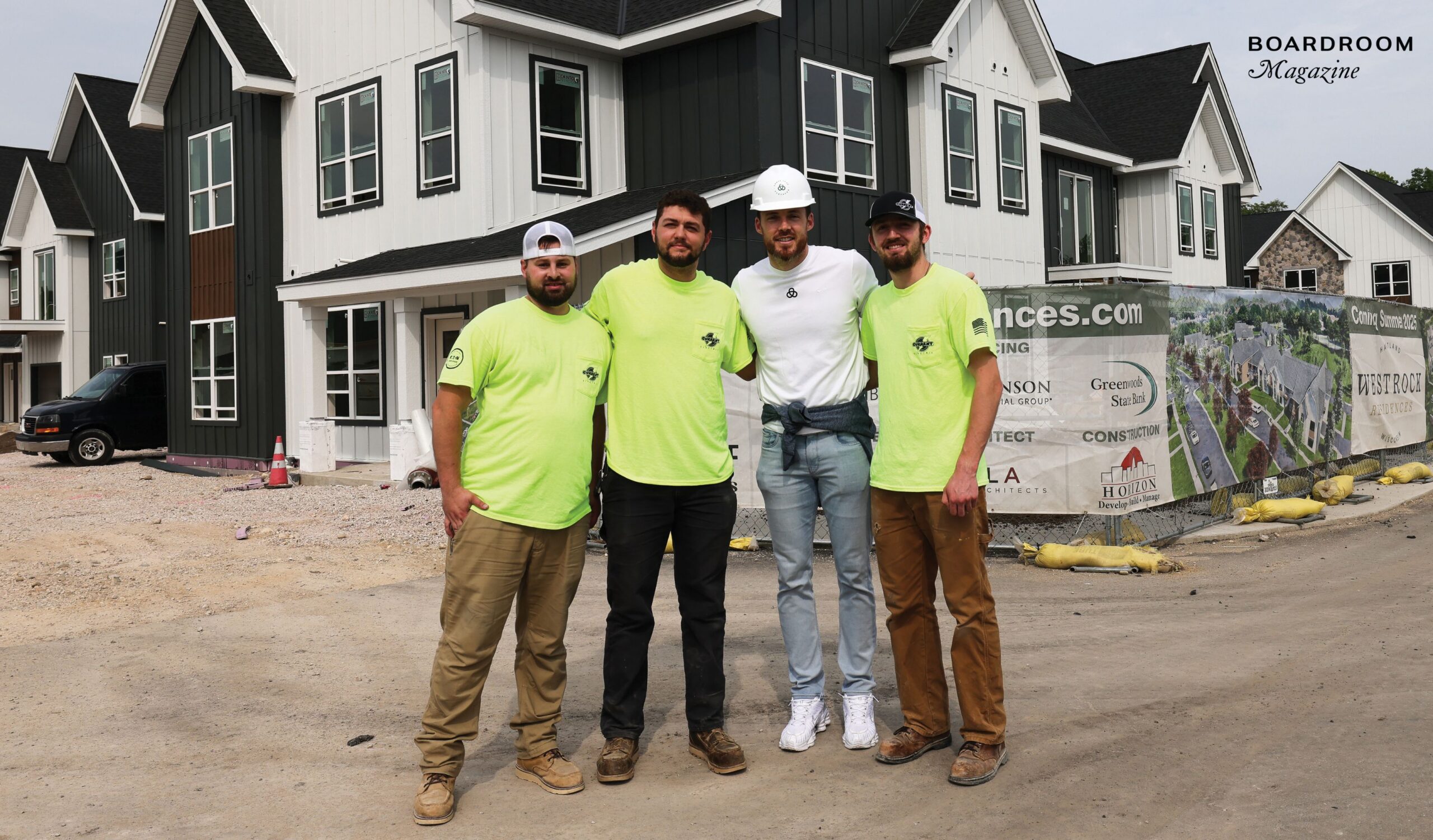
It was cool to invest alongside professional athletes. I did that for a couple years. When the bubble happened, I raised 10 million bucks between a mixture of pro athletes and businessmen and women. That’s when I was like, Oh, shit; this is real and there’s something here. We did four -unit buildings, we were doing a 28-unit building back in South Bend. Around that time, when I got to Milwaukee, I had met a guy named Matt Burow, who’s my current business partner in Three Leaf.
Matt has a general-contracting background. He built a GC business in Milwaukee. He has the same skill set that my dad has. We met through a philanthropic initiative to give back to the inner city in Milwaukee. He was like, “I’d like to get more into development and less into construction.” I saw the value of construction. If you understand construction, it is a huge competitive advantage as a developer. The cost of a two-by-four to build a home in New York is far different than it is in Charlotte. The pair of Nikes I’m wearing are the same in New York as they are in Charlotte.
You can get taken for a ride if you don’t understand it, if you don’t know how to build and you don’t know the cost of things. I saw value in that because of my father. I saw the same value in Matt, and Matt had built up this pipeline of potential projects because of the clients he was building for on the construction side. I had built this platform where we could raise capital and we could utilize our platform for more than just the bottom line. It’s a long-winded way of saying that Matt and I came together back in 2021, the year we won the championship. That’s when Three Leaf really started, though I obviously started it back in 2015.
Has it been difficult to run a business based in Milwaukee since you’ve been in Charlotte?
Yes and no. Obviously, I enjoy the office camaraderie. We have 19 employees now. We did $175 million in development last year. Our portfolio is valued probably just over $600 million. We’ve got just over 1,200 units under construction as we speak. There are definitely a lot of moving parts. We raised $75 million last year. Those are things I can do virtually, but there are definitely things that lack a little because I’m not in person. I dealt with it right when Matt and I came together. When I raised $10 million, I had financial advisors asking me who’s looking after their client’s money and I said, “Me.” They’re like, “No, no, no. I see you on the court every other night. Who’s doing it full-time?” We built out a great executive team. I have a chief development officer, a chief investment officer, a chief legal officer. We have a director of HR. We have tax and accounting in-house, as well as utilize a third party for some of the K-1s and things that we need to make sure are done without conflict of interest. We have other development leads, we’ve got investor relations. We’ve built out an executive team and a team beneath them.
There are a lot of different ways to invest your money as an NBA player. You could have parked it in some index funds, let it grow that way. What made this path so appealing to you? It must have been about more than just a return on your investment, I imagine?
Working with my dad to start and learning from him was awesome. There was an organic, authentic interest from me because of how I grew up working on those job sites. I’m biased in giving you this second part of the answer, but I think as a professional athlete, a person that has an income from a day job and a healthy income at that, investment in real estate is a perfect alignment of trajectory. It’s not going to be venture capital where you 100-x your money, but you also lose on the 15 other investments you had. It’s going to be a slow, steady growth, but it’’s growth in two ways.
We do multifamily projects. We’ve grown from the 28-unit buildings. We don’t do anything under a hundred units anymore. Our last project was 267 units, so it’s anywhere from 100 to 250 units at a time. We try to do four projects a year. At any point in time, we have between 600 and 750 units under construction. We look at it as a wealth creation in the short run because of the appreciation. We’re creating all that value because we handle the construction and we’re building from the ground up. We built something for $70 million, which was our last project’s total cost. Right when it’s done and it starts to get stabilized, that thing’s probably worth $80, $82 million. There’s already appreciation value there, but then we’re looking at the cash flow of it.
My peers, we’re going to stop playing basketball, baseball, football, hockey. We’re going to stop playing sports someday. What does life look like after sports? Why were there athletes that were literally going broke? Part of it is because when your career is over, the way that you spend money doesn’t change, but your income severely changes. This is an investment for when your career’s done. You may not notice the 7% on the $100,000 that you invested and the $7,000 that comes in on a yearly basis in the first year and the second year and the third year. But if you continually consistently invest that $100,000 one year, $200 the next year, $300 the next year, all of a sudden your career’s over and we’re paying down debt, so your cashflow’s only going up.
Are there any NBA players you can name that you’ve helped guide on their own real estate journey?
I try to keep some anonymity in it for guys who care about it because you’re never going to come out unscathed. There are going to be neighbors, there are going to be municipalities that don’t like what you’re putting up. I know guys sometimes get attacked because of who they are and what their balance sheet is and stuff. I try to keep it anonymous for the most part, unless they give me permission. CJ McCollum was my third investor ever, and he’s continued to invest with me year after year. He’s mentioned it publicly. He’s somebody who obviously has a business portfolio of his own and does a lot of things outside of basketball.
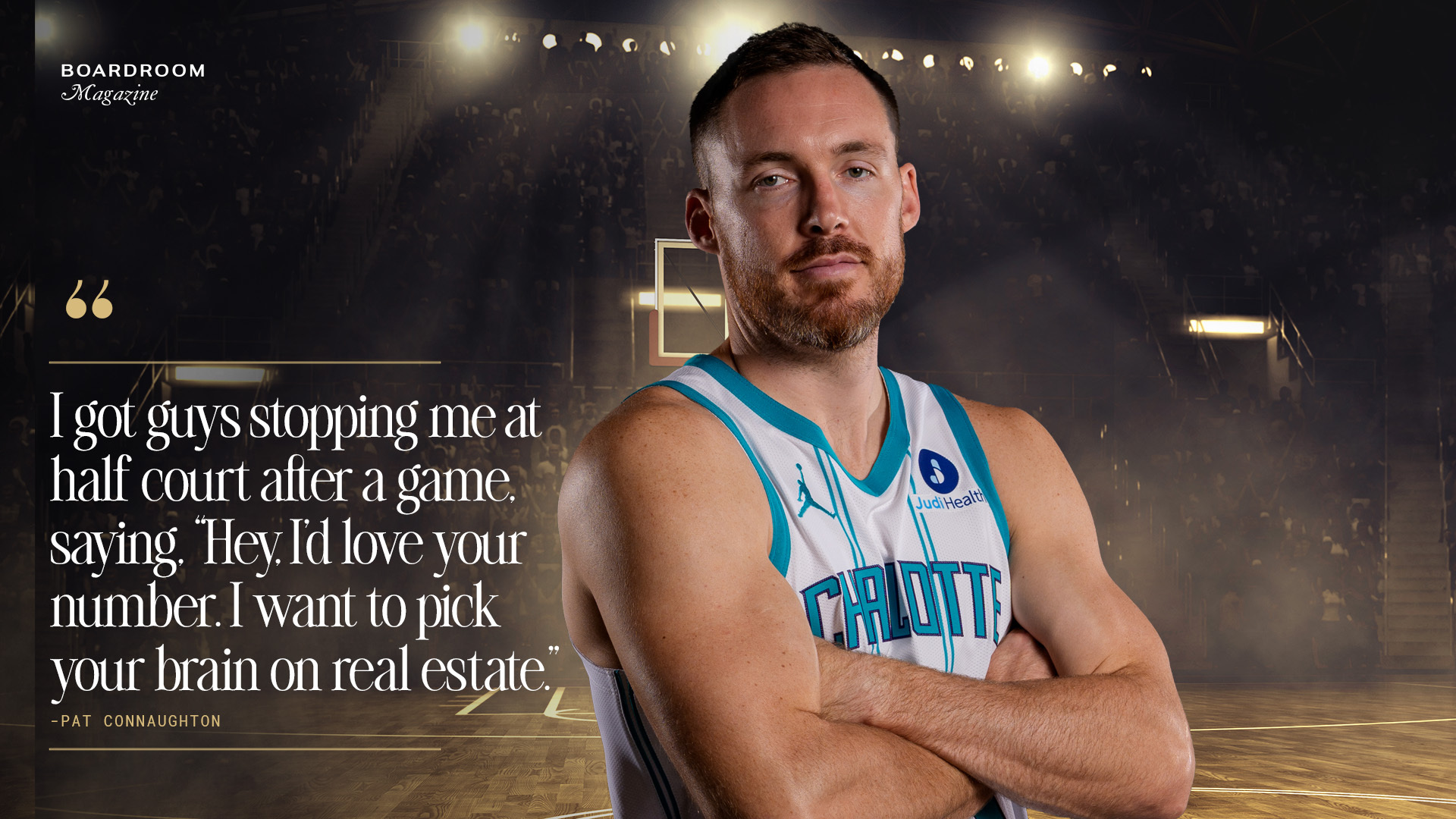
We have 62 athlete investors across all four major American sports, and then we have about 240 total investors. So we look to continue to grow that number. I think over the last two to three years, the athlete number has started to grow even more as far as the reputation that I’ve gotten. I got guys stopping me at half court after a game saying, “Hey, I’d love your number. I want to pick your brain on real estate.” There are guys that haven’t invested yet that have a desire to. I always tell athletes, “Look, we don’t have a minimum. I’m not here to tell you that you have to put in $100,000 in order to be involved.”
For me, it’s about, What are you comfortable with? This is extra. This is an investment. I don’t know everyone’s lives and what they spend money on or who they take care of or what they’re capable of investing. I want them to be comfortable. I want them to have a good experience. I want them to learn. I want them to come by the jobsites. I got guys that come by the jobsites, throw on a hard hat, and walk through something. They say, “I own part of this.”
What’s the philosophy behind your foundation? What are you trying to do with it?
I technically started the foundation during my first year in the NBA. I didn’t have anything going on. I wasn’t playing a lot. The house flip was one. As much as I was in the gym, you got a lot of time on planes, a lot of time in hotel rooms. I always said, if I’m fortunate to become a professional athlete, I want to give back to the people in places that helped me get there. I didn’t get here on my own. That was the genesis of the foundation: sports. I played two sports in college. I played two sports professionally. I played three sports in high school. I saw the value that sports brought at such a young age. There were things that extended far beyond the playing surface: teamwork, leadership, work ethic, discipline, accountability. I got taught those things from my parents as well, but sports really helped me with them, too.
I wanted to start a foundation that gave back to that next generation of student-athletes. I thought there was a lot of technology that was taking away from youth sports. I thought youth sports had become a little bit too much of a business that was putting the business interests of the owners of the programs above the actual benefit and dreams and aspirations of the youth athletes themselves. I started with clinics and camps. Then one of my good buddies who was the treasurer of the foundation for five years came up with the idea of Connaughton Courts. I can run two, three camps this summer, but I can’t run them during the season. There’s only so much of an impact I can have with the camps and clinics. A court is a tangible thing that can be utilized 365 days a year, and they can utilize it for other sports or for different things outside of athletics.
It’s had a much larger impact on that community. The impact went way, way beyond what we were able to do with the camps. We’ve donated 38 courts to date. We’ve donated over three and a half million dollars, $3.6 to be exact. We’ve impacted just under 150,000 student athletes with the courts. A basketball court can really change the lives of the local youth in that area. It can keep them off the street, it can keep them working together, and obviously it can keep them developing those translatable life skills at a young age.
Read More:
Keanu Reeves’ Next Act Is Built on Two Wheels

The Blueprint: Jessica Holtz Meets the Moment
The Power Broker: Emma Grede Is Just Getting Going

Quiet Power: Imani Ellis on CultureCon, Creators, and Learning to Let Go

The Long Game: How LeBron James and a Few NBA Friends Might Elevate the Game of Golf