
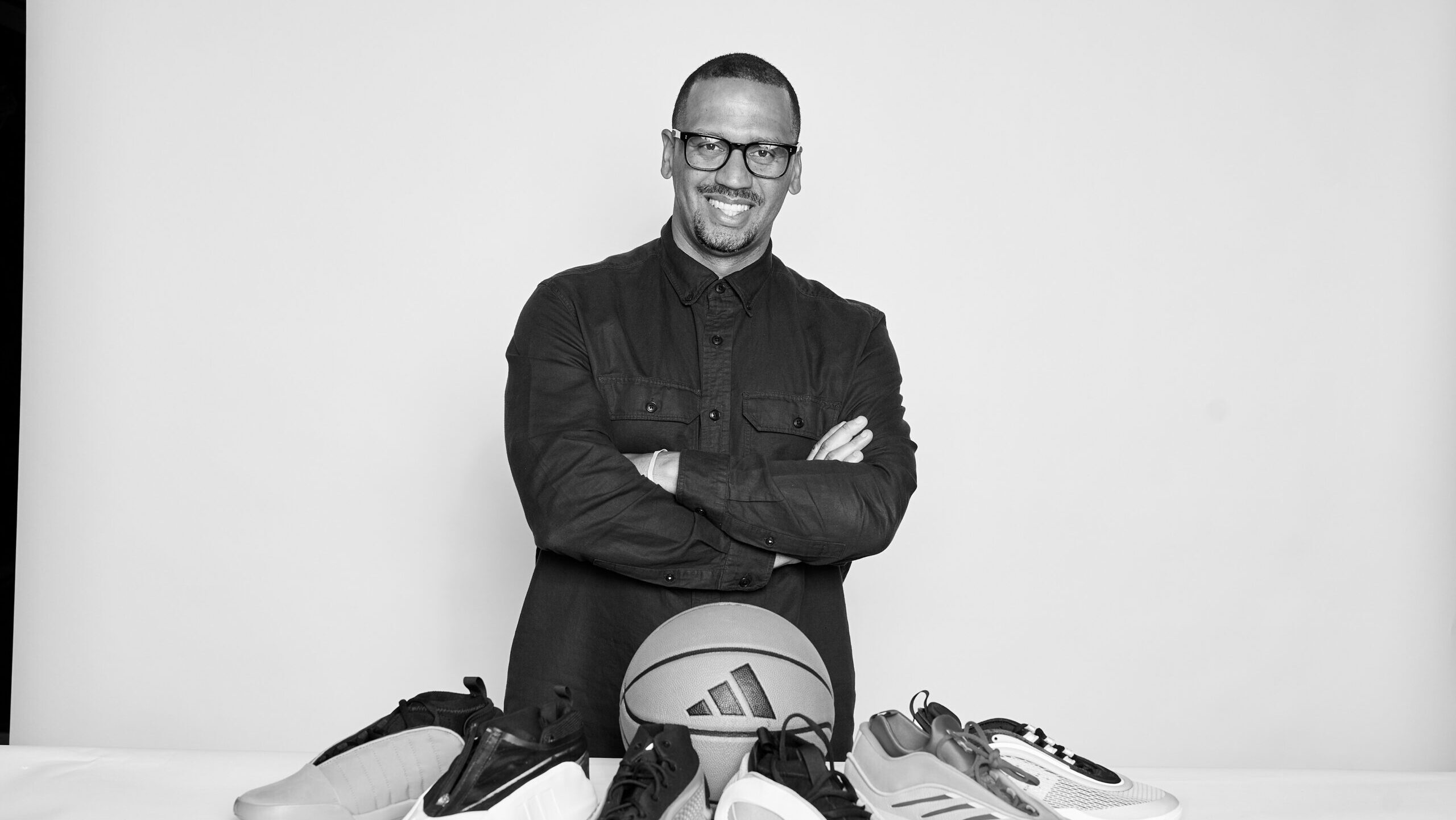
Jesser brings in former Adidas GM Eric Wise to help scale Bucketsquad, betting on speed, authenticity, and deeper real-world community engagement.
Eric Wise didn’t need a trend report to understand where media was heading — he saw it at home.
Traditional TV wasn’t fading in his household; it was already gone. His kids weren’t watching scheduled programming or flipping channels. They were on YouTube, consuming highlights and creator content on demand, every day. The shift wasn’t theoretical; it was happening in real time.
“I have four kids, so I have daily insights,” Wise said. “I can’t even get them in front of a television to watch normal TV.”
That perspective stuck with him. After years helping lead Adidas Basketball as the global general manager of the department — working with top athletes, building brand strategy, and operating at a global scale — he wasn’t looking to chase something new. He was looking to move closer to where culture already was. That’s what made joining Jesser and the Bucketsquad as its new President feel like the right move: “Just knowing where the space is going … it was right place, right time.”
From the outside, Bucketsquad, which now exists under newly formed parent company, JesserCo., already had what many brands struggle to build: a deeply engaged audience that feels connected to the people behind the content. But what stood out to Wise wasn’t just the scale; it was how that connection was built.
“He’s just a good guy. … There’s nothing performative about him. What you see is what you get,” Wise said of Jesser.
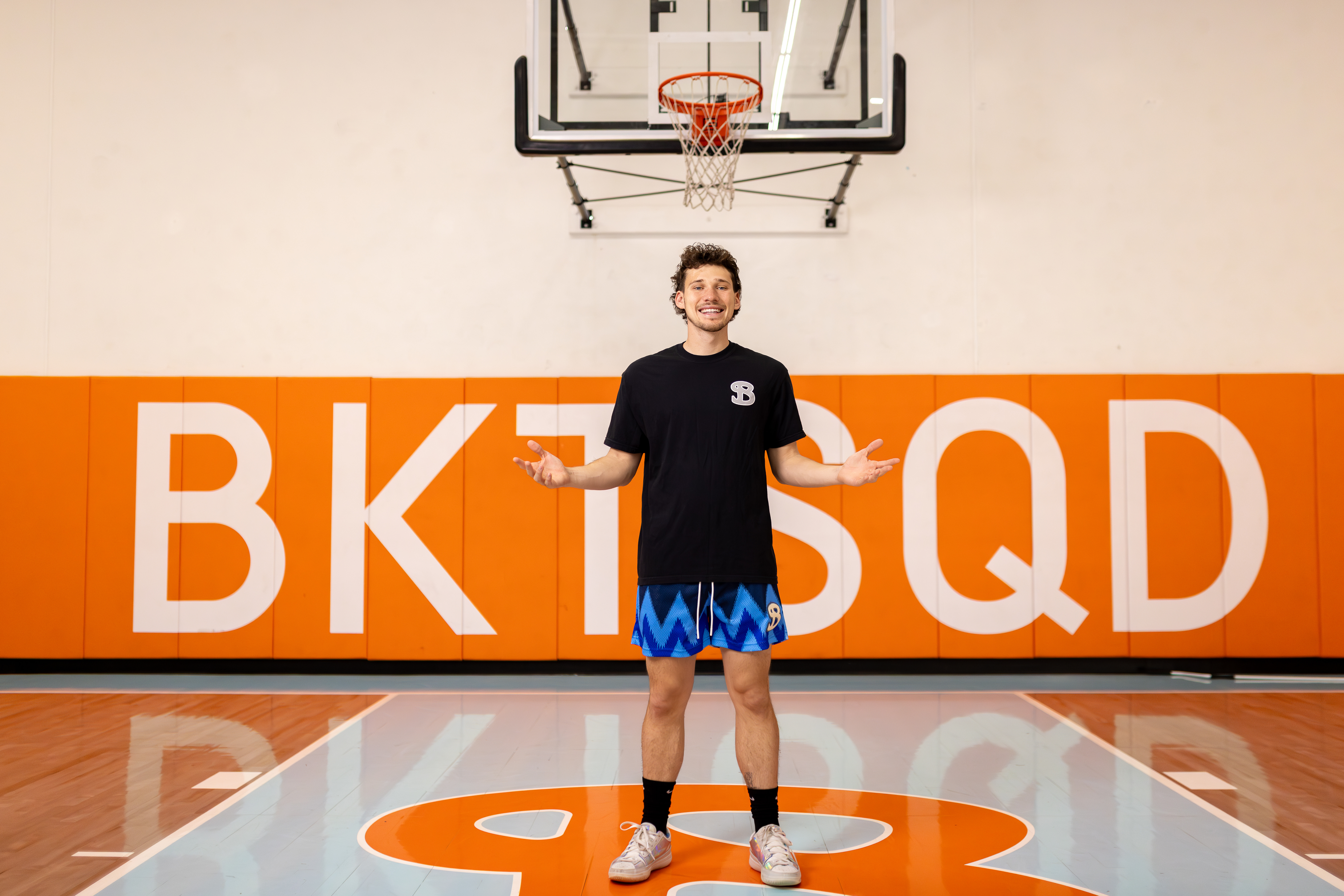
That authenticity is the foundation. It’s also what separates creator-led brands from traditional companies trying to replicate that connection from a distance. Because the real advantage isn’t just content — it’s proximity to the audience.
Creators live in a constant feedback loop with their communities. They’re always creating, always adjusting, always responding in real time. It doesn’t function like a campaign; it’s continuous: “It’s always on. It’s 24/7,” Wise said. “It’s not a job to them. This is kind of what they do.”
That kind of immersion is difficult for large organizations to match. It’s also why Wise believes creator-led brands have real staying power, especially when paired with speed. One of his early takeaways since joining has been just how quickly things can move: “The speed and agility that we can move at is even faster and more nimble than I thought.” Without the friction of a large corporate structure, ideas can turn into execution almost instantly. In a landscape driven by attention, that speed matters.
Still, the goal isn’t to overhaul what’s already working. It’s to build on it, especially by taking a digital-first community and making it more tangible.
“How do we do this in real life and really cement ourselves with that community?” Wise posed.
That’s the next step for Bucketsquad: translating online engagement into real-world experiences, products, and touchpoints that deepen the relationship with its audience. At the center of it all is the same quality that made Jesser resonate in the first place — accessibility.
“The one thing that makes his authenticity really strong … is just how attainable he feels to the kids,” Wise said.
It’s a different kind of influence, one built on relatability instead of distance. And as that model continues to grow, Wise sees no reason why creator-led brands can’t scale into something much bigger.
For now, his focus is simple: understand the culture, support the team, and clear the path for growth.
“We’re all really excited to bring Eric into the company,” Jesser said to Boardroom. “He understands product and brand at a high level, but he also gets the culture around this business and understands why people connect with Bucketsquad in the first place. For our team, that’s a big deal, and I think he’s going to bring a lot of energy and expertise to this next stretch.”
In a space defined by speed and connection, that might be the most important role of all.
This interview has been edited for length & clarity.
BOARDROOM: Before you joined, what was your perspective on this creator-led economy?
WISE: Yeah, I mean, I think for me, it’s easy. I have four kids, so I have daily insights. So, I know how they consume content, all the pieces that are written and the data that’s collected, I live it. I can see very clearly where the landscape’s going, just overall just how content’s being consumed versus old capable TV. And again, as I said, what my kids watch is every day, YouTube, and how they consume it. I can’t even get them in front of a television to watch normal TV. It’s really weird. They only watch sports because they’re all athletes, but outside of that, it’s just highlights and other content that’s on there. So yeah, just knowing where the space is going in general, having the opportunity to be at a company like this was the right place, right time. And I’m really stoked to be a part of it. Definitely know where it’s going and excited to be on it on the way up.
What was it about Jesser and this group and Bucketsquad and all of it that specifically made you want to jump in here versus maybe another creator?
I think it’s a couple of things you touched on. I think just the overall foundation that the Jesser brand and Jesser himself has built is a huge advantage. So I think that’s one. I think the other thing too is I’m a person who likes to be around people who are like- minded and just good people. I think that sometimes that goes unsaid and is maybe kind of assumed, but I think people learn the hard way most of the times when they’re around people that he doesn’t really kind of mix. So he’s just a good guy. I think he’s super authentic in what he does. There’s nothing performative about him. What you see is what you get, and integrity is a big thing for me. So our values align really quickly. And then the other thing too, I mean, coming from my background just in sport in my professional career, lastly, being at Adidas with basketball, leading basketball, I mean, this is right up my alley.
And the things that he wants to do, and just bringing the joy to the game, is something that I was trying to implement at Adidas. I think we did that in certain ways. And I think you can kind of bridge it really quickly. So I think just the lightheartedness of how you take things. Again, things in the world are so dark and gloomy at times, but bringing that lightheartedness, being around good people and having a foundation to build off was really the things I was looking at that are really super just made me excited.
Obviously, you have done a lot in your career up until this point. What are some of the skills that you — specifically with Adidas, but really at any point in your career — that you think will carry over into this new space?
I think for me, my experience that’s transferrable, I think one first and foremost is leadership. I’ve had the opportunity and the privilege to manage a lot of people on a large scale at a large corporate brand like Adidas, all the way down to mom and pop upstarts on my retail side back in Philadelphia with Villa. So that first and foremost transfers. I think the other thing, too, is being able to build a team and kind of an infrastructure. I had a chance to do that with Adidas basketball, bringing it down from Portland to LA, building a brand new office, and a whole new team. The other piece is brand. I think, again, with Adidas basketball, we had the ability to rip it down to its studs and build it back up. Everything from how we speak to the consumer to how we build product for the consumer, the consistency of our brand and tone of voice is something that I’m really proud of.
And that’s something I could bring here as well. And then on the flip side, pre-Adidas, I think it’s my experience of owning my own business. So I kind of understand the founder’s mentality that Jesser has, so I can speak those languages and understand and empathize with where he’s at. And then my retail background of being able to lead a DTC business, again, really gets a chance to put my retailer hat on. I’m a merchant at heart, so I love product. I would like to say I know how to sell it and do good things. So bringing those experiences as well is something that I think is really advantageous.
And the last thing is just, again, being around a lot of high level athletes, especially at Adidas with [Anthony Edwards] and [Donovan Mitchell] and [James Harden] and you name it, being able to understand how not just founders, but also high-level creative suggesters as well, be able to understand and speak that language is really important as well.
What has surprised you the most moving from a giant like Adidas to a creator-led brand like this?
The surprises are all positive. I think the speed and agility that we can move at is even faster and more nimble than I thought. I knew, and again, we ran against us being at a big brand, we just couldn’t do certain things, but the things that we can actually do here quickly are something that I’m pleasantly surprised at in a really positive way. That’s probably the biggest thing. So that’s something that we can use to our advantage and our right away.
How can Bucketsquad further cement itself in the space as a brand? And then what are some of the next steps that you kind of envision taking in order to do that?
I think the bigger opportunities, again, they’ve done such a great job in a short amount of time. I think the things that we can do in my mind and improve on are just how we speak and interact with our community. Jesser, the brand, and Bucketsquad have done such a great job developing this community digitally. How do we do this in real life and really cement ourselves with that community? The communities, I mean, it speaks for itself, just the amount of subscribers across all platforms, et cetera. How do we really start to engage with them in real life, especially knowing how things are moving going forward? I think that’s one that we really want to get after. And then I think just some of my experiences with wholesale partners and some of the infrastructure pieces I can bring to the forefront to really help elevate it.
And lastly, just the consistency. I think just being consistent in how we speak as a brand and look, all those things that I think, again, people kind of take for granted, but really go a long way. If we’re really consistent in how we brand ourselves, that’ll really get things going.
You kind of mentioned some of the ways that you can maintain that authenticity moving forward, but is that something that you’re hyper-focused on as you implement new things moving forward here?
100%. Yeah. And again, I think Jesser’s already authentic in the space. I think the one thing that makes his authenticity really, really strong, and I guess really real, which probably doesn’t make sense, but it’s just how attainable he feels to the kids. And again, I’ve seen it over my career, especially in the footwear or sporting goods space, most brands want the kids to aspire to be these incredible giant athletes that don’t feel attainable. The ones that do, the Steph Currys, the Kyries, you can see it actually in the sales. So Gesture fits that mold as far as being attainable and being authentic. So I think that’s something that we’re going to really press upon and that really just goes into our consumer focus. We’re not trying to compete at these streetwear and these adult … That’s not what we do. We’re focused on the young consumer and really just making sure that things feel attainable to them, they feel attainable to the parent. We speak their language, and that’s where the authenticity is going to come from. And the last thing is, again, being in person with them, so they can touch and feel the brand, the product, and, again, the power behind it.
What’s one thing that big corporations, teams, or leagues consistently misunderstand about creator-led brands or anything like that? Is there a common thread that is just always a misunderstanding?
It’s just the disconnect with this community, and for a big brand to be able to really connect with this community, it’s always on. It’s 24/7. These guys and ladies, they live it, they breathe it. I see how it works every day here. They’re constantly cooking up things, constantly figuring out how to continue to bring joy to their consumers through content. And I think the tough part for these big brands or leagues is, like, do you have the infrastructure and the people to live it, breathe it? It’s really, really tough. If you’re not on the ground 24/7, and it can’t be a job because that’s the other thing too, it’s not a job to them. This is kind of what they do, and that’s kind of the secret sauce. They’re not doing this for a paycheck or just to make a couple of dollars. This iswhat they do and who they are. So that’s always the hard part as a larger brand, that disconnect. It just feels so far away, the separation so far.
What do you think is the biggest untapped opportunity in the creator economy right now? Do you see these brands being led by creators eventually being on par with some of these bigger media companies?
Yeah, I would say there’s definitely going to be some for sure that can kind of … if they can build that infrastructure and have that strong foundation where they can really get after things consistently over time, yeah. I mean, the speed at which this whole economy is moving, especially in the media space, it’s just like, and again, this isn’t anything that hasn’t been said before. It’s just when cable TV started, it went from three or four channels to this crazy thing with amazing choices or just a huge amount of choices. And now it’s very similar. Those choices are getting pushed out into these new choices, and this new generation is coming up with them. So from a media space, absolutely. I mean, I can see it, things that I’m privy to, whether it’s here or other places, about what some of these larger companies are looking at and the fears that they have, whether they want to partner with people or they’re just going to get past.
So absolutely, I think that. And I think on the sportswear kind of side, the same thing. I think you can see it. You can see it in all the earnings reports and things like that. It’s tough to continuously move at a clip of a $30-40 billion dollar company without having your pulse on the generation. And that’s how they were built. I was part of a brand that did that. I was a fan of another brand that did that when I was growing up. They knew what was going on in the community. It doesn’t change. The formula doesn’t change. It just gets harder to do as you grow. So these guys are here on the ground floor, and that’s where the acceleration’s coming from, and they’re going to bring the generation with. So yeah, there’s definitely going to be some big winners, I think.
What do you envision in the first month or so here on the job? What do you really want to try and accomplish?
I think with anything, in my opinion, how you establish yourself is people first. So, understanding the people, understanding the culture, how can you improve upon it? My job as a leader in any space is to make other people’s jobs easier. That’s just the job. How do I remove roadblocks? So that’s first and foremost. And then I think you get a handle on just overall, the stuff around finances and product and our product pipeline, and then understand, and then you can assess and say, okay, here’s where we need to go. And you build the vision. And I have a vision of a point of view of where this thing can go. And you start to implement that. And I think bringing people along within that and helping them input into it is the biggest thing. It’s like, how do people buy into this vision and feel that they’re part of something that’s bigger than just their job?
For me, that’s the 30, 60, 90 [day plan], and it’s the years down the road, that never stops. So yeah, that’s kind of what I’m looking to implement so far. It’s been a great journey. It’s been a sprint in a good way. And yeah, I think every day I open my computer, I see more opportunities for us to grow and to do some really cool things in the community. It’s exciting.
Read More:

The Blueprint: Jessica Holtz Meets the Moment
The Power Broker: Emma Grede Is Just Getting Going
Quiet Power: Imani Ellis on CultureCon, Creators, and Learning to Let Go

The Long Game: How LeBron James and a Few NBA Friends Might Elevate the Game of Golf
Savannah James and April McDaniel on Navigating Money, Friendship, and Business