Boardroom connects with Brian Scott and Travis Pastrana to learn how they came together to deliver the penultimate video in the legendary series.
When the late Ken Block and Brian Scotto first launched the “Gymkhana” series, it was meant to be a niche experiment—a “throwaway” concept that unexpectedly broke the internet and fundamentally changed the landscape of automotive media. Seventeen years later, the franchise has evolved from a viral curiosity into a cultural juggernaut, influencing everything from manufacturer advertising to Hollywood chase scenes.
This time around, Hoonigan co-founder Brian Scotto and action sports legend Travis Pastrana team up once again to take the series where it’s literally never been before: Australia. This film marks the conclusion of Pastrana’s three-film tenure, a run defined not just by the absolute bat-shit brazenness of his stunts or a “kink for crazy” that pushed logistical and physical limits, but by his precision and dedication to the craft of driving. Filmed in Australia—a location Scotto describes as “unfinished business” due to the country’s strict “anti-hoon” laws—the project sees Pastrana piloting a Subaru Brat completely remade by Vermont SportsCar—a car he’s requested since he joined the series.
From “walking on water,” as Scotto describes it, to a harrowing canyon jump that nearly ended in disaster, the stunts in this final installment are so extreme that leaked footage was initially dismissed by online skeptics as “AI slop.” But as Scotto and Pastrana reveal, in this interview with Boardroom, the danger was very real. In the conversation that follows, the trio explores the “fear gene” required to survive these shoots, the pressure of stewarding Ken Block’s legacy, and the uncertain future of long-form content in a vertical-video world. As Pastrana steps away, he leaves behind a film that aims to remind the world why driving is supposed to be fun.
This interview has been edited and condensed for length and clarity.
Boardroom: Fellas, big week for you guys. It’s crazy for me because, Brian, I remember being in the office in Chelsea, New York, when you first started working with Ken Block. I remember when you first mentioned you were working on this special video—I was leaving the company—and then it came out when I was at Complex and completely broke the internet. It was one of the first times things coalesced into a monoculture moment.
Since then, it’s been a constant process of one-upping yourself. You’ve managed to make these huge events where the production and stakes have consistently gone up. Brian, how do you reconcile having to keep “going up” while making something brand new in 2025, after essentially launching an entire segment of media with this project?
Brian Scotto: To answer that, I have to talk about Gymkhana 5 in San Francisco. When that came out, Ken and I both said, “That’s it. It’s over. Why make another one?. We felt that was clearly peak Gymkhana. We weren’t joking; five is a lot in a series. Then Ken had the idea to build the “Hoonicorn,” so we thought that would be the last one. But the car took too long to build, so we did one in between. Eventually, Gymkhana 7 came out, and we again said, “This is the last one. We aren’t going to top this.”
Maybe we never did make something “bigger” in the traditional series than five. The production quality rose, and the tricks got crazier, but five was a peak moment. When we brought Travis into the mix, it wasn’t about making it bigger or better; it was about making “something different. Travis has a completely different style and wants to do different things. Ken was all about super close proximity and precision. Travis is like, “Hey, can we make a car walk on water?. That opened an entirely new section of the film we never really dipped into before.
Before Travis, we asked, “How many ways can we do this one thing Ken is really good at?” Travis wanted to try new stuff—more jumps, different approaches. It became a different film. I was telling someone yesterday that I am happy we got to the end of this run intact because Travis’s kink for “crazy” spins out of control really fast. I think we really pushed the limit of what can be done. Travis jumped a canyon and literally walked on water. I’m not sure where we go from there, but there are ideas.
Travis, this is the third one you’ve done. How has the series changed in your mind going into this final one?
Travis Pastrana: The first one was survival. I had a car that was much faster than anything I’d driven. I’m not a pavement driver; I’m a dirt bike rider who liked off-road and rally. We were going through my hometown where I know everyone. I’m jumping in the fog and wet over my buddy in a boat who wants to hit 100 mph when the Coast Guard told him he can’t go over six. He’s about to take a million-dollar boat into a crab shack, and I’m thinking if my wheels get wet, I’m going to valet park my car inside the bar. That car was built to go fast, not sideways. As Brian said, I entered that Gymkhana as a driver and left as a passenger.
For the second Gymkhana, we built the easiest car in the world to drive, but it flew like a brick. I almost put it off a 150 mph jump into the Everglades. That car was built for proximity because Ken Block was strict. He said, “You’re just pinned in top gear backing it in hoping to survive. This isn’t Nitro Circus. We’re showing how talented you are. I almost died on a base jump I wanted to add, which let us reset and understand the car better.
This last one was neat because location was always important to Ken, and Australia was a place he always wanted to go. The term “hooning” originated there. We hit three separate locations. I had my nightmare—which is Ken’s happy place—doing reverse entry downhill in Sydney with no practice runs. We did donuts in front of the Sydney Opera House.
But the coolest part was going to Broken Hill, where they shot Mad Max. The dust and dirt were surreal. Scott found a street they had shut down because too many people were hooning, and we said, “Let’s open the street back up and hoon some more.”
Brian Scotto: You know you have a good spot when all the old guys in town say, “Back in the day I used to hit that on the way home from the bars”.
Travis Pastrana: We knew this was going to be my last one. Ken’s vision was to see if Gymkhana would work with someone else while keeping the tradition of epic cars and locations. Ken always wanted to see if his kids, Micah, Lia, or Kira, wanted to take it over. Lia is doing amazing things, and it would be cool to see her take the next step. For this one, Scotto found places where we could do everything we wanted in one country.
Scotto, can you talk more about Australia as a destination? I know you guys always wanted to go there. What was it like to finally make this happen?
Brian Scotto: As Travis mentioned, the etymology of the name “Hoon” comes from Australia. We took it and made it into the portmanteau of “Hoonigan.” Australians have chaos baked into their hearts.
When we were dealing with the head of environmental protection services, we were convinced he would say no. We showed him this massive canyon we wanted to jump, explaining we had to cut through bush. I thought, “This is the ender.” But as I told him the plan, he started laughing. He said, “You have no idea how excited I am for this to happen.” That is what I love about Australia; everyone wants to see crazy things.
We actually went there nine years ago and got shut down by the police because of anti-hoon laws. They were afraid of copycats and shut down us and Fast and Furious that year. This time, after getting shut down in San Diego, someone told us a lot had changed in Australia because they just shot The Fall Guy there and were open to practical stunts.
I refer to it as unfinished business. The highlight of the film for me is the stuff at Bathurst. Even if you don’t know the history, it’s the craziest track. Watching what we do blend with race cars doing “race car stuff” creates a unique spectacle. Travis drove on water further than before, dropping two wheels off the pier, but the Bathurst segment feels completely new. It was amazing the cars didn’t hit each other. A bunch of that footage leaked, and the comments accused it of being “AI slop” because people couldn’t believe it was real. That’s funny to me; if you make something people immediately assume is fake, you’ve reached a high level.
Travis Pastrana: To add to that, we only had a half-day in Bathurst. I drop into this corner, and Scotto—I don’t mean to be an asshole—but your timing usually sucks. Scott says, “I got the timing dialed.” Nick Percat comes up the hill at race pace. I told them if I’m doing a full reverse entry, it takes longer because I’ve technically overshot the corner. I have to get right up to the wall or the shot is useless.
I didn’t even see Nick, but he comes through the smoke doing 100 mph and misses the car by inches. That was on take one. I came back and Scott was just giggling, almost crying laughing.
Then later, I was racing Will Brown. I assumed his supercar would be way faster on the straightaway than the Brat, but we were neck and neck doing 170 mph. We go into the corner side by side, I slide in front of Will, miss the corner, Will goes by, and the other guy swoops by on the inside. Everyone asked, “Was that supposed to happen?” Absolutely not. But it was better because they’re racers, not stunt people. If it doesn’t work, make it look cool and go like hell.
Brian Scotto: When something is really good, I giggle because I’m nervous and can’t believe it happened. Our AD, Derek Dauncey, was explaining to the race teams that we have a “very professional and scientific timing method.” But the way I time is just counting in my head.
I originally sent people on “two,” then on “three,” and they were way too close—he had to hit the brakes to avoid hitting Travis. So I called Derek on the radio and said, “Just send him somewhere between three and two.” Derek said every team captain looked at him like, “You have to be kidding me.” But that timing nailed the shot in the film. It’s precision adjacent.
Brian, I remember watching The Gymkhana Files and you talked about how stressful these shoots are. How did this one compare in terms of stress?
Brian Scotto: Personally, this was one of the least stressful films we’ve made because I no longer run Hoonigan. I only had one job on set: directing. I treated this shoot like a feature film and wrote a full script, which meant the crew was more in tune with what was going on.
However, the stuff that stresses the crew out doesn’t stress Travis. Travis gets stressed about whether Ken would send him a nasty text about his proximity not being close enough. Meanwhile, when he is jumping a canyon or driving across water, the set gets really tense. When he was doing the canyon jump, nobody talked for an hour. Travis was in his zone taking measurements, but we were all in that “if it goes bad, it goes really bad” moment.
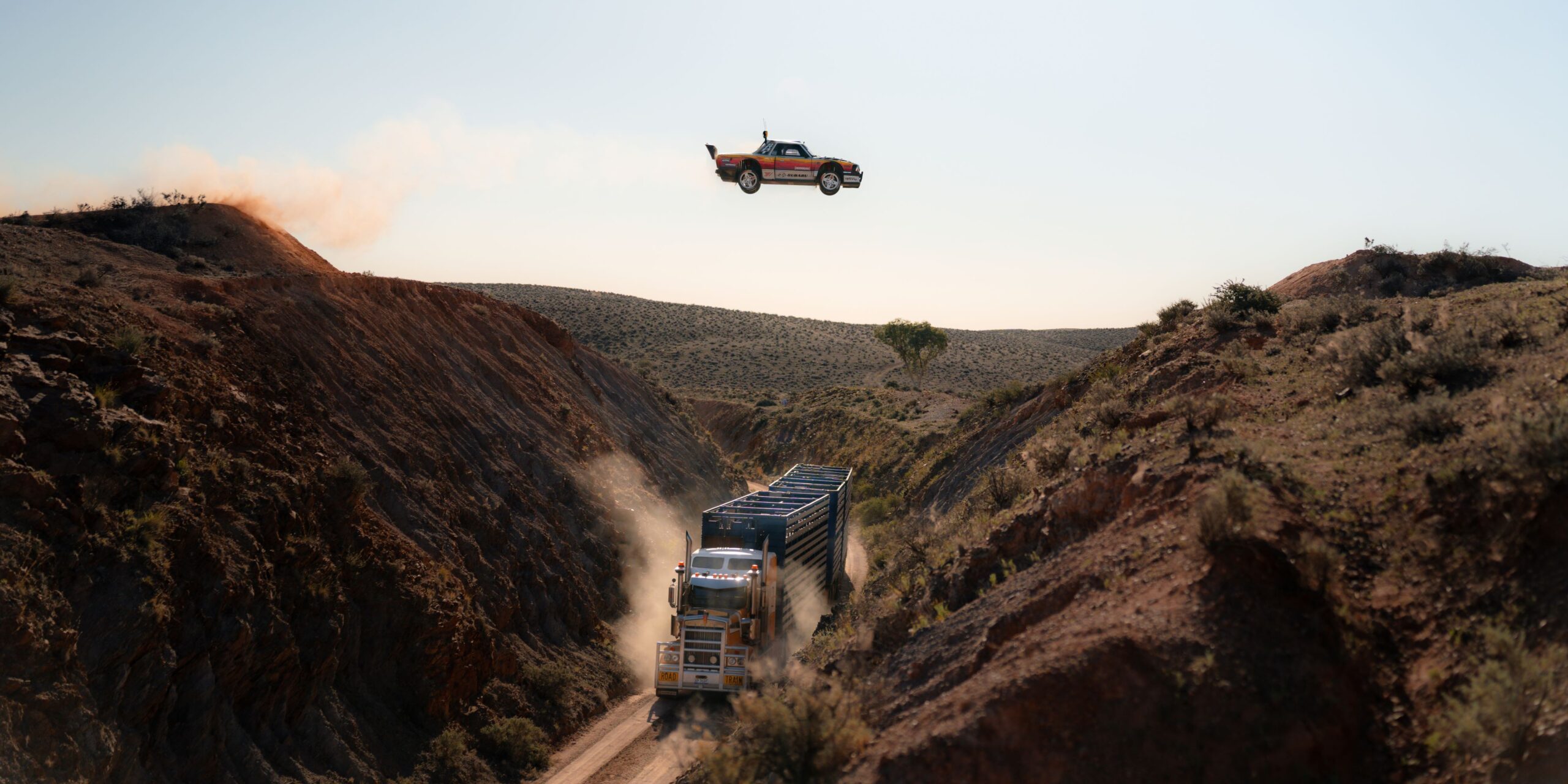
Travis Pastrana: Fun fact: Subaru was almost about to say no to that jump. I took a test run and couldn’t get up to speed because the dirt was looser than I thought. I know I have to hit a minimum of 82 mph. I’m past the point of no return and still at 65 mph. I stop and say I need the water truck, and Scott comes over the radio: “The sun is setting. We have to go now”.
I looked at the Subaru guys and said, “100% it’ll work. I’m just going to come through the bush.” Guys were pulling rocks and shrubs out of the way. I came through the bush and hit the speed right at the base of the jump for a 110-foot deep canyon. The shot was great.
Travis, people think you are unbreakable. Do you have the “fear” part of your brain removed? When you’re in the car and those moments happen, are you actually terrified?
Travis Pastrana: I don’t really function at 100% until everything is on the line. If you put cones in a parking lot, 100 drivers could drive better proximity than me. But if you put cliffs where the cones are, and high speed, that’s where clarity comes in.
It’s difficult for me to make it matter in my head when we are just going around tires. I feel like when you get everything going, the clarity is cool. I enjoy that feeling less as I get older because you start thinking of the risk. But at Bathurst, I needed to full commit—fourth gear, 110 mph into a reverse entry downhill. I knew if I messed it up, the car was gone. We only had one car in Australia. Scott saw it in my eyes and pulled the stunt from me. You either go all in or not. If you start thinking too much, this isn’t your sport.
Brian Scotto: Most rally car drivers on the limit lack the fear gene. You can’t race rally and worry about the immovable oak tree your car is jettisoning at 90 mph. It’s not that they don’t have fear; they just don’t overthink the situation. Ken had a less ambitious understanding of physics than Travis—Ken would check the ROI and say “not a good idea.” Travis says, “We’ll figure it out.”
Travis Pastrana: It’s not a lack of fear; it’s overconfidence in your ability. It’s deciding you’re either in or out beforehand. You figure it out on the fly.
Talk to me about the car.
Travis Pastrana: The Subaru freaking Brat. I’ve been asking for it every time. Subaru finally saw the value and nostalgia in it. The “Brumby,” as they call it in Australia, fit perfectly in the Outback.
It was front-heavy, which allowed me to throw it in hard, but it had more understeer, so precision wasn’t as easy as the wagon. This thing revved to the moon—we call it the “high revving 77.” It sounded like an F1 car. But, like a two-stroke motorcycle, it didn’t have a lot of torque. First gear didn’t do much from 0 to 30 mph. So when reverse entering, I had to downshift more than I wanted and just scream the motor. It made driving more difficult, but the sound was absolutely worth it.
Scotto, you produced this with your own company. Did that change the calculations or the on-site work?
Brian Scotto: It allowed us to be more focused. Previously, Gymkhana was maybe job three or four because I was running a company of 40 people. This time, I could treat it like a feature film. I wrote a proper script and broke it down by scenes instead of just listing tricks on a napkin.
It also brought a different level of professionalism. We had the shortest turnaround ever—we got clearance in August, pre-pro in September, filmed in October, and edited in two weeks. Hoonigan knows me well, so the contract made every one of my usual downsides a breach of contract. I couldn’t “let it flex” like I used to when it was my company.
As you step down, Travis, what do you want people to take away from this last film?
Travis Pastrana: Honestly, just what Ken Block gave to so many people. Ken’s vision to “have fun in a car” started an entire culture. It gave people like me an opportunity to do things we only thought of in video games.
When the video leaked, people said it was AI. To push the envelope like that is amazing. I hope it inspires people to go out, build a cool vehicle, and enjoy driving. In this day and age, the fun of driving is being diminished; people worry more about cup holders than the drive. Even IndyCar driver Conor Daly told me he got into driving because he saw Gymkhana 1. His dad raced F1, but Ken Block was the one who inspired him. That’s incredible.
Scotto, same question. You and Ken transformed automotive media. What is the mark going forward?
Brian Scotto: There was a lot of trepidation about even making this film after Ken passed. We asked ourselves if we even wanted to make another one. We tried scouting Puerto Rico and other locations, but it felt like the movie didn’t want to get made.
But if we were going to do Travis’s last one, it needed to count. It needed to be a good steward to the thing Ken built. We even included tricks like the “Segway donut,” which is a Ken trick, not a Travis trick, as an homage. The audience response was overwhelmingly positive.
Going forward, I’d actually be interested in lowering the bar and starting from a new point. Lia Block said to me, “I want the film to be my own. I’d rather go back to basics and work my way back up.” There is something exciting about that.
However, I don’t know if current media allows for that. When we started, YouTube was the Wild West. I don’t think you could make a Gymkhana today without the brand attached and have it be successful because platforms now want ongoing serial stories. If you asked me to recreate this for maximum views today, I’d say shoot it 9×6 and make it a vertical series. That wouldn’t make me happy, but it would be the right way to do it.
It’s fascinating that this format has persisted so long.
Brian Scotto: It has become part of the data set of “what works. Jeff Zwart, who is best known as an action content person, told me he felt a “changing of the guard” when Gymkhana came out. He used to walk into meetings where lawyers would say, “No, the car can’t slide too much.” After Gymkhana, car companies started asking him to make their commercials look like our videos. Now you see Acura commercials where front-wheel-drive cars are sliding. It infiltrated car chases too—scenes in Baby Driver and John Wick feel like Gymkhana moments.
It’s a trip to look back at the ecosystem this “throwaway” film created. Ken had done other stunts, like the snow park jump, but Gymkhana became the runaway success. It’s funny because Ken wasn’t a fan of big jumps after breaking his back; we thought the jump content would be bigger, but the nerdy precision driving is what popped.
It changed everything. I’m excited to see the reaction.
Brian Scotto: I still shoot in 16×9 because cars are long and look better on wide. The 16×9 version I uploaded has 100,000 views, and the vertical version has 5.5 million. It’s like asking, “Have you heard it on vinyl?”
Read More:

Inside the Making of the Coolest Golf Collab of the Year (So Far)

Shaun White’s Second Act: Redefining the Business of Snowboarding
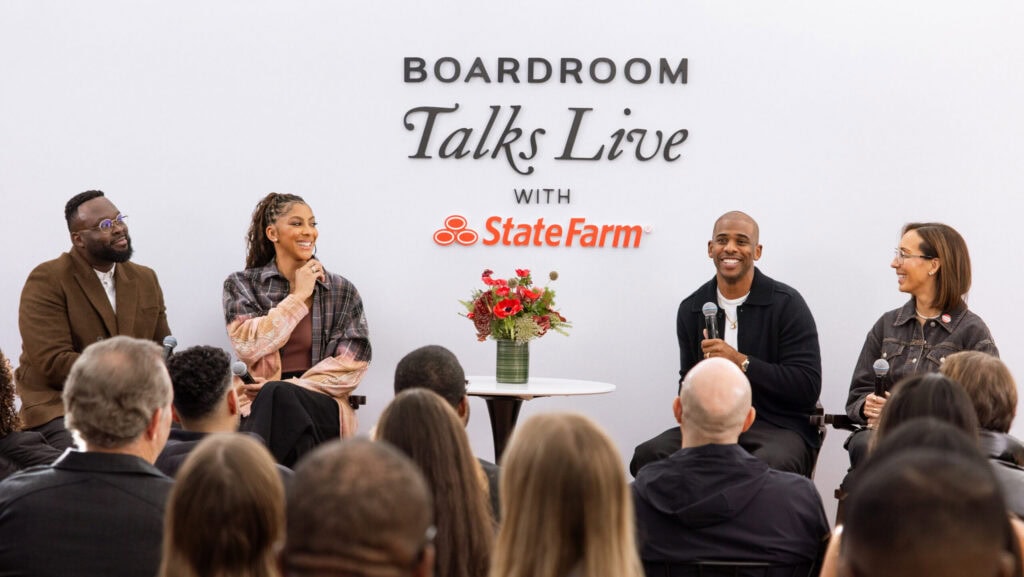
Beyond the Game: Chris Paul, Candace Parker, and Kristyn Cook on Legacy & Leadership
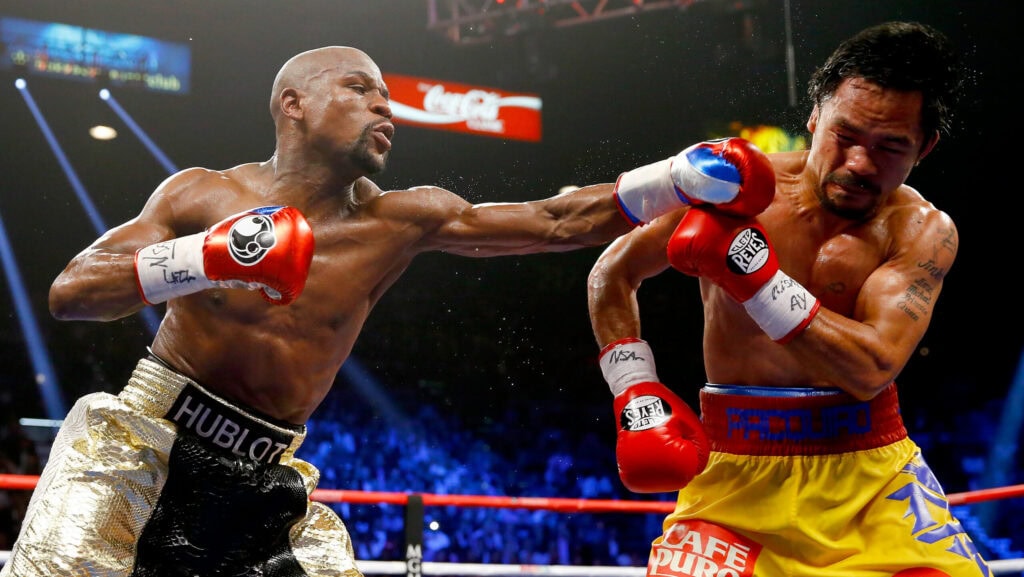
Floyd Mayweather-Manny Pacquiao Set For Rematch on Netflix

Kalshi’s Tarek Mansour on Prediction Markets, Regulation, and the Future of Truth in Finance