

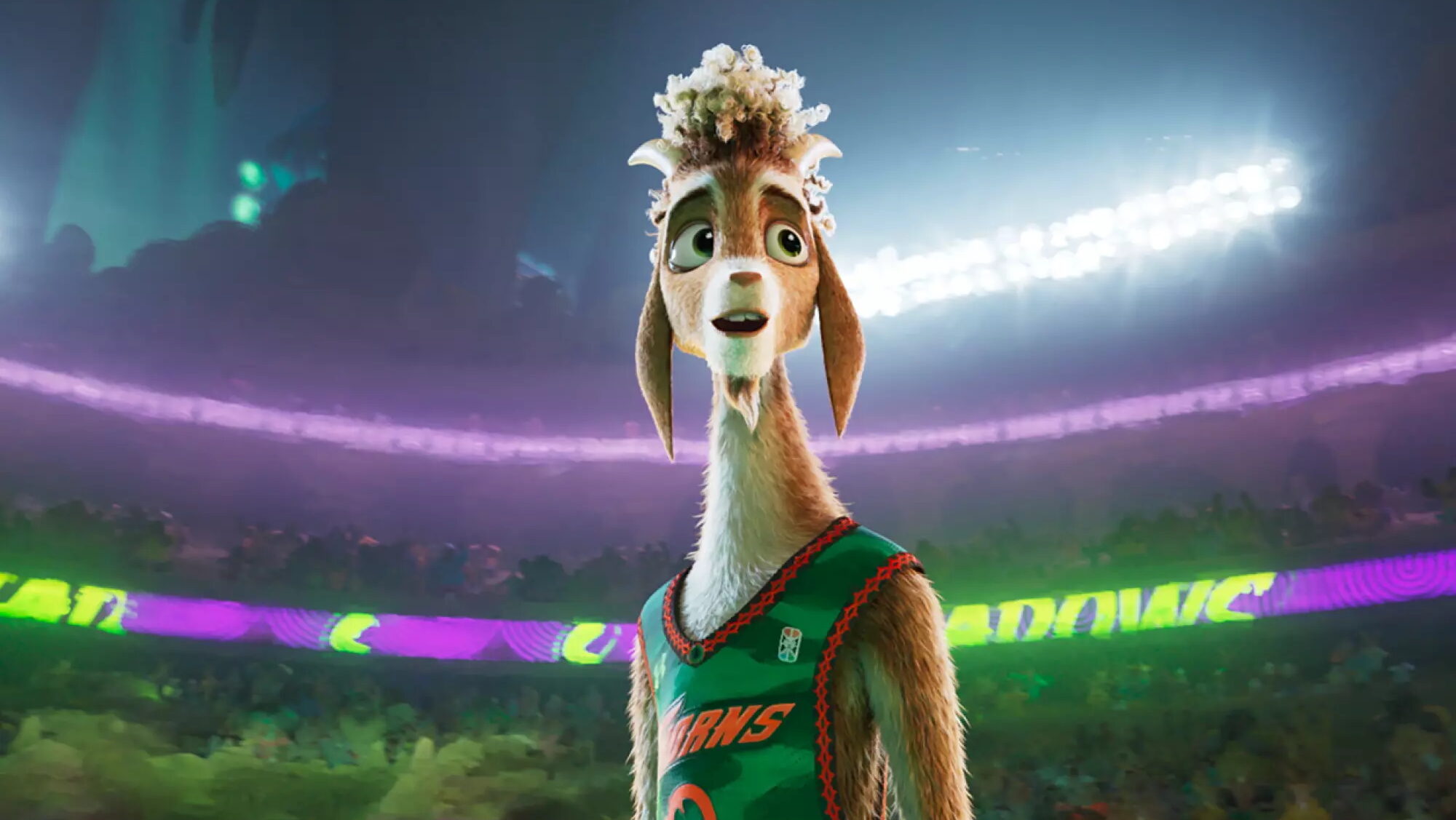
From Caleb McLaughlin’s vocal grit to Stephen Curry’s inspiration, a star-studded cast breathes new life into the classic underdog journey.
Sony Pictures Animation’s GOAT is one of those rare feel-good movies that doesn’t just lean on sentimentality, but rather on the sheer, kinetic joy of its world-building.
Fresh off the groundbreaking success of the Spider-Verse series and K-Pop: Demon Hunters, Sony brings its signature stylized reality to the screen, utilizing the same cutting-edge techniques that have redefined modern animation. Partnering with them is Stephen Curry’s Unanimous Media, ensuring that the film’s roarball culture is a grounded reflection of real-life sports grit. By blending Sony’s visual wizardry with Curry’s personal “smalls can ball” philosophy, the production creates a world that feels both fantastical and authentically competitive.
While the premise of GOAT follows the traditional sports-movie blueprint, the execution is a vibrant reminder of why we fall in love with the underdog story in the first place.
Initially, I was drawn to the project solely on the star-powered voice cast. In a live-action setting, assembling this specific ensemble — a mix of Gen Z icons like Caleb McLaughlin, veteran heavyweights like Gabrielle Union, and actual sports royalty like Curry — would be a logistical nightmare. But that is the inherent beauty of animation; it provides a sandbox where a diverse dream team cast can play off one another in ways reality rarely allows. For McLaughlin, the draw was instantaneous once he realized the DNA of the story.
“They told me this is a loose story of Stephen Curry’s upbringing in his basketball career,” he noted during our Boardroom Talks interview. “Once they told me that, I was sold. I was like, ‘Time out … I’m actually going to sign the contract right now.'”
The story itself is comfortably familiar, hitting the classic beats of the genre. You have your typical, looming villain characters, which in this film are imposing figures representing the old guard of the sport, and a clear, high-stakes mission for our protagonist, Will Harris. Along the way, we are treated to the essential found family of goofy sidekicks and mentors that provide the film’s emotional anchor. It’s a formula I know, but one I love to see get recreated in ways like this.
What makes this rendition even better is the technical precision of the voice work. McLaughlin emphasized that without the physical sets that complement his typical roles, he had to reinvent his process to bring the young goat, Will, to life.
“As the actor going into a character, you get to go into costumes. I had none of that,” McLaughlin explained. “So it was all a mindset and the tone. I really had to hone in on the tone and understand, okay, this personality had to come through his voice … how can I compensate for his physicality and his facial expressions in just your words?”
What truly elevates GOAT from a standard family flick to a cultural moment, however, is its creative swing for the fences moments, specifically, the animated diss track. In a stroke of genius, the filmmakers used a musical battle to heighten the rivalry within the world of roarball. It wasn’t just a gimmick; it felt like an organic extension of the film’s culture. It added a layer of modern wit and street cred to the animal kingdom, proving that the writers actually understand the intersection of sports and entertainment, especially across Black culture. It’s easily the most memorable sequence in the film and a testament to the creative freedom the medium offers.
While some might call the underdog narrative predictable, I found that the film’s medium made the journey feel entirely fresh. I knew where the story was headed, but I couldn’t have guessed the visual or technical ways it would reach the finish line. Even with a familiar blueprint, the film’s creativity was so entertaining that the predictability of the outcome didn’t diminish the excitement of the ride.
Perhaps most impressively, the film respects the audience’s time. In a cinematic landscape where runtimes seem to be getting longer and longer, GOAT didn’t overstay its welcome. It manages to tell a complete, emotionally resonant story without the fluff. It moves at the pace of a real-time game clock, ensuring the energy never dips and that fun remains the priority.
Ultimately, GOAT succeeds because it understands its identity. It is an animated sports fable for the modern age that honors the greats while making room for the smalls. By blending high-intensity action with genuine heart and an unexpected diss track that I would surely listen to again, it has cemented itself as more than just a movie for kids; it’s a movie for anyone who has ever been told they weren’t big enough to play.
Read More:

YG on Making ‘My Krazy Life’, His West Coast Legacy, & Reinventing Himself

There Is No Offseason: KLUTCH Sports Group COO Fara Leff on Commanding the Sports Calendar
Michael Che Opens Up About SNL, Kanye, Colin Jost, Cancel Culture, & Comedy

Red Hook Tavern: Where Billy Durney Wants to Know Your Name
Keanu Reeves’ Next Act Is Built on Two Wheels