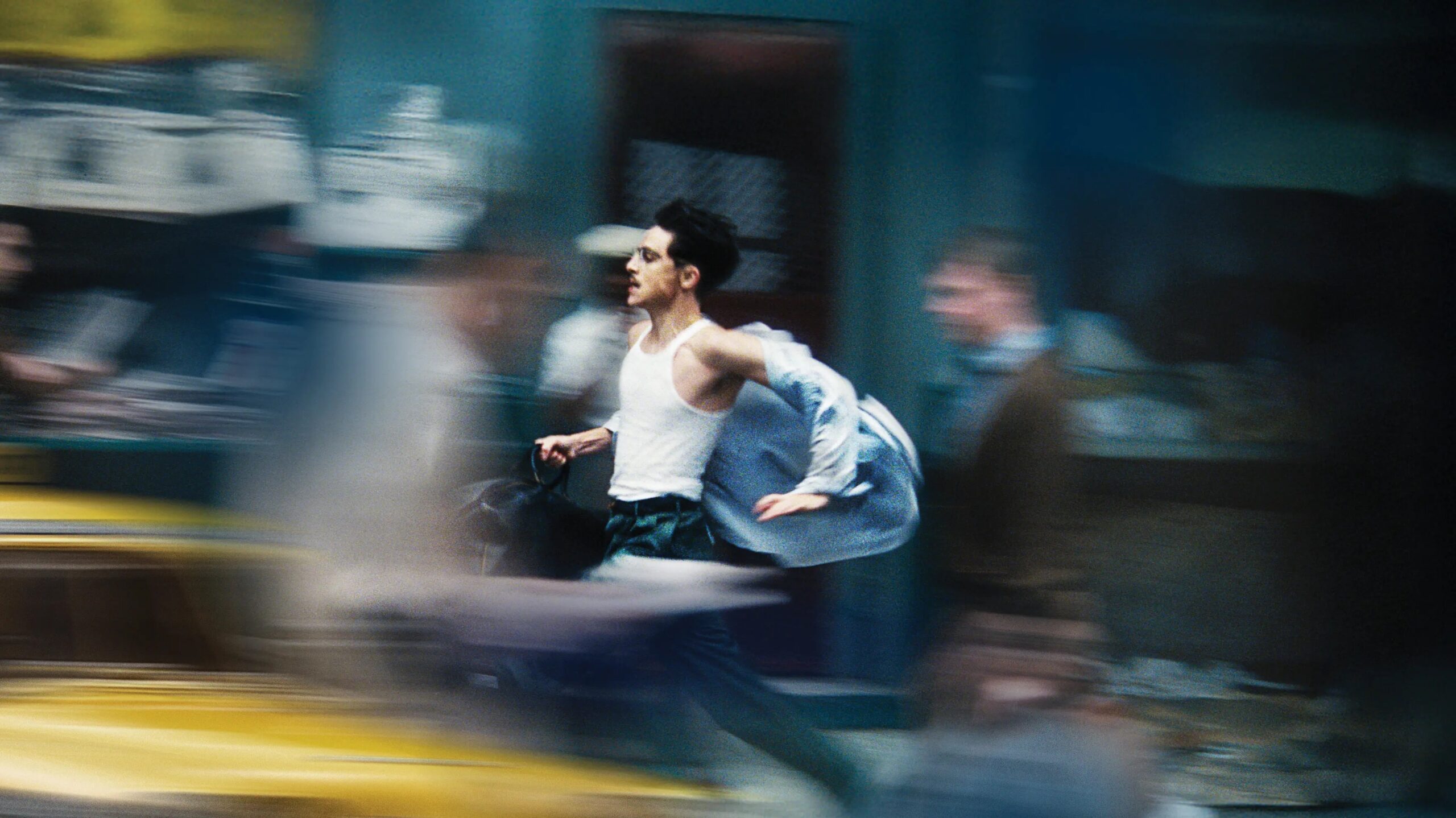
The soundtrack reveals how film scoring has become a vital new lane for musicians navigating a drastically changed industry.
Within the overwhelming, monumental spectacle that is Marty Supreme, it’s easy to overlook Daniel Lopatin’s score. That’s not because it’s underwhelming or less ambitious than the rest of the film, but simply because the visual cinematic elements can be all-encompassing—especially when recalling the film. Today’s release of Lopatin’s score is a reminder of its power, both as an aspect of the film and a self-contained universe; another brilliant release from an artist who has been one of electronic music’s most steady forces over the past decade and a half. Both under his own name and as Oneohtrix Point Never, Daniel Lopatin has been a singular presence in modern music. The soundtrack for Marty Supreme is far from his most audacious statement, but it’s a reminder of all the things he does so well.
Late 2025 brought the release of Lopatin’s 11th Oneohtrix Point Never LP, Tranquilizer, and it offered some insight into how the songwriter was approaching music generally leading into this solo release and the arrival of Marty Supreme. He spoke about the album in contrast with his 2011 LP, Replica, in an interview with Tone Glow, having said: “…it’s a record from start to finish. Replica is this incredible thing of these blasts of music, and Tranquilizer you get that too, but you can sit down and experience it as a whole in a way that I wasn’t personally able to do with Replica.” This feeling of fullness, of completeness, of a story from beginning to end, manifests itself both within the very construct of a film soundtrack, and in the way his songs in the Marty Supreme score function with each other.
Some of the ideas he toys with on Tranquilizer—arpeggiated synths, shining walls of sounds, and industrial percussion—make their way into the world of Marty Supreme, but looking at the two as some sort of companions outside of when they were released actually does a disservice to both. Tranquilizer is almost subtle, though it’s quite loud. The tricks and details are what stand out, whereas Marty Supreme is an album of grand ideas. It takes cues from the source material, whereas Tranquilizer seems to have welled up from a totally ambiguous and improvised landscape.
Lopatin also spoke about Marty Supreme in an interview with Interview Magazine, and it was some insight he had on the movie’s themes that elucidate his POV as a songwriter and composer, how the two intersect and the ways in which they support each other. He said, “This is about a guy who refuses to sell out and then has to make compromises and find his way through this labyrinth of a vampiric old world of wealth and power, but also the incestuous world of the Lower East Side and people trying to hold him back. And Marty Mauser has this unrelenting belief in himself.
“To me, it’s also about being an artist and not selling out. It really, really hit me hard. I scored Uncut [Gems] and I loved working on that movie. But I had to look at it more as, ‘Okay, what’s the assignment?’ Whereas here I was intoxicated with the character to a degree that I could feel myself in him, and it made it very easy.”
This refusal to sell out looms large in today’s musical landscape, when the entire middle class of artists has practically been hollowed out; a place Lopatin would have fit comfortably in during a different era. It’s a tragedy in many ways, but it’s also given filmgoers a unique gift in which many of our greatest musicians and songwriters are embracing the medium of film score composition in a way artists from previous eras would only dabble. It’s, in many ways, a more lucrative career than releasing music and touring as an independent artist, as the Task composer Dan Deacon explained to Boardroom in November. Artists can now support their work by making art in a different, potentially higher paying medium.
Lopatin can continue his career as Oneohtrix Point Never not by selling a jingle to a car commercial or performing for corporate ghouls at private events but by collaborating with other capital-A artists in different mediums. It’s the same route Johnny Greenwood has taken in his work with Paul Thomas Anderson. Lopatin hasn’t worked with any filmmakers besides the Safdie brothers, and Greenwood has given the majority of his film scores to PTA. While it’s easy to imagine these songwriters and musicians working in film scoring even if the opportunities in music were what they used to be, this rather dire landscape does provide ample reason for talents like Greenwood and Lopatin to start searching for new ways to share their ideas.
It’s thrilling to hear the score for Marty Supreme within the universe of Josh Safdie’s brilliant film, but it’s also the second Daniel Lopatin release we’ve been given in three months. It’s a treat, a reminder of how versatile, freewheeling, and adventurous he can be within the alternative electronic world in which he exists. Marty Supreme is a treat on a number of levels, a circus of amusement and delight. Daniel Lopatin’s score is a big reason, among many others, why.

How Jordan Brand Is Building With Women, Not Around Them

Beyond the Feed: How [untitled] is Building a “Sacred Space” for Musicians

How Stephen Curry’s Underdog DNA Redefines the Hero’s Journey in ‘GOAT’

Kevin Durant, KITH’s Ronnie Fieg, & Rich Kleiman on Sneakers, Legacy, and Culture

JuJu Watkins Showed Where the Game Is Headed at Chase Freedom’s Cashback Courts