
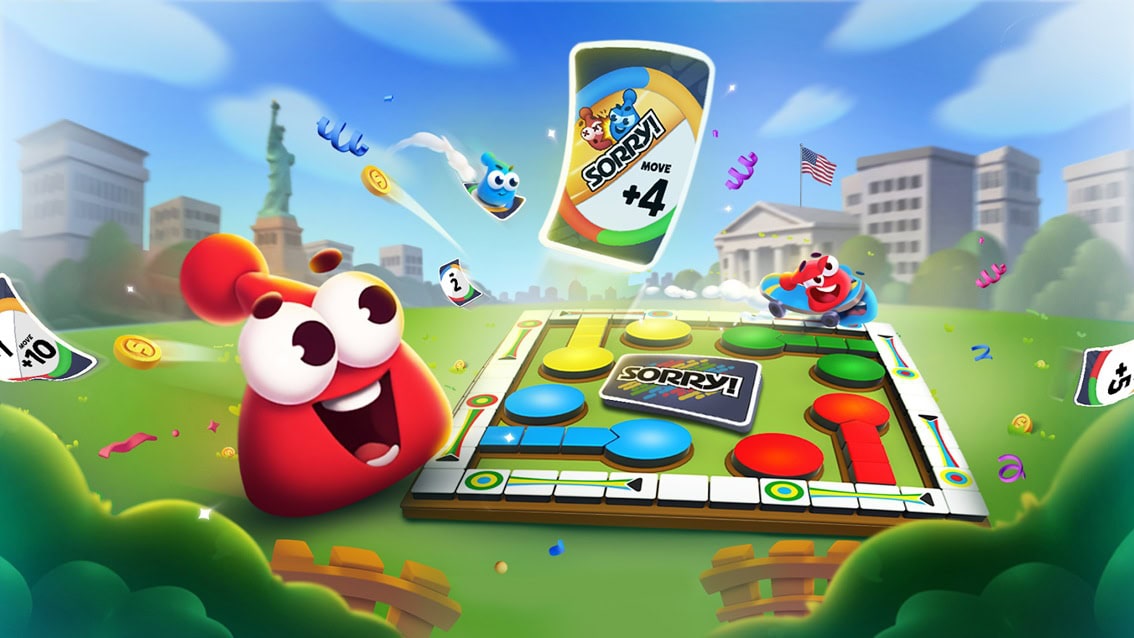
Teaming up with Hasbro to reimagine the classic board game as Sorry! World, co-founder Afsar Ahmad explains how the studio blends old-school sentiment with fresh design, social gameplay, and a modern experience.
Gameberry Labs is a Bengaluru-based, bootstrapped mobile-gaming studio founded in 2017, best known for board-game-style hits like Ludo Star and Parchisi Star. Under the leadership of co-founders Afsar Ahmad and Govind Agarwal, the company has focused on building deeply social, casual multiplayer experiences, games “that people will love to grow old with,” as Ahmad describes. Since its inception, Gameberry has grown significantly, crossing $100 million in lifetime revenue, expanding into international markets, and consistently staying profitable.
Ahmad studied at IIT Kharagpur before working as a games prototype engineer at Moonfrog Labs. Today, he heads product, art, and UX at Gameberry, shaping both the creative vision and user experience for its portfolio of games. Boardroom recently sat down with Ahmad to dive into Gameberry’s bold undertaking: transforming the classic board game Sorry! into a vibrant, modern mobile experience. He takes us through how the partnership with Hasbro came about, how his team balanced nostalgia with innovation, and the design decisions that made Sorry! World feels fresh yet faithful to its tabletop roots, beloved by millions worldwide for decades.
BOARDROOM: You’ve said that at Gameberry Labs, the mission is to build games players want to grow old with. How has that guided your decision-making from the early days to now?
AFSAR AHMAD: At Gameberry Labs, I think the principle that we have followed so far is, whenever we are picking a game, we try to pick games that have a little proven history with it. So, let’s take Sorry! for example. They had not been digitalized, but the game has been there for the last 80 years. Same goes with all major tabletop games, which have lasted the test of time. We feel those are the games that we want to digitalize in a manner where people of different age groups can play together. So I think that is how we utilize this principle to pick games and put this social layer, which makes it even more timeless on top of it, most of the time.
How do you use leverage your international audience to continue innovating?
I think what we are learning over time is a difference of cultures, which have different kind of demands. So certainly in India, like some of the features don’t work so well. But when you take it to Spain, it’s different. Across different cultures, people resonate with different entities in the game. So let’s say somebody would like colorful dices, but somebody would like more golden, polished dices, whereas somebody would like a board to be more Halloween theme. But at the same time, probably somewhere in India or Saudi Arabia, they have no context of Halloween. So those differences in culture, that’s the trickiest thing we see in our games where people are motivated by very different things. But at the end, they’re playing together and probably playing the same core game.
Can talk about the decision behind why you chose to start with Sorry!? When you and your team were trying to go from board to mobile, what were the challenges?
If you look at Gameberry’s history, we have been building timeless games for years, taking digital adaptation of games to appeal to the Western market. The western market has a lot of games, but people do not play digital forms of their childhood board games. We started looking at the list and it included Monopoly, Trouble, Sorry!, and Uno. So we started asking ourselves, ‘Which of these games is the best fit for Gameberry to make a digital adaptation for?’ Sorry! was the obvious answer. Hasbro has the physical board license, so we told them we have been building Ludo STAR and Parchisi STAR, which have like 300 million downloads across the world, and we want to build another version for the U.S. and European market, and we feel Sorry! is a great fit.
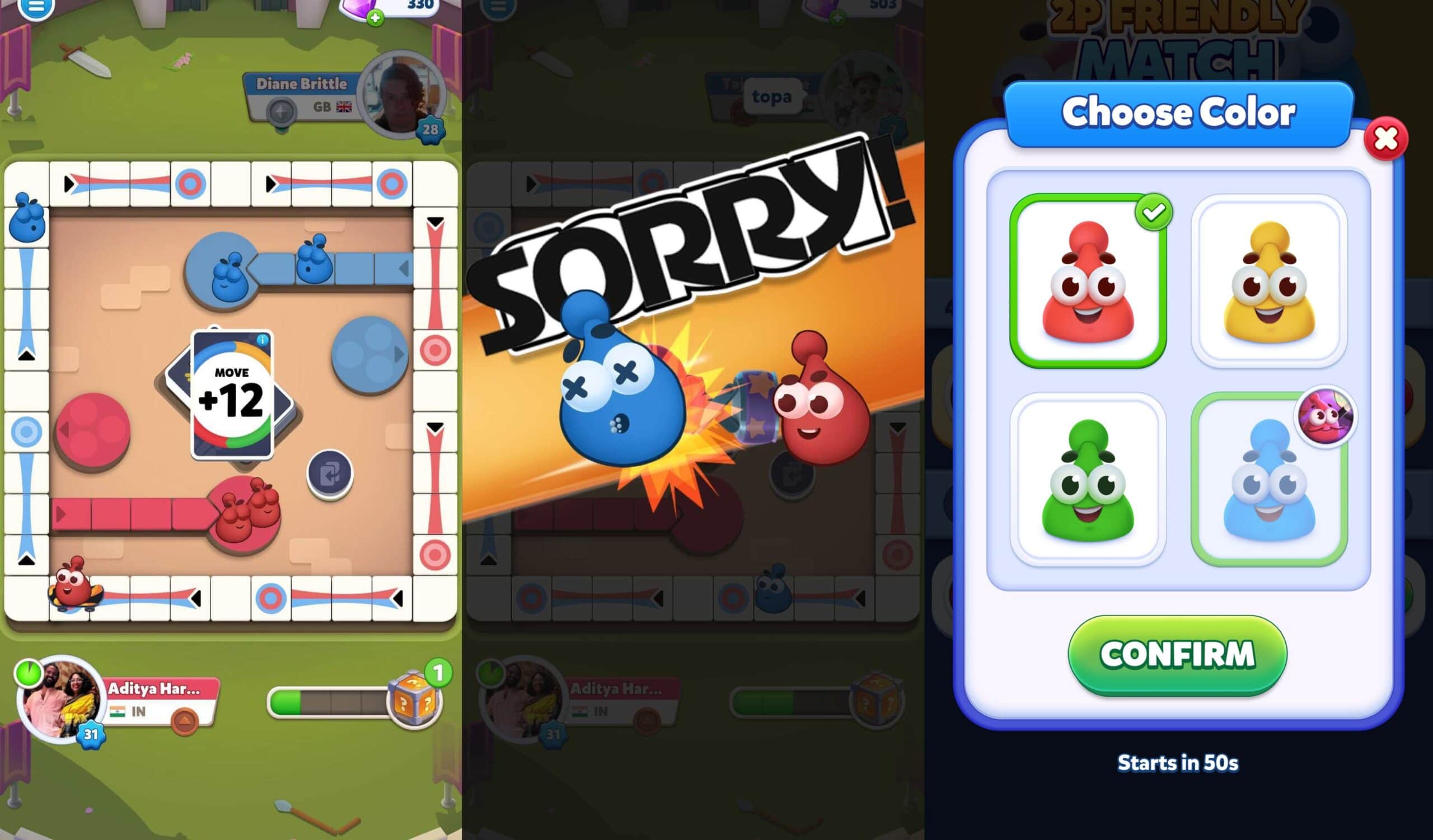
So once we started brainstorming with Hasbro, we moved into the creative side of it. How do you think the audience would like to see the game? When you look at Ludo and Parchisi, they have a glittery feel to it. When it came to Sorry!, we questioned whether we really want that kind of glittery feel and royal feel to it, or do we want more sunny, warm picnic vibe to it? So, we started discussing with Hasbro on it what they feel their learning has been around, sorry, how do people play in us these games?
The physical board Sorry! board game has 10 steps on each part, so it has 40 steps overall. We felt on mobile, those 40 steps are too much. So we started reducing the number of steps from 10 to nine to eight on each side, and eventually we found a good fit with the eight steps at the corner, with people getting the feel of it, but not compromising too much of the play that you’ve experienced on the physical board game itself. Then it led on to some of the interesting things like OK, do we continue chat experiences like Ludo, or do we change the UX a bit differently?
How do you see those enhancements affecting the way players who are used to playing the board game, compared to those who have never played the board game and have now played the mobile game?
What we are hearing is players have heard or seen a Sorry! board somewhere with their friends, but they haven’t played it much. I think the mobile game takes them slowly into it and teaches them a few aspects of it. It’s easier to get on board because they don’t have a bias of how Sorry! was. But for the older player, they look for certain experiences they had when they were playing on game night. I think that takes a little bit of time for them to come back and recall this was the rule and what’s different.
When we look at the extra features that we’ve added, like the central city building, it dives into the memory of Sorry! Because when you were playing with your friends and family, you had fights, but not literally. So we wanted those sweet fights to be in the game as well, where you are competing sweetly with other people, breaking their buildings, and then taking revenge on top of that.
What are some of the trends right now you’re noticing in the mobile game market?
People are playing a lot of merge and puzzle games. Another trend, which I’m seeing, is around tabletop games like Mahjong or block games, which are very simple in nature, and they don’t need WiFi. For us, I think the timing has been great. Sorry! being a very different game to whatever is being offered in the market is an advantage for us. Apart from the nostalgia element of the game, it’s also bringing a new taste to how people play with each other together. There was a lot more seclusion, single-player games happening, so I feel it’ll break the trend. Whereas now you can play and invite your friends, we are seeing private games increasing, which means people are inviting their friends over and want to play with them as well.
When it comes to monetization, the game is free to download, but there are in-app purchases. How do you determine price based on consumer wants?
I feel there’s a balance to it. For us, whoever wants to play Sorry! is important because maybe a player might not be able to afford certain parts of the game, whereas the friend of that particular player can still afford extra features. So what we try to do is minimize the push of monetization on the player, which means you will see a little lower RDAU. But the advantage is because people are playing together, we compromise by a decreased push of monetization from our side. We eventually hope we get the benefit of not pushing too much of our purchases on players and let them play for free. And eventually, when they’re playing together, they want to compete together, so they become aggressive, and that’s where, if they can afford it, they tend to pay.
It’s been eight years now since you founded Gameberry Labs. What’s one piece of advice for someone who is interested in establishing that sort of community? And what’s the biggest lesson you’ve learned in this entire time being an entrepreneur?
One of the lessons I would tell myself would be to work on Sorry! even earlier. We are a bootstrap company; we don’t have investors, so we have been more constrained to ourselves and have been doing things on our own. I would say to entrepreneurs that they should be meeting more people who are in their field so that they get to know what they’re doing and how they’re doing. And it could be internationally. I just came back from Turkey, and I was connecting with developers, and the amount of enthusiasm and innovation that everybody’s doing just gives you more energy to do things even better. So I feel in the world where we are just getting more and more disconnected, we should strive for more connections by talking to other people and just try to be more connected to people who are like-minded or do the same kind of things that we’re doing.
Read More:
An Inside Look At How UFC Treats Its Highest Rollers

“It Was Stolen From Us”: How Notre Dame Reacted to Its College Football Playoff Snub

The Best TV Shows of 2025: ‘The Pitt’, ‘Adolescence’, ‘The Last of Us’ and More

The Safdie Brothers: The Auteurs

Bad Bunny: The Superstar