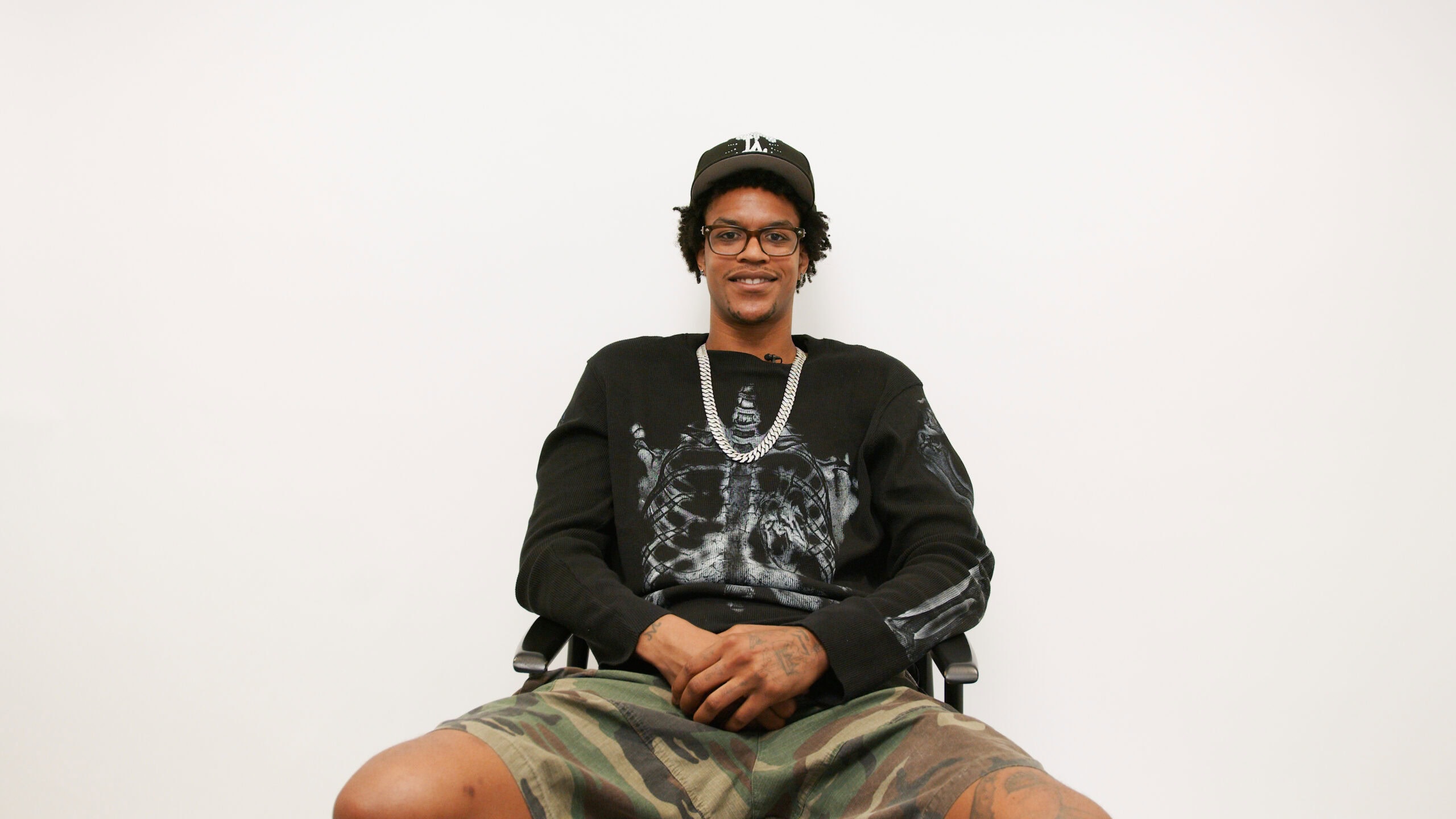
Shareef O’Neal reflects on growing up in Shaq’s shadow, overcoming a life-altering heart condition, and redefining success beyond basketball through fashion, business, and creativity.
By the time Shareef O’Neal introduces himself, he’s already reframing the conversation. “What’s up? It’s Shareef O’Neal. I’m 25 years old, creative strategist at the Shaq brand. And you’re watching The Newprint.” The title matters. It signals a shift away from the assumptions that have followed him since childhood.
Growing up as Shaquille O’Neal’s son meant constant visibility, even if it didn’t always feel that way at first. Shareef remembers that inside arenas, he and his siblings were tucked away, shielded from the noise. It wasn’t until public outings that reality set in: “When we’d go out as a family to the movies or anything, people would just follow us, thousands of people.” Still, pressure never came from home. “My mom and dad never really forced us to play basketball or do anything in their footsteps. They told us: Do what makes you happy, and if you’re going to do it, lock in.”
Before basketball took over, Shareef was a skateboarder, immersed in music, friends, and skate culture. That changed around 2008 in Phoenix, when he began to take basketball seriously. By 2015, exposure came fast. A social media post exploded overnight, but the label was immediate: “The first thing it said is Shaq’s son.” From that point on, comparisons were unavoidable. “It’s something I’m probably going to live with for the rest of my life,” he says now, accepting it without bitterness.
In 2018, staying home to play at UCLA felt right — “honestly the best decision I’ve ever made in my life” — until routine testing revealed a heart condition he didn’t know existed. The diagnosis blindsided him, and the moment doctors explained the surgery ahead, he admits, “I didn’t hear one word they were saying.” The experience at Stanford Children’s Hospital reshaped his perspective. Watching younger patients face repeated surgeries made his fear feel small. “Those kids, they helped me a lot.”
Recovery was physically and mentally brutal. He lost weight, confidence, and certainty. When he returned to basketball, frustration and outside criticism pushed him too hard, too fast. Eventually, after transferring to LSU and entering the NBA Draft, he came to understand the reality: “I kind of knew I wasn’t going to get drafted, but I knew somebody was going to give me a chance.”
The next chapter emerged quietly. A Thanksgiving conversation turned into work with Reebok, blending his lifelong interest in fashion with business. “I kind of like this lifestyle… being a business person, networking.” His goal now is accessibility, not prestige.
For Shareef, redefining success means alignment. The lesson he carries forward is simple and hard-earned: “Don’t let anybody tell me I can’t do anything… don’t fake who you are.”
Read More:

Is This the End of the Kansas City Chiefs as We Know Them?

An Inside Look At How UFC Treats Its Highest Rollers

‘It Was Stolen From Us’: How Notre Dame Reacted to Its College Football Playoff Snub
The Best TV Shows of 2025: ‘The Pitt’, ‘Adolescence’, ‘The Last of Us’ and More
The Safdie Brothers: The Auteurs