

A look at how Collier reshaped women’s basketball in 2025, on the court and as co-founder of Unrivaled, a player-owned league redefining power, equity, and the future of the game.
Editor’s note: This piece is part of “The 50 Names in the Boardroom,” our December Cover Story spotlighting the athletes, creators, and leaders who defined the year, selected through the same filter we use daily to shape what matters to the BOARDROOM.
The story of 2025 women’s basketball starts with a simple truth: Napheesa Collier stopped asking for permission. While everyone else debated how to “grow the game,” she bounced and built a new one.
Unrivaled — the league she co-founded alongside Breanna Stewart — is less a business venture and a manifesto. It’s what happens when elite women stop waiting for validation from systems built to exclude them. It’s player-owned, player-run, and built around the idea that control is the new currency. Collier didn’t want another contract; she wanted true power. And in 2025, she turned that plan into a reality.

On the court, her play mirrored that mission. Collier has always been technical, but this year she played with the gravity of someone building a future mid-game. Her season with the Minnesota Lynx was one long masterclass in balance: 22 points, eight rebounds, four assists a night, and the calm of someone who could see every cut before it happened. She led Minnesota back to the playoffs not by shouting but by showing.
Her dominance feels different from flashier stars. She’s cerebral, economical, precise. You can see it in the way she operates in the high post: patient, composed, surveying defenders the way a CEO surveys a balance sheet.
What makes Collier essential, though, is the way she turned visibility into leverage. She’s part of a generation of WNBA players who understand that exposure without equity is exploitation. Unrivaled was her counter-move. A league designed to keep the profits and the power within the locker room. She isn’t just playing for salary; she’s designing ownership models. She’s rewriting the definition of professional.
She’s the independent artist who figured out distribution. The one who realized she doesn’t need a label when she owns her masters. Every WNBA highlight that circulates now exists in a world she helped shape — a world where players aren’t props in the marketing machine but producers of their own.
There’s no posturing with Collier. Just a consistent reminder that dominance can sound like diplomacy. When she speaks, the league listens because she’s credible. That might almost be better than any stat line. Her 2025 is a blueprint for what comes next: the athlete as founder, the star as strategist, the competitor as architect. In her world, empowerment is the endgame.
Years from now, when people talk about the WNBA’s second great expansion, they’ll point to Unrivaled as the turning point. They’ll say the league changed because players like Collier refused to separate passion from profit. She didn’t just play the game differently; she changed what the game could pay back.
And maybe that’s the point. Real power doesn’t perform — it builds.
Read More:

Aaron Judge Opens Up to Kevin Durant on Yankees Expectations, MVP Mindset & MLB Journey

Kevin Durant Reflects on a Life Centered Around Basketball
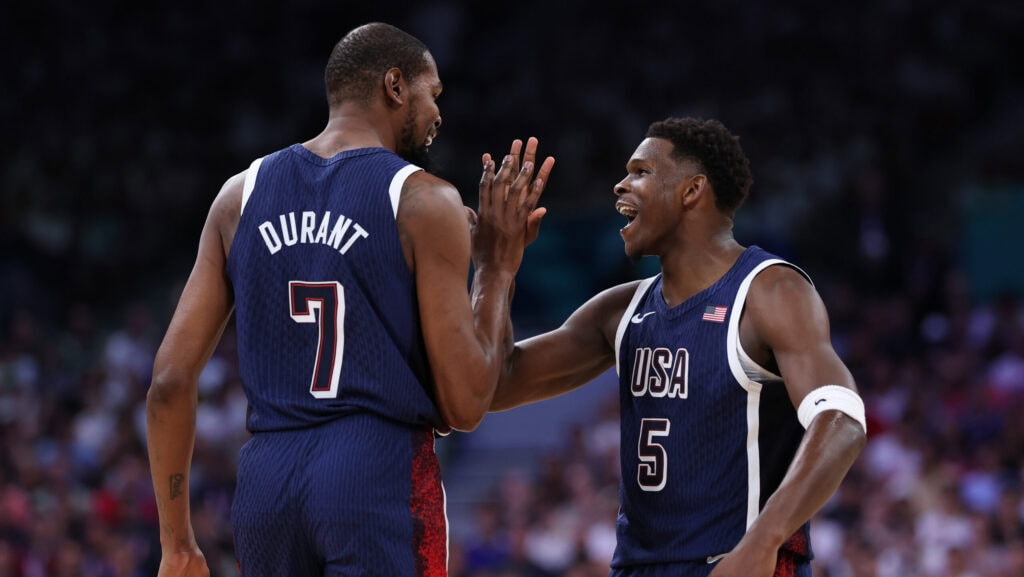
Kevin Durant Looks at Anthony Edwards, Luka Dončić as Next All-Time Scoring Threats

Kevin Durant Breaks Down the Real Difference in Michael Jordan’s Game

NFL Stars, Celebrities Show Up For Fanatics Flag Football Classic