Andrew Ross Sorkin is busy.
When he walks into NYC’s Zero Bond, where Boardroom has erected a dual studio set up to capture photos and video, it’s a little past 6 p.m., a full work day behind him. But, despite a full day of making sure his various professional interests are taken care of, Sorkin is present and available; attentive and affable. You get the sense that this is part of what allows him to disarm heads of state and business leaders at his annual DealBook Summit and operate the media empire he’s grown from the ground up.
Over the last two decades, Sorkin has built one of the most uniquely influential portfolios in modern media — author, anchor, showrunner, interviewer, and host of one of the world’s most prestigious business conferences. He’s the creator and editor of DealBook, the daily newsletter and annual summit that has become a who’s who of global power. He’s a founding co-anchor of Squawk Box, CNBC’s morning market roundtable that sets the tone for the business day. He’s the author of Too Big to Fail, the definitive chronicle of the 2008 financial crisis, which became both a hit film and a blueprint for how Wall Street nearly collapsed. And, of course, he co-created Billions, the Showtime drama that turned hedge fund warfare into appointment television.
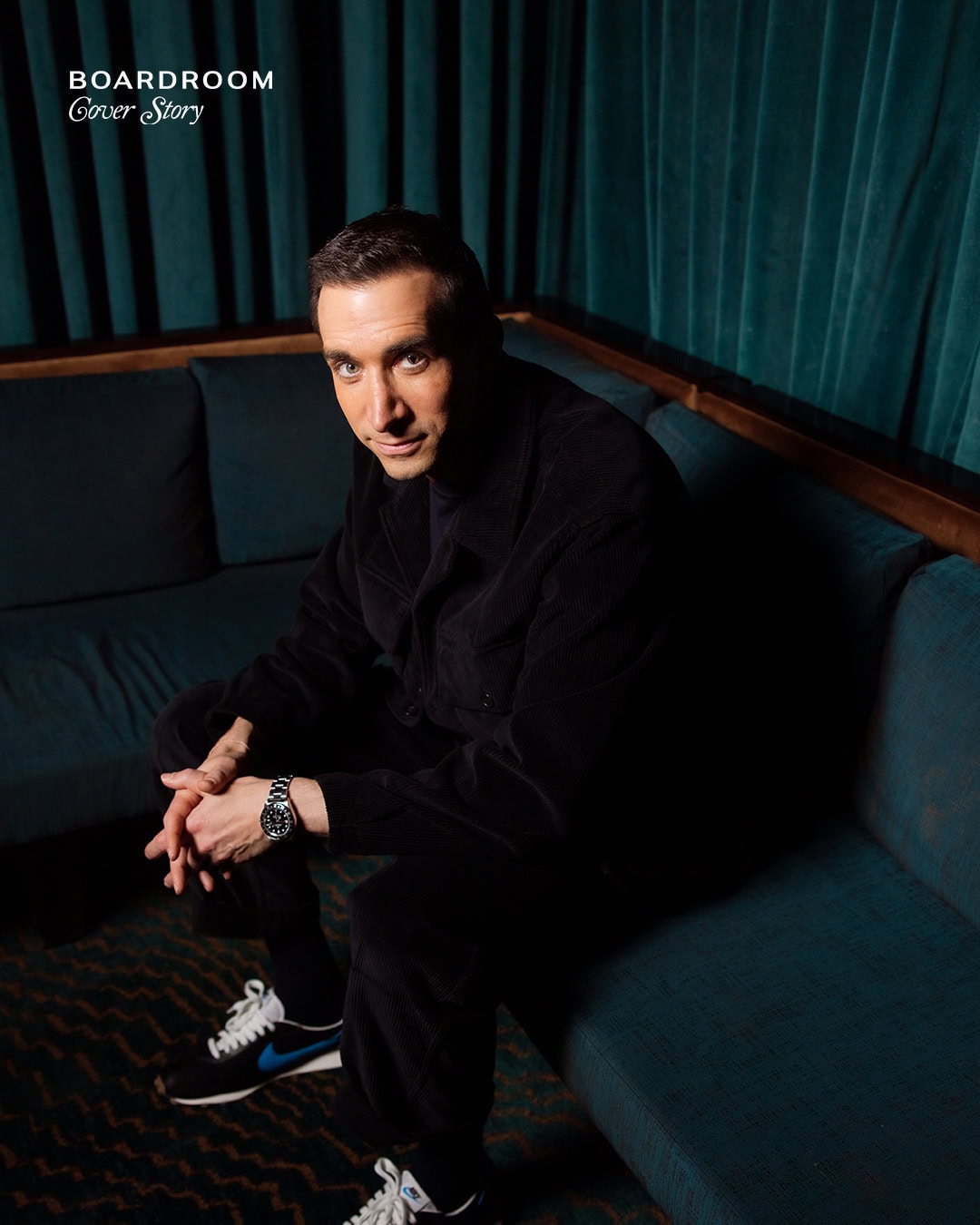
Now, with 1929, Sorkin turns his investigative lens backward — nearly a century — to understand the original market crash that reshaped the American economy. The timing, as always with Sorkin, feels uncanny. AI valuations are soaring, private equity money is flooding startups, and investors are asking the same questions their grandparents once did: how much higher can it go? Sorkin spent eight years researching the book, excavating forgotten letters, memos, and diaries to tell the story of how ambition, greed, and optimism collided to create one of history’s great financial disasters. “Everybody was buying stocks.” he says. “There were brokerage houses popping up on the streets like Starbucks, literally. And you could walk in and they would loan you money to buy stocks.”
But Sorkin’s story isn’t just about economics — it’s about humanity. It’s about how people behave when money, power, and fear intersect. It’s the same instinct that drives his interviews, whether it’s Elon Musk at DealBook or Jamie Dimon on CNBC. His gift isn’t just access — it’s empathy. “I think the other person knows that I want them to hit the ball back,” he says. “ I’m not trying to strike ’em out.”
At 47, Sorkin has become a bridge between worlds — journalism and business, Wall Street and Main Street, the newsroom and the writer’s room. He’s also a reminder that curiosity itself can be a career.
Boardroom sat down with Andrew Ross Sorkin for a conversation that spanned his new book, the lessons of Too Big to Fail, the future of AI, the next market correction, and why, despite everything, he’s still an optimist.
This interview has been edited for length & clarity.
Want More from Boardroom? Get Our Newsletter
BOARDROOM: What’s up everybody, and welcome to the October Boardroom Cover Story. Today, I am sitting with bestselling author, host of Squawk Box, creator of DealBook, and my co-host for Game Plan, and my friend Andrew Sorkin. Andrew, welcome to the show. How does it feel to be interviewed?
ANDREW ROSS SORKIN: A little weird. I’m usually on the other side of this, so I’m excited and slightly nervous.
I called you because I think you’re someone who really resonates in the zeitgeist — maybe even beyond it. Lately, especially with your book release, it feels like everyone’s recognized what you do so uniquely well. But people ask: how do you do it all? Hosting Squawk Box, running DealBook, organizing one of the biggest conferences, and writing a massive book — how?
I like to do a lot of things. I’m insatiably curious and constantly testing myself. My wife would tell you I take on too much, but whenever I get a new idea, I need to see if it’s possible. That’s what drives me.
So what’s a typical day like?
I wake up around 4:30 — late by morning TV standards. I spend about 30–40 minutes reviewing the DealBook newsletter draft from our Europe team, then tweak it before heading to the studio. I shower, race in, do makeup NASCAR-style, and go live from 6 to 9 a.m.
After Squawk Box, I’ll often do Morning Joe for 10–30 minutes, then meetings, lunch, and prep for the next DealBook. I try to have dinner with my wife and three kids, and if I can squeeze in the gym, it’s usually right after Squawk. By 4 p.m., I’m fried.
Is DealBook a big team?
Not huge — about six of us, plus an event team that expands around conference time.
When did you create DealBook?
2001. We were supposed to launch the week of 9/11 but delayed a few weeks. Back then, there were no newsletters like it. I was at The New York Times, covering business, and realized that while readers got the Times, many read The Wall Street Journal for business. I wanted to get straight into their inbox and prove we could compete — even by linking to competitors, which was unheard of then.
Did the Times see your vision?
They did, but on a smaller scale. They thought we’d reach 30,000 readers. We’re over a million now.
Growing up, did you want to be a journalist or on TV?
No. I was fascinated by business — following the money explains everything: politics, sports, art. I started a sports magazine at 15 called The Sports Page to sell ads to teenage boys, since brands mostly targeted girls through Seventeen magazine. My mom drove me to the city so I could pitch ad agencies. At 18, The Times wrote about my magazine and offered me an internship — unpaid, just Xeroxing and stapling. I was thrilled. Someone overheard me talking about the internet in 1995 and asked me to write a story. That’s how it all started.

So DealBook now — a million subscribers. Paid or ad-supported?
Always free. I wanted the right readers, not necessarily the most. Advertising drives the business.
How do you know you have the right readers?
If you saw the list, you’d be shocked — White House officials, top bankers, major tech CEOs. The replies are wild: people challenge stories, tip us off, or ask for calls. Sometimes it’s “Call me right now.”
And the DealBook conference — how did that grow from the newsletter?
It’s my Super Bowl. We do it at Jazz at Lincoln Center, and every year it grows. I prep for months — building question trees, researching deeply. But the real key is listening. You can have a script, but you need to know when to pivot.
Do you decide who speaks?
Yes, mostly. People now reach out asking to join, though some still take persistence. I always keep two late slots open for timely, newsy guests.
How long have you been doing it?
Fourteen years — next year will be fifteen.
Is there a guest that you still haven’t booked that keeps you up at night?
Andrew: I’ve talked to Oprah a lot about doing it. It’s wild that I can even say that.
That’s a good flex.
No, no, I can’t even believe it myself. But I haven’t made it happen yet. Hopefully one day. She’s the GOAT to me. I grew up watching her. She mastered interviewing—and built a multibillion-dollar business while doing it. The way she can talk to anyone, from any walk of life, at any time, about anything—it’s incredible.
So, you did want to be on TV?
Kind of, but I didn’t know this was what I’d end up doing. I thought maybe I’d run or publish a magazine, not host a show.
What was the Elon Musk interview like?
Wild. A lot of people thought so from the outside too. I wanted to show the real Elon—the person—because he has so many sides. Walter Isaacson had just written his biography, and I thought, let’s do that in real life. I wanted viewers to see the full range of him over the course of the hour. I didn’t expect we’d get to the “upset” version so fast.
When he started cursing about advertisers, people were shocked. I wasn’t. I’ve known him a long time, and I could tell he was coming from a tough place. I try to be empathetic and meet people where they are — not where I or the audience want them to be. That’s what I tried to do in that moment.
I pivoted and said, “You once described your mind as a storm—what did you mean by that?” That brought him back. He became introspective, and it helped the audience empathize.
You gave him context, which humanized him.
That’s always the goal. Everyone in the news gets flattened into black and white characters, but everything’s gray. Everyone’s got their demons. The most powerful people often don’t even think they’re powerful.
You make these people feel safe. Bezos, Musk—they all seem comfortable with you.
I think it’s because they know I want them to engage. I’m not trying to strike them out. I might throw some curveballs, but I want a rally, not an ace. Even tough questions work better when there’s trust.

It also helps that you really understand what you’re talking about.
I just love this stuff. I’ve spent my life studying it. It’s genuine curiosity.
And DealBook is still with The New York Times?
Yes. The Times owns DealBook. I’m just an employee.
A very valuable one. Between Squawk Box, DealBook, your books — you’re balancing a lot. And now you’ve got a bestseller that’s, no joke, thick.
(laughs) It’s thick, but I wanted it to be a cinematic, easy read.
I don’t even know what a “beach read” is. I’ve read maybe three books on a beach in my life.
You can do the audiobook. I narrated it myself. Took forever.
Did you practice?
No. Probably should have. By the end, I figured out the rhythm and went back to re-record the first chapters. It’s 13 hours long but took about 35 hours to record.
I’ll put it on double speed — six hours, a few car rides.
Exactly.
Let’s talk about your books. You wrote your last one a year after the housing crash, right?
Yep — 2008 crash, Lehman collapse, bailouts. The book came out in October 2009. It was like sprinting a marathon. I was at The Times covering it in real time, went home that night, told my wife, “It’s like a movie.” She said, “No—it’s like a book. Go write it.”
I’d never written more than a few thousand words. I thought I’d have to give the advance back. But it felt urgent, so I did it.
That was about an insane moment in history. And this new one just happens to line up with another.
Totally. I started in 2017, not thinking about today. People kept asking, “How did 2008 compare to 1929?” I didn’t know. I started reading, realized no one had written a book that put readers inside that story—the people, their motivations, the White House drama. It was like a soap opera. But it took eight years to piece together the real letters, memos, and transcripts to tell it truthfully.
Everyone from that era’s gone.
Exactly. Even the family members were mostly gone. So I had to reconstruct it from primary documents.
Did the research change your understanding of 1929?
Completely. I thought it was one crash day — Black Tuesday. It wasn’t. It was a series of cascading failures. It didn’t have to become the Great Depression, but policy mistakes turned it into one. By 1932, unemployment hit 25%. 9,000 banks failed. People were living in tents in Central Park.
That’s insane.
The 2008 crisis hit 10% unemployment for a year. This was on another level.
So, in simple terms — what happened in 1929?
America turned stock trading into a national pastime. Everyone was buying stocks, often with borrowed money. You’d give a dollar, they’d lend you ten. From 1928 to 1929, the market rose 90%. Then it crashed, and people lost everything—including their homes.
Because the companies weren’t actually worth that much?
Exactly. There was euphoria over new industries — automobiles, radio. RCA was the hot stock, the “AI” of its time. It didn’t make money, but it had patents on TV, so everyone thought it was the future.
That sounds scary.
It was — and yes, it made me think about today. We won’t have another Great Depression, but there are echoes: speculative mania, “democratizing finance,” everyone chasing the lottery ticket.
Like crypto.
Exactly. And when I caution people on air, they say, “Don’t protect me—you’re protecting the system.”
And when you say things on Squawk Box, it can actually move markets.
It can. I learned early that a single sentence can move billions. That’s why I can’t own individual stocks — only mutual funds. Even my kids aren’t allowed to trade. I don’t ever want a conflict of interest.

Let’s talk about the markets now. What do you make of what’s happening with AI and valuations?
It feels familiar. Every era has its “new thing.” In the 1920s, it was the radio and the car. In the ’90s, it was the internet. In the 2010s, it was social media and crypto. Now it’s AI. People are euphoric — buying because they’re afraid to miss out, not because they understand it.
That’s not to say AI isn’t transformative — it absolutely is. But history tells us that when something feels unstoppable, that’s when people take on too much risk.
You’ve said markets are story-driven now.
Completely. Markets have always been shaped by numbers, but now it’s narrative. The right story can create billions in value—or erase it. A single tweet or sound bite can change sentiment instantly.
And you’re part of that story machine.
Exactly. That’s why I take it seriously. On Squawk Box, I know what I say can move markets. I try to be thoughtful, not sensational.
Are we in a bubble?
Maybe. But bubbles aren’t always bad — they drive innovation. The real danger is leverage. If people borrow to chase the story, that’s when the collapse comes.
So, you’re an optimist?
A realist, but yes — an optimist. I believe the world gets better over time, even if it’s messy along the way. We forget history always feels uncertain while you’re living it. Wars, technology, social shifts — they’ve always made people anxious. But step back, and you see progress.
What’s your biggest fear right now?
Complacency. People stop questioning assumptions when times are good. That’s when mistakes compound.
Let’s switch to sports. You’ve written about valuations, streaming, and ownership models. Where’s it headed?
Sports teams are still going up in value long-term, but some correction will come. The real growth is in expansion—turning franchises into brands. The Lakers, for example, aren’t just a team; they’re a global lifestyle. But the economics of media are changing. There’s too much content—too many streaming platforms chasing the same dollar. That’s why the next phase is consolidation.
Like cable 2.0?
Exactly. In five years, you’ll have bundles again — just digital. Netflix and Disney won’t compete for subscriptions; they’ll get packaged together on your smart TV or through your internet provider. The streaming wars will end in partnerships.
And live sports are still king.
Always. It’s the last appointment viewing. People can binge everything else later, but sports still happen in real time. That’s where the money is.
What about all these new leagues popping up? Pickleball, indoor soccer, flag football — do they survive?
Some will. The ones that think like startups — build a community, leverage social media, and expand beyond broadcast rights — will win. Pickleball’s done that well. But there will be a shakeout.
It’s like venture capital: 10 things launch, two survive.
Exactly. The future belongs to whoever builds a real ecosystem.
Let’s talk music. You’ve compared it to the media industry — too much content, not enough economics.
The business model doesn’t fully work. Streaming made music infinitely available, which made it less valuable per unit. There’s a flood of content and no scarcity. That’s why live shows are everything now—that’s where artists make real money.
Touring’s the new album.
Right. And the artists who connect their music to product, brand, and experience —Travis Scott, Beyoncé, Taylor Swift — they’re redefining the model. They’ve turned fandom into an economy.
So, artists have to be entrepreneurs.
100%. The future of music looks more like fashion — drops, collaborations, exclusives. Streaming’s just the marketing.
You wrote Too Big to Fail, which became a film. What did that teach you about storytelling?
How powerful editing is. The HBO team — Curtis Hanson, Paul Giamatti — they condensed a 600-page book into two hours and still captured the essence. It made me appreciate how narrative shapes understanding.
Then you did Billions.
That started because I realized no one had dramatized the hedge fund world authentically. I wanted to show why people root for “villains.” Real life isn’t good vs. evil — it’s ambition, ethics, ego. Partnering with Brian Koppelman and David Levien, who did Rounders, was a dream.
Is your new book going to be a movie or show too?
Maybe. There’s been interest in a limited series. It’s cinematic—it’s got power, betrayal, and big personalities. We’ll see.
Last topic: sports gambling.
It’s here to stay. But it’s like insider trading — there will always be people pushing the line. The leagues have to build real systems for monitoring and integrity. One scandal won’t break trust, but repeated ones could. The entire industry depends on fans believing the games are fair.
So, the system only works if the audience still believes.
Exactly. Trust is the currency. Without it, everything collapses — markets, media, sports, all of it.
Interviewer – Rich Kleiman
Photographer – Kees
VP, Content – Damien Scott
Art Director – Michelle Lukianovich
Director of Photography – Lloyd Barnes
Senior Producer – Craig Newton
Video Producer – Audrey Blackmore
Production Assistant – Amel Sutton
Sound Mixer – Matteo Liberatore
Clothing Stylist – Khalilah Beavers
Manager of Content Operations – Griffin Adams
Sr. Director of Social – Yoni Mernick
Sr. Director of Audience Development – Jonathan Wiener
Director, Marketing – Stephanie Talmadge
CMO – Sarah Flynn
Co-Founders – Rich Kleiman & Kevin Durant
Read More:
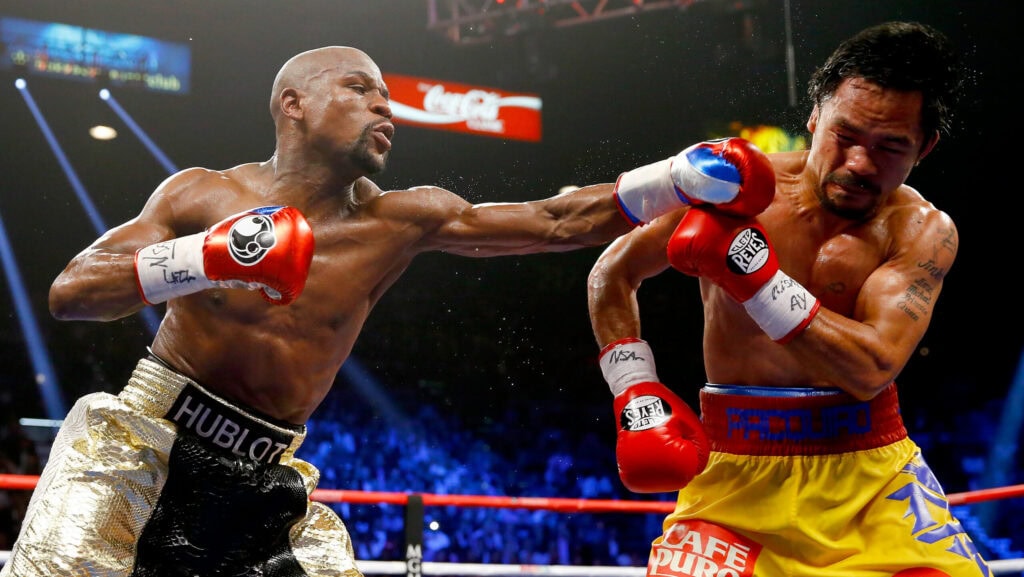
Floyd Mayweather-Manny Pacquiao Set For Rematch on Netflix

Kalshi’s Tarek Mansour on Prediction Markets, Regulation, and the Future of Truth in Finance
How Jordan Brand Is Building With Women, Not Around Them
Beyond the Feed: How [untitled] is Building a “Sacred Space” for Musicians
How Stephen Curry’s Underdog DNA Redefines the Hero’s Journey in ‘GOAT’