

Jordan Brand’s Heir Series 2 marks a shift in women’s basketball footwear, built with female athletes to prioritize performance, health, and longevity.
For decades, women’s basketball has been played in gear that was never truly built for women. The assumption remained unbelievably flawed: scale down a men’s shoe, change the colorway to fit a women’s presumed aesthetic, and call it innovation without any real effort. But as the women’s game continues to evolve into being a faster, sharper, more technically demanding skill set, that shortcut no longer suffices. The conversation around Jordan Brand‘s Heir Series sneaker reflects a deeper shift, one that centers women’s bodies, movement, and long-term health in a way the industry has rarely prioritized.
As a Jordan Brand athlete, Napheesa Collier puts it plainly: “Everything, especially as an athlete, it starts at your foot.” When shoes don’t support how an athlete is intended to move, the consequences ripple upward through ankles, knees, hips, and eventually entire careers. For women, whose biomechanics differ significantly from men’s, that disconnect has often been an invisible contributor to injury.
What makes the Heir Series 2, Jordan Brand’s latest shoe designed specifically with women’s insights in mind, stand out isn’t just the technology, but the process behind it. Rather than designing in isolation, Jordan Brand worked directly with its A-list roster of female athletes, asking a simple but long-overdue question: What do you actually need on the court? According to Collier, those conversations changed everything.
“We found that women are running and cutting more than jumping,” she explained exclusively to Boardroom. “Most shoes are made for men — it has that springiness so they can jump higher, and that’s not the same as the women’s game.”
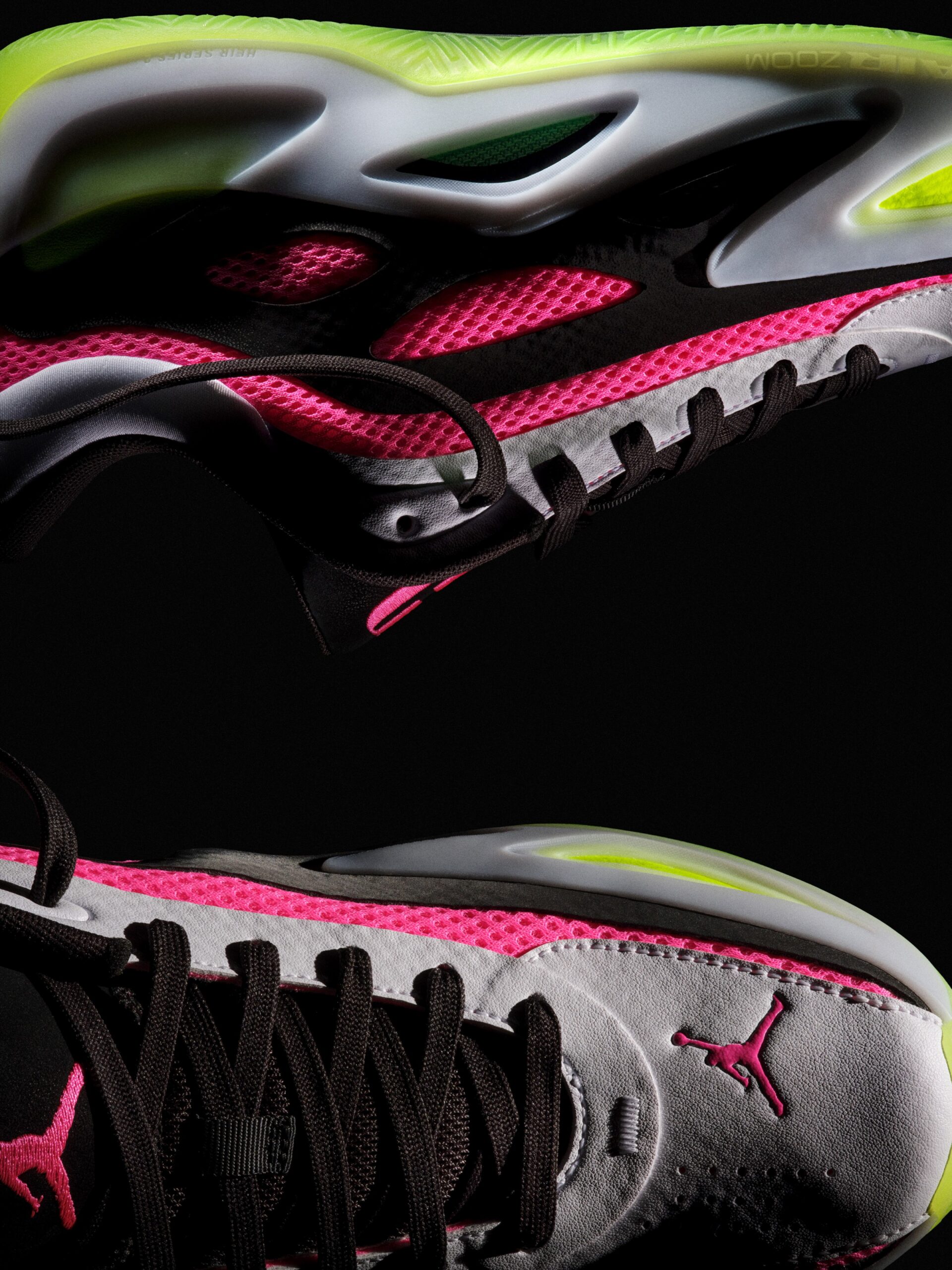
That essential insight led to meaningful design changes. From wider openings to accommodate ankle braces to cushioning tailored to varying arches, the Heir Series 2 reflects a level of detail that may have long been denied to women athletes. “They really worked diligently to make sure that our shoes were made specifically for women,” Collier said. “Everything in the rest of your body is so affected by your feet.”
Those details translate directly to performance. At the professional level, comfort isn’t a luxury, but rather a competitive edge. “If your feet are hurting, you can’t do anything,” Collier said. “Any advantage that you can get is valuable, because everyone at this level is so talented.” In a league where games are decided by a crucial block, a half-step of speed, or a perfectly timed game-winning swish, that advantage matters.
Even the smaller design choices signal a shift in mindset. A built-in ponytail holder, for instance, might seem trivial, but it reflects a broader awareness of the realities of women athletes. It’s not about novelty; it’s about being seen. These touches feel less like branding and more like proof that someone in the Jordan Brand lab was actually listening.
The company’s support also extends beyond the court. For Collier, who is currently out for 4-6 months after having surgery on her ankles, the relationship hasn’t been conditional on performance. “Even though I’m quote unquote not performing for them right now, they still care about me and making sure I’m good,” the Minnesota Lynx star said. “That means so much more than just a transactional brand-athlete relationship.”
That philosophy carries into how Jordan approaches the future of the women’s game, too. By involving both younger athletes and seasoned veterans in the design process, the brand creates continuity across generations. “The earlier you can get shoes that are good for your feet, it helps prevent injury in the future,” Collier added. In a moment when women’s sports are finally receiving sustained attention, the difference between performative support and real investment is clear. “This shoe was specifically made for women,” Collier said. “It’s not just, ‘This is a man’s shoe, you guys can wear it if you want.'”
Greatness, Her Way
As you can see, Jordan Brand isn’t whispering to women anymore; it’s speaking directly to them with bold intent. This year marks the launch of the brand’s biggest women’s campaign to date, a moment Jordan sees as more than marketing.
“We believe that we are in a once-in-a-generation moment for women across sport and culture,” Jordan CMO Caitlin Sargent said, pointing to the undeniable rise of women’s basketball and subsequently women’s influence in sneaker culture. Women, Sargent argues, aren’t just entering the conversation anymore. “They’re actually leading it.”
The Generational Greatness campaign draws inspiration from the brand’s 1991 “Genie” ad, reimagined through a modern, female lens. Representation, Jordan emphasized, is both symbolic and functional. The result is a roster spanning sports, culture, music, and fashion, reflecting a generation of women who refuse to be boxed into a single lane.
“Women and girls see themselves in the Jordan story, and we’re here to amplify that,” Sargent adds.
At the center of that vision is the idea that greatness is never satisfied. “Our young female consumer doesn’t want to be one-dimensional,” Sargent said. That hunger shows up across the campaign’s protagonists, from global athletes to multi-hyphenate creators. Figures like Teyana Taylor, described as “multi-faceted” and “a triple threat in every way,” embody the brand’s belief that greatness often shows itself long before the world catches on. “We see greatness before the world sees greatness,” underscoring a long-term commitment to building with women, not chasing trends. The campaign’s global scope is just as intentional. Athletes and creators are positioned to lead in their own markets, each with bespoke storytelling that reflects local culture while reinforcing a shared message. Representation across multiple dimensions is no longer an afterthought.
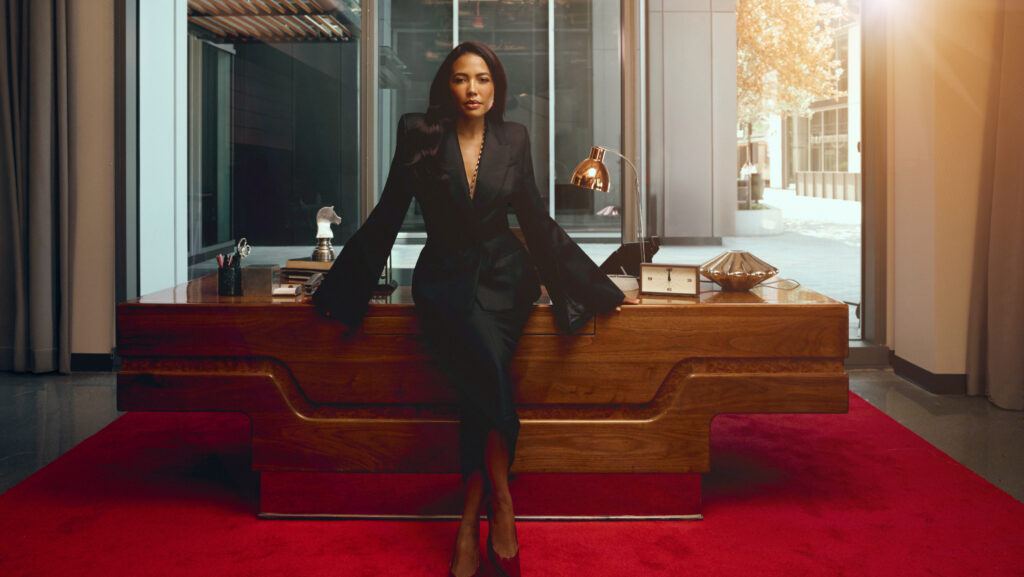
Some faces you’ll see in the star-studded spot include Niecy Nash as the modern-day Genie (played by Spike Lee 34 years ago), actress Regan Aliyah, Taylor, and, of course, Collier.
Together, the campaign and the Heir Series 2 reflect a larger shift: Jordan Brand isn’t asking women to adapt to its decades-long legacy. It’s strengthening that legacy alongside them. At a moment when women’s sports undeniably shape everything about culture, Jordan is betting on a simple truth: That greatness, especially hers, deserves to be built from the ground up.
Read More:
There Is No Offseason: KLUTCH Sports Group COO Fara Leff on Commanding the Sports Calendar

Michael Che Opens Up About SNL, Kanye, Colin Jost, Cancel Culture, & Comedy

Red Hook Tavern: Where Billy Durney Wants to Know Your Name
Keanu Reeves’ Next Act Is Built on Two Wheels

The Blueprint: Jessica Holtz Meets the Moment