

A bold look ahead to 2026: MLB labor strife, CFP and March Madness expansion, World Cup chaos, AI-driven sports media, UFC at the White House, and more.
Welcome to 2026, where America turns 250 on July 4, we see the first AFC Championship Game without Patrick Mahomes or Tom Brady since 2010, the U.S., Canada, and Mexico hosts the FIFA Men’s World Cup starting June 11, we celebrate the 60th Super Bowl on Feb. 8 while the Winter Olympics play out in Italy starting Feb. 6, and a UFC event actually takes place on the White House lawn on June 14.
As we set the stage for a wild, eventful, and consequential 2026, here are 14 sports business predictions for the year to come that are simultaneously speculative and informed.
There will be an MLB lockout to end 2026.
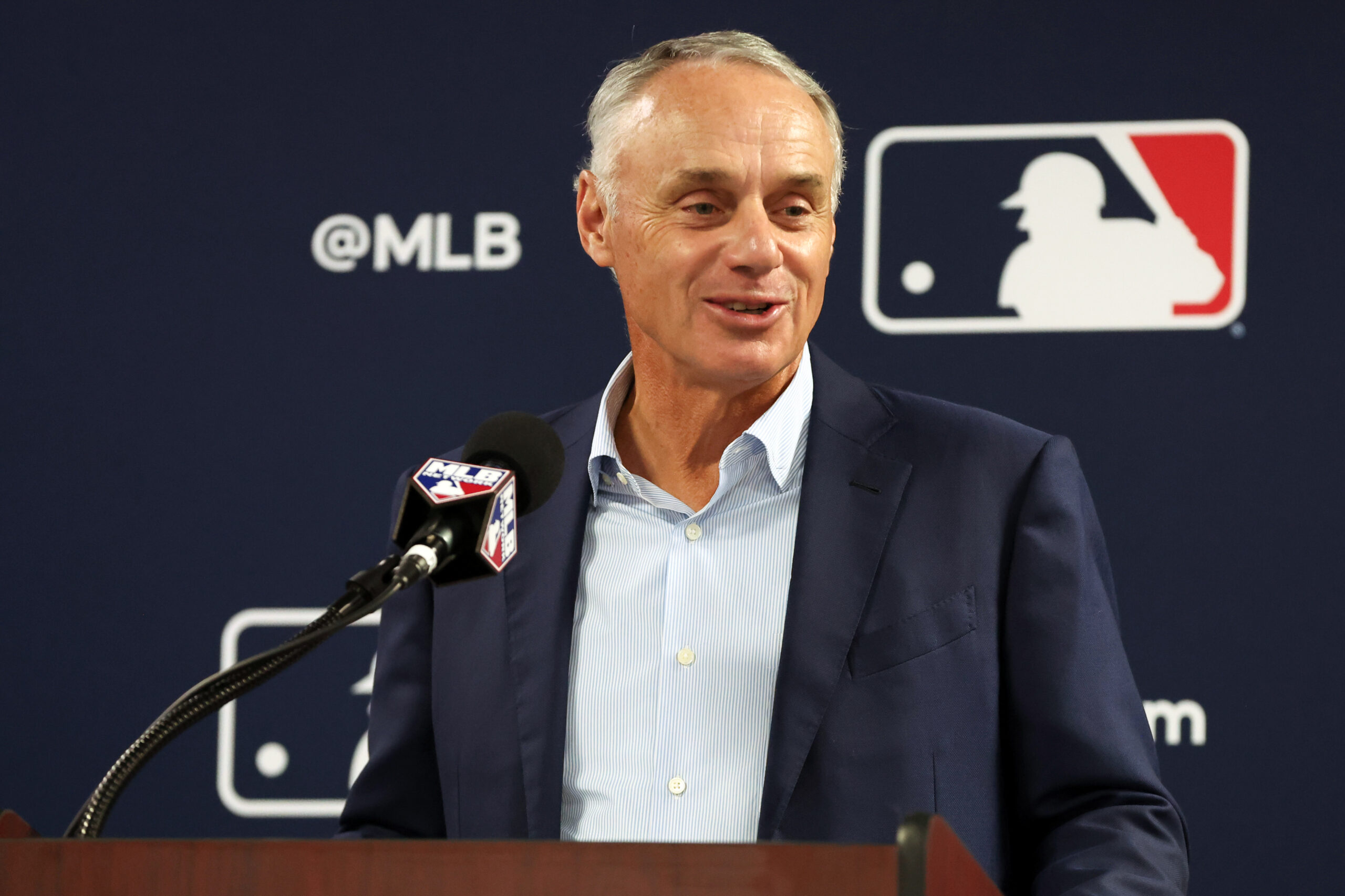
Right now, Major League Baseball is the hottest it has been in a decade, with record TV ratings, attendance, and overall buzz, momentum, and goodwill among fans. But looming in the shadows has been an impending war between MLB owners, who want a salary cap, and players, who have vowed to avoid it for decades. The current collective bargaining agreement expires on Dec. 1, and something’s gotta give.
The gap between teams like the Los Angeles Dodgers and teams like the Athletics, Miami Marlins, and Pittsburgh Pirates is widening, and a salary cap would increase parity and eliminate gargantuan contracts signed in recent years by Shohei Ohtani and Juan Soto. If the owners are really dug in and won’t take no for an answer this time on a salary cap, regular-season games in 2027 are at serious risk.
“We don’t believe salary caps are good for players or are good for the game,” MLB Players Association Executive Director Tony Clark told me in July. “We believe salary caps are actually anti-competition.”
Buckle up.
College Football Playoff expansion is coming.
The current deadline to change the current CFP format is Jan. 23, four days after the national championship game in Miami, and too many entities will benefit from an expansion for it not to happen. The only questions are: How many more teams will be added, and who benefits from automatic spots?
The most logical outcome is to expand from 12 to 16 teams, which would’ve been a huge help to teams like a pissed-off Notre Dame, but ultimately, this tournament is going to grow even further. “We could go easily to 16,” Ohio State athletic director Ross Bjork told me in September. “I think we could even go above that.”
While it may not happen right away, the CFP is destined for at least 24 teams. And with the Big Ten and SEC having majority control over the CFP moving forward, expect each conference to secure four spots each per year in the 24-team format, and perhaps even in the 16-team version.

NCAA Tournament expansion is coming
This year’s March Madness will be the final tournament with 68 teams. Both the men’s and women’s tourneys will expand to 76 teams for 2027, with the First Four in the current format on Tuesday and Wednesday for the men expanding into a more fully-fledged first round featuring 12 games across two days to whittle the field down to 64.
With revenue sharing now in full effect across Division I, there’s too much money to be made for these schools to let the extra games go. Prior hesitation to expand the field won’t be enough to deny the inevitable. Expect the change to be announced not long after the men’s Final Four in April.
Prediction markets will face regulatory backlash in states.
Prediction market platforms like Kalshi, Polymarket, and Robinhood have been operating in states where sports gambling is illegal, like California and Texas. Other states have sued, contending that while event contracts are designed to be gambling against other users rather than the companies themselves, they resemble gambling too much and should be regulated as such. Washington does not authorize prediction markets; Connecticut launched a cease-and-desist against Kalshi that it’s currently fighting; Louisiana classified prediction markets as illegal gambling; and Arizona may soon take legal action.
Despite Kalshi having recently reached an $11 billion valuation, expect more states to fight prediction markets as regulatory backlash grows, considering states don’t like feeling like their rules are being skirted or outright broken. It will also be interesting to see how traditional sports books like FanDuel and DraftKings’ entry into the market changes things.
College jersey sponsor patches will be everywhere next fall.
With Division I schools needing to pay players, college jersey sponsor ad patches for football, men’s and women’s basketball, and baseball will be approved by the NCAA to launch in time for the next college football season. Last month, UNLV reportedly signed a five-year, $11 million jersey patch deal with Acesso Biologies that will be the first of many such arrangements. So just prepare yourselves.
The NWSL will continue losing top talent to Europe.
As long as the NWSL continues to have a salary cap that fails to retain its biggest stars while European leagues don’t have caps, superstars will continue migrating across the pond. The league is trying to change that with a “high impact player” clause that allows teams to retain marquee players like Trinity Rodman without all of their salaries counting against the cap, but if a team like Chelsea, Barcelona, or Arsenal really wants someone, there isn’t much an NWSL team can really do about it.
The federal government will scrutinize college athlete pay, universities themselves.
President Trump said last month that he’s willing to use the federal government to reduce player salaries in college sports, saying schools currently spend too much money on football. A week earlier, GOP congressman Michael Baumgartner wondered aloud whether schools like the University of Utah that take private equity money should keep their tax-exempt status.
As the college sports landscape continues to rapidly evolve in 2026, expect these threats of action across the President and Congress to go, with a decent chance that an executive order or legislation like the SCORE Act materializes to protect the NCAA and colleges at the expense of players who some in government don’t especially like making millions of dollars to play basketball or football.
The NBA will look into relocating the New Orleans Pelicans.
NBA Commissioner Adam Silver said last month that 2026 will be the year in which the league decides whether to expand from 30 to 32 teams. If the league determines that it’s not quite ready to dilute its $77 billion media rights contract payments, it’s going to shift its focus to potentially relocating underperforming franchises. Enter the New Orleans Pelicans.
The Benson family, which owns the team, seems to care the least about their team than any franchise owner in the league. Attendance is horrible, the 27-year-old Smoothie King Center looks stale and outdated with the league’s smallest seating capacity, and a tweet last month claimed a sale offer of a suite with 24 seats and three parking passes for $750. What?!
The NBA tried basketball in New Orleans in the 70s and moved the Jazz to Utah after five years. Pro hoops just doesn’t work in a city that will always prioritize football and a uniquely vibrant music and culture scene. The Athletic‘s John Hollinger recently called the Pels the NBA’s “most unserious franchise,” and he’s being generous. Only three teams generated less revenue, and only two teams are less valuable than the Pelicans. It might be time to nudge the Bensons toward a sale and a move to Seattle or Las Vegas.

The World Cup will be treacherous for foreigners.
Fans of Iran, Haiti, Senegal, and the Ivory Coast may be banned by the U.S. government from entering the States to cheer on their countries at the World Cup. Foreigners traveling to America will face various restrictions entering the U.S. and will be closely scrutinized by authorities wherever they go while staying here. There’s no way to avoid this being a major news story as the World Cup progresses.
Also, look for President Trump to lobby FIFA to move at least one game from a blue state for one reason or another, perhaps Seattle, as it maintains it will hold an LGBTQ pride night as it hosts Egypt against Iran on June 26, to the countries’ dismay and protest.
The White House UFC event will be its most-watched ever.
While we don’t yet know who will be fighting during the UFC‘s televised extravaganza from the White House lawn on June 14, President Trump’s 80th birthday, expect it to be highly publicized, highly politicized, and broadcast nationally on CBS as a tentpole event as part of Paramount‘s new seven-year, $7.7 billion rights deal with UFC. It will also draw more than 10 million viewers, making it by far the most-watched event in UFC history.
The WNBA/Unrivaled rivalry will grow.
The inaugural season of Unrivaled was an unquestionable success and will only grow in popularity in Season 2, especially as collective bargaining talks between the WNBA and the WNBA Players Association continue. I hope I’m wrong here, but a major injury to a superstar player at Unrivaled, while the league’s ratings and reputation are soaring, will bring the debate over whether players can and should compete in other offseason leagues to the forefront.
If more players get injured in offseason competitions, just as the players ask the league to get paid way more money and a larger share of revenue to compete in the W, look out for the league to make more of a stink about their biggest stars primarily playing in the WNBA, and not Unrivaled, Project B, or whatever else materializes along the way.
Lewis Hamilton will contend for the 2026 F1 driver’s championship.
With a new car debuting across all teams and drivers for Formula 1 in 2026, parity will emerge in the sport as everyone starts from scratch with a clean slate. This is the best and final path for Lewis Hamilton to again contend for an F1 title as he continues to acclimate at Ferrari. It’s supposed to be a more traditional, pared-down car with simpler aerodynamics, and a level playing field will be just what Hamilton needs to get back on top.

AI will continue to redefine sports storytelling.
In 2026, you’ll not only see more AI-generated sports highlights, but models that will help anticipate what might happen, in addition to helping analyze what already happened.
“As AI models evolve, sports storytelling will shift from reacting to events to anticipating them,” Sportradar VP of Media Products Mark Holland told Boardroom, “creating richer, more immersive viewing experiences. The next frontier of storytelling isn’t just about faster production, but smarter, AI-driven storytelling that helps fans see why something matters as it happens.”
Saudi PIF will purchase a major global sports franchise.
After buying EA and attempting to be part of Paramount’s initial bid to purchase Warner Bros. Discovery, Saudi Arabia’s Public Investment Fund will succeed in purchasing a major global sports franchise this year, likely in global soccer. Saudi Arabia has established sports as a main tool to burnish its image, and rightfully so. As it looks to rebuild LIV Golf‘s reputation in 2026, a major soccer team will definitely be part of that equation.
Read More:
Keanu Reeves’ Next Act Is Built on Two Wheels

The Blueprint: Jessica Holtz Meets the Moment
The Power Broker: Emma Grede Is Just Getting Going

Quiet Power: Imani Ellis on CultureCon, Creators, and Learning to Let Go
The Long Game: How LeBron James and a Few NBA Friends Might Elevate the Game of Golf